The best road cycling routes around Santovenia De La Valdoncina
4.3
(59)
4,834
riders
154
rides
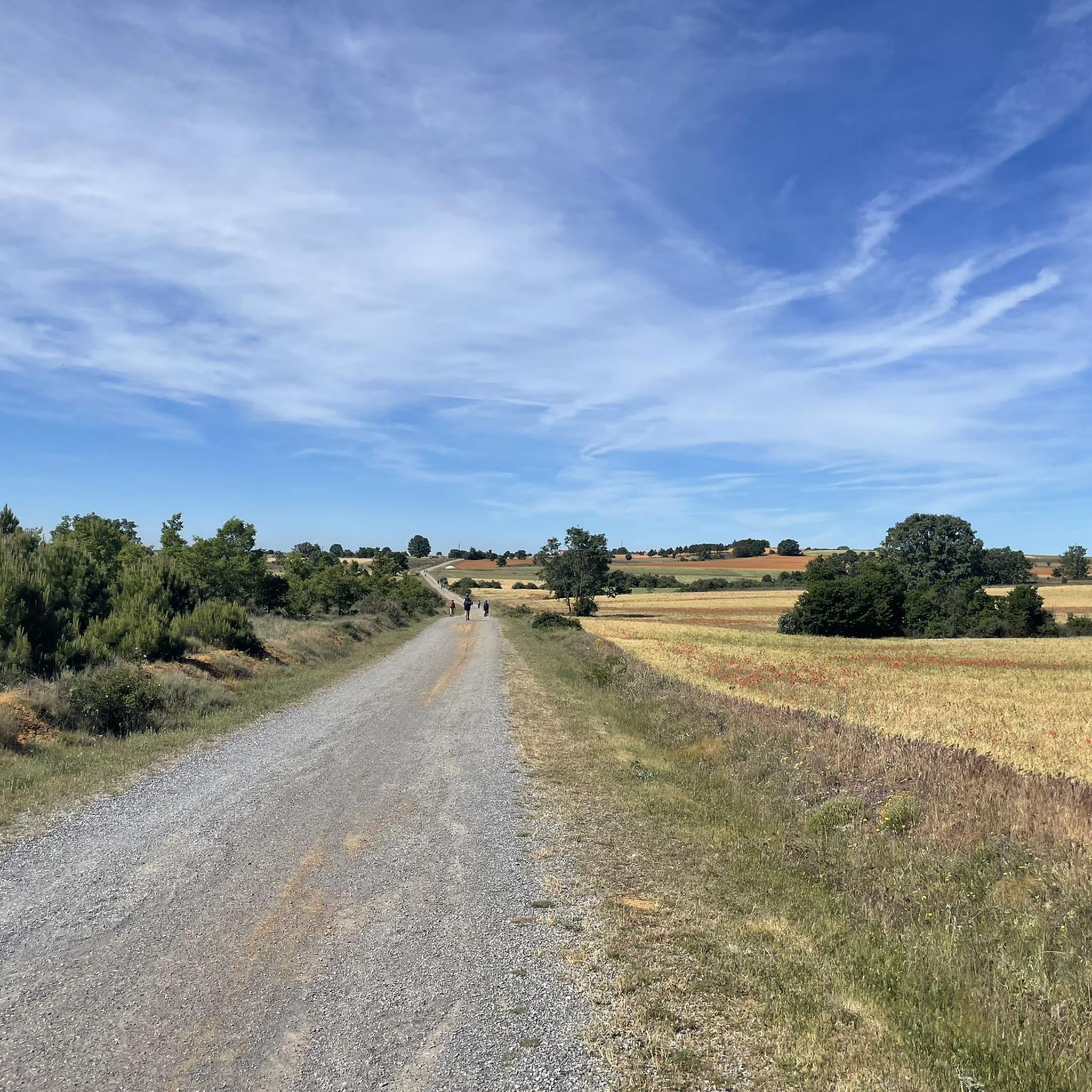
Road cycling around Santovenia De La Valdoncina offers diverse terrain, from flatter sections to undulating hills that become more pronounced towards the Montes de León. The municipality itself is situated at an elevation of 836 meters, providing a starting point for various rides. Cyclists can expect an extensive network of quiet secondary roads, allowing for immersion in the Castilian landscape. The region provides a dynamic environment for road cyclists, combining stretches for speed with climbs that test endurance.
Best road…
Last updated: May 20, 2026
4.3
(4)
42
riders
41.3km
01:42
190m
190m
Easy road ride. Great for any fitness level. Mostly well-paved surfaces and easy to ride.
3.0
(1)
35
riders
77.6km
03:12
400m
400m
Cycle the moderate 48.2-mile León - Camino Francés Loop, enjoying scenic countryside, charming villages, and historic Camino sights.

Sign up for free
7
riders
80.5km
03:14
310m
310m
Moderate road ride. Good fitness required. Mostly well-paved surfaces and easy to ride.
127km
05:11
580m
580m
This difficult 79.2-mile road cycling route from Leon to Astorga and back explores historic cities and the Castilian landscape.
1
riders
146km
05:55
620m
620m
Hard road ride. Very good fitness required. Mostly well-paved surfaces and easy to ride.
Get access to more routes and recommendations from other explorers.
Sign up for free
Already have an account?
Our route recommendations are based on thousands of hikes, rides, and runs completed by other people on komoot.
Start today with a free account
Your next adventure awaits.
Login or Signup

Tips from the Community

The Bishop's Palace of Astorga is one of only three buildings that Antoni Gaudí built outside Catalonia.
3
0

In the heart of Astorga, right next to the cathedral, lies one of the most unusual bishop's residences on the Iberian Peninsula: the Palacio Gaudi. It was designed and built by the famous Spanish architect of the same name (Antonio Gaudi, 1852-1926). A visit to the museum housed here is worthwhile both for the exhibits on display and, of course, for the imaginative architecture of the building.
2
0

On June 24, 1889, the prelate's name day, the first stone was laid. They had planned to complete the work on the palace in June 1894, but the bishop died in 1893, and this event radically changed the course of the work, paralyzed by the hostility between Gaudí and the Diocesan Council. Finally, Antonio Gaudí resigned from his post as chief architect, very upset by the treatment he received. In 1905, D. Julián de Diego y Alcolea ruled the diocese of Astorga and tried to convince Gaudí to return to the works of the palace, but he did not succeed. Ricardo García-Guereta, diocesan of León, was appointed architect and completed the work on October 12, 1913, as bishop D. Julián de Diego y Alcolea
4
0
It is the great Gothic cathedral. Over the centuries it has been rebuilt several times under the direction of numerous famous architects, giving it its own character.
10
0

The Passo Honroso Bridge in Hospital de Órbigo is an impressive medieval construction from the 13th century. This bridge is known for its large size and historical importance, as it was the scene of the famous Passo Honroso joust in 1434, where the knight Suero de Quiñones and his companions defended the bridge for a month. 🌉😎🚶♀️🚴
5
0

Santa María del Páramo is a village in the Spanish province of León, in the autonomous community of Castilla y León. It is located in the region of Páramo Leonés and has approximately 3041 inhabitants. The village is known for its vibrant cultural, sporting and tourist activities. It organizes a wide range of events, including the 63rd Feria, various summer activities for children, and an international football tournament. The landscape of Santa María del Páramo is characterized by its location on the plain of Páramo Leonés, a vast plateau between the valleys of the Órbigo and Esla rivers.
2
0
After crossing the Pyrenees on the French Way, pilgrims pass numerous places of worship, small churches, and village chapels. There are also large and magnificent cathedrals. Of particular note is the church in the center of León, described in Cordula Rabe's guidebook as "the most outstanding and stylistically purest early Gothic building on Spanish soil" and inspired by the Cathedral of Reims (France).
7
0

Hospital de Órbigo is a municipality on the Way of Saint James in the province of León, in the autonomous community of Castile and León. In the Middle Ages there was already a small village on the left bank of the Río Órbigo river. This village, formed around the church of Santa Maria, was named after the Puente de Órbigo bridge.
4
0
Frequently Asked Questions
What kind of terrain can I expect when road cycling around Santovenia De La Valdoncina?
The region offers diverse terrain, starting at an elevation of 836 meters. You'll find a mix of flatter sections and undulating hills, which become more pronounced as you approach the Montes de León. This provides a dynamic environment with stretches for speed and climbs that test endurance.
Are there road cycling routes suitable for beginners in Santovenia De La Valdoncina?
Yes, there are routes suitable for various skill levels, including beginners. For example, the Villarroañe from León – circular by Puente Villarente is an easy 25.7-mile (41.3 km) trail with gentle gradients, perfect for those new to road cycling in the area. Overall, there are 32 easy routes available.
What are some challenging road cycling routes near Santovenia De La Valdoncina?
For experienced cyclists seeking a challenge, routes like Astorga from Leon, covering 79.1 miles (127.4 km), or Sahagún from León – circular via Melgar de Abajo and río Cea, a 91.0-mile (146.4 km) journey, offer more demanding climbs and descents as you venture towards the Montes de León. There are 25 difficult routes in total.
Are there any circular road cycling routes starting from Santovenia De La Valdoncina?
Many routes in the area are designed as circular loops. A popular moderate option is the León - Camino Francés Loop via Carrizo de la Ribera, which is 48.2 miles (77.6 km) long and combines varied paths with cultural landmarks. Another great circular route is Santa Maria del Paramo from Leon – circular, covering 50.0 miles (80.5 km) through undulating terrain.
What cultural or historical landmarks can I see along road cycling routes in the area?
Many cycling routes incorporate monuments and villages, allowing you to experience local culture. The proximity to the city of León means you can easily visit significant historical attractions. Notable landmarks include the stunning León Cathedral, the vibrant San Marcelo Square, and the ancient Roman City Walls of León. Other points of interest include the Plaza de Santo Domingo Fountain and the Casa Botines Gaudí Museum.
Is Santovenia De La Valdoncina a good destination for long-distance road cycling?
Yes, the region offers numerous options for long-distance road cycling. With an extensive network of quiet secondary roads and routes extending towards the Montes de León, you can plan rides well over 50 miles (80 km), such as the 91.0-mile (146.4 km) circular route to Sahagún, providing ample opportunity for endurance training and exploration of the broader Castilian landscape.
What is the best time of year for road biking in Santovenia De La Valdoncina?
While specific seasonal details are not provided, the varied terrain and 'Castilian landscape' suggest that spring and autumn would likely offer the most pleasant conditions for road cycling, with milder temperatures and beautiful scenery. Summer can be warm, and winter might bring colder conditions, especially closer to the mountains.
Are there places to eat or stay for cyclists in Santovenia De La Valdoncina?
The wider Castile and León region is known for its cultural, gastronomic, and oenological richness. While specific cyclist-friendly establishments in Santovenia De La Valdoncina itself are not detailed, its proximity to the city of León means you'll find a wide array of cafes, pubs, restaurants, and accommodation options catering to visitors, including cyclists.
How many road cycling routes are available around Santovenia De La Valdoncina?
There are over 150 road cycling routes available around Santovenia De La Valdoncina, catering to various difficulty levels. This includes 32 easy routes, 99 moderate routes, and 25 difficult routes, ensuring options for every type of cyclist.
What do other road cyclists say about the routes in Santovenia De La Valdoncina?
The road cycling routes around Santovenia De La Valdoncina are highly rated by the komoot community, with an average score of 4.3 stars from over 52 reviews. More than 4000 road cyclists have used komoot to explore the varied terrain, often praising the extensive network of quiet secondary roads and the immersive Castilian landscape.
Is it possible to access road cycling routes using public transport in Santovenia De La Valdoncina?
While specific public transport policies for bikes in Santovenia De La Valdoncina are not detailed, its location near the city of León suggests that public transport connections to the wider region are available. It's advisable to check with local transport providers regarding their bike carriage policies before planning your trip.
Are there any permits required for road cycling in the Castile and León region?
Generally, no specific permits are required for road cycling on public roads in the Castile and León region. However, always respect local traffic laws and any specific regulations that might apply to protected natural areas if your route passes through them.
Most popular routes around Santovenia De La Valdoncina
Most popular attractions around Santovenia De La Valdoncina

Get inspired with the komoot mobile app


Explore more
Browse the best Road cycling routes in other regions.
