Attractions and Places To See around A Pastoriza - Top 20
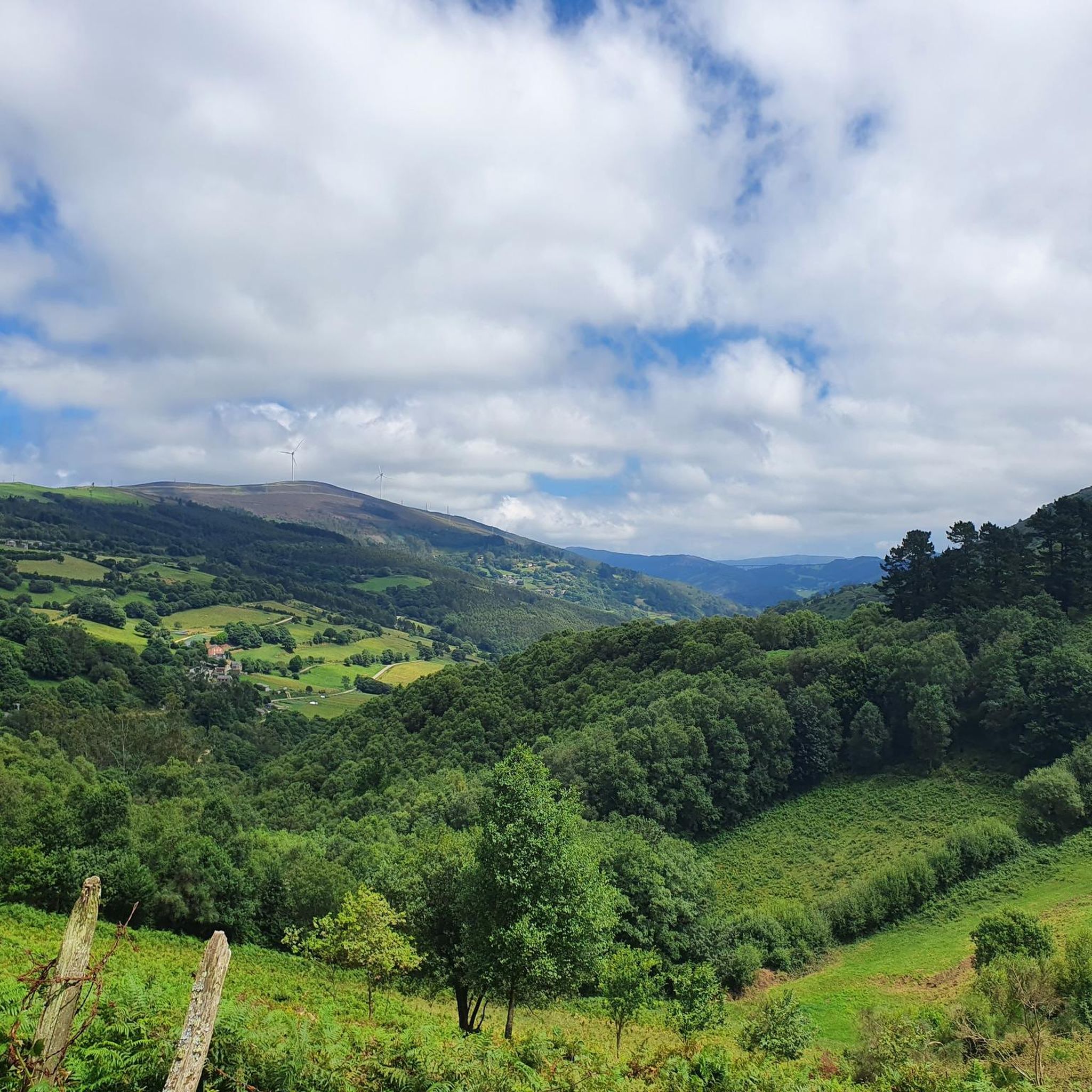
Best attractions and places to see around A Pastoriza, a municipality in Lugo, Galicia, offer a blend of natural beauty, history, and cultural heritage. The region is known for its connection to the origins of Christianity in Galicia and its diverse natural landscapes, including the Miño River. A Pastoriza is situated in the "Terra Chá" region, characterized by flat, fertile land, forests, and traditional villages, making it suitable for exploring natural features and historical landmarks.
Best attractions and places to…
Last updated: May 9, 2026
Mondoñedo Cathedral
Highlight • Religious Site
Translated by Google •
Tip by

Old bridge
Highlight • Bridge
Translated by Google •
Tip by

Sign up now to discover places like this
Get recommendations on the best single tracks, peaks, & plenty of other exciting outdoor places.
Sign up for free
Galician hórreos
Highlight • Monument
Translated by Google •
Tip by

Fonte Vella (Old Fountain)
Highlight • Monument
It was built …
Translated by Google •
Tip by

Hornos de Vilaoudriz
Highlight • Monument
Translated by Google •
Tip by
Sign up for free to discover even more attractions around A Pastoriza.
Sign up for free
Already have an account?
Start today with a free account
Your next adventure awaits.
Login or Signup
Tips from the Community

Mondoñedo Cathedral, also known as the Basilica of the Virgin of the Assumption, is one of Galicia's most important monuments, both for its historical and artistic value. Construction began in 1219 and was completed in the 14th century.
3
0
The Old Fountain or Fonte Vella of Mondoñedo is one of the most emblematic and historically significant monuments in this Galician town. It was commissioned in 1548 by Bishop Diego de Soto, as indicated by the inscription on its facade.
3
0
Mondoñedo Cathedral, also known as the Cathedral Basilica of the Virgin of the Assumption, is an impressive cathedral located in the town of Mondoñedo, in Galicia, Spain. This cathedral combines Romanesque and Gothic architectural styles, and its main construction took place between 1219 and 1243. The façade was remodeled in the 18th century, and the towers that give it its current appearance were added.
6
0


In 1973, a decree of protection was approved by the Spanish State for all the old hórreos and cabazos existing in Galicia and Asturias, which attempted to halt the consequences of the abandonment of the rural way of life and the loss of the use of the horreos. Some of the Galician hórreos have the status of historical-artistic monuments, such as that of the presbytery of Santa Comba de Carnota, built in 1768, or the group of hórreos of Combarro.
1
1

Small masonry bridge with 3 arches over the Batán river located on the commercial route between Vilalba and Mondoñedo. Magical place surrounded by native Galician forest.
2
1

The Cathedral Basilica of the Virgin of the Assumption of Mondoñedo is one of the episcopal sees of the diocese of Mondoñedo-Ferrol in Galicia. The temple, in the Romanesque style with later additions and reforms, also has contributions from the Baroque and Gothic styles. Although its construction dates back to the 13th century, the cathedral was not completed until the 14th century. Later, during the Middle Ages, a choir, the ambulatory and the sacristy were built, while the cloister with a square plan with semicircular arches and Doric columns dates from the 17th century.
3
0
Frequently Asked Questions
What significant historical sites can I visit in A Pastoriza?
A Pastoriza is rich in history. You can explore the ancient Old bridge, known for its medieval origins and moss-covered stones, often encountered on the Camino del Norte. Other notable sites include the Fonte Vella (Old Fountain), a 16th-century monument with historical inscriptions, and the Hornos de Vilaoudriz, a large complex of calcination kilns representing industrial heritage.
What natural attractions can I explore in A Pastoriza?
The region offers beautiful natural landscapes. A key highlight is the Laguna de Fonmiñá, considered one of the prominent sources of the Miño River. The Miño River itself flows through A Pastoriza, providing scenic beauty and recreational areas like Área Recreativa da Liboira and Praia Fluvial de Baltar. You can also enjoy panoramas of the Neda mountains and Campo do Oso within the "Terra Chá" region.
Are there any unique cultural landmarks in the region?
Yes, A Pastoriza features several unique cultural landmarks. The Santa María de Bretoña parish church is historically significant as the ancient episcopal see of Britonia, tied to the spread of Celtic-Christianity in Galicia. The municipality is also dotted with numerous cruceiros (stone crosses), such as the 19th-century Cristo do Fiouco, which are integral to its artistic and ethnographic heritage.
What kind of outdoor activities can I do around A Pastoriza?
A Pastoriza is ideal for outdoor enthusiasts. You can enjoy hiking on numerous trails, including the PR-G 153 Augas de Fonmiñá route which explores the Miño's source. Cycling is also popular, with various routes available. For more detailed options, you can check the Hiking around A Pastoriza guide or the Cycling around A Pastoriza guide.
What historical buildings or religious sites are worth seeing?
Beyond Santa María de Bretoña, you can visit the impressive Mondoñedo Cathedral, a Romanesque cathedral with Baroque and Gothic additions dating back to the 13th century. Other significant religious buildings in A Pastoriza include the parish churches of O Salvador de Crecente, Santiago de Reigosa, San Juan de Úbeda, and San Bartomeu de Cadavedo, showcasing architectural evolution from rural Romanesque to Galician Baroque.
Are there any museums or interpretation centers in A Pastoriza?
Yes, the Centro de Interpretación de Bretoña offers an interactive journey through the region's history, focusing on the Briton settlement in Gallaecia with documents, archaeological pieces, and ethnographic objects. Additionally, the Museo Pedagógico - Etnográfico Villapol in Bretoña displays thematic sculptures, historical photographs, and ethnographic pieces illustrating local professions.
Can I find ancient archaeological sites in A Pastoriza?
Absolutely. The Castro de Saa is a fascinating archaeological site providing insights into the Castreña culture from the 6th century B.C. to the 2nd century A.D., featuring circular dwellings and defensive structures. In the parish of Mazoi, you can also find an ancient megalithic tomb known as a dolmen.
What do visitors particularly enjoy about the attractions near A Pastoriza?
Visitors appreciate the blend of natural beauty and rich history. Many enjoy the serene atmosphere of places like the Old bridge, noting its historical charm. The architectural grandeur of Mondoñedo Cathedral is also a favorite, and the unique Galician hórreos (traditional granaries) are often highlighted for their cultural significance and varied designs.
Are there any family-friendly historical sites?
Yes, several sites can be enjoyed by families. The Mondoñedo Cathedral and the Fonte Vella (Old Fountain) are both listed as family-friendly attractions. The Hornos de Vilaoudriz also offers an interesting historical exploration for all ages.
Where can I see traditional Galician architecture?
You can observe traditional Galician architecture through the numerous Galician hórreos found throughout the region. These unique granaries, used to store grain, are a distinctive feature of the landscape and vary in style from region to region. Many are lovingly decorated and offer a glimpse into local heritage.
What are the best places to experience the Miño River in A Pastoriza?
To experience the Miño River, start at the Laguna de Fonmiñá, its significant source. Further along, you can visit recreational areas like Área Recreativa da Liboira and Praia Fluvial de Baltar, which offer spaces for relaxation and enjoying the riverside environment. The river's course through A Pastoriza provides many scenic spots for walks and appreciation of the pure Galician landscape.
Most popular attractions around A Pastoriza

Get inspired with the komoot mobile app


Explore more
Still not found the Highlight you’re looking for? See guides of the top attractions in other regions:
