The best walks and hikes around Nacionalni park Una
4.4
(294)
1,159
hikers
15
hikes
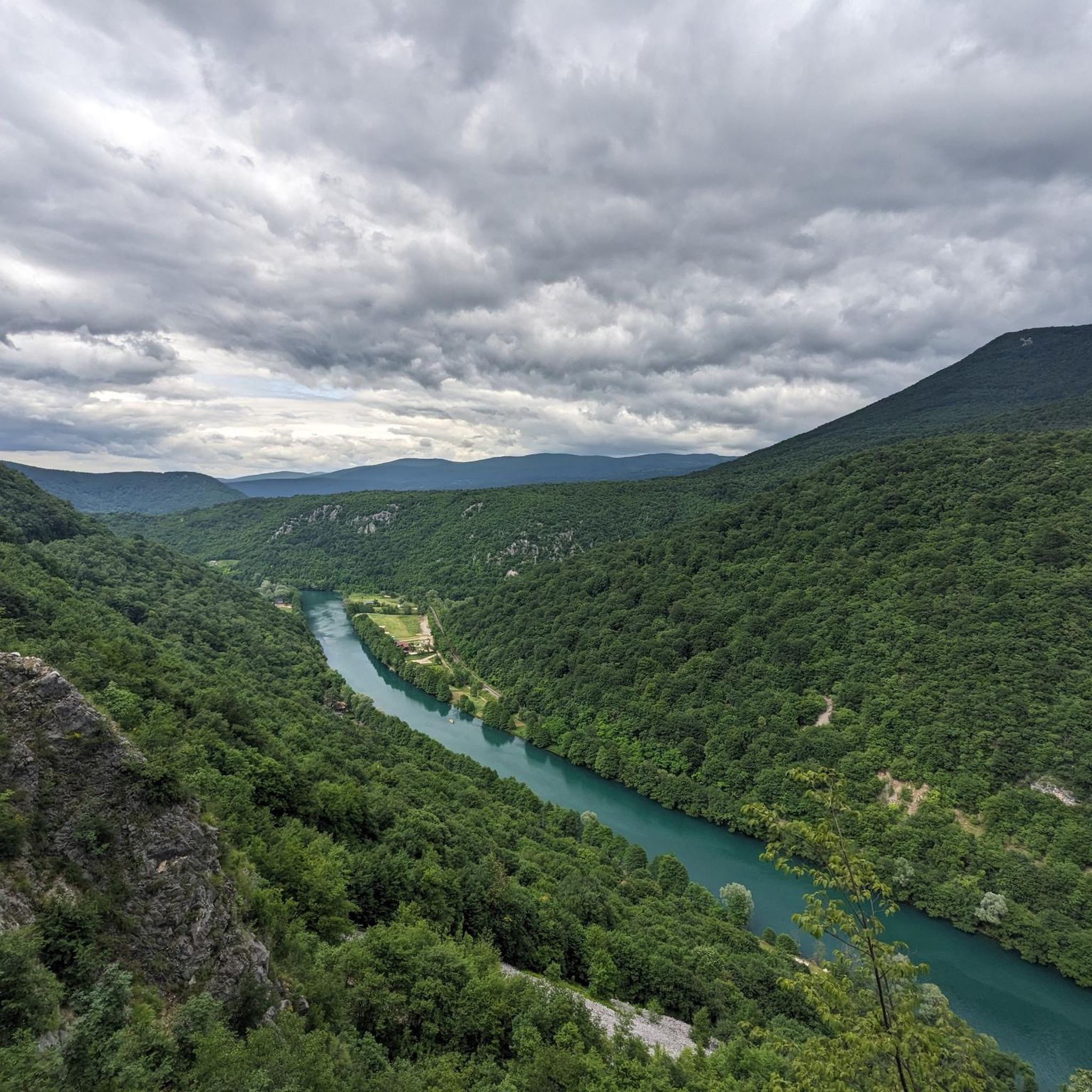
Hiking trails around Nacionalni park Una are characterized by the Una River, its waterfalls, and surrounding forested areas. The region features diverse terrain, from river valleys to hills, offering varied elevation changes. This natural park in Bosnia and Herzegovina provides routes that traverse alongside water features and through woodlands.
Best hiking trails around Nacionalni park Una
- The most popular hiking route is Small Waterfall at Martin Brod – Unac Waterfalls, Martin Brod loop from Manastir Rmanj, a 6.6 miles (10.6 km) trail that takes 3 hours 11 minutes to complete, featuring multiple waterfalls.
- Another top favourite among local hikers is Unac Waterfalls, Martin Brod – Small Waterfall at Martin Brod loop from Martin Brod, an easy 3.3 miles (5.4 km) path that explores the area's notable waterfalls.
- Local hikers also love the Muslim Cemetery – View of Ostrovica Castle loop from Nacionalni park Una, a 5.8 miles (9.3 km) trail leading through varied terrain with views of Ostrovica Castle, often completed in about 2 hours 42 minutes.
- Hiking around Nacionalni park Una is defined by river paths, waterfalls, and forested hills. The network offers options for different ability levels, including easy and moderate routes.
- The routes in Nacionalni park Una are highly rated by the komoot community with an average score of 4.4 stars from over 200 reviews. More than 800 hikers have used komoot to explore Nacionalni park Una's varied terrain.
Last updated: October 4, 2026
4.2
(72)
206
hikers
Moderate hike. Good fitness required. Easily-accessible paths. Suitable for all skill levels.
4.4
(40)
123
hikers
9.25km
02:42
240m
240m
Moderate hike. Good fitness required. Easily-accessible paths. Suitable for all skill levels.

4.4
(14)
54
hikers
8.66km
02:29
210m
210m
Moderate hike. Good fitness required. Easily-accessible paths. Suitable for all skill levels.
4.8
(42)
183
hikers
Hard hike. Great for any fitness level. Sure-footedness, sturdy shoes and alpine experience required.
4.0
(1)
26
hikers
Easy hike. Great for any fitness level. Easily-accessible paths. Suitable for all skill levels.
Get access to more routes and recommendations from other explorers.
Already have an account?
Our route recommendations are based on thousands of hikes, rides, and runs completed by other people on komoot.
Start today with a free account
Your next adventure awaits.
Tips from the Community

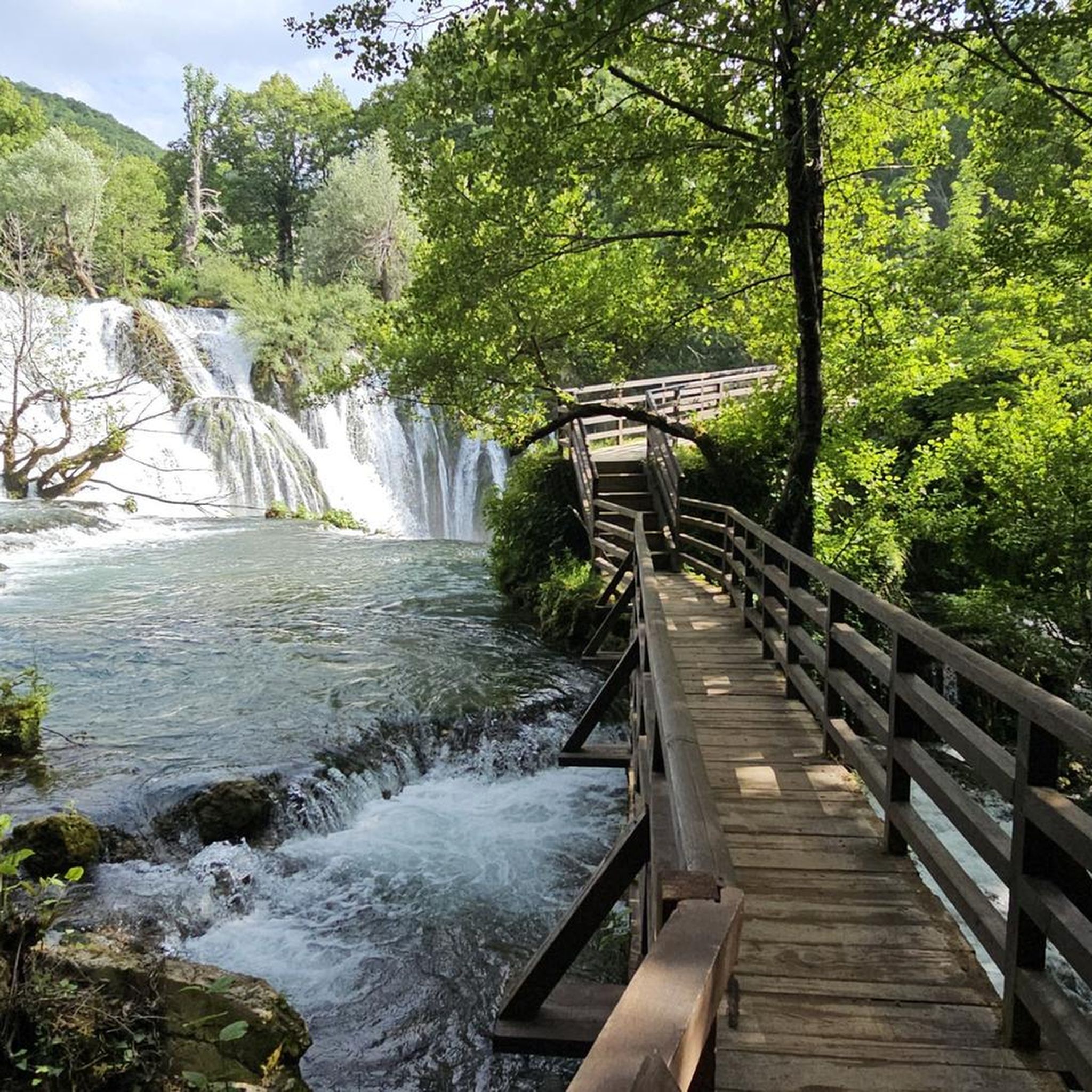
At this location in Martin Brod, as seen in most photos, is the so-called 'Small Waterfall'. It is located on one of the tributaries of the Una River, on the left side of the river course flowing between various village houses and catering establishments. The Unac is a tributary of the Una and flows into the Una about a kilometer downstream.
2
0
U strasnom zagrljaju dvije rijeke, na ušću Unca u Unu, ljubomorno čuva svoje čari neponovljiva i vjekovima nedirnuta prirodna ljepota, naseibuna Martin Brod. U ovom mjestu se nalazi najveći kompleks slapova u Nacionalnom parku “Una”, a nekad je ovdje postojao veliki broj mlinova i bučnica. Naselje je poniklo iz srednjovjekovnog grada koji je podignut krajem XIV ili početkom XV vijeka na ušću Unca u Unu, a postoje mišljenja historičara da ovaj stari grad datira iz XIII vijeka. Po zapisima iz 1396. godine ovaj grad se nazivao Konuba. U izvorima se prvi put spominje 1431. godine kada ga je ugarski kralj Sigismund založio Nikoli Frankopanu. U današnjem Martin Brodu nalazi se pravoslavni manastir Rmnaj koji predstavlja važno duhovno sjedište sjeverne Tromeđe (trograničja Bosne, Like i Dalmacije). Narodna tradicija pripisuje njegovo podizanje Katarini Branković – kćeri srpskog despota Đurđa Brankovića i bizantijske princeze Jerine Kantakuzin a supruzi grofa Urliha II Celjskog. U starijim dokumentima manastir Rmanj se naziva Hrmanj, Ajerman, Chermlja, Szermil, Hermanya, Herman a ime je dobio po Katarininom sinu Hermanu III koji je zbog bolesti mlad umro, te je njemu u spomen Katarina podigla manastir. U narodu se vremenom od imena Herman pretvori u naziv Rmanj i taj naziv je ostao do dana današnjeg. Izvor: https://npuna.com/martin-brod/
4
1
Tuff or travertine is a sedimentary rock and belongs to the group of carbonate rocks. It forms around cold springs. It is characterized by its porosity. Tuff is a monomineral rock, meaning it is built from only one mineral - calcite. The structure is cryptocrystalline, while the texture is porous. It forms around cold springs, by the precipitation of calcium carbonate from a saturated aqueous solution of calcium bicarbonate. This happens in places where the water flow loses kinetic energy either due to an obstacle (aquatic plants) or due to a decrease in slope. The porous texture occurs because calcite is deposited around plants, and after their decay, cavities remain. Source: https://hr.wikipedia.org/wiki/Sedra
1
2
The old town of Ostrovica was built on a hill of the same name, on the left bank of the Una River, above Kulen Vakuf. Before coming under Ottoman rule, it was in the hands of the Frankopans, Juraj Mikulčić, and Ivan Keglević. It came under Ottoman rule in 1523 and only gained significance after the Peace of Karlovac in 1699. From 1523 to 1878, the Turks kept a garrison in Ostrovica. The Turks significantly expanded it, and it then acquired its present form. The town is essentially an elongated rectangle with strong walls up to 10 m high. In 1577, the garrison numbered 60 horsemen and 150 infantrymen, and in 1834, only 20 men. The Imperial forces attacked this town several times (1560, 1698, 1737, 1789, and 1834). In terms of size, Ostrovica was a small town, but as it was located close to both the Venetian and Austrian borders, and also had a favorable defensive position, it was given great importance. Therefore, work was constantly carried out on its expansion and strengthening. The town is surrounded by strong ramparts 10 meters high, with a length of 117 and a width of 83 meters. The main gate was located in front of the ramparts. The fortress consisted of four towers and two bastions. The main entrance is from the south, and the secondary entrance from the north. The commander of the garrison held the title of dizdar, and was officially titled bašaga. From 1699, if not earlier, a captain resided in Ostrovica, who around 1791 moved his seat to Prkosi. Among the dizdars of Ostrovica, the following are mentioned: Nesuhaga (1637), Muhamedaga (1700), and Alijaga (1783). The town also became the seat of the Ostrovica Captaincy, which was founded in the early years of the 18th century and extended on both sides of the upper course of the Una River. It included Orašac, Havala, Kulen Vakuf, and the palankas of Čovka and Donji Lapac. Its captains were members of the well-known Bosnian family Kulenović. Ostrovica, Kulen Vakuf, and Orašac had 989 men in the war of 1714–1718, and after the peace treaty, 561 men. The very next year, 1720, their number increased by 428 men. The military garrison remained in Ostrovica until 1878. https://kulen-vakuf.com/stari-gradovi.html
4
1
The old town of Ostrovica was built on the hill of the same name, on the left bank of the Una River, above Kulen Vakuf. Before coming under Ottoman rule, it was in the hands of the Frankopans, Juraj Mikulčić, and Ivan Keglević. It came under Ottoman rule in 1523 and gained significance only after the Peace of Karlovci in 1699. From 1523 to 1878, the Turks kept a garrison in Ostrovica. The Turks significantly expanded it, and it then acquired its present form. The town is essentially an elongated rectangle with strong walls up to 10 m high. In 1577, the garrison numbered 60 horsemen and 150 infantrymen, and in 1834, only 20 men. Imperial troops attacked this town several times (1560, 1698, 1737, 1789, and 1834). In size, Ostrovica was a small town, but as it was located near both the Venetian and Austrian borders, and also had a favorable defensive position, it was given great importance. For this reason, work was constantly carried out on its expansion and strengthening. The town is surrounded by strong ramparts 10 meters high, with a length of 117 and a width of 83 meters. The main gate was located in front of the ramparts. The fortress consisted of four towers and two bastions. The main entrance is from the south, and the secondary from the north. The garrison commander held the title of dizdar, and was officially titled bašaga. From 1699, if not even earlier, a captain resided in Ostrovica, who around 1791 moved his seat to Prkos. Among the dizdars of Ostrovica, the following are mentioned: Nesuhaga (1637), Muhamedaga (1700), and Alijaga (1783). The town also became the seat of the Ostrovica Captaincy, which was founded in the early years of the 18th century and extended on both sides of the upper course of the Una. It included Orašac, Havala, Kulen Vakuf, and the palankas of Čovka and Donji Lapac. Its captains were members of the well-known Bosnian family Kulenović. Ostrovica, Kulen Vakuf, and Orašac had 989 men in the war of 1714–1718, and after the peace treaty, 561 men. The very next year, 1720, their number increased by 428 men. The military garrison remained in Ostrovica until 1878. Source: https://kulen-vakuf.com/stari-gradovi.html
4
0
Kulen Vakuf je u osmanskim dokumentima iz 18. veka zvan Džisr-i-kebir, što znači “Veliki most.” Naselje je tako nazvano zbog velikog mosta i važnog prelaza preko Une.
4
1
Vakuf means a religious or charitable foundation/property in the Islamic world; in place names, it often means that the area was linked to such a foundation. And Kulen Vakuf refers to a vakuf that was connected to the Kulenović family or Mahmut-paša Kulenović.
4
1
Džisr-i Kebir is not a Bosnian word, but an Ottoman-Turkish name with Arabic roots. -Džisr / jisr: Arabic for “bridge”. -kebir / kabir: Arabic/Ottoman for “great” or “magnificent”. So Džisr-i-Kebir literally means, as Anton also mentions, “the great bridge”.
4
1
Frequently Asked Questions
What is the general difficulty of hiking trails in Nacionalni park Una?
Nacionalni park Una offers a range of hiking trails suitable for various fitness levels. The majority of routes are classified as easy or moderate. For example, the Unac Waterfalls, Martin Brod – Small Waterfall at Martin Brod loop from Martin Brod is an easy 3.3-mile (5.4 km) path, while the Small Waterfall at Martin Brod – Unac Waterfalls, Martin Brod loop from Manastir Rmanj is a moderate 6.6-mile (10.6 km) trail.
Are there easy trails for beginners or those looking for a relaxed walk?
Yes, Nacionalni park Una has several easy trails perfect for beginners or those seeking a leisurely hike. Many of these routes explore the river valleys and waterfalls. An example is the Sultan Ahmed Mosque – Muslim Cemetery loop from Nacionalni park Una, an easy 3.9-mile (6.3 km) trail.
What natural attractions or landmarks can I expect to see while hiking?
The trails in Nacionalni park Una are rich with natural beauty, primarily centered around the Una River and its impressive waterfalls. You can expect to encounter stunning features like the famous Štrbački Buk Waterfall and the picturesque Milančev Buk Waterfall, Martin Brod. The park also features historical sites such as the Rmanj Monastery.
Are there family-friendly hiking options in Nacionalni park Una?
Many of the easier trails along the Una River are suitable for families. These paths often feature gentle gradients and offer opportunities to enjoy the waterfalls and river scenery. Look for routes with shorter distances and minimal elevation gain for a comfortable family outing.
Can I find circular hiking routes in Nacionalni park Una?
Yes, many of the popular hiking routes in Nacionalni park Una are circular, allowing you to start and end at the same point without retracing your steps. This design is common for trails exploring specific natural features like waterfalls or viewpoints. The Muslim Cemetery – View of Ostrovica Castle loop from Nacionalni park Una is a good example of a circular route.
Are dogs allowed on the hiking trails in Nacionalni park Una?
Generally, dogs are permitted on trails within Nacionalni park Una, but it's crucial to keep them on a leash to protect wildlife and ensure the safety of other hikers. Always clean up after your pet and respect any specific signage regarding pet access in certain areas.
What is the best time of year to go hiking in Nacionalni park Una?
The best time for hiking in Nacionalni park Una is typically from spring to early autumn (April to October). During these months, the weather is generally mild and pleasant, and the waterfalls are often at their most impressive due to increased water flow. Summer can be warm, but the forested trails offer shade.
Are there short hiking routes suitable for quick excursions?
Yes, Nacionalni park Una offers several shorter routes ideal for quick walks or if you have limited time. These trails often focus on specific highlights like waterfalls. The Unac Waterfalls, Martin Brod – Small Waterfall at Martin Brod loop from Martin Brod is a relatively short 3.3-mile (5.4 km) easy loop.
Is parking available at the trailheads in Nacionalni park Una?
Parking facilities are generally available at key entry points and popular trailheads within Nacionalni park Una, especially near major attractions like the waterfalls and visitor centers. It's advisable to check specific route details or park information for precise parking locations and any potential fees.
What do other hikers enjoy most about Nacionalni park Una?
The hiking experience in Nacionalni park Una is highly rated by the komoot community, with an average score of 4.4 stars from over 200 reviews. Hikers frequently praise the stunning beauty of the Una River and its numerous waterfalls, the tranquility of the forested paths, and the well-maintained trails that offer diverse scenery.
How many hiking trails are available in Nacionalni park Una?
There are over 15 distinct hiking trails available for exploration in Nacionalni park Una, catering to various preferences and skill levels. This network includes a good mix of easy and moderate routes, ensuring there's something for everyone.
Are there any trails that offer views of historical sites?
Yes, some trails provide glimpses of historical landmarks. For instance, the Muslim Cemetery – View of Ostrovica Castle loop from Nacionalni park Una offers views of Ostrovica Castle, adding a historical dimension to your hike.
Most popular attractions around Nacionalni park Una

Get inspired with the komoot mobile app


Explore more
Browse the best Hikes in other regions.
