The best walks and hikes around L'Ènova
4.7
(206)
1,403
hikers
98
hikes
Hiking trails around L'Ènova offer a blend of natural beauty and historical significance within the Valencian Community of Spain. The region features gentle undulations and elevated points, particularly in its southern zone, providing varied topography and scenic vistas. Trails often traverse areas with Roman heritage, including ancient quarries and cart tracks, alongside natural recreational spots. The landscape, while generally flat, includes distinct hills that contribute to diverse hiking experiences.
Best hiking trails around L'Ènova
- The most popular hiking route is…
Last updated: November 21, 2026
14
hikers
5.14km
01:50
220m
220m
Moderate hike. Mostly walkable paths. Sure-footedness required.
20
hikers
10.8km
02:51
100m
100m
Moderate hike. Good fitness required. Easily walkable paths.

4.7
(3)
14
hikers
13.6km
03:45
220m
220m
Moderate hike. Good fitness required. Easily walkable paths.
4.0
(2)
14
hikers
6.72km
01:51
110m
110m
Easy hike. Easily walkable paths.
12
hikers
4.43km
01:44
220m
220m
Moderate hike. Mostly walkable paths. Sure-footedness required.
Get access to more routes and recommendations from other explorers.
Already have an account?
Our route recommendations are based on thousands of hikes, rides, and runs completed by other people on komoot.
Start today with a free account
Your next adventure awaits.

Tips from the Community

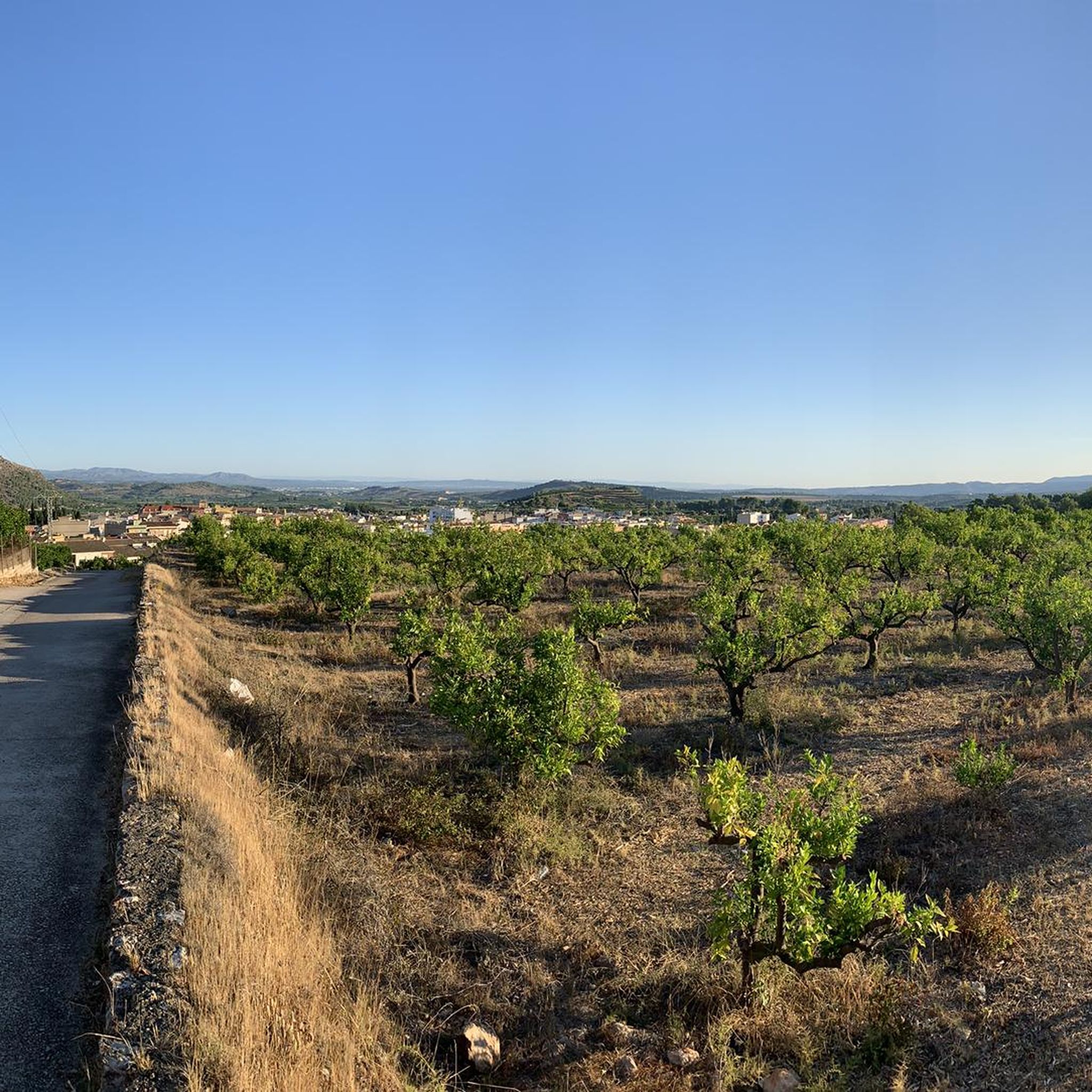
The temperature was just below 30 degrees and that was fine for this walk, which was most of the time in the sun. The first part of the walk was more challenging than the second part. In this case that was good because of the temperature. There were no other people taking this walk, so it was very quiet. There were some nice views to other places like Xativa.
2
0

The Quatre Camins quarry, also known as the Llosar dels Francs, is an archaeological site 500m away. of the Roman villa, known as Villa Cornelius, located in Partida dels Franks. These are quarries that, according to some scholars (such as the archaeologist Miquel Ramon Martí), could be considered the most important of the Roman period in the Iberian Peninsula. The commercialization of the marble extracted from these quarries was the main source of wealth for the Iunii family, of the Galeria Tribe, owners of the plantation and the Cornelius town. The transport of the stone was done through the carriladas, that is to say, grooves in the rocks that channeled the wheels of the carts, which can still be seen on the road that leads from Énova to Barxeta. The planter has preserved marks that show that the marble was extracted forming rectangular blocks. These large blocks were transported in oxcarts to the town, where the work of stonemasons or stonemasons continued, who would fragment them and shape them into specific pieces, according to the order that needed to be served. This marble was used to make tombstones, monuments of different sizes and even slabs to pave the Roman theater in Zaragoza or the plinths of the Romanesque door of the Cathedral of Valencia.
1
0
It is advisable to take advantage of rail transport to travel to the starting point of the planned routes on foot or by bike. From L'Énova you can take interesting routes on foot through its territory and also by bike through the regions of Ribera and Costera.
2
0
Underground passage to cross the train tracks on foot or by bike.
2
0
Villa Cornelius is a Roman villa, located in the municipality of l'Énova, in the region of Ribera Alta, in an area known as "Els Alters". The discovery of the site was due to chance, since the remains of the villa were found when, in September 2003, work began prior to the construction of the AVE Madrid- Valencia. It is a rural villa, between 2,600 and 3,000 square meters, located very close to the Via Augusta (on a plain between the river Sucro (Xúquer) and its tributary the river Magre) and the old Saetabis (Xàtiva), in the Tarraconensis province, belonging to the patrician Publius Cornelius Iuniani (whose name had to give rise to the toponym of the later population, Iunianus). The villa was built at the end of the 1st century AD (specifically between the years 65 and 75) and ended its use in the second quarter of the 5th century AD. Throughout this period, in which the villa was dedicated to the exploitation and processing of flax, several reforms were carried out both in the house and in the production area. It had to be abandoned enough that part of the roof of the residential buildings fell and remained on the floors (which contained mosaics), sealing them and allowing their conservation to this day. At present, the villa is covered again, after having extracted valuable mosaics.
2
0
Also known as Llosar dels Francs, in this Roman marble quarry you can distinguish the rectangular blocks that were later loaded onto bullock carts to transport them.
2
0
El Pi d'Ambrosio is a natural site of great environmental value, much appreciated by all the residents of L'Énova. Place, where people usually go to spend the day and get in touch with nature. Currently, this area is minimally conditioned with approved paellers, as well as several drinking water sources.
2
0
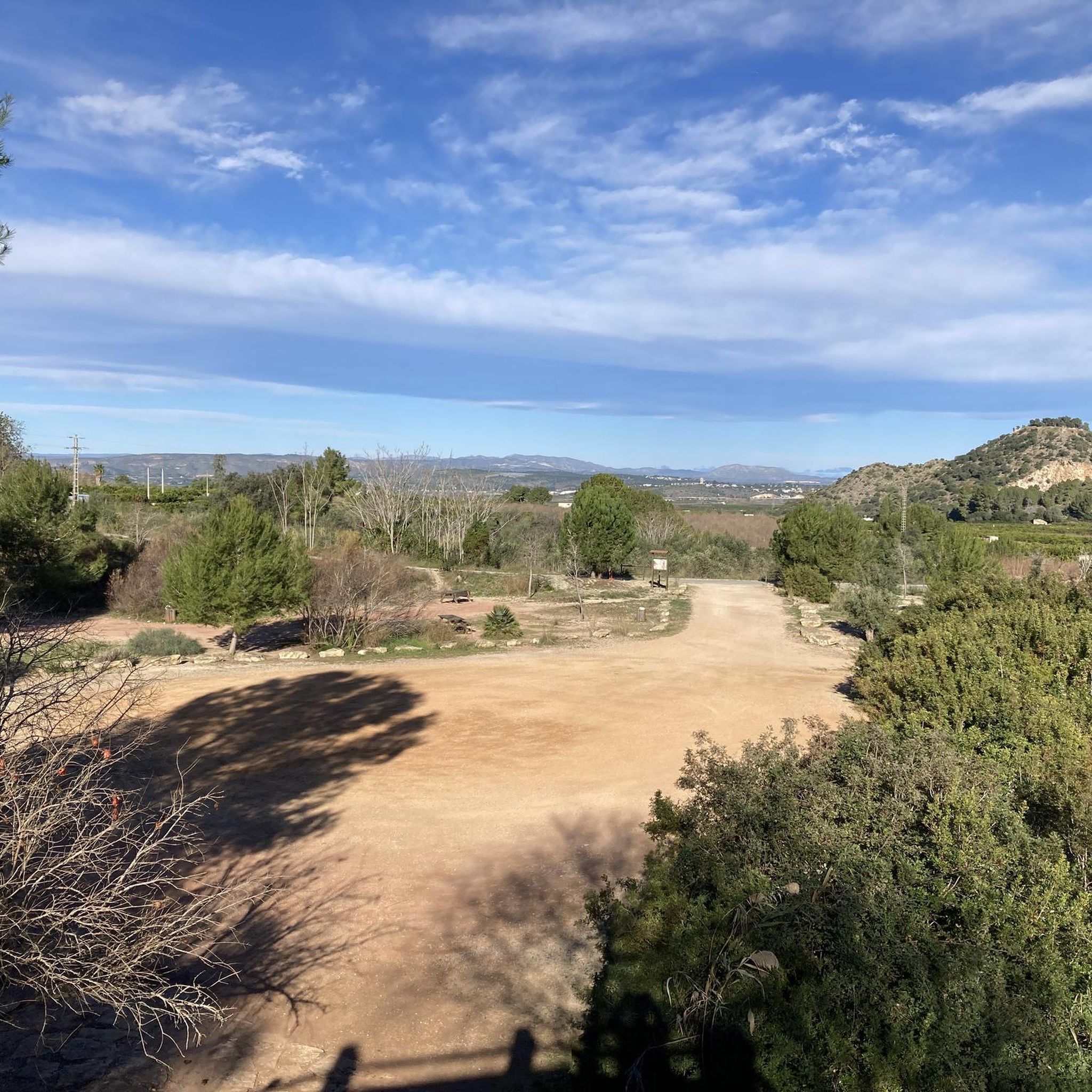
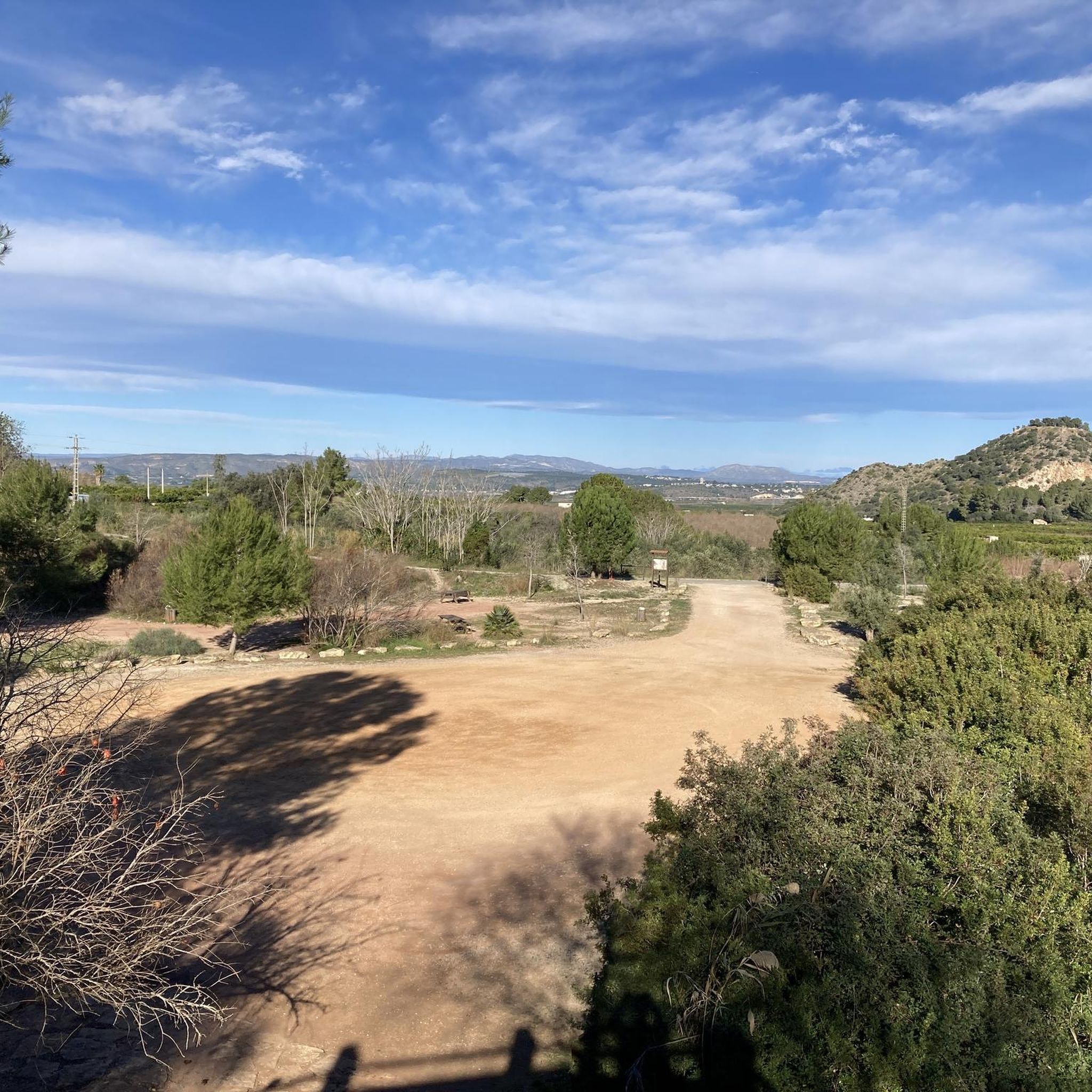
El Cabeço is located at 180 meters above sea level, this being the highest point of the entire route of the Xiquisenda. Near here is the old Colom Shooting Range, as well as the Airstrip, where the planes in charge of spraying for pest control usually land. In addition to the views already mentioned, we can also enjoy views towards Xàtiva and one of the most important mountain ranges of the Valencian geographical relief: Montdúver, in the Safor region, 841m high.
2
0
Frequently Asked Questions
What kind of hiking trails can I expect in L'Ènova?
L'Ènova offers a diverse range of hiking trails, characterized by gentle hills, historical Roman sites, and natural recreational areas. While generally flat, the southern zone features elevated points like the Cabezo, providing varied topography and scenic vistas. You'll find options suitable for various ability levels, from easy walks to more moderate excursions.
Are there many hiking routes available in L'Ènova?
Yes, L'Ènova boasts a comprehensive network of hiking routes. There are over 80 trails available, with 23 classified as easy, 54 as moderate, and 7 as difficult, ensuring options for every hiker's preference and skill level.
What historical sites can I explore while hiking in L'Ènova?
L'Ènova's trails are rich in history, particularly Roman heritage. You can explore significant ruins like the Villa Cornelius, a Roman villa with unearthed mosaics and artifacts, and a well-preserved Roman quarry. Ancient cart tracks, known as 'Carriladas ibero-romanas,' also mark the historical significance of these routes. Additionally, you might encounter the Church of Mare de Déu de Gràcia with its Roman tombstones and the unfinished Ermita del Calvario.
Are there any family-friendly hiking options in L'Ènova?
Many trails in L'Ènova are suitable for families, offering accessible paths and interesting points of interest. The region's flagship route, the 'Senda Histórica-Paisajística de L'Ènova,' is designed to be family-friendly, combining natural beauty with historical exploration. For a shorter, moderate option, consider the Senda Andaluza (PR-CV 193) loop from el Genovés, which is about 5.1 km.
What natural attractions can I discover on the trails?
Beyond historical sites, L'Ènova's trails feature notable natural attractions. The Pi d'Ambrosio is a recreational area perfect for resting, while the Cova Negra (a small but beautiful cave) offers interesting rock formations and local legends. The region's gentle undulations, like the Lloma del Baladre and Cabezo, also provide scenic viewpoints.
Are there any circular hiking routes in L'Ènova?
Yes, L'Ènova offers several circular routes, which are popular among hikers for their convenience. A notable example is the High Cross – Pi d'Ambrosio loop from L'Ènova - Manuel, a moderate 13.6 km path that includes both recreational areas and historical markers. Another option is the Mirador de la Creu loop from el Genovés, which is a moderate 4.3 km trail.
What do other hikers say about the trails in L'Ènova?
The hiking trails in L'Ènova are highly regarded by the komoot community, holding an impressive average rating of 4.7 stars from over 189 reviews. Hikers frequently praise the blend of natural scenery with rich historical elements, as well as the well-maintained paths that cater to various skill levels.
Are there any trails that follow riverine landscapes?
Yes, you can find trails that lead through riverine landscapes. The Genovés Train Station – Albaida River Crossing loop from Antiga Estació del Genovés is a 14.5 km moderate trail that specifically takes you through areas alongside the Albaida River.
Where can I find parking for hiking trails in L'Ènova?
While specific parking areas for each trailhead are not detailed, L'Ènova is a municipality with various access points. For routes starting from towns like el Genovés or L'Ènova - Manuel, you can typically find public parking within the village or near the designated starting points of the trails. It's advisable to check local signage upon arrival.
What is the highest point I can reach on a hike in L'Ènova?
The highest point you can reach on a hike in L'Ènova is the Cabezo, which stands at an altitude of 180 meters. This elevated point, located in the southern part of the municipality, offers expansive views of the surrounding area and is often incorporated into the longer historical-scenic routes.
Can I find any caves to explore near L'Ènova?
Yes, there are caves to explore in the vicinity of L'Ènova. The Cova Negra is a notable natural highlight featuring interesting rock formations and local legends. Another option is the Cavern of Quatretonda, which is also nearby.
Are there any gorges or canyons to visit around L'Ènova?
While L'Ènova itself is characterized by gentler terrain, the surrounding area offers opportunities to explore gorges and canyons. You can find highlights like the Pou de Francés and Barranco de Agulló, which provide a different kind of natural landscape to discover.
Most popular attractions around L'Ènova

Get inspired with the komoot mobile app


Explore more
Browse the best Hikes in other regions.
