Attractions and Places To See around Cabeza La Vaca - Top 20
Best attractions and places to see around Cabeza La Vaca include historical landmarks, cultural sites, and natural features. Situated in the foothills of Sierra Morena, this town is recognized as the highest in the province of Badajoz, Spain. Its unique location provides a rich ecosystem and opportunities for outdoor activities.
Best attractions and places to see around Cabeza La Vaca
- The most popular attractions is The Dehesa along the Vía de la Plata, a trail that offers a picturesque…
Last updated: June 5, 2026
The Dehesa along the Vía de la Plata
Highlight (Segment) • Trail
Translated by Google •
Tip by

Bonales Summit (1,055 m) – Highest Point of Huelva
Highlight • Summit
Translated by Google •
Tip by

Sign up now to discover places like this
Get recommendations on the best single tracks, peaks, & plenty of other exciting outdoor places.
Sign up for free
Monastery of Tentudía
Highlight • Religious Site
Translated by Google •
Tip by
Section approaching Monasterio
Highlight • Trail
Translated by Google •
Tip by

San Pedro Apóstol Parish Pilgrims' Hostel, Monesterio
Highlight • Rest Area
Translated by Google •
Tip by
Sign up for free to discover even more attractions around Cabeza La Vaca.
Sign up for free
Already have an account?
Start today with a free account
Your next adventure awaits.
Login or Signup
Tips from the Community

The Parish Pilgrims' Hostel in Monesterio is a welcoming and affordable place for pilgrims travelling the Vía de la Plata.
6
0
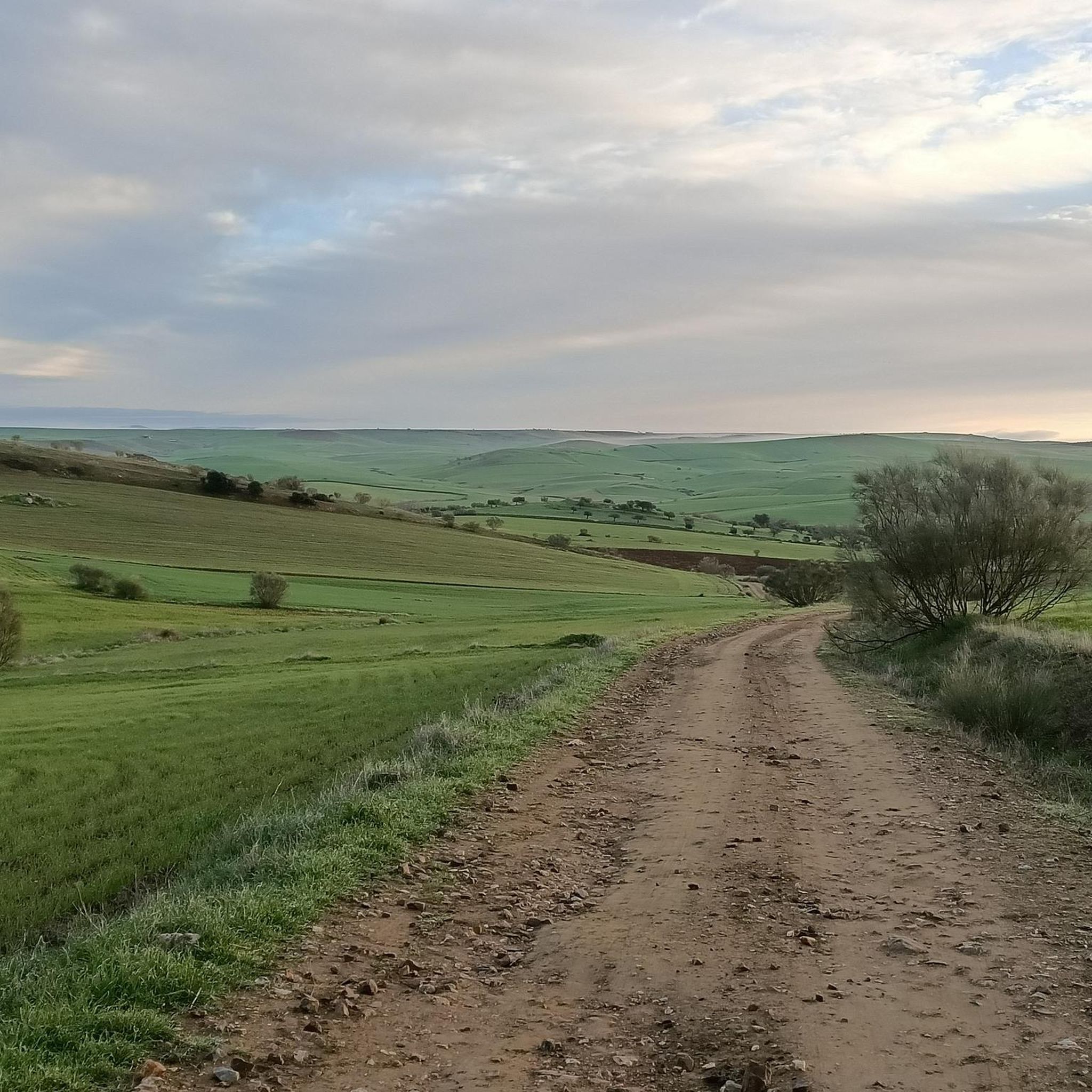
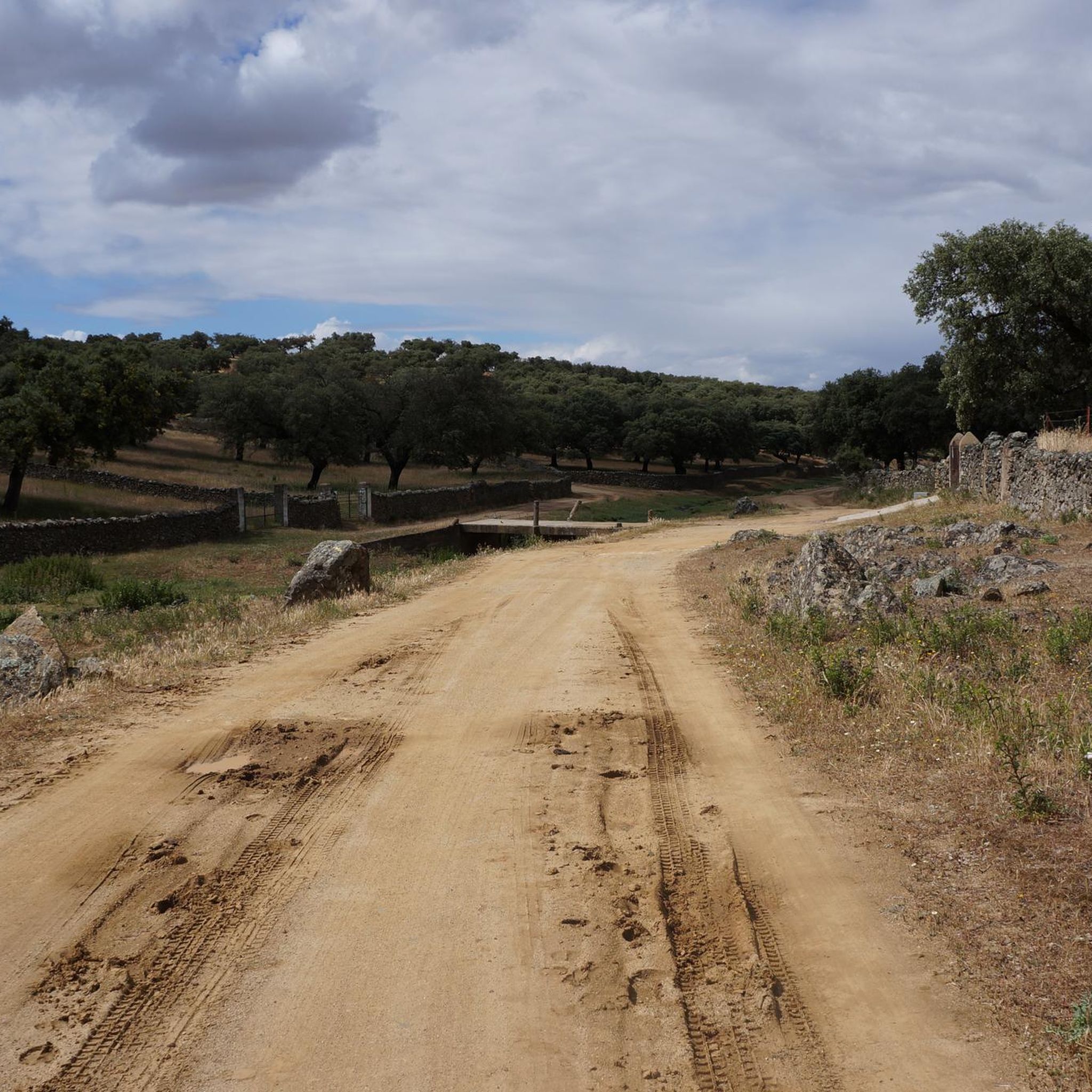
The La Dehesa route along the Vía de la Plata in Monesterio is a wonderful experience for hiking lovers. This section of the Vía de la Plata crosses the beautiful Dehesa de Calera de León, offering a picturesque landscape of the Extremaduran interior. One of the popular routes is the one that goes from Monesterio to Fuente de Cantos. It is a gentle stage of about 20 km, ideal for enjoying a day outdoors. The path begins in Monesterio and passes through oak pastures, delimited by stone walls, and farmland.
6
0

The road that reaches the town of Monasterio offers sections that are interspersed between the Dehesas Extremadura and its characteristic fields that never end. Beautiful scenery!
0
1

Mount Bonales (also known as Cerro Bonales or Cumbre Bonales) is, at 1,055 meters, the highest elevation in the Spanish province of Huelva. A fantastic tour of the natural park, enjoying cork oaks, holm oaks, oaks, meadows, and enjoying its flora and fauna.
1
1
The legend about the Tentudía Monastery has its origin in the 13th century, during the Reconquest, when the monarch Fernando III El Santo commissioned the master Pelay Pérez Correa, of the Order of Santiago, to take the mountains of the Tentudía region from the Saracens. .
11
0

This section of the Vía de la Plata runs through La Dehesa de Calera de León, a beautiful setting with lots of trees and a picturesque landscape of the interior of Extremadura.
4
1
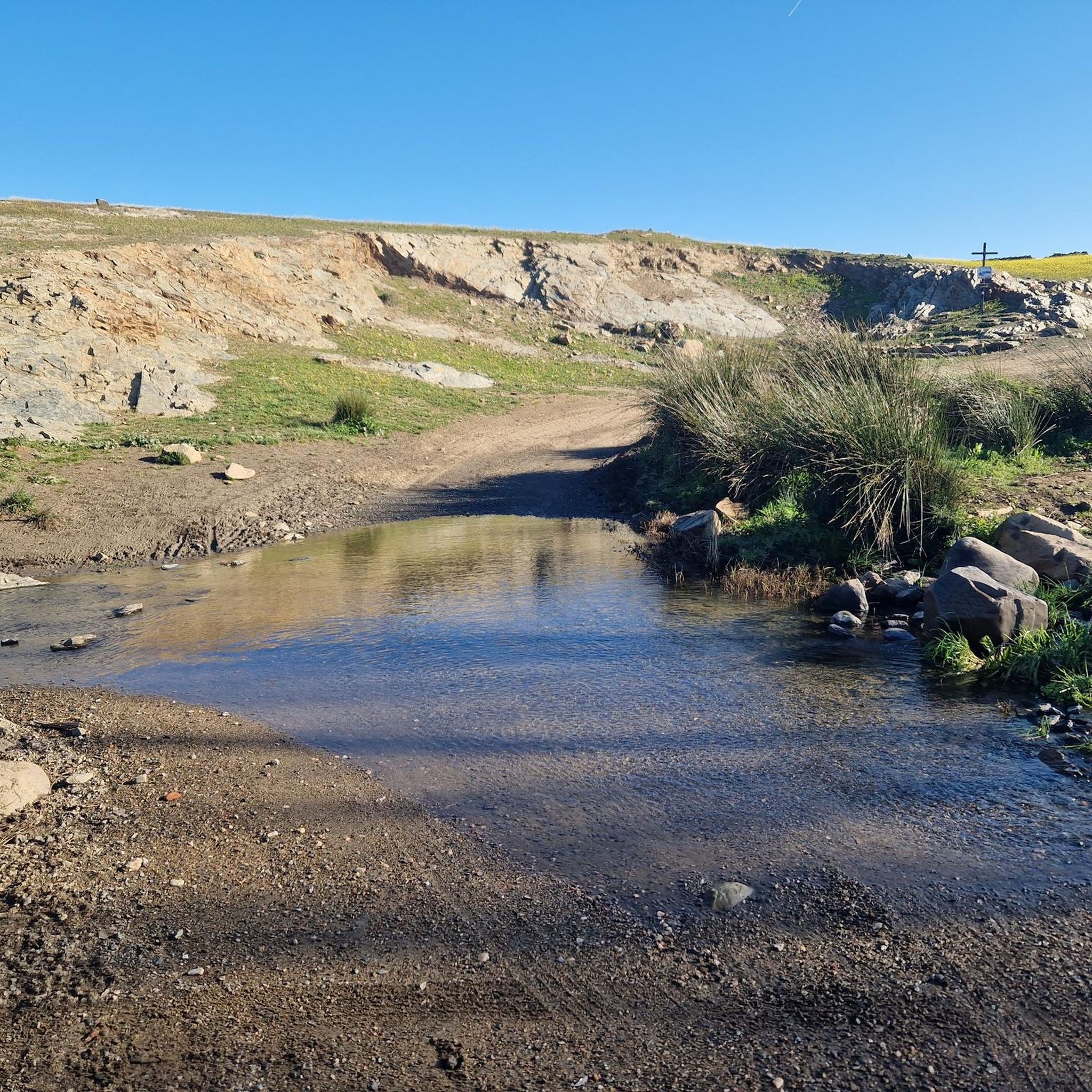
Also known as the "roof of Huelva" this peak at 1055 masl represents the physical limit between the province of Huelva and Badajoz. The massif has 2 well-marked summits and this one in particular is located in the province of Huelva.
1
0
This wonderful Monastery located in the south of Extremadura hides a very curious legend related to its name that dates back to the 13th century. Legend has it that during a battle against the Arabs, the master of the Order of Santiago Pelay Pérez Correa, seeing that night was falling and victory seemed impossible, he himself implored the Virgin shouting: Holy Mary, stop! your day!. It was with that cry that, according to tradition, the sun stopped on the horizon to allow the Christian troops victory, reason enough for the master to later order the construction of a temple for Santa María de Tentudía.
4
0
Frequently Asked Questions
What historical landmarks can I explore in Cabeza La Vaca?
Cabeza La Vaca is rich in history. You can visit the 15th-century Iglesia de Nuestra Señora de los Ángeles, the 18th-century Plaza de Toros, and the Torre del Reloj and Antigüa Cárcel built in 1770. Don't miss the Cruz del Rollo, a unique 17th-century pillory, and the Cruz de la Fuente de Abajo, the oldest monument from 1539.
Are there any significant natural features or viewpoints around Cabeza La Vaca?
Yes, Cabeza La Vaca is nestled in the foothills of Sierra Morena and the Tentudía massif, offering stunning mountainous landscapes. You can find panoramic views from various points in the natural surroundings. A notable natural monument is Bonales Summit (1,055 m) – Highest Point of Huelva, which provides views of cork oaks, holm oaks, and diverse flora.
What kind of outdoor activities are available near Cabeza La Vaca?
The surrounding sierras and valleys are ideal for outdoor activities. You can find numerous hiking trails, running routes, and road cycling paths. For detailed routes, explore the hiking guide, running guide, or road cycling guide for the area.
Are there family-friendly attractions or activities in Cabeza La Vaca?
While specific children's attractions aren't highlighted, the natural environment offers family-friendly outdoor experiences. The The Dehesa along the Vía de la Plata is categorized as family-friendly, offering a picturesque landscape suitable for walks. The Plaza Vieja, once a bullfighting arena, is now a recreational area with Portuguese mosaic paving, perfect for a stroll.
What is the Monastery of Tentudía and its significance?
The Monastery of Tentudía is a significant religious building and historical site located in the south of Extremadura. It is associated with a fascinating 13th-century legend from the Reconquest, where the Virgin Mary is said to have stopped the sun during a battle, giving the monastery its name ('tentudía' meaning 'stop your day').
Can I find easy hiking trails around Cabeza La Vaca?
Yes, there are easy hiking options available. For instance, the 'Pico Bonales via the Collado de la Majada del Moral' route is rated as easy. You can find more easy trails and detailed information in the hiking guide for Cabeza La Vaca.
What is the Vía de la Plata and how can I experience it near Cabeza La Vaca?
The Vía de la Plata is an ancient route with Roman origins. Near Cabeza La Vaca, you can experience a beautiful section known as The Dehesa along the Vía de la Plata. This trail offers a picturesque landscape of the Extremaduran interior, crossing the Dehesa de Calera de León with its oak pastures and farmland.
What is the highest point in the area and what does it offer?
The highest point in the vicinity is Bonales Summit (1,055 m) – Highest Point of Huelva. This natural monument marks the physical limit between the provinces of Huelva and Badajoz. It offers a fantastic tour through a natural park, with opportunities to enjoy cork oaks, holm oaks, and diverse flora and fauna.
What are some unique cultural sites in Cabeza La Vaca?
Beyond the church and bullring, Cabeza La Vaca features the Fuente del Rollo, a fountain in the main square with a granite base and four spouts. The Plaza Vieja, believed to be the town's original foundation, is now a beautifully cobbled recreational area. Also, the Cruz de la Calle Tordoya honors an illustrious resident and incorporates a column possibly from a Roman villa.
What do visitors particularly enjoy about the attractions around Cabeza La Vaca?
Visitors appreciate the blend of historical sites and natural beauty. The scenic landscapes of the Dehesa along the Vía de la Plata and the panoramic views from summits like Bonales are highly enjoyed. The historical significance and legends surrounding sites like the Monastery of Tentudía also captivate many.
Are there any ancient Roman remains in Cabeza La Vaca?
Yes, the town's origins can be traced back to a Roman presence. You can find Restos de la Villa Romana (Remains of the Roman Villa) from the 2nd century A.D., indicating a rich historical past that persisted until the 9th century.
What kind of flora can I expect to see in the natural areas?
The natural areas around Cabeza La Vaca are characterized by diverse flora, including extensive fields of holm oaks, olive trees, and chestnut trees. You'll also encounter cork oaks and other native vegetation, contributing to the picturesque natural environment of the Sierra Morena foothills.
Most popular attractions around Cabeza La Vaca

Get inspired with the komoot mobile app


Explore more
Still not found the Highlight you’re looking for? See guides of the top attractions in other regions:
