The best cycling routes around Cabeza La Vaca
4.8
(11)
194
riders
32
rides
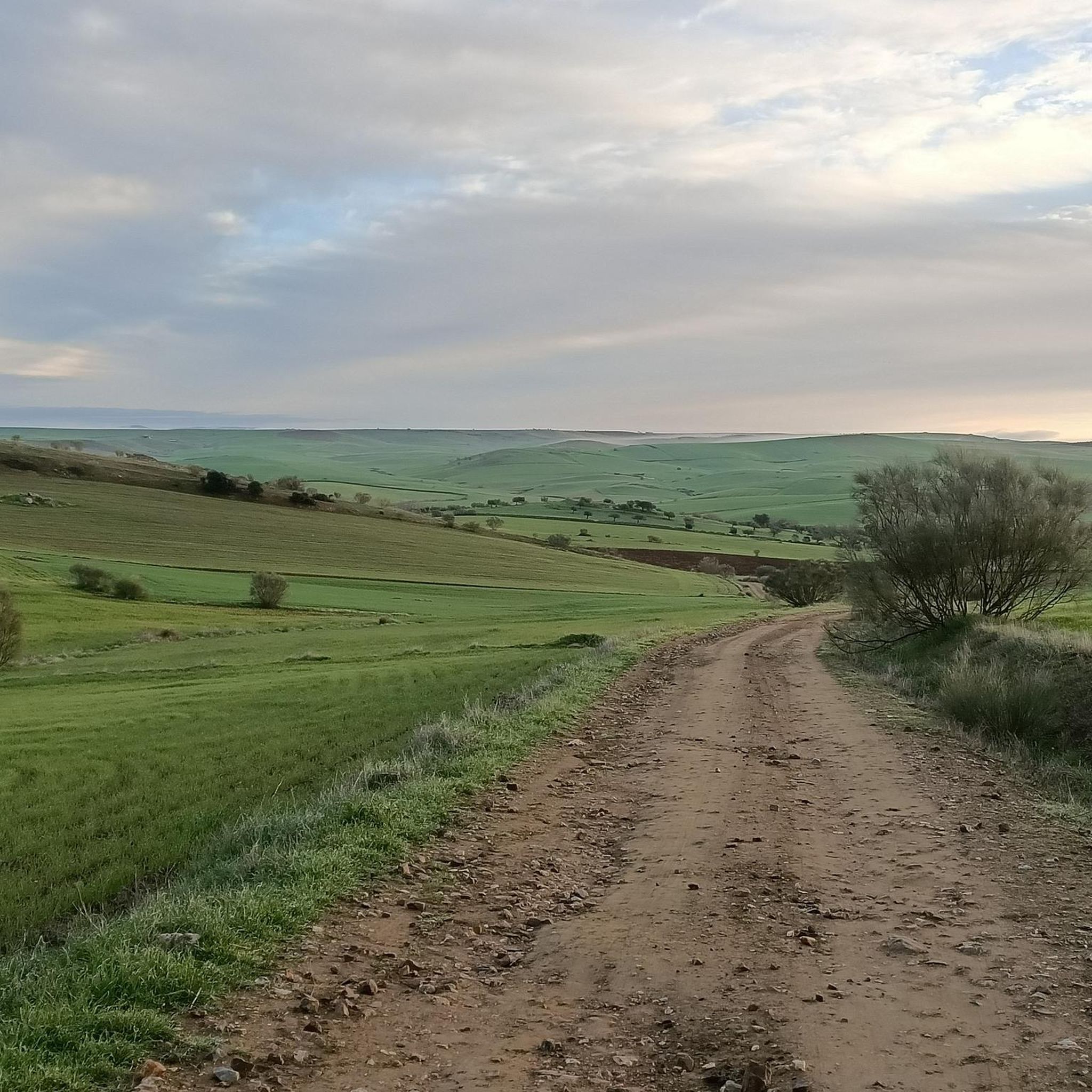
Touring cycling around Cabeza La Vaca offers routes through diverse natural features and mountainous landscapes. The region is situated in the foothills of the Sierra Morena, specifically the Sierra de Tentudía massif, and is characterized by thousands of evergreen oaks, olive trees, and pine trees. Valleys carved by streams and rivers, along with rocky formations and dense scrubland, define the terrain. The southern municipality features mountainous areas exceeding 1000 meters, providing varied elevations for cycling.
Best touring cycling routes around Cabeza La Vaca
- The most popular touring cycling route is Vía de la Plata Loop from Monasterio, a 15.5 miles (24.9 km) trail that takes 2 hours 5 minutes to complete. This moderate route traverses oak pastures, stone-walled fields, and farmland.
- Another top favourite among local touring cyclists is Monastery of Tentudía – Cerro de Tentudia loop from Monesterio, a difficult 27.6 miles (44.4 km) path. This route offers views of the Sierra de Tentudía, featuring Pyrenean oak and chestnut trees.
- Local touring cyclists also love the Cerro de Tentudia – Monastery of Tentudía loop from Monesterio, a 53.8 miles (86.5 km) trail leading through the Sierra Morena foothills, often completed in about 6 hours 12 minutes.
- Touring cycling around Cabeza La Vaca is defined by mountainous terrain, evergreen oaks, and diverse valleys. The network offers options for different ability levels, from moderate paths to more challenging routes.
- The routes in Cabeza La Vaca are highly rated by the komoot community with an average score of 4.75 stars from more than 10 reviews. More than 180 touring cyclists have used komoot to explore Cabeza La Vaca's varied terrain.
Last updated: May 14, 2026
4.5
(2)
4
riders
24.9km
02:05
290m
290m
Moderate bike ride. Good fitness required. Mostly paved surfaces. Suitable for all skill levels.
5.0
(2)
21
riders
44.4km
04:42
1,180m
1,180m
Hard bike ride. Very good fitness required. Mostly paved surfaces. Suitable for all skill levels.

Sign up for free
17
riders
86.4km
06:12
1,800m
1,800m
Hard bike ride. Very good fitness required. Mostly paved surfaces. Suitable for all skill levels.
4.0
(3)
15
riders
39.3km
03:13
440m
440m
Moderate bike ride. Good fitness required. Mostly paved surfaces. Suitable for all skill levels.
7
riders
34.9km
02:33
760m
760m
Hard bike ride. Very good fitness required. Mostly paved surfaces. Suitable for all skill levels.
Get access to more routes and recommendations from other explorers.
Sign up for free
Already have an account?
Our route recommendations are based on thousands of hikes, rides, and runs completed by other people on komoot.
Start today with a free account
Your next adventure awaits.
Login or Signup
Tips from the Community

Section of the Camino de Santiago towards Monesterio.
0
1

The Alto de Aguafría Tower, located in the municipality of Monesterio (Badajoz), is a fire watchtower located at one of the highest points in the Sierra de Aguafría, at an altitude of 1,079 meters.
3
0
The view of El Real de la Jara Castle is one of the great scenic attractions of this charming town in the Sierra Norte of Seville.
4
1
The Parish Pilgrims' Hostel in Monesterio is a welcoming and affordable place for pilgrims travelling the Vía de la Plata.
6
0
The Castillo de las Torres is a fortress located in the municipality of Monesterio, in the province of Badajoz, Extremadura. It is believed that due to its typology it could date from the 15th or 16th century. This castle is located on a small rocky hill, near the Torres stream and the road that connects Monesterio with El Real de la Jara (old Camino de la Plata). Although it is in the municipality of Monesterio, it is only 1 kilometer from the town of El Real de la Jara in the province of Seville
6
0

There are hardly any campsites on the Via della Plata and I didn't want to camp in the wild.
0
0

This fortress is located on the outskirts of El Real de la Jara, very close to the Castillo de las Torres and almost on the natural border with Extremadura. It was built at the end of the 14th century, but a large part of the walls and towers still remain. You can visit the monumental interior from Tuesday to Sunday from 10:00 a.m. to 6:00 p.m.
3
1
This castle is located right on the border between Andalusia and Extremadura. Although its origin and purpose are not well defined, different studies confirm that it was built between the 15th and 16th centuries. From its three rounded towers it was possible to watch over the nearby Vía de la Plata.
3
0
Frequently Asked Questions
How many touring cycling routes are available around Cabeza La Vaca?
There are over 30 touring cycling routes around Cabeza La Vaca, offering a variety of experiences for different skill levels. You'll find 5 moderate routes and 27 more challenging options to explore the region's diverse landscapes.
What kind of landscapes can I expect to see while cycling in Cabeza La Vaca?
The touring cycling routes in Cabeza La Vaca traverse diverse natural features, including mountainous terrain, thousands of evergreen oaks, olive trees, and pine trees. You'll also encounter valleys carved by streams, rocky formations, and dense scrubland, particularly in the foothills of the Sierra Morena and Sierra de Tentudía massif.
Are there any circular touring cycling routes in the area?
Yes, Cabeza La Vaca offers several circular touring cycling routes. For example, the Vía de la Plata Loop from Monasterio is a moderate 24.9 km route, and the more challenging Monastery of Tentudía – Cerro de Tentudia loop from Monesterio covers 44.4 km.
What are some of the natural attractions or points of interest I can see along the routes?
While cycling, you can explore significant natural features like the Sierra de Tentudía and its Pyrenean oak and chestnut trees. The region is also home to the protected natural area of "Pisá del Caballo." You might also encounter highlights such as the Tentudía Summit or the Caves of Fuentes de León.
Are there any family-friendly or easy touring cycling routes in Cabeza La Vaca?
While most routes in Cabeza La Vaca are moderate to difficult due to the mountainous terrain, there are some less strenuous options. The Vía de la Plata Loop from Monasterio is a moderate route that traverses oak pastures and farmland, making it a good choice for those seeking a more relaxed ride.
What is the best time of year to go touring cycling in Cabeza La Vaca?
The region's climate, with its diverse ecosystems and mountainous terrain, makes spring and autumn ideal for touring cycling. These seasons offer milder temperatures, which are more comfortable for longer rides through the evergreen oaks and valleys, avoiding the intense heat of summer.
What cultural or historical sites can I visit near the cycling routes?
Beyond the natural beauty, Cabeza La Vaca offers several historical attractions. You can visit the 15th-century Iglesia de Nuestra Señora de los Ángeles, the 1770 Torre del Reloj y antigua cárcel de la villa (Clock Tower and old town prison), or the late 18th-century Plaza de Toros. The Monastery of Tentudía is also a significant landmark often included in routes.
What do other touring cyclists enjoy most about cycling in Cabeza La Vaca?
The area is highly rated by the komoot community, with an average score of 4.75 stars from over 10 reviews. Reviewers often praise the diverse terrain, the scenic views of the Sierra de Tentudía, and the opportunity to cycle through characteristic Dehesas Extremadura.
Are there any long-distance touring cycling routes available?
Yes, for those seeking longer rides, the Cerro de Tentudia – Monastery of Tentudía loop from Monesterio is a substantial 86.5 km trail. This route leads through the Sierra Morena foothills and typically takes over 6 hours to complete, offering a significant challenge.
Can I find places to eat or stay overnight along the cycling routes?
While specific cafes and pubs directly on every trail are not detailed, towns like Cabeza La Vaca and nearby Monesterio offer amenities. For example, the San Pedro Apóstol Parish Pilgrims' Hostel, Monesterio, indicates accommodation options are available for cyclists in the vicinity.
What is the elevation gain like on the more difficult routes?
The more difficult routes in Cabeza La Vaca can feature significant elevation gains due to the mountainous terrain. For instance, the Monastery of Tentudía – Cerro de Tentudia loop from Monesterio involves over 1175 meters of ascent, while the Cerro de Tentudia – Monastery of Tentudía loop from Monesterio has an even greater climb of nearly 1800 meters.
Are there any routes that highlight the Dehesa landscape?
Yes, the region is known for its Dehesa landscape. The Castle of the Towers – Dehesa Landscape loop from Monesterio is a moderate 38.7 km route that specifically showcases this characteristic Extremaduran environment of oak pastures and farmland.
Most popular attractions around Cabeza La Vaca

Get inspired with the komoot mobile app


Explore more
Browse the best Cycling routes in other regions.
