The best cycling routes around Villeneuve-Lès-Maguelone
4.5
(273)
1,890
riders
32
rides
Touring cycling routes around Villeneuve-Lès-Maguelone traverse a landscape characterized by coastal environments, tranquil lagoons, and historical vineyards. The region is situated on a peninsula, offering a unique blend of fresh and saltwater ecosystems, including the Étang du Méjean and Étang de Pérols. Cyclists can explore the Salines de Villeneuve Nature Reserve, known for its birdlife, and a 9-kilometer natural beach accessible via a footbridge. The area's flat to gently rolling terrain makes it suitable for various cycling experiences.
Best touring…
Last updated: October 8, 2026
4.5
(47)
417
riders
Easy bike ride. Great for any fitness level. Mostly paved surfaces. Suitable for all skill levels.
4.6
(14)
75
riders
Hard bike ride. Very good fitness required. You may need to push your bike for some segments of this route.

4.5
(110)
587
riders
43.8km
02:31
120m
120m
Moderate bike ride. Good fitness required. Mostly paved surfaces. Suitable for all skill levels.
3.6
(8)
61
riders
Moderate bike ride. Good fitness required. Mostly paved surfaces. Suitable for all skill levels.
4.7
(3)
35
riders
Easy bike ride. Great for any fitness level. Mostly paved surfaces. Suitable for all skill levels.
Get access to more routes and recommendations from other explorers.
Already have an account?
Our route recommendations are based on thousands of hikes, rides, and runs completed by other people on komoot.
Start today with a free account
Your next adventure awaits.
Tips from the Community

The Étang de Thau is the largest lagoon in Occitania and a species-rich inland sea, separated from the Mediterranean by a narrow sandbank. The waters are the center of South French oyster farming, whose hanging mussel beds shape the landscape. As a nautical hub, the lagoon also connects the famous Canal du Midi with the Canal du Rhône à Sète. Along the shore, charming towns line up, such as the fishing town of Sète, the vermouth town of Marseillan, and the oyster towns of Bouzigues and Mèze, which can be perfectly explored via the 53-kilometer-long cycling route around the basin.
0
0

The view plunges over the Thau lagoon and its immense checkerboard of shellfish farms. These regular alignments are the breeding facilities where the oysters and mussels of the lagoon are produced. Bouzigues holds a special place in this history: in 1925, Antoine Louis Tudesq and other Bouzigues oyster farmers developed the "Pyramid" technique, which contributed to the development of shellfish farming in the lagoon. Thus, the panorama allows us to read the landscape differently: behind this vast expanse of water lies a real production area, shaped for over a century by the work of the "sea farmers".
0
0
This monumental gate marks the entrance to the Maguelone estate, between the Rhône à Sète canal and the coastal ponds. Officially named "Portail de Maguelone", this monument is also commonly called "La Porte de Maguelone". Despite its appearance as an ancient gate, it is a 20th-century construction, erected following the conflict that opposed at the beginning of the century the owner of the estate, Frédéric Fabrège, to the municipality of Villeneuve-lès-Maguelone concerning a path giving access to the beach and the existence of a servitude right.
2
0
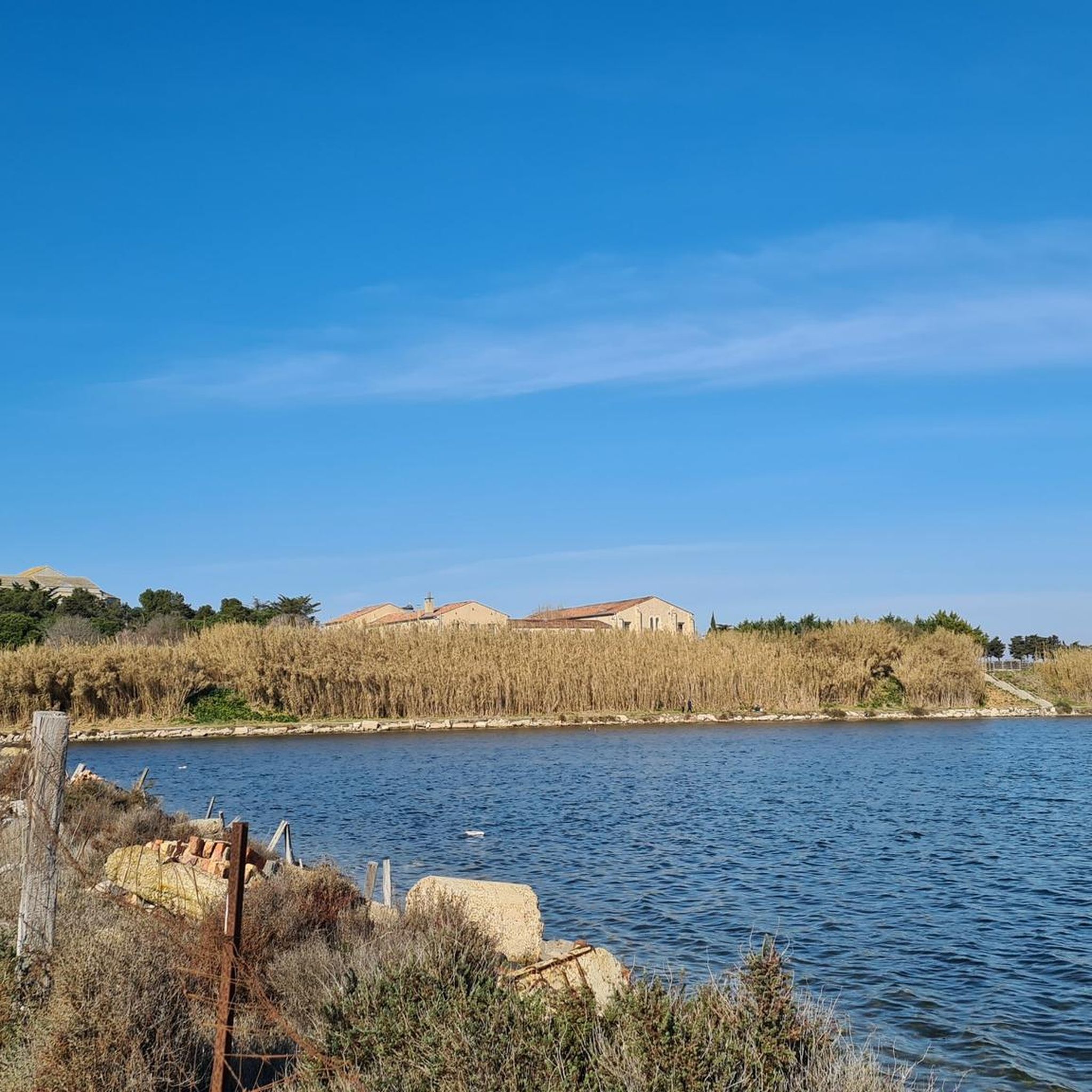
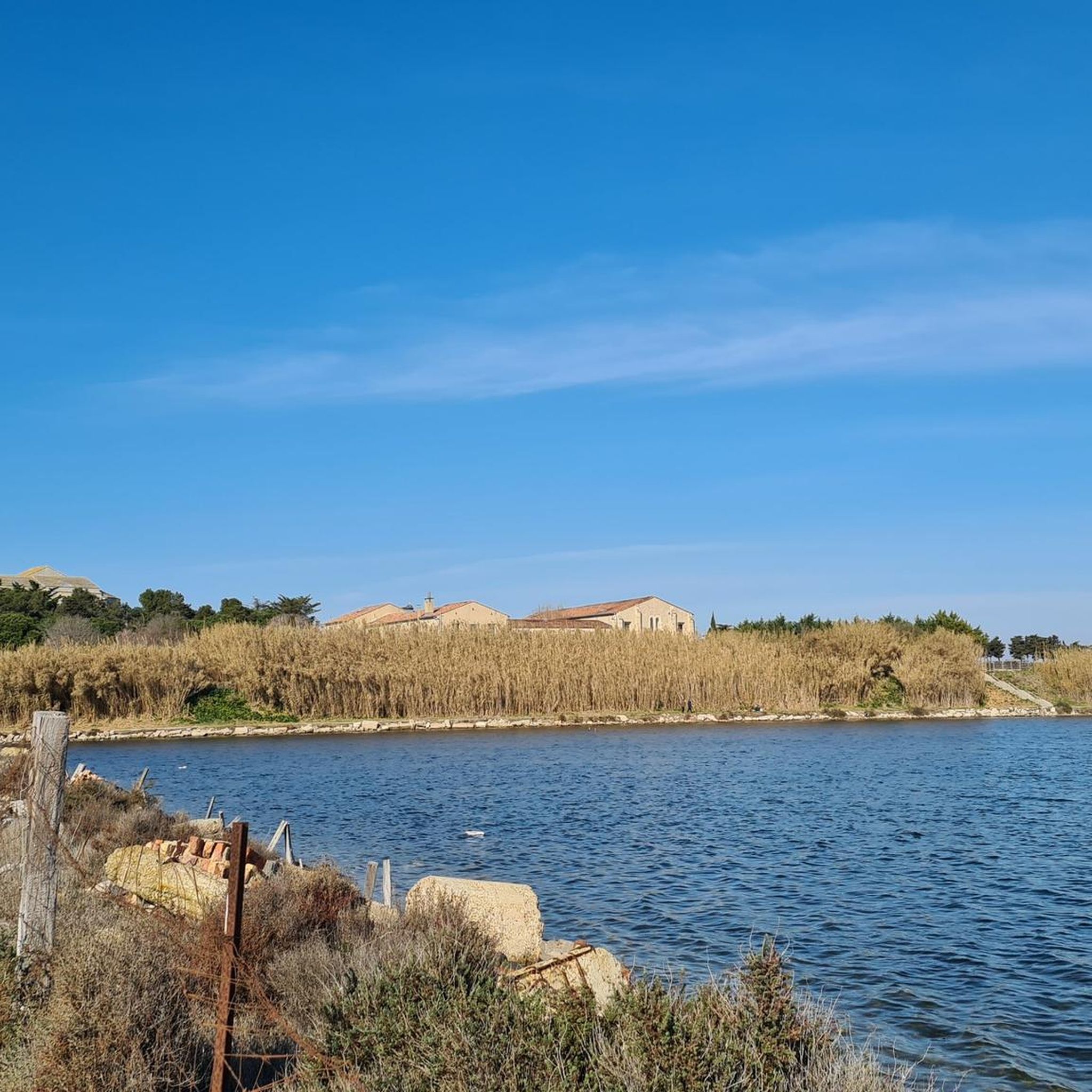
Between the Palavasian ponds and the Mediterranean, the Maguelone peninsula occupies a former island space whose history dates back to Antiquity. Old maps still show Maguelone surrounded by lagoons: in 1570, it appears as an island, and its insular position is still clearly visible on a map of the diocese of Montpellier dated 1641.
2
0
From Frontignan to Palavas-les-Flots, the route follows the Canal du Rhône à Sète through one of the major lagoon areas of the Languedoc coast. After the Étang d'Ingril and the Aresquiers, the canal successively crosses or runs alongside the Étangs de Vic and de Pierre-Blanche, then passes between those of Arnel and Prévost before reaching Palavas. The canal itself is a major historical element of this landscape. Its construction began in 1701 under the name Canal des Étangs, to ensure continuity between the Royal Canal of Languedoc — today the Canal du Midi — and the Rhône. The route, completed in 1829, passes through Frontignan, Maguelone, and Palavas before reaching Aigues-Mortes and then Beaucaire. In Frontignan, its opening in the 18th century profoundly modified the landscape: the canal notably separated the former Étang de Frontignan into two parts, giving rise to the Étang d'Ingril and that of La Peyrade.
2
0
From Frontignan to Palavas-les-Flots, the route follows the Canal du Rhône à Sète through one of the major lagoon complexes on the Languedoc coast. After the Étang d'Ingril and Les Aresquiers, the canal successively crosses or runs alongside the Étangs de Vic and Pierre-Blanche, then passes between those of Arnel and Prévost before reaching Palavas. The canal itself is a major historical element of this landscape. Its construction began in 1701 under the name Canal des Étangs, in order to ensure continuity between the Canal Royal du Languedoc – today the Canal du Midi – and the Rhône. The route, completed in 1829, passes through Frontignan, Maguelone, and Palavas before joining Aigues-Mortes and then Beaucaire. In Frontignan, its opening in the 18th century profoundly modified the landscape: the canal notably separated the former Étang de Frontignan into two parts, giving rise to the Étang d'Ingril and that of La Peyrade.
2
0
From Frontignan to Palavas-les-Flots, the route follows the Canal du Rhône à Sète through one of the large lagoon complexes on the Languedoc coast. After the Étang d'Ingril and the Aresquiers, the canal successively crosses or runs alongside the Étangs de Vic and de Pierre-Blanche, then passes between those of l'Arnel and du Prévost before reaching Palavas. The canal itself is a major historical element of this landscape. Its construction began in 1701 under the name Canal des Étangs, in order to ensure continuity between the Royal Canal of Languedoc – today the Canal du Midi – and the Rhône. The route, completed in 1829, passes through Frontignan, Maguelone and Palavas before joining Aigues-Mortes and then Beaucaire. In Frontignan, its opening in the 18th century profoundly modified the landscape: the canal notably separated the former Étang de Frontignan into two complexes, giving rise to the Étang d'Ingril and that of La Peyrade.
2
0
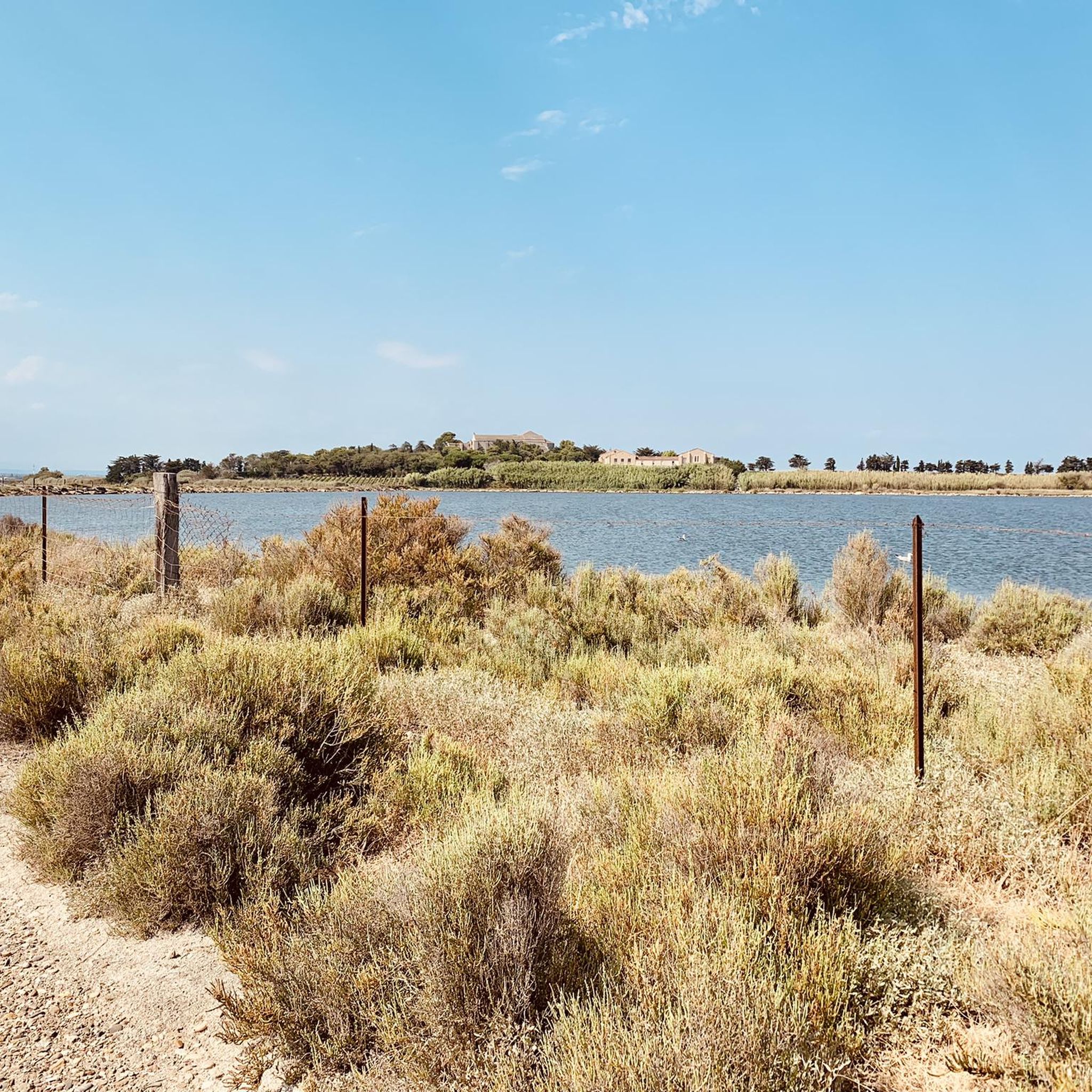
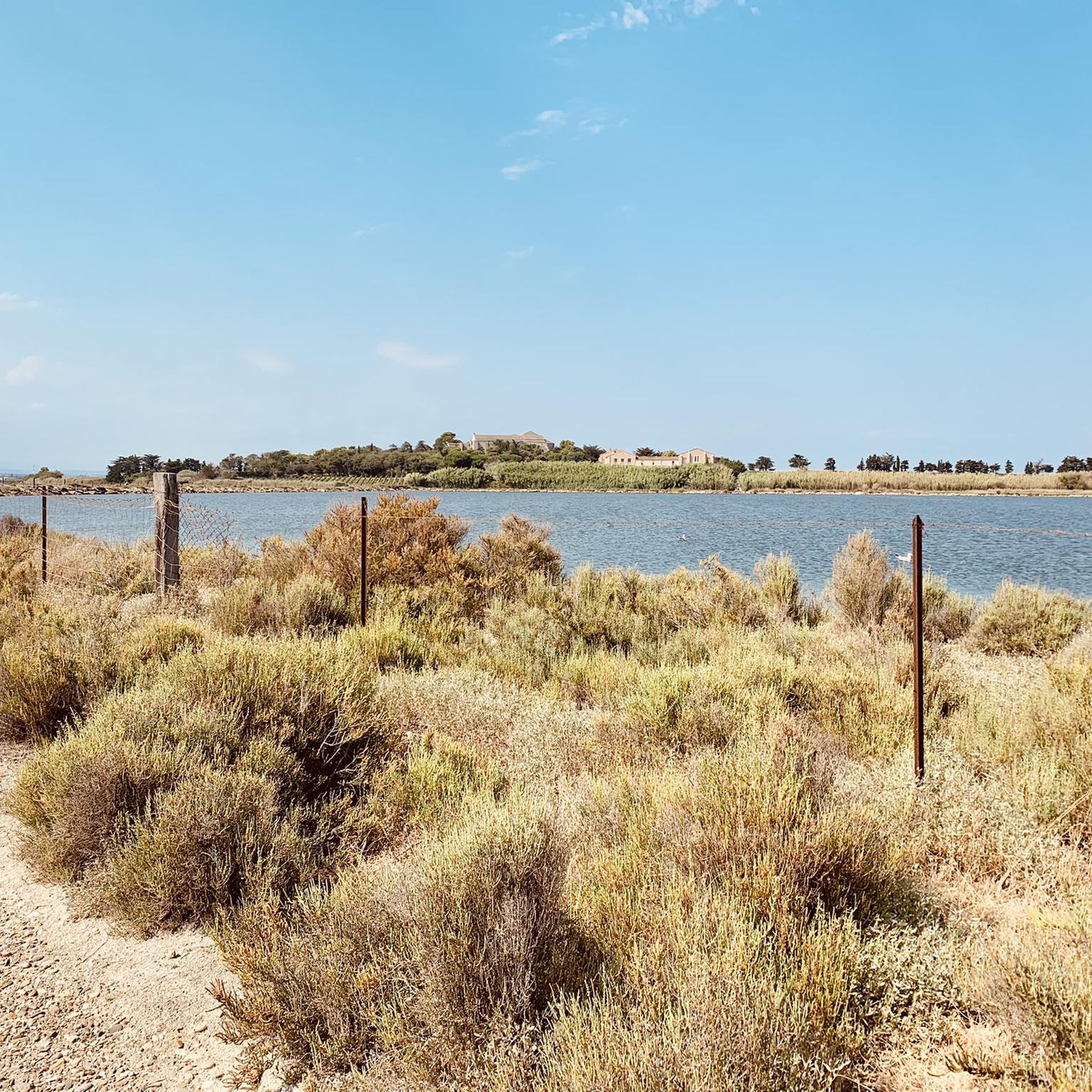
From the greenway, the panorama opens onto the Étang de Vic. This vast coastal lagoon of over 1,000 hectares stretches between the Gardiole massif and the Aresquiers lido. Protected within the Natura 2000 site of the Palavasian ponds and recognized as a wetland of international importance under the Ramsar convention, the pond forms a vast landscape of lagoon, salt marshes, and wetlands here. This opening allows its full extent to be appreciated from the surroundings of Vic-la-Gardiole.
2
0
Frequently Asked Questions
What makes Villeneuve-Lès-Maguelone a good destination for touring cycling?
Villeneuve-Lès-Maguelone offers a unique blend of coastal beauty, tranquil lagoons, and historical sites. Situated on a peninsula, you can cycle through diverse landscapes including the Étang du Méjean and Étang de Pérols, the Salines de Villeneuve Nature Reserve, and along a 9-kilometer natural beach. The terrain is generally flat to gently rolling, making it suitable for various cycling experiences.
How many touring cycling routes are available in the area?
There are over 35 touring cycling routes around Villeneuve-Lès-Maguelone, catering to different skill levels and preferences. This includes a good mix of easy, moderate, and more challenging options.
Are there easy routes suitable for beginners or families?
Yes, the region is well-suited for easy rides. More than 20 of the touring cycling routes are classified as easy. A great option for a relaxed ride with opportunities for wildlife spotting is the View of Maguelone – Flamingos loop from Villeneuve-lès-Maguelone, which is just under 20 km long and offers scenic views of the Maguelone peninsula and its historic cathedral.
Can I find challenging touring cycling routes in Villeneuve-Lès-Maguelone?
Yes, for those seeking a longer and more demanding ride, there are several challenging routes. For instance, the View of the Étang de Thau – The end of the Canal du Midi loop from Villeneuve-lès-Maguelone covers nearly 100 km with significant elevation changes, offering a full day's adventure.
What kind of scenery can I expect to see while cycling?
You can expect a diverse range of scenery, from the vast lagoons like the Étang du Méjean and Étang de Pérols, to the protected Salines de Villeneuve Nature Reserve. Many routes also pass through vineyards, along the Mediterranean coast, and offer views of historical landmarks such as the Cathédrale de Maguelone.
Where can I spot wildlife, especially flamingos, along the routes?
The Salines de Villeneuve Nature Reserve and the various lagoons (étangs) are prime locations for wildlife spotting. Thousands of pink flamingos, avocets, egrets, and other waterfowl species inhabit these areas. The Flamingos – Méjean Nature Reserve loop from Villeneuve-lès-Maguelone is specifically designed to offer views of these birds within their natural habitat.
Are there any circular touring cycling routes?
Yes, many of the touring cycling routes in Villeneuve-Lès-Maguelone are designed as loops, allowing you to start and end at the same point. Examples include the popular 'Flamingos – Méjean Nature Reserve loop' and the 'View of Maguelone – Flamingos loop'.
What attractions or landmarks can I visit while cycling?
Beyond the natural beauty, you can visit historical sites like the Cathédrale de Maguelone, located on a peninsula amidst the lagoons. The area also features highlights such as the Salines de Villeneuve Nature Reserve and various viewpoints offering lovely views of the Étang de Pérols. Cycling along the Rhone Kanal or the Canal du Rhône à Sète also offers unique perspectives.
What do other touring cyclists say about the routes in Villeneuve-Lès-Maguelone?
The routes in Villeneuve-Lès-Maguelone are highly rated by the komoot community, with an average score of 4.4 stars from over 160 reviews. Cyclists often praise the beautiful lagoon-side trails, the opportunities for birdwatching, and the well-maintained paths that make for enjoyable rides.
What is the best season for touring cycling in this region?
The Mediterranean climate of Villeneuve-Lès-Maguelone makes spring and autumn ideal for touring cycling, with pleasant temperatures and less crowded paths. Summer can be enjoyable, especially for coastal rides, but it's advisable to cycle in the mornings or late afternoons to avoid the midday heat. Winter offers milder conditions compared to many other regions, making it possible to cycle year-round.
Are there routes that include gravel sections?
Yes, some routes incorporate varied terrain, including gravel sections. For example, the Very nice cycle path – Gravel DFCI loop from Villeneuve-lès-Maguelone is a longer route that includes gravel paths, suitable for trekking or gravel bikes.
Can I access the routes using public transport or find parking nearby?
While specific public transport connections to every trailhead are not detailed, Villeneuve-Lès-Maguelone is well-connected to Montpellier, which has public transport options. For those arriving by car, parking is generally available in and around the town, particularly near popular starting points for cycling routes, allowing easy access to the network.
Most popular routes around Villeneuve-Lès-Maguelone
Most popular attractions around Villeneuve-Lès-Maguelone

Get inspired with the komoot mobile app


Explore more
Browse the best Cycling routes in other regions.
