Attractions and Places To See around Pérols - Top 20
Best attractions and places to see around Pérols include a diverse range of sites, blending natural beauty with cultural traditions. The town is situated between two saltwater lakes, the Étang de l'Or and the Étang du Méjean, and is located near the Mediterranean Sea. This area offers unique landscapes and a connection to Camargue traditions, serving as a gateway to the Camargue region. Visitors can explore historical landmarks, natural features, and scenic routes.
Best attractions and places to see around…
Last updated: September 26, 2026
Between the Étang du Méjean and the Étang de l'Arnel
Highlight • Cycleway
Translated by Google •
Tip by

Chemin du Pilou - between the Vic and Arnel ponds
Highlight (Segment) • Other
Showing Translation
Tip by

Sign up now to discover places like this
Get recommendations on the best single tracks, peaks, & plenty of other exciting outdoor places.
Porte de Maguelone
Highlight • Monument
Translated by Google •
Tip by

Canal du Rhône à Sète Between Palavas-les-Flots and Vic-la-Gardiole
Highlight • Cycleway
Translated by Google •
Tip by

Grand Travers Beach – La Grande-Motte
Highlight • Beach
Translated by Google •
Tip by

Sign up for free to discover even more attractions around Pérols.
Already have an account?
Start today with a free account
Your next adventure awaits.

Other adventures around Pérols

Tips from the Community

This monumental gate marks the entrance to the Maguelone estate, between the Rhône à Sète canal and the coastal ponds. Officially named "Portail de Maguelone", this monument is also commonly called "La Porte de Maguelone". Despite its appearance as an ancient gate, it is a 20th-century construction, erected following the conflict that opposed at the beginning of the century the owner of the estate, Frédéric Fabrège, to the municipality of Villeneuve-lès-Maguelone concerning a path giving access to the beach and the existence of a servitude right.
2
0
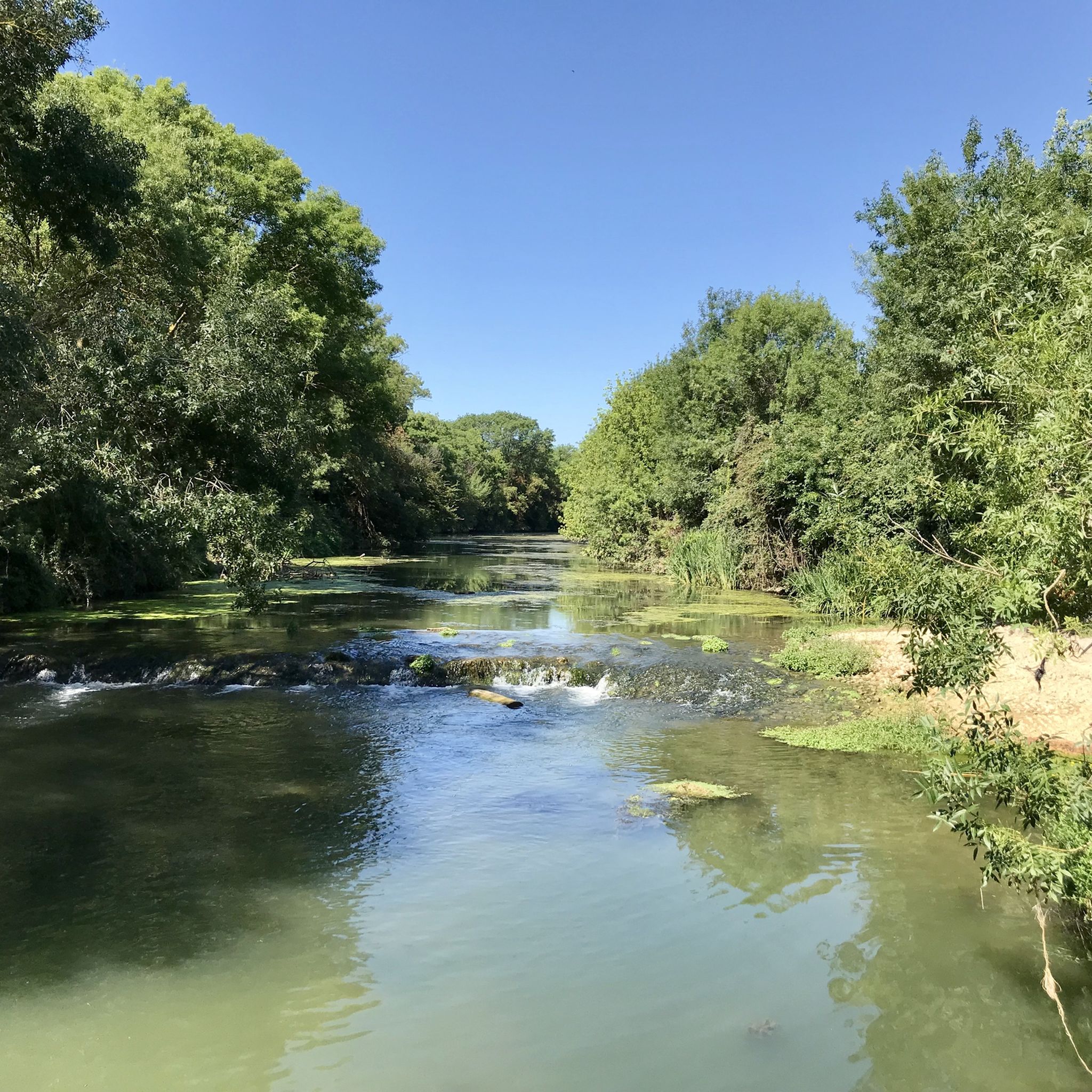
From Frontignan to Palavas-les-Flots, the route follows the Canal du Rhône à Sète through one of the large lagoon systems on the Languedoc coast. After the Étang d'Ingril and the Aresquiers, the canal successively crosses or runs alongside the Étang de Vic and Étang de Pierre-Blanche, then passes between the Étang de l'Arnel and Étang du Prévost before reaching Palavas. The canal itself is a major historical element of this landscape. Its construction began in 1701 under the name Canal des Étangs, in order to ensure continuity between the Royal Canal of Languedoc — today the Canal du Midi — and the Rhône. The route, completed in 1829, passes through Frontignan, Maguelone, and Palavas before reaching Aigues-Mortes and then Beaucaire. In Frontignan, its opening in the 18th century profoundly modified the landscape: the canal notably separated the former Étang de Frontignan into two parts, giving rise to the Étang d'Ingril and the Étang de La Peyrade.
2
0
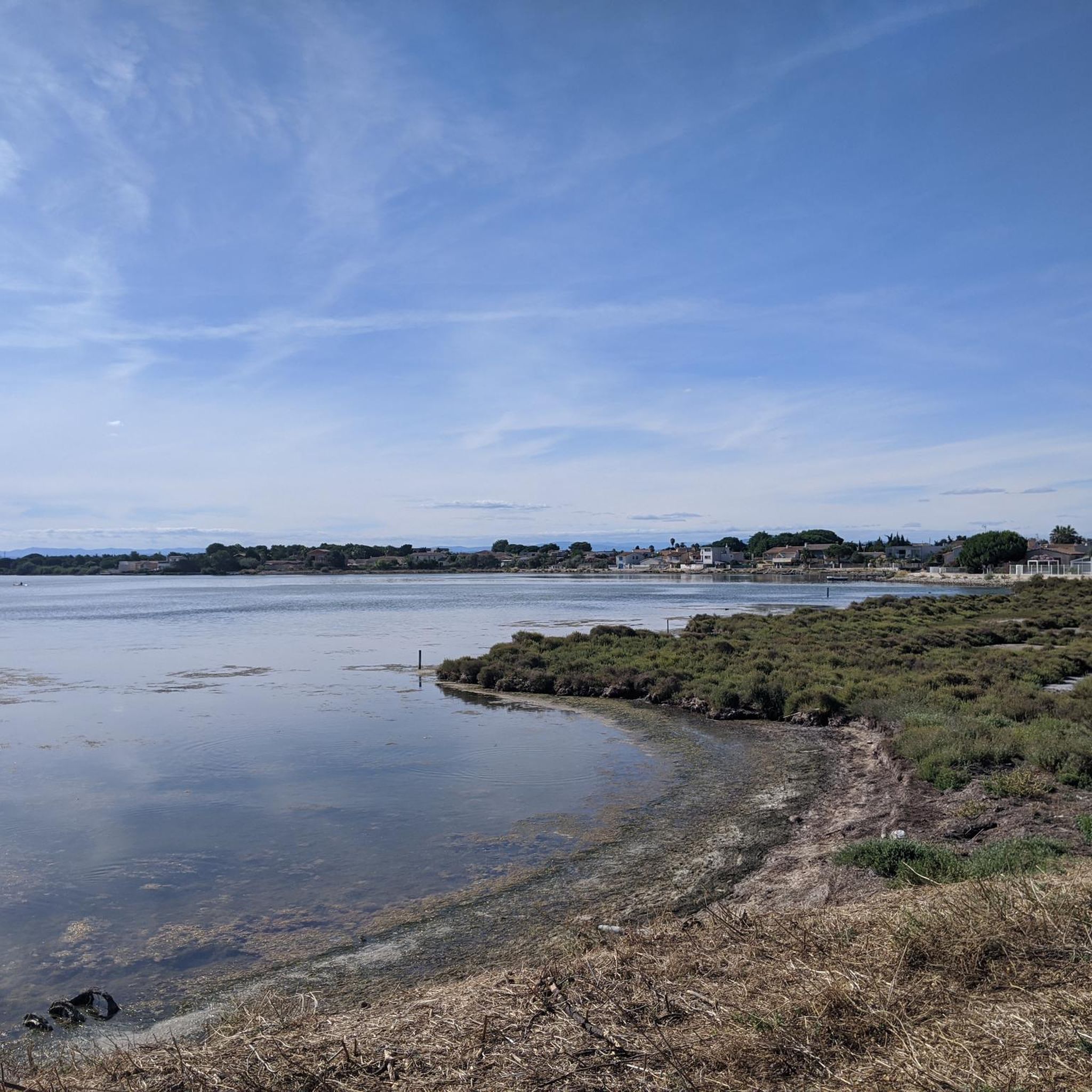
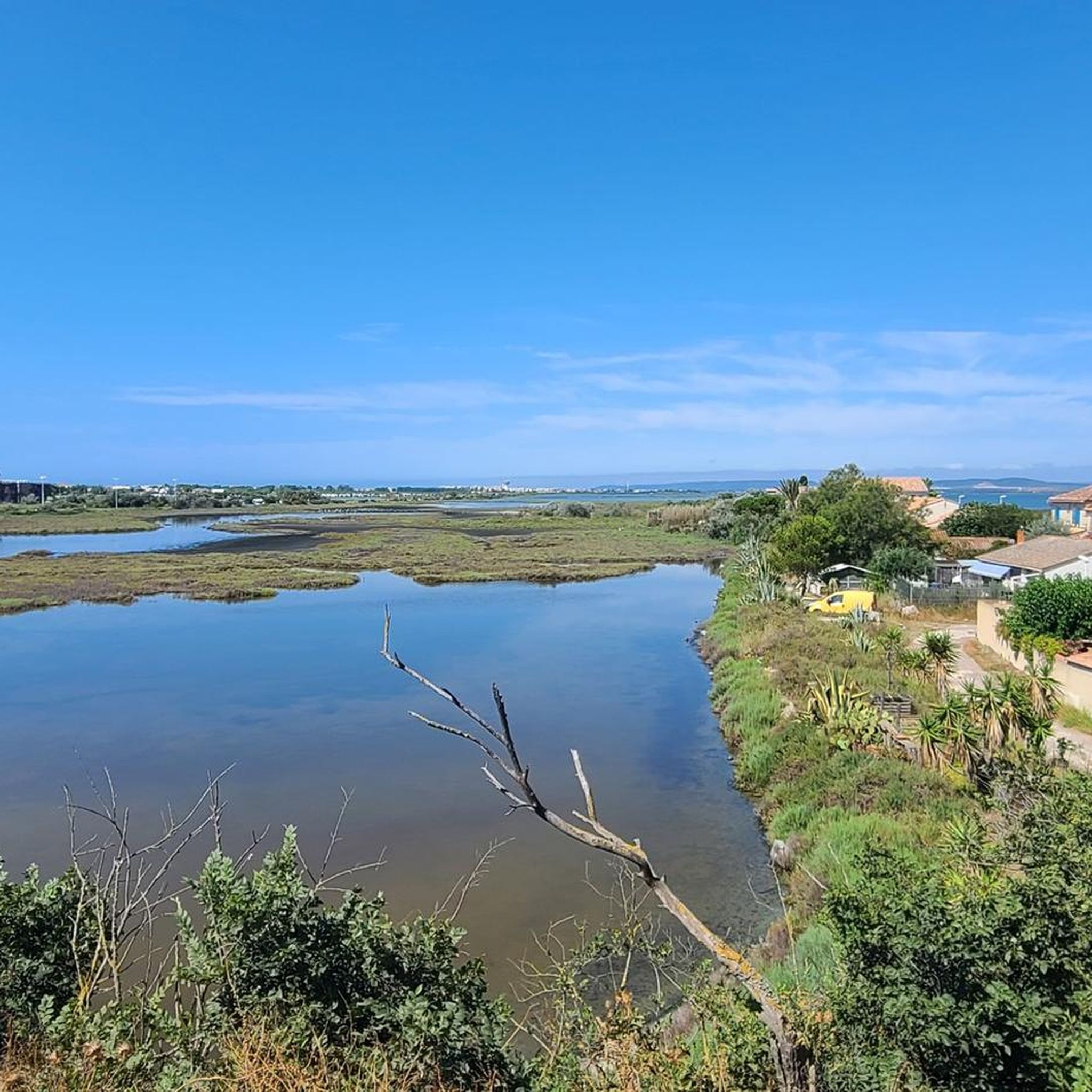
From the locality of Le Pilou to the eponymous footbridge, this path takes us to the heart of the lagoon landscape of the Arnel pond. An area where human developments coexist with the characteristic environments of the Palavasian ponds: lagoon, sansouire (salt-tolerant vegetation) and halophytic vegetation. L’Arnel is today a protected natural area, integrated into the Natura 2000 network and the classified site of the Palavasian ponds. But the lagoon also bears the traces of a long history of exploitation: fishing, old salt pans and hydraulic developments have shaped this amphibious territory for several centuries.
2
0

The Porte de Maguelone is an ochre stone arch located at the entrance to the Villeneuve-lès-Maguelone peninsula. It symbolizes a historical conflict related to private property in the 19th century.
0
0
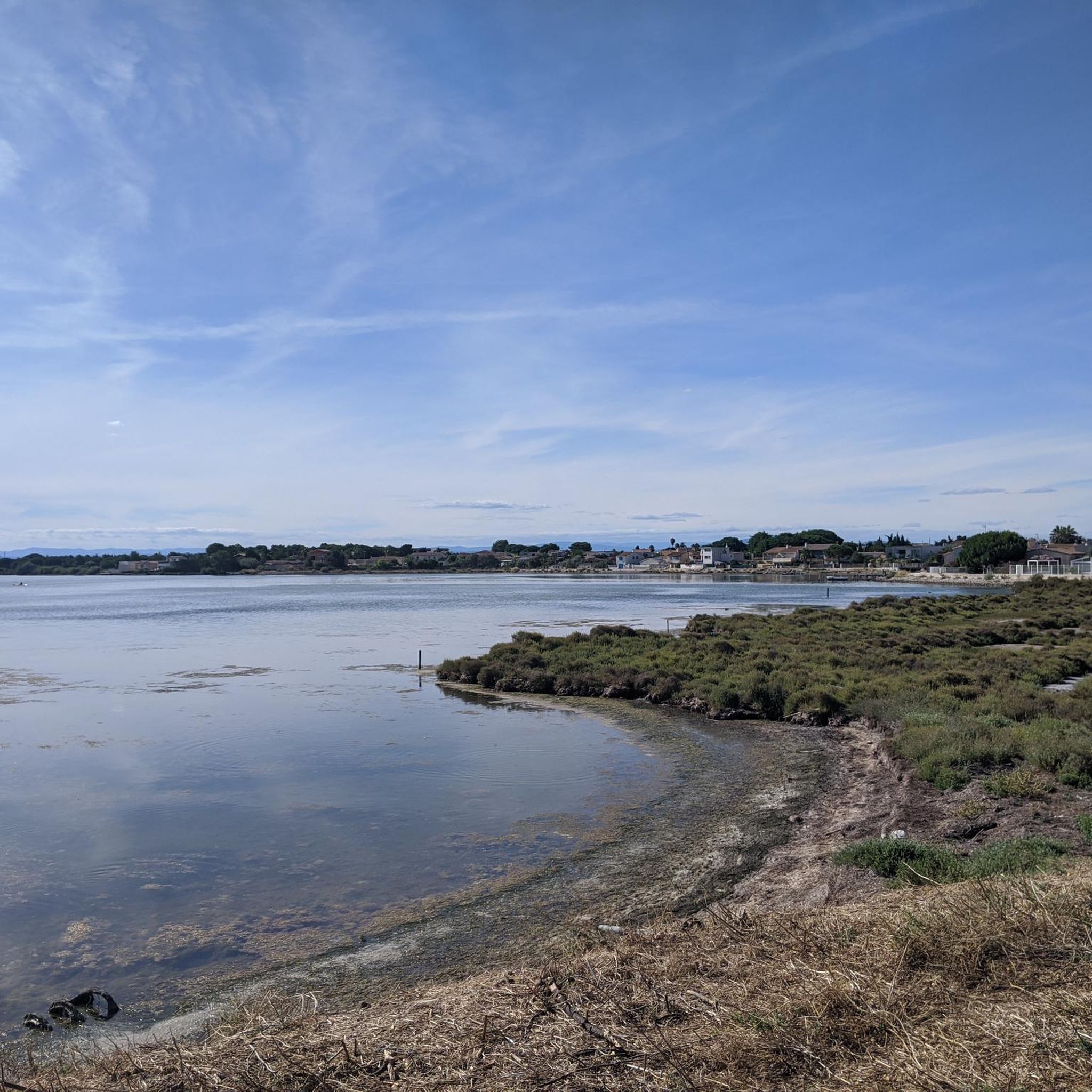
The étang du Méjean (also called étang de Pérols) is a protected natural site of over 600 hectares located in Lattes, just 8 kilometers south of Montpellier. Managed by the Conservatoire du littoral, this exceptional lagoon space offers a mosaic of preserved landscapes (marshes, reed beds, sansouïres) where you can easily observe pink flamingos, white storks, bulls, and Camargue horses.
0
0
L'étang de l'Arnel is a vast coastal lagoon located in the municipality of Villeneuve-lès-Maguelone, in the Hérault department, less than 20 km south of Montpellier.
0
0

Frankly you have to do it, the road is passable all the way, you will come across pink and white flamingos, seagulls, barges and a few small boats, so in this vastness you are safe, there are crossings. As for the wind, having practiced it, the path is so wide that you do not risk falling into the canal 😂 Only you have to pedal hard when it is facing you, you are 70 years old and have a non-electric bike. You will not be disappointed but delighted. I wanted to do it so much when you discover the door alone in the middle of nowhere, it is fantastic. When you arrive, you have a bench that will welcome you for a picnic. You will visit the cathedral, go to Pilou beach and leave by the same route or through the vineyards!!!! Enjoy it, it is so magical!!!!
1
1

When there is a northwesterly wind there is massive headwind here.
0
0
Frequently Asked Questions
What unique natural landscapes can I explore around Pérols?
Pérols is uniquely situated between two saltwater lakes, the Étang de l'Or and the Étang du Méjean, offering exceptional panoramas. The Étang du Méjean is a protected natural landscape, home to diverse flora and fauna, including flamingos, herons, and storks. You can also visit the Grand Travers Beach – La Grande-Motte, a beautiful fine sandy beach behind dunes, or explore the Pointe de la Grave for traditional fishing culture.
Are there any historical or cultural sites specific to Pérols?
Absolutely. Pérols boasts the iconic Port de Carême, featuring fishing sheds dating back to the 16th century on the Étang de l'Or. The Saint-Sixte Church dominates the old town, and you can admire colorful house fronts nearby. The town also has a vibrant bloodless bullfighting tradition, honored by the Statue of the Camargue Bull, and the Maison des Arts "Max Castan" for cultural exhibitions.
What family-friendly activities are available near Pérols?
Families can enjoy the Grand Travers Beach – La Grande-Motte for a day by the sea. For an educational experience, Montpellier, just 8 km away, offers
Planet Ocean Montpellier, a recommended visit for those interested in marine life. The Peyrou Gate and Three Graces Fountain, Place de la Comédie in Montpellier are also family-friendly historical sites.
Where can I go cycling or hiking near Pérols?
Pérols is excellent for outdoor activities. You can cycle along the Canal du Rhône à Sète Between Palavas-les-Flots and Vic-la-Gardiole, a scenic route with a gravel path. Another picturesque cycle path connects the Étang du Méjean and the Étang de l'Arnel, where you might spot flamingos. For more routes, explore the dedicated guides for hiking around Pérols or cycling around Pérols.
What is the significance of the Camargue bull in Pérols?
Pérols is known as the "Porte d'Or de la Camargue" (Golden Gate of the Camargue), a region where the bull is revered. The town proudly displays a Statue of the Camargue Bull, which pays homage to the bloodless bullfighting tradition (course camarguaise) and other local customs, recognized as part of France's intangible cultural heritage.
Can I see flamingos or other wildlife near Pérols?
Yes, the saltwater lakes surrounding Pérols, particularly the Étang du Méjean and Étang de l'Arnel, are excellent for wildlife viewing. These protected areas feature reed beds, marshes, and mudflats that support numerous bird species, including flamingos, herons, and storks. Lucky visitors cycling between the Étang du Méjean and the Étang de l'Arnel often spot flamingos in the shallow waters.
What are some popular attractions in nearby Montpellier?
Just 8 km from Pérols, Montpellier offers a rich historical old town. Key landmarks include the Place de la Comédie with its iconic Three Graces Fountain and Opéra Comédie, and the magnificent Peyrou Gate (Arc de Triomphe), a historical monument erected in 1691.
Are there any easy hiking trails suitable for beginners near Pérols?
While specific easy trails are not detailed in the highlights, the general area around Pérols, with its flat terrain around the étangs and coastal paths, offers many opportunities for leisurely walks. For a variety of options, including moderate routes, you can explore the hiking guide for Pérols, which lists routes like the Carnon Beach loop.
What do visitors enjoy most about the cycle paths around Pérols?
Visitors particularly appreciate the scenic beauty and unique experience of cycling between the water of the canal and the étangs. For instance, the Canal du Rhône à Sète Between Palavas-les-Flots and Vic-la-Gardiole is praised for its worthwhile gravel path, and the route between the Étang du Méjean and the Étang de l'Arnel is loved for the chance to spot flamingos.
What is the best time of year to visit Pérols for outdoor activities?
Pérols, being close to the Mediterranean, generally enjoys a mild climate. Spring and autumn are ideal for outdoor activities like cycling and hiking, as the weather is pleasant and comfortable. Summers can be warm, perfect for beach visits, but also suitable for early morning or late afternoon activities. Winters are generally mild, allowing for year-round exploration.
Are there any hidden gems or less-known spots worth visiting in Pérols?
Beyond the main attractions, exploring the 'rue du Courreau' in Pérols' old town offers a charming experience with its colorful house fronts leading to the arenas. The Maison des Arts "Max Castan," a former water tower redeveloped into an arts center, provides an atypical and significant cultural venue that might be considered a hidden gem for art enthusiasts.
Is Pérols considered a gateway to the Camargue region?
Yes, Pérols is often described as the "door of the Camargue." Its location between the saltwater lakes and its strong connection to Camargue traditions, including the reverence for the Camargue bull and bloodless bullfighting, firmly establish its role as a gateway to this unique natural and cultural region.
Most popular attractions around Pérols

Get inspired with the komoot mobile app


Explore more
Still not found the Highlight you’re looking for? See guides of the top attractions in other regions:
