The best cycling routes around Leers
4.3
(1198)
10,330
riders
18
rides
Touring cycling around Leers offers routes primarily characterized by flat terrain and gentle gradients, making it accessible for various skill levels. The landscape features a network of canals and greenways, providing scenic paths for cyclists. This region in northern France is known for its agricultural areas and waterways, which define many of the available cycling routes.
Best touring cycling routes around Leers
- The most popular touring cycling route is Greenway Hem-Anstaing – As the water flows loop from Leers,…
Last updated: June 4, 2026
3.0
(1)
18
riders
37.0km
02:23
100m
100m
Hard bike ride. Good fitness required. You may need to push your bike for some segments of this route.
4.7
(3)
13
riders
34.4km
02:03
90m
90m
Moderate bike ride. Good fitness required. Mostly paved surfaces. Suitable for all skill levels.

Sign up for free
4.6
(9)
10
riders
30.3km
01:55
110m
100m
Easy bike ride. Great for any fitness level. Mostly paved surfaces. Suitable for all skill levels.
4.0
(1)
17
riders
27.0km
01:40
110m
110m
Hard bike ride. Great for any fitness level. You may need to push your bike for some segments of this route.
5.0
(1)
11
riders
10.3km
00:36
20m
20m
Easy bike ride. Great for any fitness level. Mostly paved surfaces. Suitable for all skill levels.
Get access to more routes and recommendations from other explorers.
Sign up for free
Already have an account?
Our route recommendations are based on thousands of hikes, rides, and runs completed by other people on komoot.
Start today with a free account
Your next adventure awaits.
Login or Signup


Tips from the Community

***** a journey of discovery through beautiful nature
0
0

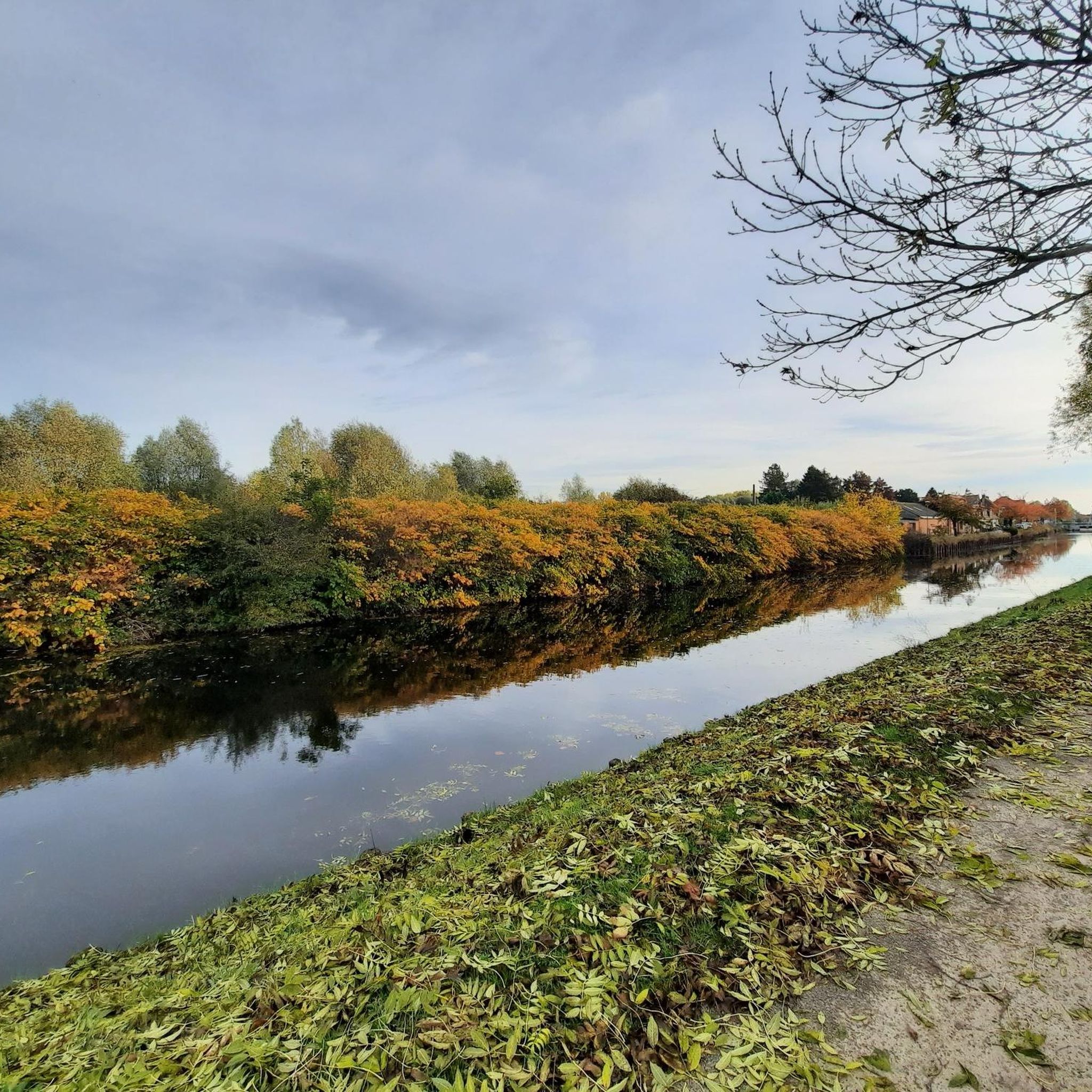
The Canal de Roubaix connects the Deûle River to the Scheldt via the Espierres Canal. Plans for this canal date back to 1821, and it was deemed necessary to supply water and coal to the rapidly developing textile industries in Roubaix and Tourcoing. The first section of the canal begins at the Deûle and includes the canalization of part of the Marque River. This section opened in 1831. The connection from Roubaix to the Belgian-French border was also completed in 1843. The section through Belgium to the Scheldt, the Espierres Canal, was also opened at that time. A watershed existed between the two sections of the canal (between the Lys and the Scheldt), and a tunnel was planned, but this led to difficulties and delays. Therefore, an alternative route was chosen further north, also serving Tourcoing. This more northerly section opened in 1877. A branch of this section of the canal is the Canal de Tourcoing. This was completed in 1893. In 1985, the canal was closed due to dilapidated infrastructure. However, it was restored as an industrial heritage site and reopened to shipping in 2010. The canal is 20 km long and has 12 locks. Source: Wikipedia
3
0
The Roubaix Canal, or the Espierres Canal, as it's called in French or Belgian, forms part of the link between the Deûle River in France and the Scheldt River in Belgium. In 1843, the two canals were connected between Leers, France, and Leers-Nord, Belgium. Despite damage sustained during the two world wars, the canal was the pinnacle of the region's textile industry for over a hundred years, transporting coal from Belgium to numerous French factories. In Leers-Nord, Belgium, the workers who pulled the coal-laden barges were called "satcheux" (sailors). Next to the lock keeper's house, a stone's throw from France, the crossing point between France and Belgium, a customs guardhouse was built. Customs officers were present to inspect the numerous goods transported by barge. After the decline of the textile industry in the 1970s and 1980s, the canal gradually lost its usefulness and was closed to shipping in 1983. In the early 2000s, the canal was the subject of a cross-border rehabilitation project to allow tourist boats to pass through again. As part of the Interreg Blue Links project, a collaboration between France, Flanders, and Wallonia, it was flooded again. The final works were completed in 2011, and navigation reopened. Since the early 20th century, the Roubaix/Espierres Canal has been a place of conviviality, walking, and fishing for cross-border residents and commuters. Consequently, strong public opposition has arisen to the plan to convert the canal into a motorway. Source: www.caue-nord.com
3
0

Super small and a relic from the past, love it.
0
0

An easy trail, great for children. Good off-road trails with no traffic, pedestrians and bicycles only, and a natural setting.
1
0

A smooth-running path, as is almost everywhere along the Marque River. Also doable by mountain bike.
4
0
A fairly smooth trail up the hill, with a nice climb to get there and a steep descent to get back. Indeed, there's one particularly low-hanging spot, and you really have to bend down.
3
0
As mentioned earlier, it's very smooth and can also be done by hybrid bike. Perfect for a bit of coolness in the summer.
1
0
Frequently Asked Questions
How many touring cycling routes are available around Leers?
There are over 15 touring cycling routes around Leers, offering a variety of distances and experiences. The region's flat terrain and network of greenways make it accessible for many skill levels.
Are there easy or family-friendly cycling routes in Leers?
Yes, Leers is well-suited for easy and family-friendly cycling, with 11 routes classified as easy. A great option is the Grimonpont Drawbridge in Leers – La Maison du Canal loop from Leers, which is just 6.6 miles (10.6 km) and features canal-side scenery.
Are there any more challenging touring cycling routes around Leers?
While the region is generally flat, there are 3 routes classified as difficult for those seeking a longer ride. The Greenway Hem-Anstaing – As the water flows loop from Leers is a 22.6 miles (36.4 km) trail that offers a more extensive touring experience.
What is the best time of year for touring cycling in Leers?
The best time for touring cycling in Leers is typically from spring to early autumn (April to October). During these months, the weather is generally mild and pleasant, making for comfortable rides along the canals and greenways. Summer offers longer daylight hours, while spring and autumn provide beautiful natural scenery.
Are there any scenic viewpoints or natural attractions along the cycling routes?
Leers' routes often feature picturesque canal-side views and agricultural landscapes. You can also explore nearby natural attractions such as Heron Lake or the Leers Filtration Ponds, which are part of the region's network of lakes and waterways.
Can I find circular touring cycling routes in Leers?
Many of the touring cycling routes around Leers are designed as loops, allowing you to start and end at the same point. An example is the Canal de Roubaix – Greenway Hem-Anstaing loop from Leers, a moderate 21.4 miles (34.4 km) path featuring canal paths and green spaces.
What kind of terrain can I expect on touring cycling routes in Leers?
The terrain around Leers is predominantly flat with gentle gradients, making it ideal for touring cyclists. Routes often follow paved greenways, canal towpaths, and quiet country roads through agricultural areas, providing a smooth and enjoyable ride.
Are there any routes that offer views of canals or rivers?
Absolutely. The region is defined by its waterways. Many routes, like the Leers Windmill – Grimonpont Drawbridge in Leers loop from Leers, closely follow the canals, offering continuous views of the water and the surrounding green landscape.
What do other touring cyclists enjoy most about cycling in Leers?
The touring cycling routes in Leers are highly rated by the komoot community, with an average score of 4.5 stars. Reviewers often praise the peaceful canal paths, the flat and accessible terrain, and the opportunity to explore the quiet agricultural landscapes and charming local landmarks.
Are there any historical or cultural landmarks to see along the routes?
Yes, the area has several points of interest. You might encounter landmarks such as the Belgium–France Border on the Canal de Roubaix, or the Our Lady of the Tonte Chapel. These add a cultural dimension to your ride through the region.
Are there less crowded cycling routes in the Leers area?
Given the network of greenways and canal paths, many routes offer a peaceful cycling experience away from heavy traffic. Routes that venture further into the agricultural areas, such as the Church of Leers – La Maison du Canal loop from Lys-lez-Lannoy, tend to be less crowded, especially outside of peak tourist seasons.
Is public transport available to access the cycling trails in Leers?
Leers is part of the Lille Métropole area, which has a public transport network. While direct access to every trailhead by public transport might vary, you can typically reach Leers by bus from larger towns like Lille, and then cycle to the starting points of the routes. Check local transport schedules for specific connections.
Most popular attractions around Leers

Get inspired with the komoot mobile app


Explore more
Browse the best Cycling routes in other regions.
