The best road cycling routes around Feugarolles
4.7
(30)
1,164
riders
195
rides
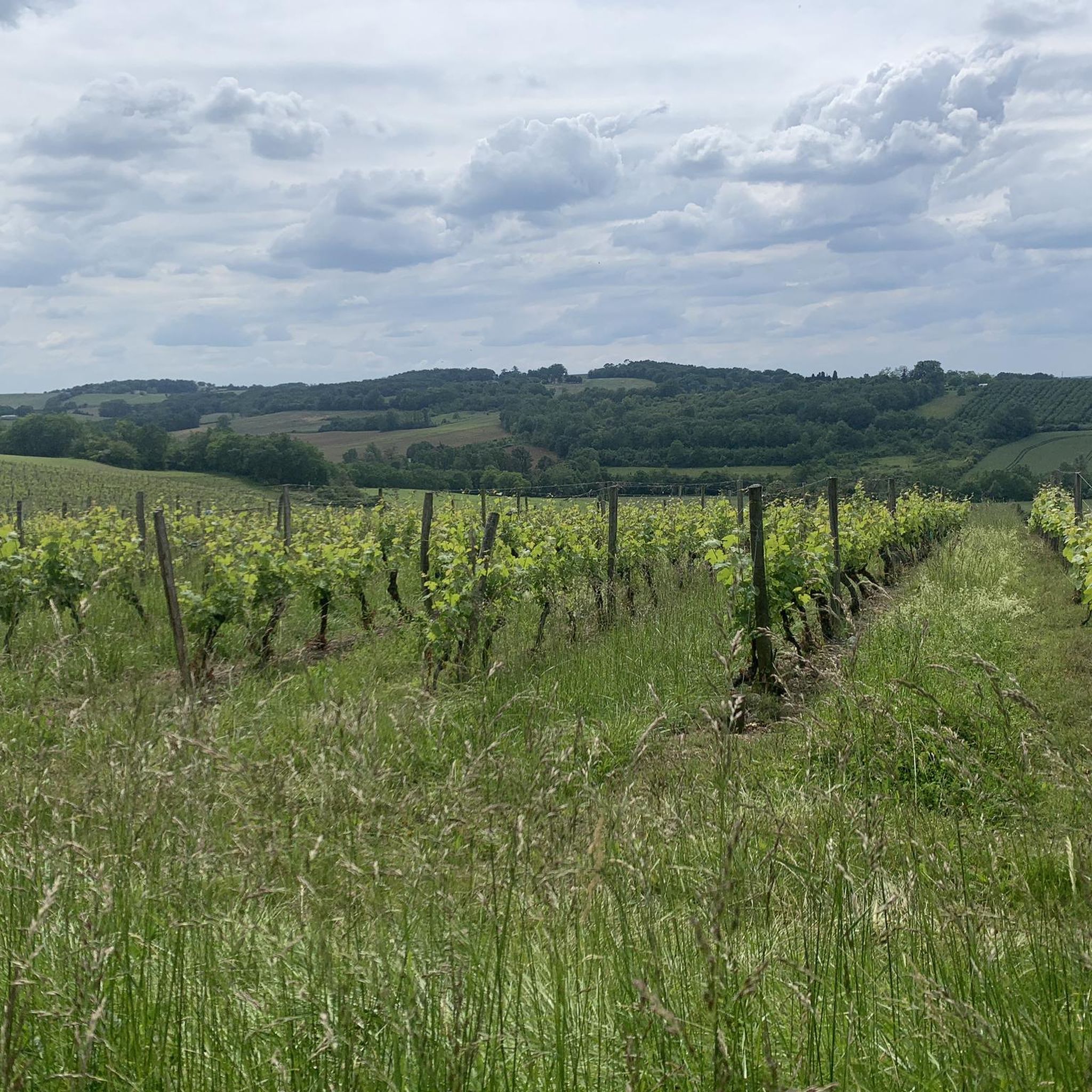
Road cycling routes around Feugarolles traverse a landscape characterized by quiet country lanes, rolling hills, and extensive waterways including the Garonne and Baïse rivers. The terrain offers a mix of mostly well-paved surfaces, with varied topography suitable for different fitness levels. Agricultural land, vineyards, and forests cover much of the area, providing scenic rides. The highest point in the municipality reaches 172 meters above sea level, ensuring engaging routes.
Best road cycling routes around Feugarolles
- The most popular road cycling…
Last updated: November 8, 2026
86
riders
142km
06:43
1,610m
1,610m
Hard road ride. Very good fitness required. Mostly well-paved surfaces and easy to ride.
15
riders
Moderate road ride. Good fitness required. Mostly well-paved surfaces and easy to ride.

7
riders
75.9km
03:19
680m
680m
Moderate road ride. Good fitness required. Mostly well-paved surfaces and easy to ride.
5.0
(2)
5
riders
28.9km
01:13
200m
200m
Easy road ride. Mostly well-paved surfaces and easy to ride.
7
riders
74.6km
03:24
610m
610m
Moderate road ride. Good fitness required. Mostly well-paved surfaces and easy to ride.
Get access to more routes and recommendations from other explorers.
Already have an account?
Our route recommendations are based on thousands of hikes, rides, and runs completed by other people on komoot.
Start today with a free account
Your next adventure awaits.

Tips from the Community

This beautiful Voie Verte, created in 2008, 2009 and 2010, connects Villeneuve-sur-Lot to Casseneuil. It uses the footprint of two old railway lines on the outskirts of Villeneuve-sur-Lot and at the entrance to Casseneuil. Between these two sections, it is a pretty path that was created along the "La Masse" stream.
0
0
The Tour du Roy of Sainte-Livrade-sur-Lot, located in the Lot-et-Garonne department, is an old urban seigneurial fortified house built between the end of the 13th and the beginning of the 14th century. Listed as a Historical Monument since 1925, it represents the only surviving vestige of the town's medieval fortifications. Despite its name "Tour du Roy", it initially belonged to a local lord and not to the crown. Local legend sometimes erroneously attributes it to Richard the Lionheart.
0
0
Former medieval stronghold, the village is officially labeled among The Most Beautiful Villages of France. Stone, brick, and half-timbered facades surround the market hall and the central square. The village is home to the Collegiate Church of Saint-Nicolas, whose tower-belfry serves as a fortified entrance gate to the town, as well as the Church of Sainte-Foy, adorned with remarkable 16th-century frescoes. Sections of ramparts and the old gates bear witness to its military past as an Albigensian stronghold.
0
0
Former medieval stronghold, the village is officially labeled among The Most Beautiful Villages of France. Facades of stone, brick, and timber-frame surround the market hall and the central square. The village houses the Collegiate Church of Saint-Nicolas, whose tower-belfry serves as a fortified entrance gate to the town, as well as the Church of Sainte-Foy, adorned with remarkable 16th-century frescoes. Sections of ramparts and old gates bear witness to its military past as an Albigensian stronghold.
0
0
A former medieval stronghold, the village is officially labeled among the Most Beautiful Villages of France. Stone, brick, and half-timbered facades surround the market hall and the central square. The village houses the Collegiate Church of Saint-Nicolas, whose tower-belfry serves as a fortified gateway to the town, as well as the Church of Sainte-Foy, adorned with remarkable 16th-century frescoes. Sections of ramparts and old gates bear witness to its past as an Albigensian stronghold.
0
0
The architecture of Villeneuve-sur-Lot tells its story as a 13th-century river bastide, built for trade and defense. Its geometric checkerboard plan is organized around a central hub and opens onto the river. The checkerboard plan: Straight streets, typical of medieval bastides. Place Lafayette: Central square bordered by covered arcades (the cornières). The watchtowers: Fortified gates of Paris and Pujols in brick and stone. The Romanesque-Byzantine style: Used for the Sainte-Catherine church with its 55-meter high bell tower. The half-timbered facades: Medieval houses with timber framing and overhangs. The Pont des Cieutat: 13th-century structure with asymmetrical stone arches.
0
0
The Saint-Sylvestre Church depends on the Saint-Jacques-en-Vallée-du-Lot community, attached to the diocese of Agen. The current village church was built between 1863 and 1865. It houses, among other things, a beautiful 14th-century polychrome wooden statue representing Saint Peter.
0
0
The medieval alleys of Penne-d'Agenais, listed among the Most Beautiful Villages of France, form a true paved labyrinth that climbs the hillside for nearly 200 meters in altitude to overlook the superb Lot valley. This fortified town, often compared to a small Tuscan village due to its ochre-colored facades, warm stones, and gentle way of life, offers a real dive into medieval history.
0
0
Frequently Asked Questions
What kind of terrain can I expect for road cycling around Feugarolles?
Road cycling around Feugarolles offers a diverse landscape of quiet country lanes, rolling hills, and extensive waterways. The terrain is mostly well-paved, with varied topography that includes gentle undulations and some challenging climbs, reaching up to 172 meters above sea level. You'll cycle through agricultural land, vineyards, orchards, and wooded areas, providing scenic views throughout your ride.
Are there road cycling routes suitable for all fitness levels in Feugarolles?
Yes, Feugarolles caters to various fitness levels. The region offers a mix of easy, moderate, and difficult routes. For instance, the Bastide of Vianne – Bridge over the Baïse in Vianne loop from Feugarolles is an easy 29.7 km ride, while the Pujols-le-Haut – Pujols loop from Port-Sainte-Marie is a difficult 144.7 km route for those seeking a greater challenge.
What historical sites or natural attractions can I discover while cycling near Feugarolles?
The area around Feugarolles is rich in history and natural beauty. You can cycle past historic châteaux like the Château de Trenquelléon, or visit medieval villages such as Fources. Routes often follow waterways like the Garonne and Baïse rivers, and you might encounter engineering marvels like the canal bridge over the Baïse. Notable attractions include the Canal Latéral à la Garonne, Nérac Old Town and Château d'Henri IV, and the Henry IV's Mill.
What do other road cyclists enjoy the most about road cycling in Feugarolles?
The komoot community highly rates road cycling in Feugarolles, with an average score of 4.7 stars from over 20 reviews. Cyclists often praise the quiet country lanes, the scenic routes along the Garonne and Baïse rivers, and the diverse landscapes that include vineyards and forests. The variety of routes, from easy to difficult, also contributes to its popularity.
Are there any long-distance road cycling routes accessible from Feugarolles?
Yes, Feugarolles is strategically located near several long-distance cycling networks. It's part of 'The Scandibérique' (EuroVelo 3), a European cycle route. You can also access sections of the Garonne Canal Loop and the Lot Valley Cycle Route, offering hundreds of kilometers of picturesque and often shaded paths for extended rides. An example is the Pujols-le-Haut – Pujols loop from Port-Sainte-Marie, which covers nearly 145 km.
What is the best time of year for road cycling in Feugarolles?
The region around Feugarolles generally offers pleasant conditions for road cycling for much of the year. Spring and autumn provide mild temperatures and beautiful scenery with blooming flowers or changing leaves. Summer can be warm, but many routes along waterways or through wooded areas offer welcome shade. Winter cycling is also possible, though cooler temperatures and occasional rain should be expected.
Are there family-friendly road cycling options in Feugarolles?
Yes, the region offers family-friendly road cycling options, particularly along the flat and scenic canal paths or gently undulating roads alongside rivers. These routes provide a safe and enjoyable experience for families. Look for easy-rated routes, such as the Bastide of Vianne – Bridge over the Baïse in Vianne loop from Feugarolles, which is under 30 km and relatively flat.
Are there any circular road cycling routes starting near Feugarolles?
Many of the road cycling routes in the Feugarolles area are designed as loops, allowing you to start and finish in the same location. Examples include the Saint John the Baptist Church – Château de Clermont-Dessous loop from Saint-Laurent and the Nérac – Lateral canal bridge loop from Port-Sainte-Marie. These circular routes make planning your ride convenient.
What are the parking options for cyclists in Feugarolles?
While specific parking facilities for cyclists are not detailed, Feugarolles and nearby towns generally offer public parking areas. It's advisable to check local signage upon arrival for the most convenient and appropriate parking spots, especially when starting a longer route from a specific village or attraction.
Can I find cafes or places to stop for refreshments along the road cycling routes?
Yes, as you cycle through Feugarolles and the surrounding medieval villages and towns like Nérac, you'll find opportunities to stop for refreshments. These charming locations often have local cafes, bakeries, and restaurants where you can take a break and enjoy local cuisine or a coffee.
How many road cycling routes are available around Feugarolles?
There are over 200 road cycling routes available around Feugarolles, offering a wide variety of distances and difficulties to explore the region's diverse landscapes and historical sites.
Are there routes that connect to major regional cycling paths?
Absolutely. Feugarolles provides excellent access to major regional cycling paths. You can easily connect to sections of 'The Scandibérique' (EuroVelo 3), which follows the Ways of Santiago de Compostela, as well as parts of the Garonne Canal Loop and the Lot Valley Cycle Route, offering extensive cycling opportunities.
Most popular attractions around Feugarolles

Get inspired with the komoot mobile app


Explore more
Browse the best Road cycling routes in other regions.
