The best walks and hikes around Vaux-Sur-Mer
4.6
(76)
661
hikers
25
hikes
Hiking around Vaux-Sur-Mer offers diverse landscapes along the Côte de Beauté, characterized by limestone cliffs, sandy coves, and coastal paths. The region features forests of maritime pines and holm oaks, alongside marshlands such as the Marais de Nauzan. These environments provide varied terrain for outdoor activities, with trails often following the Atlantic coastline and the Gironde estuary.
Best hiking trails around Vaux-Sur-Mer
- The most popular hiking route is Chay Beach – Fort du Chay loop from Royan, a 4.9…
Last updated: July 9, 2026
4.9
(15)
134
hikers
15km
04:03
160m
160m
Moderate hike. Good fitness required. Easily-accessible paths. Suitable for all skill levels.
4.9
(7)
87
hikers
5.05km
01:20
40m
40m
Easy hike. Great for any fitness level. Easily-accessible paths. Suitable for all skill levels.

Sign up for free
5.0
(6)
23
hikers
8.87km
02:18
50m
50m
Moderate hike. Good fitness required. Easily-accessible paths. Suitable for all skill levels.
5.0
(1)
24
hikers
2.75km
00:43
20m
20m
Easy hike. Great for any fitness level. Easily-accessible paths. Suitable for all skill levels.
5.0
(1)
19
hikers
2.68km
00:42
20m
20m
Easy hike. Great for any fitness level. Easily-accessible paths. Suitable for all skill levels.
Get access to more routes and recommendations from other explorers.
Sign up for free
Already have an account?
Our route recommendations are based on thousands of hikes, rides, and runs completed by other people on komoot.
Start today with a free account
Your next adventure awaits.
Login or Signup

Tips from the Community

📍 Origins and Beginnings The tradition of games and entertainment in Pontaillac dates back to the late 19th century, with gambling clubs such as the Kursaal (around 1880) and the Otrada (1892). These establishments preceded the current casino and catered to a seaside and aristocratic clientele; they combined games, cafes, and entertainment on the beach. In 1902, La Restauration was built in Pontaillac, on the site of various games and entertainment venues. It served as a cafe-restaurant but also attracted gambling enthusiasts, such as horse racing. 🎲 Construction of the Sporting/Casino (1930s) In the 1930s, La Restauration was replaced by a new building called the Sporting, designed by the architect Auguste Bluysen, a specialist in modern casinos of the time. Built of concrete on stilts directly on Pontaillac beach, the building features a rationalist and Art Deco architecture typical of the interwar period, sometimes surprising with its style reminiscent of the 1950s. 🪖 World War II During World War II, the Sporting remained open, primarily serving German soldiers. During the massive bombings of 1945, which destroyed much of Royan, the Pontaillac casino was one of the few to survive, as it was virtually untouched by the raids. 🎭 Post-War and Golden Age After the war, the casino became a central hub of Royan's social life. It reopened in 1948, and the 1950s and 60s constituted a cultural golden age, with a rich program of shows, concerts, dances, and galas. Under the leadership of its "musician-director" Roger Genty, major French and international stars performed on its stage: Josephine Baker, Jacques Brel, Sacha Distel, Georges Brassens, Fernand Raynaud, Henri Salvador, and others. 🎰 Contemporary Era In 1986, the casino was acquired by the Lucien Barrière group, which expanded its operations by modernizing the gaming areas, adding slot machines, a bar, restaurants, and other services, while maintaining its role as a year-round entertainment hub. Today, the Casino Barrière in Royan-Pontaillac is the only casino still operating in the Royan area, bearing witness to more than a century of seaside history, gaming, and entertainment.
0
0
The Church of the Assumption of Our Lady, also known as the Pontaillac Chapel, is a small 19th-century chapel built to serve the parishioners of the Pontaillac seaside district. Replaced around 1890 by a larger chapel (Our Lady of the Angels), it was deconsecrated and converted into a private residence, while retaining its heritage exterior: a discreet yet significant witness to the religious and urban history of Royan and its beaches. 📍 Location and context • The building is located on Boulevard de la Falaise in Royan, facing the ocean, in the Pontaillac/Vaux-sur-Mer district, right on the beach. 🏛️ Origins and Religious History 🛠️ Construction • Faced with the rise of seaside tourism in the mid-19th century, the Catholic community of Pontaillac wanted a place of worship near the beaches and the developing villas. • After disagreements with the parish priest of Royan regarding the location of a church, parishioners had this small Neo-Romanesque/Neo-Gothic chapel built in 1870 on the cliff, then administratively within the territory of Vaux-sur-Mer (and therefore outside the parish jurisdiction of Royan). 🙏 Liturgical Role and Replacement • For a few years, it served as the local place of worship for the faithful of the seaside district. • With the development of Pontaillac, the building proved too small and too far from the town center. • Thus, the construction of the larger Notre-Dame-des-Anges Chapel (still a Catholic chapel today) in the center of Pontaillac in 1891 eventually replaced this first place of worship. 🏗️ Deconsecration and Transformation 🏡 End of Religious Function • Once the new chapel (Notre-Dame-des-Anges) was built, the old chapel on the cliff gradually lost its religious function and ceased to be used for regular services. 🏠 Conversion into a Private Residence • The building was then deconsecrated (that is, removed from official Catholic worship) and transformed into a private residence. • Today, while the exterior still reflects its original function with its simple and traditional architecture, the interior has been adapted for residential use, having lost its liturgical purpose. 🗺️ Architecture and Style 🧱 Original Style The chapel features modest architecture, typical of small rural/seaside chapels of the 19th century: simple volumes, use of local materials, and small proportions suited to a limited community. • In the Neo-Gothic style, it forms a single nave of five bays, lit by a series of round-arched windows. • The façade, pierced by a rose window, is flanked by two buttresses and surmounted by a simple stone cross. 🏖️ Landscape Setting • Perched on the cliff above the beach, the building formerly offered worshippers a direct view of the ocean, a setting very characteristic of seaside chapels on the Atlantic coast. 📌 Historical and Heritage Significance • The former chapel illustrates the beginnings of organized religious life in Pontaillac before the growth and complete urban development of the area. • It is an architectural and historical testament to the first phase of the local community's development, before the construction of larger buildings in the town center. • Its conversion into a residence reflects the evolving uses of religious heritage in areas where the population and needs have changed over time.
0
0
📍 Location Dr. Guillon's bathtubs are located along the Boulevard de la Côte d’Argent / Corniche de Pontaillac (between Royan and Vaux-sur-Mer), carved into the rocks of the Pontaillac cove facing the sea. They are still visible today, especially at low tide. 👨⚕️ Origin and Historical Context 📜 Dr. Frédéric-Auguste Guillon Frédéric-Auguste Guillon (1808-1890) was a physician, former naval surgeon, then a local councilor and practicing doctor in Royan. He contributed to the development of seawater therapy and thalassotherapy (treatments using seawater) on the Atlantic coast in the 19th century, a time when sea bathing was prescribed for health reasons. 🏖️ Construction of the "Bathtubs" In 1872, Dr. Guillon had a series of pools and bathtubs carved directly into the rocks of Bec des Brandes in Pontaillac. These pools were filled with seawater heated by the sun between tides. The aim was to offer natural therapeutic baths, particularly for treating scrofula, a chronic lymphatic and skin condition common at the time. 🛁 Description of the Facilities The facilities included: A large natural pool carved into the rock, Two large pools, Three individual bathtubs carved into the cliff face, which were filled with seawater at each tide. These structures provided access to seawater baths without having to directly face the currents or the depths of the ocean – a hygienic and medical approach ahead of its time. 🩺 Therapeutic Purpose At the time: Sea bathing was considered beneficial to health, improving circulation, treating chronic infections, and promoting overall well-being. Dr. Guillon's baths constituted an early form of thalassotherapy, combining the effects of seawater, sea air, and sunlight. 🌊 Heritage and Current Visibility Although the facilities are no longer used as treatment centers, the baths remain visible today on the rocks of Pontaillac, particularly at low tide. A tourist information panel installed by the city of Royan explains their origin and historical significance.
0
0
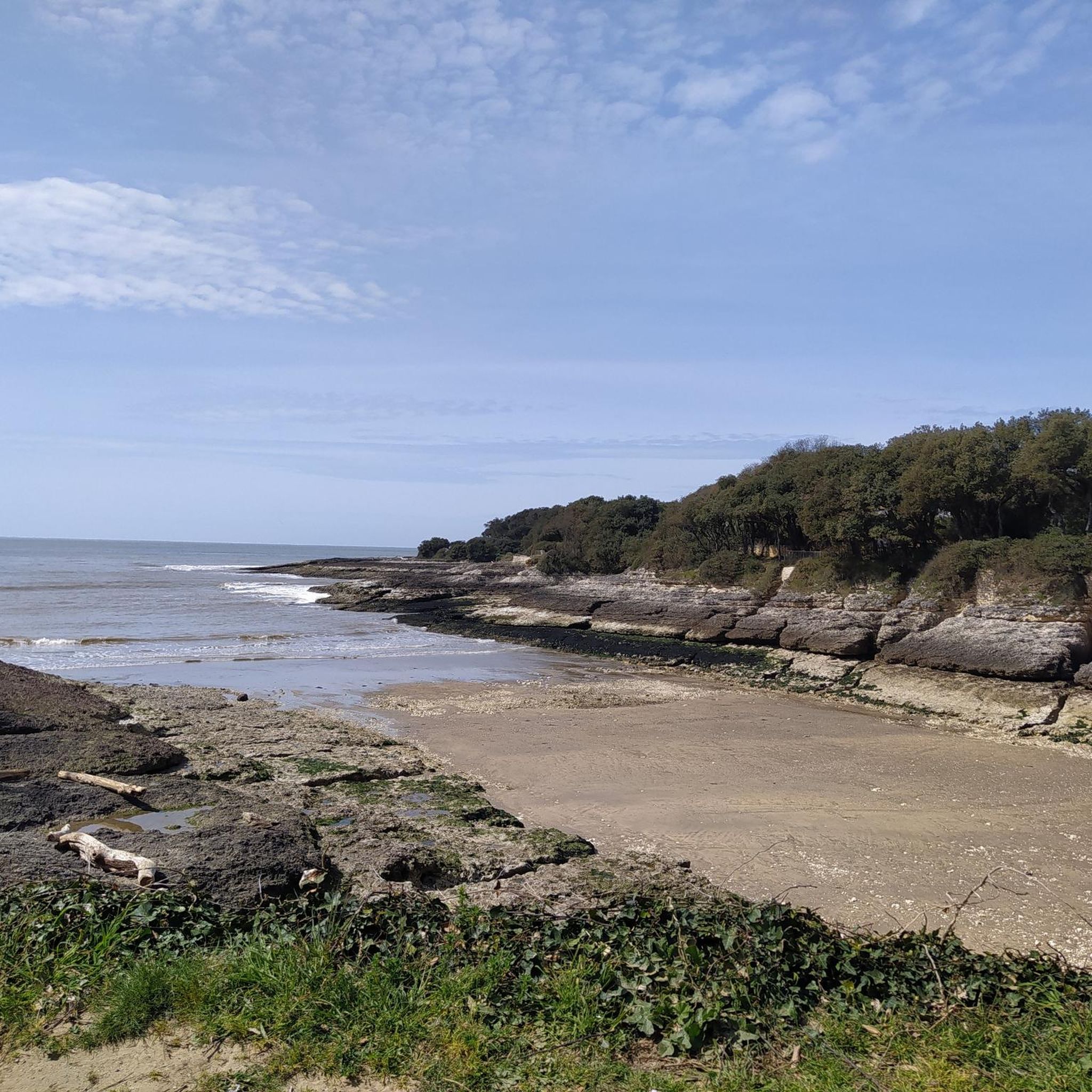
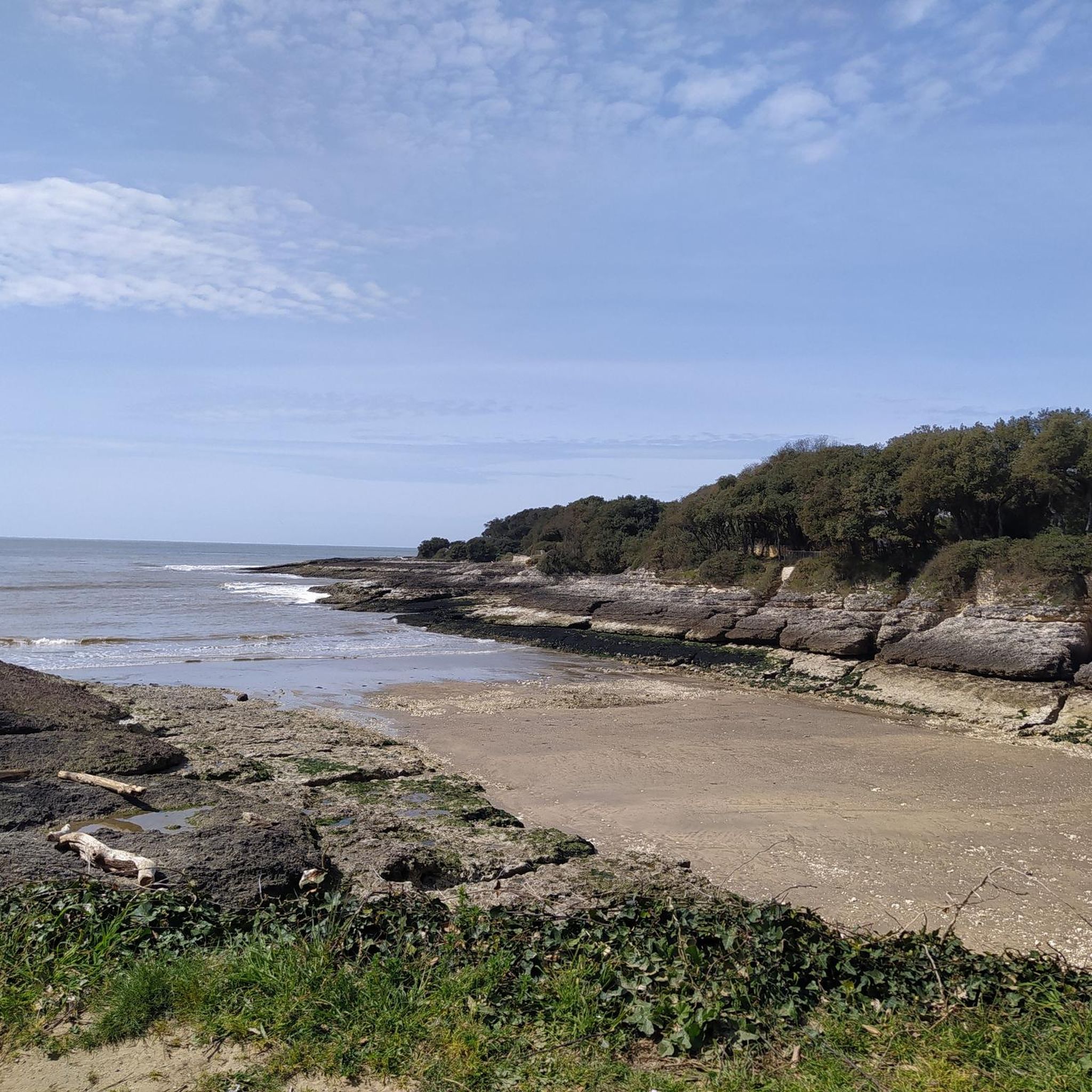
📍 Introducing the Gilet Cove The Gilet Cove is a small, natural beach on the oceanfront, located on Boulevard de la Conche de Gilet / Boulevard de la Falaise, in the town of Vaux-sur-Mer, just before Royan. 🌿 It's a sheltered, rocky cove, appreciated for its tranquility and more intimate setting compared to the larger urban beaches nearby. 🏖️ At high tide, the sea can completely cover this small beach, making the space very limited; at low tide, you can enjoy a patch of sand and rocks for relaxing or swimming. 🧭 Features & Tips 📍 Type of place: small, unsupervised beach, nestled among the rocks with sand and cliffs. 🏖️ Tides: access is best at low tide — at high tide the beach can disappear underwater. 🐶 Animals: prohibited from April 1st to September 30th (subject to municipal regulations). 👣 Access: via stairs from the boulevard above, surrounded by villas with sea views. 🚫 Lifeguard services: no lifeguard station or marked services. 📍 Location La Conche de Gilet is often considered the last small beach in Vaux-sur-Mer before reaching Royan/Pontaillac when following the coastline from Saint-Palais-sur-Mer.
0
0
🏖️ General Overview Chay Beach is a family-friendly, fine sandy beach located in Royan (Charente-Maritime), on the Côte d’Argent promenade between Pigeonnier Beach and Pointe du Chay. It stretches for approximately 200 meters and boasts a pleasant natural setting, with a cove bordered by rocks typical of the Charente coastline. 🏝️ Features • 🌊 Beach type: fine sand, sheltered cove. • 🏄♂️ Atmosphere: relatively calm and family-friendly, ideal for children and vacationers seeking relaxation away from the large urban beaches. • 🐾 Pets: prohibited from April 1st to September 30th. • 🫧 Water quality: excellent (Blue Flag label awarded for 2025). 🧭 Lifeguard and Safety • Swimming is supervised during the season (June to early September), with areas marked by red and yellow flags. • The area is classified as a Category 3 "Supervised Beach" and lifeguards are present during the indicated hours. 🪑 Amenities On-site, you can find: • 🏖️ Sun loungers, parasols, and mattresses for rent. • 🚿 Foot rinse and public restrooms. • 📶 Wi-Fi access, first aid station, and an area accessible to people with reduced mobility (assistance may be required depending on the slope). • 🍴 Beachfront restaurant ("Le Chay" bar-restaurant with sea views). 🚶♂️ Atmosphere and Activities • 🎈 Ideal for families and leisurely strolls. • 🌞 People come here for swimming, playing on the sand, flying kites, or simply relaxing by the ocean. • 🅿️ Parking is available nearby, and the beach is easily accessible on foot or by bike from Royan town center in just a few minutes. 🧭 Practical Tips • 📆 Best time to visit: summer for supervised swimming and full services, but also during the off-season for a more peaceful atmosphere. • ☀️ Arriving early in the morning makes parking easier during peak season. • 🐶 Dogs are not allowed during the summer season; check the signs on site during the off-season.
0
0

In 1872, Doctor Guillon had egg-shaped bathtubs dug into the rocks of Bec des Brandes in Pontaillac, where the sea entered through an orifice and which were used to treat scrofula (common chronic infections of the skin and mucous membranes). They are still visible on the rocks near the Villa Les Roches.
0
0
Of the first star-shaped fort (1811), only a few things remain today. In 1859 its plan was redesigned with a solid ground facing the sea separated by a large ditch cutting the fort in two. The redoubt is cut off and allows the access bridge located to the north to be monitored. This redoubt has the particularity of having a specific plan. It only has a machicolation on three of its sides to the north (inland side) and on its two short sides (east and west). The tour of the solid ground is reinforced by a large masonry wall now. At the rear, the star-shaped device protects against attacks coming from the land. The site was affected by erosion and especially lost its relief after the Second World War. The battery line is still visible from the air and on the ground, only a few German and French bunkers are still outcropping. They are inaccessible. Transformed into a promenade, the site borders the coastal path that starts from the port of Royan and continues to the Grande Côte. Today, nearly 75% of the militarized surface of the late 19th century is occupied by residences and the Cordouan Thalazur hotel. The site still has some visible remains, mainly of French origin
0
0
The first fortification projects for Pointe du Chay date back to 1772, counterbalanced on the other bank by Fort du Verdon. But it was not until the battle of 1811 that the military authorities were convinced to fortify the point. However, in 1757, Marshal Senectere, Lord of Didonne, had a defensive element built a little further south of Fort du Chay. He had opened a strategic route to protect the mouth of the estuary. A fort comprising star-shaped bastions was built between 1811 and 1812. It was recaptured by the English in April 1814 and partly destroyed. It was not until the Second Empire that the fort was considerably improved. In addition to the rebuilt embankments, a redoubt derived from the crenellated towers of the 1846 type was built between 1859 and 1860. It served the battery. The battery was remodeled between 1875 and 1877 at the same time as that of the Fort de Suzac. This new battery included eight cannons that would not evolve again until the Second World War. They were divided into four 24cm cannons and four 27cm cannons. One of the vats is disproportionate and seems to indicate that it was planned to install a larger piece there. A fire control post was probably built after 1920, perhaps at the same time as the Arros battery around 1937. It does not appear on the aerial photos of 1920 and is located in front of the firing positions. According to some sources, the Fort du Chay was equipped around 1930 with 75 model 1897 cannons (to be confirmed). The Fort du Chay redoubt would have a hardly more favorable fate than the one near the Fort de Suzac. Integrated into the improvements made to the fort at the end of the 19th century and then at the beginning of the 20th century, this structure would remain until the fort was integrated into the Atlantic Wall around 1942. In 1920, the fort was partially disarmed since only seven of the eight cannons and a reduced garrison remained. At the end of the Second World War, the Fort du Chay redoubt, the oldest vestige of the fort, was literally cut in two by the bombings of 1944 to 1945. Although in 1946, the site remained as it was, it was the object of much covetousness from 1950. The site was largely razed between 1956 and 1957 to make way for a program of 120 housing units. In 1959, it was used temporarily by an equestrian center using a large part of the star-shaped glacis of 1811.
0
0
Frequently Asked Questions
How many hiking trails are available in Vaux-sur-Mer?
Vaux-sur-Mer offers a good selection of hiking opportunities, with over 20 routes available. The majority, 19 routes, are considered easy, making them accessible for various fitness levels, while 3 are moderate.
Are there easy hiking routes suitable for beginners or families in Vaux-sur-Mer?
Yes, Vaux-sur-Mer is very well-suited for beginners and families, with 19 out of 22 routes classified as easy. The coastal paths, particularly sections of the "Sentier des Douaniers" along the conches like Nauzan and Gilet, offer gentle strolls with beautiful sea views. These paths are generally well-maintained and provide a pleasant experience for all ages.
What kind of scenery can I expect on hikes around Vaux-sur-Mer?
Hiking in Vaux-sur-Mer offers a diverse range of scenery. You'll experience invigorating walks along the Atlantic coastline with limestone cliffs and fine sandy coves such as Nauzan, Gilet, and Conseil. Inland, routes may take you through forests of maritime pines and holm oaks, like the "Bois des Fées," and even touch upon marshlands such as the Marais de Nauzan. The combination of sea, forest, and wetlands provides a rich and varied landscape.
Are there any circular walks in Vaux-sur-Mer?
Yes, many of the trails in Vaux-sur-Mer are designed as circular routes, allowing you to start and end at the same point. For example, the Conche de Gilet – Conche de Nauzan loop from Vaux-sur-Mer is an easy 6.5 km circular hike that connects two beautiful coves.
What are some interesting landmarks or attractions to see along the hiking trails?
Along the coastal trails, you can discover several natural and historical points of interest. Keep an eye out for the unique geological formations like the "Pont du Diable" (Devil's Bridge). You can also enjoy the picturesque Conche de Gilet and the expansive Chay Beach. Some routes may also pass by Belle Époque villas, adding a touch of historical charm to your walk.
What is the best time of year to go hiking in Vaux-sur-Mer?
Vaux-sur-Mer is enjoyable for hiking throughout much of the year. Spring and autumn offer pleasant temperatures and fewer crowds, making them ideal for coastal walks and exploring the wooded areas. Summer is also popular, especially for combining hikes with beach activities, though it can be warmer. Even in winter, the coastal paths can be invigorating, offering crisp air and dramatic sea views.
Are dogs allowed on the hiking trails in Vaux-sur-Mer?
Generally, dogs are welcome on many of the hiking trails in Vaux-sur-Mer, especially on the coastal paths and in natural areas. However, it's always advisable to keep them on a leash, particularly in protected areas or during peak seasons, and to check local signage for any specific restrictions, especially on beaches during certain times of the year.
How long do hikes near Vaux-sur-Mer typically take?
The duration of hikes in Vaux-sur-Mer varies depending on the route and your pace. Many easy coastal strolls, like The Carrelets of Royan – Conche de Gilet loop from Vaux-sur-Mer (5.3 km), can be completed in about 1.5 to 2 hours. Longer moderate routes, such as the Conche de Nauzan – Chay Beach loop from Vaux-sur-Mer (15 km), might take around 4 hours or more.
What do other hikers enjoy the most about hiking in Vaux-sur-Mer?
The area is highly rated by the komoot community, with an average score of 4.6 stars from over 90 reviews. Reviewers often praise the stunning coastal views, the variety of landscapes from beaches to forests, and the well-maintained paths that make for an enjoyable and accessible hiking experience.
Is parking available near the trailheads in Vaux-sur-Mer?
Yes, parking is generally available in Vaux-sur-Mer, especially near popular beaches and starting points for coastal walks. You can often find public parking areas close to the main conches like Nauzan and Gilet, as well as in the town center. It's recommended to arrive early during peak season to secure a spot.
Are there any routes that offer views of the Gironde estuary?
Yes, some trails and viewpoints in the wider area provide excellent perspectives of the Gironde estuary, the largest in Europe. While many Vaux-sur-Mer trails focus on the immediate Atlantic coast, you can find specific highlights like the View of the estuary and white cliffs at Parc de l'Estuaire which offers panoramic vistas of this significant natural feature.
Most popular routes around Vaux-Sur-Mer
Most popular attractions around Vaux-Sur-Mer

Get inspired with the komoot mobile app


Explore more
Browse the best Hikes in other regions.
