Attractions and Places To See around Fouquières-Lès-Lens - Top 20
Best attractions and places to see around Fouquières-Lès-Lens include historical monuments and unique natural features. This region, located in the Pas-de-Calais, offers a variety of sites reflecting its significant past, particularly related to the First World War. Visitors can explore more than 20 distinct places, ranging from war memorials to former mining landscapes. The area provides opportunities for outdoor activities and historical exploration.
Best attractions and places to see around Fouquières-Lès-Lens
- The most popular attractions is Canadian National Vimy Memorial…
Last updated: May 21, 2026
Canadian National Vimy Memorial
Highlight • Monument
Translated by Google •
Tip by

Canadian Memorial
Highlight • Other
Translated by Google •
Tip by

Sign up now to discover places like this
Get recommendations on the best single tracks, peaks, & plenty of other exciting outdoor places.
Sign up for free
Monument to the Moroccan Division
Highlight • Monument
Translated by Google •
Tip by
Terril de Drocourt
Highlight • Structure
Translated by Google •
Tip by

Canadian National Vimy Memorial
Highlight (Segment) • Monument
Translated by Google •
Tip by

Sign up for free to discover even more attractions around Fouquières-Lès-Lens.
Sign up for free
Already have an account?
Start today with a free account
Your next adventure awaits.
Login or Signup


Tips from the Community

The Vimy Memorial is the most prestigious Canadian monument in Europe. It is located on the very site of the 1917 fighting near Vimy in the Pas-de-Calais region of France. Erected on the highest point of the hill, Hill 145, the objective of the operations that began on April 9, 1917, it overlooks the Douai Plain. In 1921, architect and sculptor Walter S. Allward (1875-1955) won the competition from the Canadian Battlefield Memorials Commission. The significance of the battles at the site and the favorable location at the top of the hill allowed Vimy to receive the most prestigious work. The monument's architecture consists of twenty figures and a massive base topped by two immense pillars. Carved from a single 30-ton block, the main statue, symbolizing the spirit of Canada mourning its fallen, dominates the Douai Plain. At the top, the angels of Justice and Peace stand guard over the gate. At the front of the monument, between the pillars, two statues represent the spirit of sacrifice, one representing the spirit of sacrifice, and the other representing the passing of the torch. The 27-meter-high pylons symbolize both the gates of eternity, as well as France, with the fleur-de-lis, and Canada, with the maple leaves. They are also adorned with representations of Truth, Knowledge, Valor, Sympathy, and the coats of arms of Canada, England, and France. On either side of the façade wall, cannons adorned with laurel and olive branches, symbolizing Victory and Peace, can be seen. Below, figures represent the Breaking of the Saber and Sympathy for the Victims. Each of the monument's statues embodies an ideal: Justice, Peace, Honor, Faith, Charity, Truth, Knowledge, Hope... The following words are engraved on its base: "TO THE VALOR OF HER SONS DURING THE GREAT WAR, AND IN MEMORY OF HER SIXTY THOUSAND DEAD, THE CANADIAN PEOPLE HAVE ERECTED THIS MONUMENT." The names of 11,285 missing persons are also etched in stone for eternity. This list complements those on the monument erected in memory of the Armies of the British Empire at the Menin Gate, Ypres. Indeed, 18,283 Canadian soldiers were never found... Construction work began in 1925. The memorial was inaugurated on July 26, 1932, in the presence of King Edward VII and Albert Lebrun, President of the French Republic.
0
0

A remarkable story about the Vimy Memorial concerns its unveiling in 1936. More than 50,000 people, including 6,200 Canadians, attended the ceremony. The presence of so many veterans and survivors underscored the profound impact of the war and the enduring bond between Canada and France. The memorial has since become a symbol of Canadian courage and sacrifice.
6
0
The Mémorial national du Canada à Vimy is an impressive war memorial, commemorating the members of the Canadian Expeditionary Force who died during the First World War. The memorial, designed by Walter Seymour Allward, was unveiled on 26 July 1936 by King Edward VIII. It commemorates the 11,169 Canadian soldiers who died in France and have no known grave.
7
0
A special story about the monument concerns the two colonels, Pein and Cros, who were both killed during the division's actions in May 1915. Their names are inscribed on the monument, along with an inscription commemorating the courage and determination of the soldiers: "Aux morts de la division marocaine, sans peur, sans pitié". This tribute emphasises the heavy losses and heroic efforts of the Moroccan Division during the battle.
7
0
The Monument à la Division Marocaine in Givenchy-en-Gohelle commemorates the courage and sacrifice of the Moroccan Division during the First World War. This monument was erected in honour of the breakthrough made by the division during the Battle of Artois on 9 May 1915. The Moroccan Division, led by General Georges Louis Humbert, played a crucial role in breaking through the German lines and capturing strategic terrain.
8
0
The Vimy Memorial is the most prestigious Canadian monument in Europe. It is located on the very site of the 1917 fighting near Vimy in the Pas-de-Calais region of France. Erected on the highest point of the hill, Hill 145, the objective of the operations that began on April 9, 1917, it overlooks the Douai Plain. In 1921, architect and sculptor Walter S. Allward (1875-1955) won the competition from the Canadian Battlefield Memorials Commission. The significance of the battles at the site and the favorable location at the top of the hill allowed Vimy to receive the most prestigious work.
1
0

I went there late one evening, a calm that does you good, a great panorama night and day
0
0

beautiful journey, beautiful scenery
0
0
Frequently Asked Questions
What historical sites related to the First World War can I visit around Fouquières-Lès-Lens?
The region is rich in WWI history. You can visit the impressive Canadian National Vimy Memorial, which commemorates Canadian soldiers who died in France. Another significant site is the Monument to the Moroccan Division, honoring their courage during the Battle of Artois.
What kind of outdoor activities are available near Fouquières-Lès-Lens?
You'll find a variety of outdoor activities. The area is popular for hiking, road cycling, and gravel biking. For specific routes and guides, you can explore options like Hiking around Fouquières-Lès-Lens, Road Cycling Routes around Fouquières-Lès-Lens, and Gravel biking around Fouquières-Lès-Lens.
Are there any unique natural or man-made landscapes to explore?
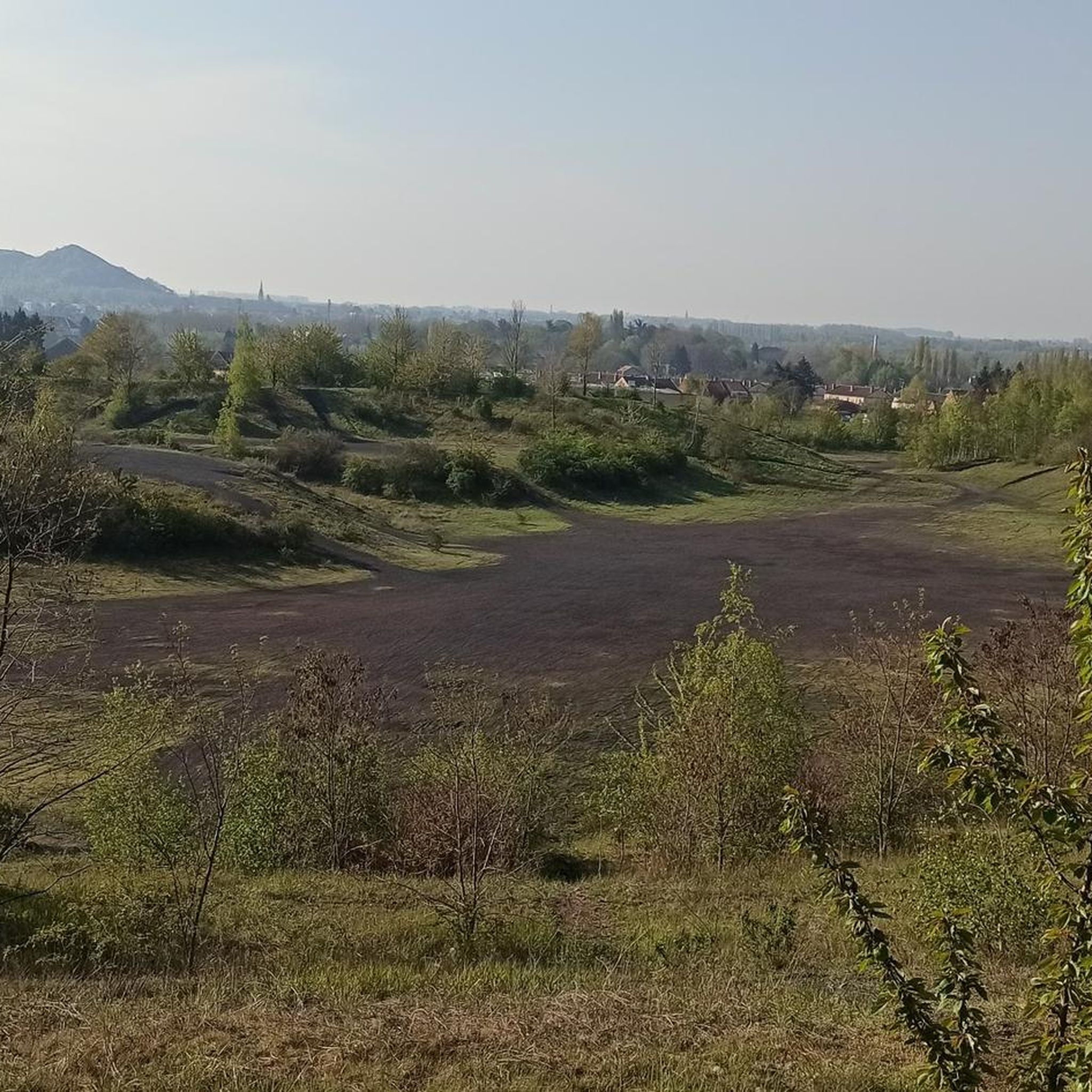
Yes, the region features unique former industrial landscapes. The Terril de Drocourt, a former slag heap, has been repurposed as a bike park and offers a unique setting for outdoor activities and great views.
Are there hiking trails suitable for families or easy walks?
Absolutely. For easy and family-friendly walks, consider trails like the 'Galance Marsh – Étang du Brochet loop from Harnes' or the 'Florimond Wood – Étang du Brochet loop from Harnes'. You can find more options in the Hiking around Fouquières-Lès-Lens guide.
What is the best time of year to visit Fouquières-Lès-Lens for outdoor activities?
Spring and autumn generally offer pleasant weather for outdoor activities like hiking and cycling, with milder temperatures and beautiful scenery. Summer is also suitable, though it can be warmer. Winter can be cold, but some attractions remain accessible.
Is parking available at the main attractions?
Parking is generally available at major historical sites like the Canadian National Vimy Memorial. It's always a good idea to check specific visitor information for each attraction before your visit for the most up-to-date details on parking facilities.
Are dogs allowed at the attractions or on trails?
Many outdoor trails and natural areas around Fouquières-Lès-Lens are dog-friendly, especially if kept on a leash. However, specific rules may apply to indoor exhibits or certain memorial grounds. It's best to check the individual attraction's guidelines regarding pets.
Are there any attractions accessible for visitors with limited mobility or wheelchairs?
The Canadian National Vimy Memorial is designed with accessibility in mind, offering paths and facilities that can accommodate visitors with limited mobility. For other sites, accessibility can vary, so it's recommended to check directly with the attraction.
What do visitors particularly appreciate about the attractions in this region?
Visitors frequently appreciate the profound historical significance of the war memorials, noting their impressive scale and the poignant stories they tell. The unique transformation of former mining landscapes, like the Terril de Drocourt into an outdoor activity hub, is also highly valued for its novelty and recreational opportunities.
Can I find cafes or restaurants near hiking spots in Fouquières-Lès-Lens?
While some larger towns nearby will have a good selection of cafes and restaurants, options directly adjacent to remote hiking trails might be limited. It's advisable to plan your meals in advance or bring snacks, especially for longer excursions. You'll find more choices in Fouquières-Lès-Lens itself or neighboring communities.
Are there opportunities for wildlife spotting around Fouquières-Lès-Lens?
The region's green spaces, particularly around the former mining areas and marshlands, can offer opportunities for wildlife spotting. Keep an eye out for local bird species and small mammals, especially during quieter times of the day in areas like the Galance Marsh.
What should I wear for outdoor activities in the area?
For outdoor activities, it's recommended to wear comfortable, layered clothing suitable for the season. Sturdy walking shoes or hiking boots are essential for trails, especially on varied terrain like the slag heaps. Bringing a waterproof jacket is always a good idea, as weather can change.
Most popular routes around Fouquières-Lès-Lens
Most popular attractions around Fouquières-Lès-Lens

Get inspired with the komoot mobile app


Explore more
Still not found the Highlight you’re looking for? See guides of the top attractions in other regions:
