The best running trails around Gruissan
4.5
(94)
4,516
runners
127
runs
Jogging routes Gruissan traverse a diverse landscape, from the Mediterranean coastline to the rugged Massif de la Clape. The region features extensive wetlands, vibrant salt marshes, and numerous coastal paths and étangs, providing varied terrains for runners. This area is characterized by its mosaic of natural environments, offering both flat, accessible paths and more challenging trails with elevation gains.
Best jogging routes around Gruissan
- The most popular jogging route is Circuit de la Chapelle des Auzils et de la Goutine…
Last updated: September 28, 2026
4.0
(2)
66
runners
Moderate run. Good fitness required. Mostly paved surfaces. Suitable for all skill levels.
4.0
(1)
373
runners
18.8km
02:11
370m
370m
Hard run. Very good fitness required. Mostly paved surfaces. Suitable for all skill levels.

239
runners
20.6km
02:23
400m
400m
Hard run. Very good fitness required. Mostly paved surfaces. Suitable for all skill levels.
5.0
(1)
161
runners
11.5km
01:14
10m
10m
Moderate run. Good fitness required. Mostly paved surfaces. Suitable for all skill levels.
3.5
(2)
239
runners
10.8km
01:08
20m
20m
Moderate run. Good fitness required. Mostly paved surfaces. Suitable for all skill levels.
Get access to more routes and recommendations from other explorers.
Already have an account?
Our route recommendations are based on thousands of hikes, rides, and runs completed by other people on komoot.
Start today with a free account
Your next adventure awaits.



Tips from the Community

Gruissan has another remarkable peculiarity: its old village is built in a 'circulade', with houses and alleys winding around the rock and its ancient fortress. This organization, which appeared in the Middle Ages in Languedoc, responded in particular to defensive imperatives. An anecdote accompanies the famous Tour Barberousse: contrary to what its name might suggest, the famous Ottoman corsair Khayr ad-Dîn Barbarossa never came to Gruissan. The tower, built in the 13th century, predates him by several centuries. Its name would rather be associated with a local character Gaspard Dot, a corsair active in the Gulf of Lion at the end of the 16th century, known as 'Barbe Roussette' or 'Barberousse'.
2
0
Dominating the old village, the Tour Barberousse is the main vestige of the former fortified castle of Gruissan. A first fortification is attested as early as 1084, but the current tower belongs to the development of the castle in the 13th century: a document from 1247 mentions the construction of a tower near the entrance, which would be the one preserved today. The name "Barberousse" is, however, more recent and its origin remains uncertain. One should not see in it the trace of a passage of the famous Ottoman corsair Khayr ad-Dîn Barberousse, who died in 1546, long after the construction of the tower. The Heritage Inventory rather suggests a possible confusion with Gaspard Dot, known as "Barbe Roussette" or "Barberousse", a corsair active in the Gulf of Lion at the end of the 16th century.
2
0
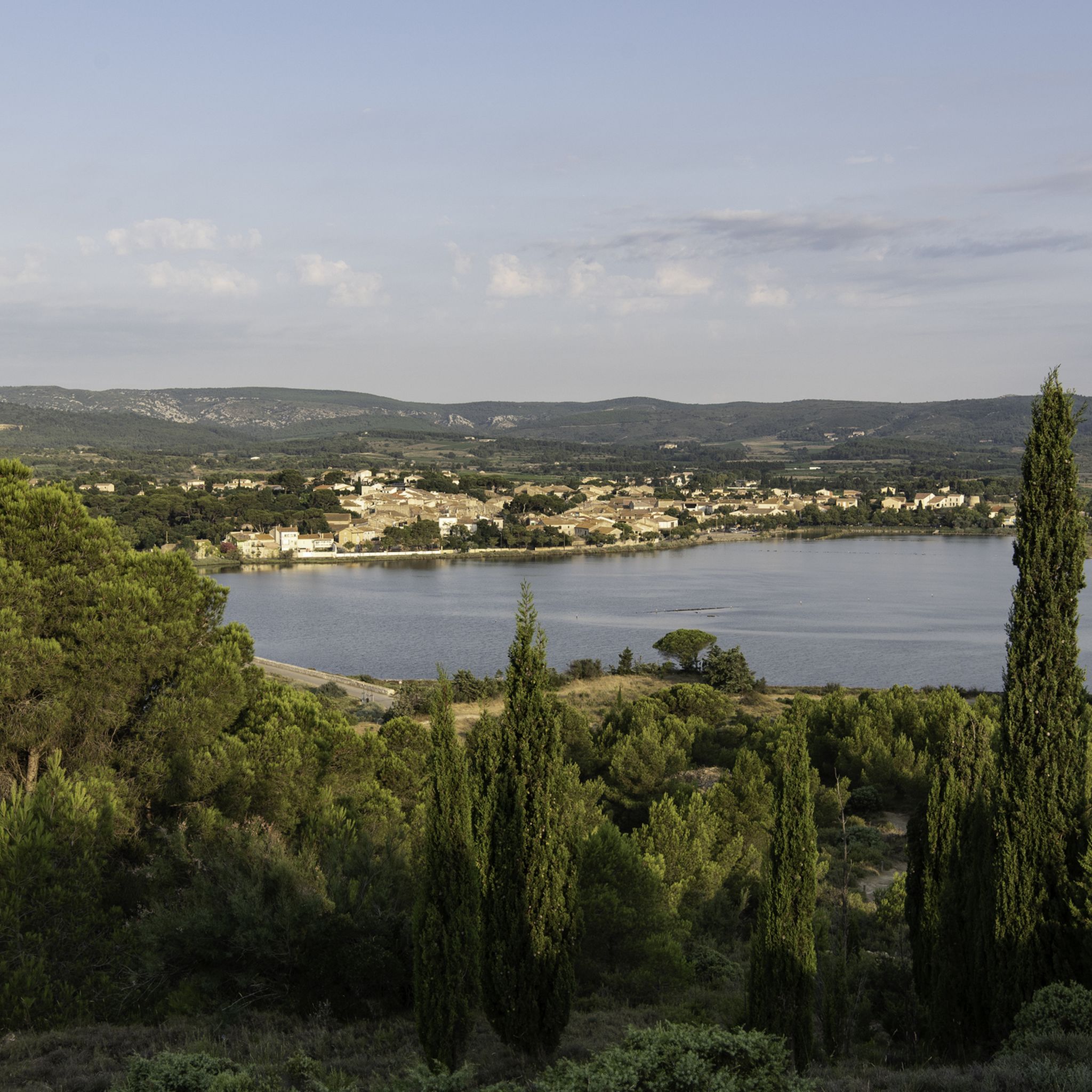
With an average depth of only 55 cm, the Étang de Gruissan is more of a lagoon than a true "lake". Its brackish waters depend on exchanges between the sea, canals, and watershed, while winds can significantly alter its functioning. It is part of the six lagoons of the Narbonne complex, protected notably for the richness of their wetlands and their importance for birds. A few kilometers away, the remains of Île Saint-Martin recall another era: between the 2nd century BC and Roman antiquity, these lagoons were part of Narbonne's vast port system.
2
0
Here, we reach the spot where the Canal Sainte-Marie flows into the Gruissan pond. The waters of the canal then mix with those of the lagoon, which have a higher salinity due to the exchange with the sea. On the other side of the pond, the Barberousse Tower reveals itself on its limestone promontory. Built between 1245 and 1247 by the Archbishop of Narbonne, Guillaume de Broa, this tower is the main remnant of the medieval castle that guarded the maritime access to the Narbonne area.
2
0
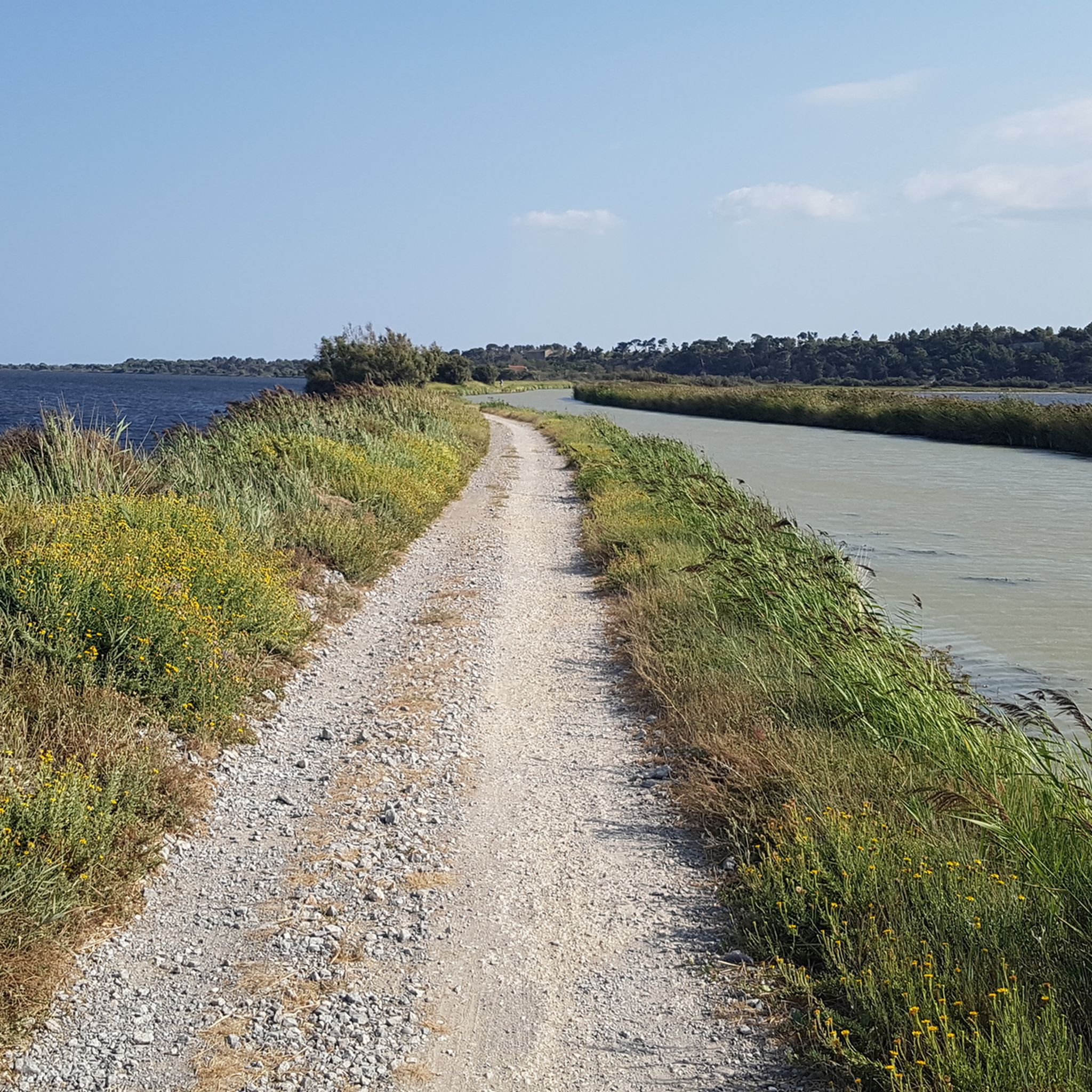
Here, the path runs along the Sainte-Marie canal and the Gruissan pond. This narrow strip of land offers a remarkable immersion in the lagoon environment. In the distance, the Barberousse Tower stands out on its limestone promontory.
2
0
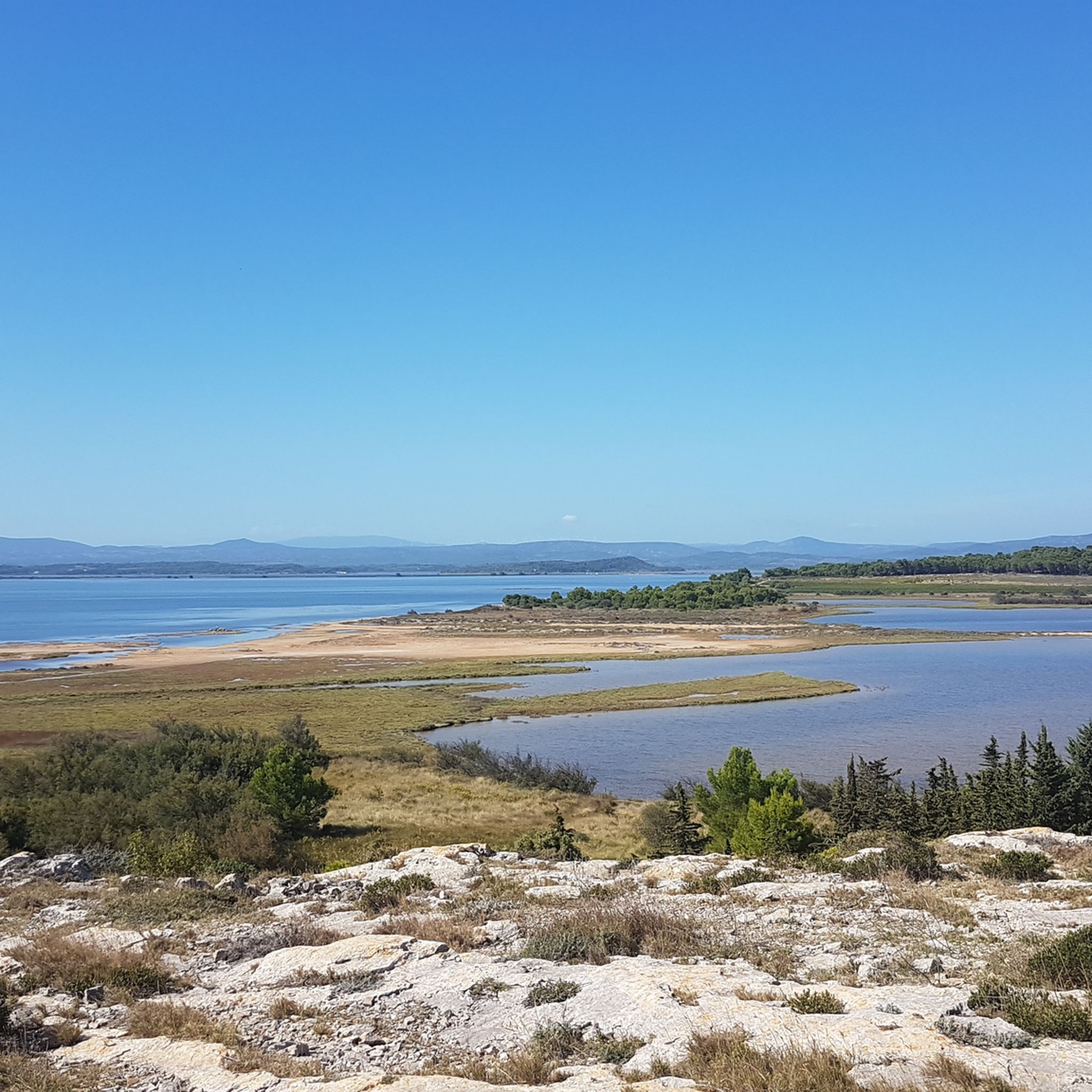
From this narrow strip of land, the Gruissan lagoon landscape reads almost like a succession of parallel bands: the wetlands and secondary ponds to the south, the path on which we are, the Sainte-Marie canal, then the Gruissan pond to the north. The Sainte-Marie canal bears witness to the old hydraulic development of this coastal plain. Integrated into a network of canals intended to manage its waters, it notably contributed to the draining of the old salt pond. Today, it contributes to the freshwater supply of the Gruissan pond and thus participates in the salinity variations of the lagoon.
2
0

It's really special to walk here.
0
0

"Lord, it's time. The summer was very long. Cast your shadow on the sundials, and let the winds loose in the fields. Command the last fruits to be full; give them two more southerly days, push them toward perfection, and chase the last sweetness into the heavy wine." (Rainer Maria Rilke, 1875–1926)
0
0
Frequently Asked Questions
How many running routes are available around Gruissan?
Gruissan offers a wide variety of running routes, with over 110 different trails to explore. These routes cater to all levels, including easy, moderate, and difficult options, ensuring there's something for every runner.
What kind of terrain can I expect on jogging trails in Gruissan?
Jogging trails in Gruissan feature a diverse range of terrains. You can run along the Mediterranean coastline, through extensive wetlands and vibrant salt marshes, or tackle more challenging paths in the rugged Massif de la Clape. The region offers both flat, accessible routes around the étangs (ponds) and more demanding trails with significant elevation gains.
Are there any easy or beginner-friendly running paths in Gruissan?
Yes, Gruissan has several easy and accessible running paths. The area around the étangs, such as the Étang de l'Ayrolle, offers flat and pleasant routes. A popular, accessible 6km loop is the 'Tour de l'Étang de Gruissan', which is mostly paved and provides scenic views. Overall, there are over 10 easy routes available.
Which running routes offer the best views or natural features?
Many routes in Gruissan boast stunning views. Trails through the Massif de la Clape offer exceptional panoramas of the Pyrenees, the Black Mountain, and the Mediterranean Sea. The Gruissan Salt Marshes provide a unique backdrop with their striking pink, white, and ochre hues, often featuring pink flamingos. For a truly magnificent vista, consider routes that pass by Pech des Moulins, which offers views of Gruissan, La Clape, the pond, and the Barbarossa Tower.
Are there any long-distance running trails for experienced runners?
Absolutely. For experienced runners seeking a challenge, Gruissan offers several long-distance and difficult trails. One such route is Notre-Dame des Auzils Chapel – Along the Etang loop from Gruissan, which spans 27.2 miles (43.7 km) and features significant elevation changes through coastal and pond landscapes.
What landmarks or points of interest can I see while running in Gruissan?
Gruissan's running routes often pass by interesting landmarks and natural attractions. You might encounter the historic Barbarossa Tower, offering 360° views, or the vibrant Gruissan Salt Marshes. The Notre-Dame des Auzils Chapel is another notable point of interest. Additionally, the Gruissan Lagoon and the unique Œil Doux Sinkhole are also accessible near some trails.
Are there any circular running routes in Gruissan?
Yes, many of Gruissan's running routes are designed as circular loops, allowing you to start and finish at the same point. The 'Tour de l'Étang de Gruissan' is a popular circular option, and routes like Gruissan Beach – Gruissan Lagoon loop from Ilot 8 des Pluviers also provide a convenient circular experience.
What do other runners say about the trails in Gruissan?
The running routes in Gruissan are highly regarded by the komoot community, with an average score of 4.4 stars from over 70 reviews. Runners often praise the varied terrain, from coastal paths to the challenging Massif de la Clape, and the stunning natural beauty, including the salt marshes and panoramic viewpoints.
Are there any routes suitable for running along the beach or coast?
Yes, Gruissan is known for its extensive sandy beaches, such as the famous Plage des Chalets, which provide vast stretches for seaside jogging. Routes like Gruissan Beach – Gruissan Lagoon loop from Ilot 8 des Pluviers offer excellent opportunities to run along the coast and enjoy views of the iconic stilt houses.
Can I find running routes that are relatively flat?
For those preferring flatter runs, the areas around Gruissan's étangs (ponds) and coastal paths are ideal. These routes offer minimal elevation changes, providing a comfortable experience with scenic views of the water and surrounding landscapes. One such route is Blick auf die Lagune – Nice bike path loop from Place de la Jonque, which is largely flat.
What is the best time of year for jogging in Gruissan?
Gruissan's Mediterranean climate makes it suitable for jogging for much of the year. Spring and autumn offer pleasant temperatures, ideal for longer runs. Summer can be warm, so early morning or late evening runs are recommended. The diverse landscapes, from coastal breezes to sheltered massif trails, provide options regardless of the season.
Most popular attractions around Gruissan

Get inspired with the komoot mobile app


Explore more
Browse the best Running Trails & Routes in other regions.
