The best road cycling routes around La Chapelle-Souëf
4.2
(12)
304
riders
96
rides
Road cycling routes around La Chapelle-Souëf are characterized by the undulating terrain of the Perche Regional Natural Park. The region features rolling hills, green valleys, and dense forests, providing varied elevation changes for cyclists. Routes often traverse picturesque countryside, passing by rivers and ponds, and offering scenic views of the natural landscape. This area provides diverse road cycling opportunities for various skill levels.
Best road cycling routes around La Chapelle-Souëf
- The most popular road cycling route is Notre-Dame Church –…
Last updated: July 29, 2026
7
riders
Moderate road ride. Good fitness required. Mostly well-paved surfaces and easy to ride.
6
riders
78.1km
03:25
710m
710m
Moderate road ride. Good fitness required. Mostly well-paved surfaces and easy to ride.

Sign up for free
3
riders
30.7km
01:21
240m
240m
Easy road ride. Great for any fitness level. Mostly well-paved surfaces and easy to ride.
3
riders
75.9km
03:33
790m
790m
Moderate road ride. Good fitness required. Mostly well-paved surfaces and easy to ride.
4
riders
107km
04:52
1,230m
1,230m
Hard road ride. Very good fitness required. Mostly well-paved surfaces and easy to ride.
Get access to more routes and recommendations from other explorers.
Sign up for free
Already have an account?
Our route recommendations are based on thousands of hikes, rides, and runs completed by other people on komoot.
Start today with a free account
Your next adventure awaits.
Login or Signup



Tips from the Community

Detailed information is available on Wikipedia: https://fr.wikipedia.org/wiki/Porte_Saint-Julien_(La_Fert%C3%A9-Bernard)
0
0

The priory was founded at the beginning of the 11th century and is dedicated to Saint Gauburge (or Walburge), abbess of a large Bavarian monastery in the 8th century. Originally owned by the lords of Bellême, it passed, from the 12th century, to the Royal Abbey of Saint-Denis-en-France. From the end of the 15th century, it was directly dependent on royal power until the Revolution. An important rural estate, its buildings bear witness to its special status and the magnitude of its revenues. Since 1972, it has housed the headquarters of the Perche Ecomuseum, which bears witness to the peasant life of the Perche and develops a diverse cultural program.
0
0


The church has a Latin cross plan. It has a single nave and a flat chevet. A small building is attached to the chevet. A bell tower flanks the building. Buttresses support the drip walls and the gable wall. Pointed arch bays with tracery illuminate the building. The portal, in a low arch, has its external arched voussure.
0
0
Church built in the 12th and 16th centuries. Listed apse from the 12th century. 4-storey bell tower. Corner buttress bell with staircase turret. Renaissance portal. Large Gothic window above the portal. 16th century roof and nave. Stone statue of a bishop, 16th century paintings.
0
0
The nave is covered with a wooden vault with exposed beams. The archivolts of the Romanesque door are decorated with saw teeth. The west gable wall is topped with a slender bell tower. The interior contains three classical altars whose designs were apparently made by Mansard at the request of Louvois, owner of the Prairie de Marcilly.
0
0
Latin cross plan with one nave. Bell tower rising at the corner of one of the side walls of the nave and one of the arms of the transept. Very simple front facade: semi-circular portal and oculus. Gable of the north arm of the transept pierced with a broken bay with tracery. Church built in the 16th century. A bay dates back to the 11th century; the north chapel dates from the 16th century; church remodeled in the 17th century
0
0
The Notre-Dame parish church, formerly the presentation of the Saint-Vincent abbey in Le Mans, is a beautiful building measuring 30 m in total length. The various stages of its construction in the 15th, 16th and 18th centuries. took nothing away from its interest. The pointed arch windows which light the choir have partly flamboyant tracery which belongs to the end of the Gothic period. The nave communicates with the aisles via large semi-circular arches. Between the northern side chapels rises the bell tower covered with a gable roof. On the south side there are three side chapels. The nave and the choir have a beautiful exposed framework in the shape of an inverted ship's hull. The current poor state of the roof has led to problems with this framework. The church itself is not protected, but has a high altar, a tabernacle, and an altarpiece from the 17th century. classified as Historic Monuments. A baptistery with its balustrade, also from the 17th century, and a Louis XVI period lectern complete this furniture. For the repair of the roof of the chapels and the north side of the nave, the Safeguarding of French Art granted two grants of 100,000 F in 1992 and 1994.
0
0
Frequently Asked Questions
How many road cycling routes are available around La Chapelle-Souëf?
There are over 100 road cycling routes around La Chapelle-Souëf, offering a wide range of options. You'll find routes suitable for various skill levels, including 20 easy, 77 moderate, and 6 difficult trails.
What kind of terrain can I expect on road cycling routes in the Perche Regional Natural Park?
The Perche Regional Natural Park, where La Chapelle-Souëf is located, is characterized by its undulating terrain. You can expect rolling hills, green valleys, and dense forests, providing varied elevation changes. Routes often traverse picturesque countryside, passing by rivers, ponds, and hedgerows, offering diverse and scenic views.
What do other road cyclists enjoy the most about road cycling in La Chapelle-Souëf?
The area is highly rated by the komoot community, with an average score of 4.2 stars from 10 reviews. Reviewers often praise the varied terrain, the picturesque Perche countryside, and the opportunities to explore charming villages and historic sites along the way.
Are there any easy road cycling routes suitable for beginners or families?
Yes, there are 20 easy road cycling routes around La Chapelle-Souëf. An example of an easy route is the Bellême – Relais du Roi Saint Louis loop from Saint-Germain-de-la-Coudre, which is about 30 km long and offers a gentle introduction to the region's beautiful landscapes.
What are some notable landmarks or attractions I can see along the road cycling routes?
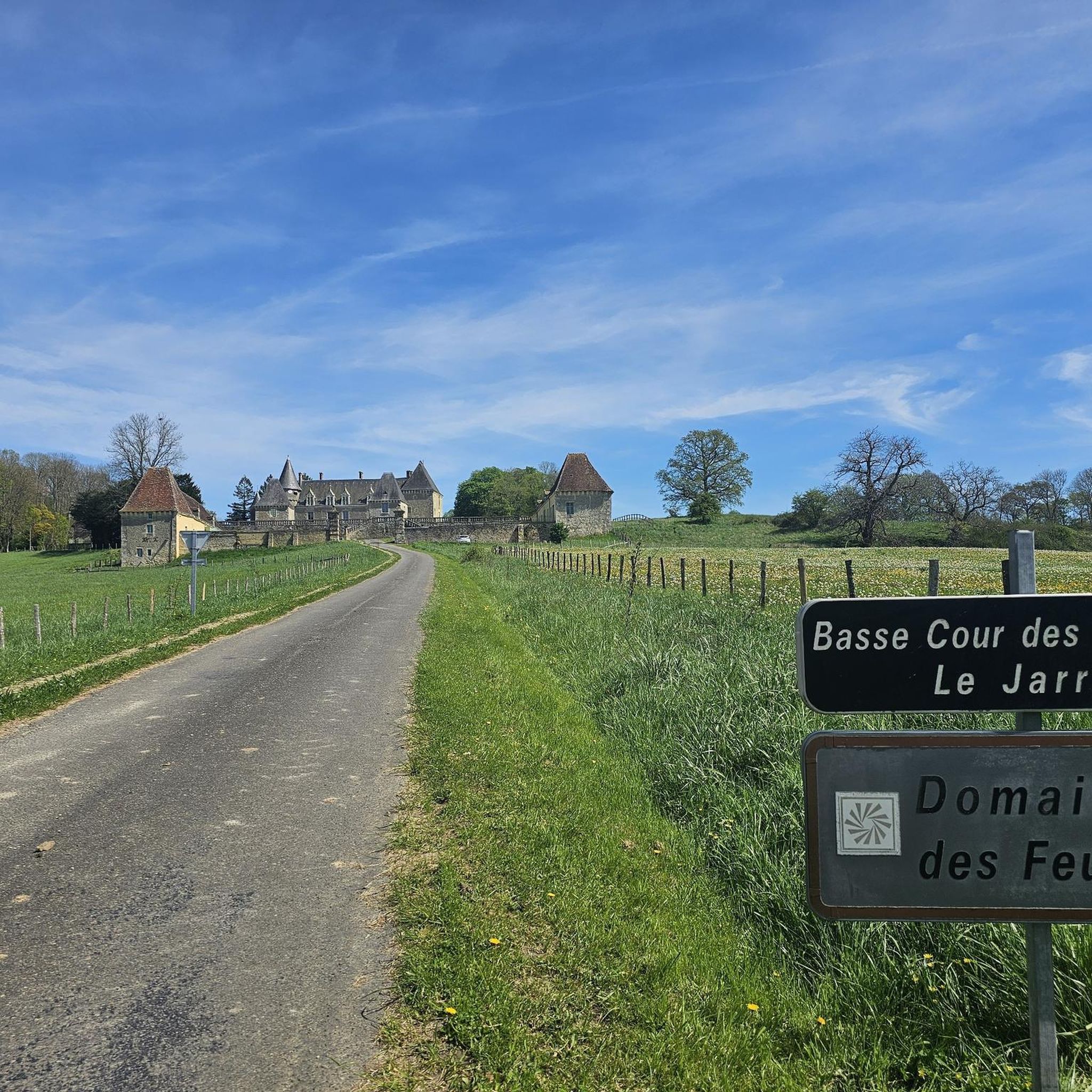
Many routes pass by charming villages and historic sites. For instance, you might cycle near Bellême, known for its attractive small villages, or the Relais du Roi Saint Louis. The Feugerets Castle – Relais du Roi Saint Louis loop from Igé specifically features historic points of interest.
When is the best time of year for road cycling in La Chapelle-Souëf?
Spring and autumn are considered the best seasons for road cycling in the Perche. During these times, the weather is mild, and the landscapes are particularly vibrant, offering beautiful scenery for your rides.
Are there any longer, more challenging road cycling routes for experienced cyclists?
Yes, for experienced cyclists seeking more challenging rides, there are 6 difficult routes available. Additionally, many moderate routes feature significant elevation changes, such as the Château de Montmirail – Porte Saint Julien loop from La Chapelle-Souëf, which covers nearly 78 km with over 700 meters of ascent.
Are there road cycling routes that pass through forests?
Absolutely. The Perche region is known for its dense forests, and many routes offer shaded pathways and tranquil atmospheres. The Relais du Roi Saint Louis – Forêt Domaniale de Bellême loop from Igé, for example, leads directly through the Forêt Domaniale de Bellême.
Can I find circular road cycling routes around La Chapelle-Souëf?
Yes, many of the routes around La Chapelle-Souëf are designed as loops, allowing you to start and end your ride in the same location. Examples include the Notre-Dame Church – Porte Saint Julien loop from Saint-Germain-de-la-Coudre and the Feugerets Castle – Relais du Roi Saint Louis loop from Igé.
Are there any specific routes that offer exceptional panoramic views?
The Perche region's rolling hills and green valleys naturally provide many scenic viewpoints. Routes that traverse the valleys of the Ronne and Berthe rivers are noted for offering significant elevation changes and exceptional panoramas of the surrounding countryside.
Is it possible to combine road cycling with exploring nearby towns?
Yes, the region is dotted with charming villages and historic towns. Bellême, Mortagne-au-Perche, and Nogent-le-Rotrou are all within cycling distance and offer rich cultural heritage and interesting sights to explore during or after your ride.
Most popular routes around La Chapelle-Souëf
Most popular attractions around La Chapelle-Souëf

Get inspired with the komoot mobile app


Explore more
Browse the best Road cycling routes in other regions.
