Attractions and Places To See around Saint-Pastour - Top 12
Attractions and places to see around Saint-Pastour include a bastide village founded in 1259, offering a rich architectural heritage in the Lot-et-Garonne department of France. Perched on a rocky plateau, the village provides views of the surrounding countryside. The area features historical landmarks, cultural sites, and opportunities for outdoor activities like hiking and cycling.
Best attractions and places to see around Saint-Pastour
- The most popular attractions is Le pont des Martinets, a metal bridge spanning the Lot river. This…
Last updated: November 6, 2026
Le pont des Martinets
Highlight • Other
This bridge was built by the SNCF …
Translated by Google •
Tip by

Sainte-Livrade-sur-Lot – Le Temple-sur-Lot Greenway
Highlight • Cycleway
Translated by Google •
Tip by
Sign up now to discover places like this
Get recommendations on the best single tracks, peaks, & plenty of other exciting outdoor places.
Villeneuve sur Lot
Highlight • Other
Translated by Google •
Tip by
Pont des Cieutats
Highlight • Bridge
Translated by Google •
Tip by

Saint-Germain Church Ruins, Le Temple-sur-Lot
Highlight • Historical Site
Translated by Google •
Tip by
Sign up for free to discover even more attractions around Saint-Pastour.
Already have an account?
Start today with a free account
Your next adventure awaits.

Tips from the Community

The bridge owes its name to Nicolas de Cieutat (baron of Pujols) and his son Arnaud. In 1585, they successfully led the heroic defense of Villeneuve-sur-Lot against the troops of Marguerite de Valois (Queen Margot). It initially comprised five arches and three fortified square brick towers with portcullises and machicolations, intended for the defense of the town. At the beginning of the 17th century, violent floods swept away two arches and its central tower. In 1643, by order of Cardinal de Richelieu, the bridge was rebuilt with a single monumental arch spanning 36 meters, giving it its current asymmetrical silhouette.
0
0
The first ashlar stone nave was built around the 13th century. The church then directly depended on the prestigious local Knights Templar commandery (called Le Temple-du-Breuil), later transferred to the Knights Hospitaller of Saint John of Jerusalem. (1572) In the midst of religious conflicts, the church suffered Huguenot vandalism. It was set on fire and partially destroyed by Protestant troops. (17th century) After remaining roofless for a long time, the church underwent significant restoration work during the 17th century. A large part of the walls was rebuilt and the brick bell tower was also rebuilt. The building was definitively deconsecrated and abandoned during the Revolution.
0
0
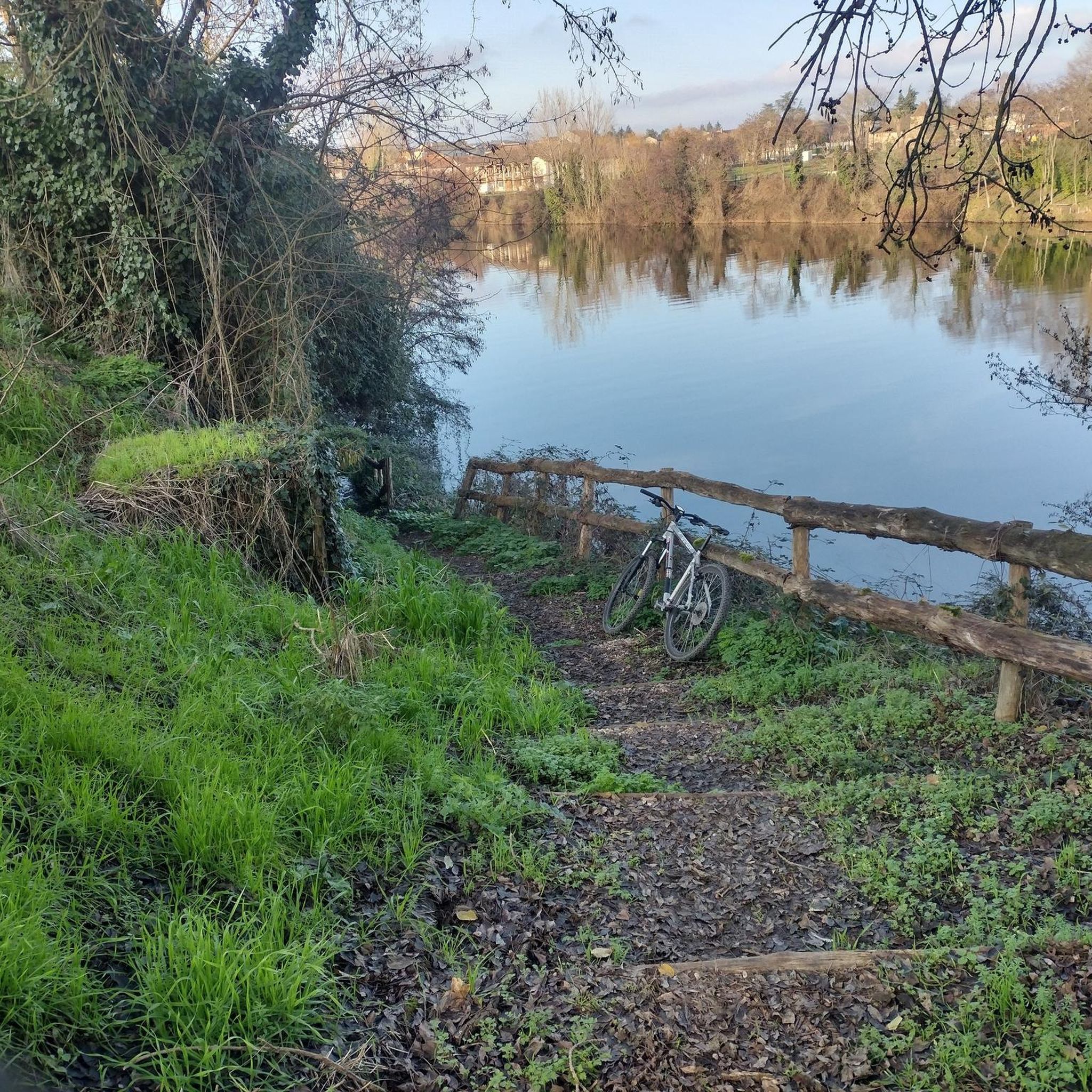
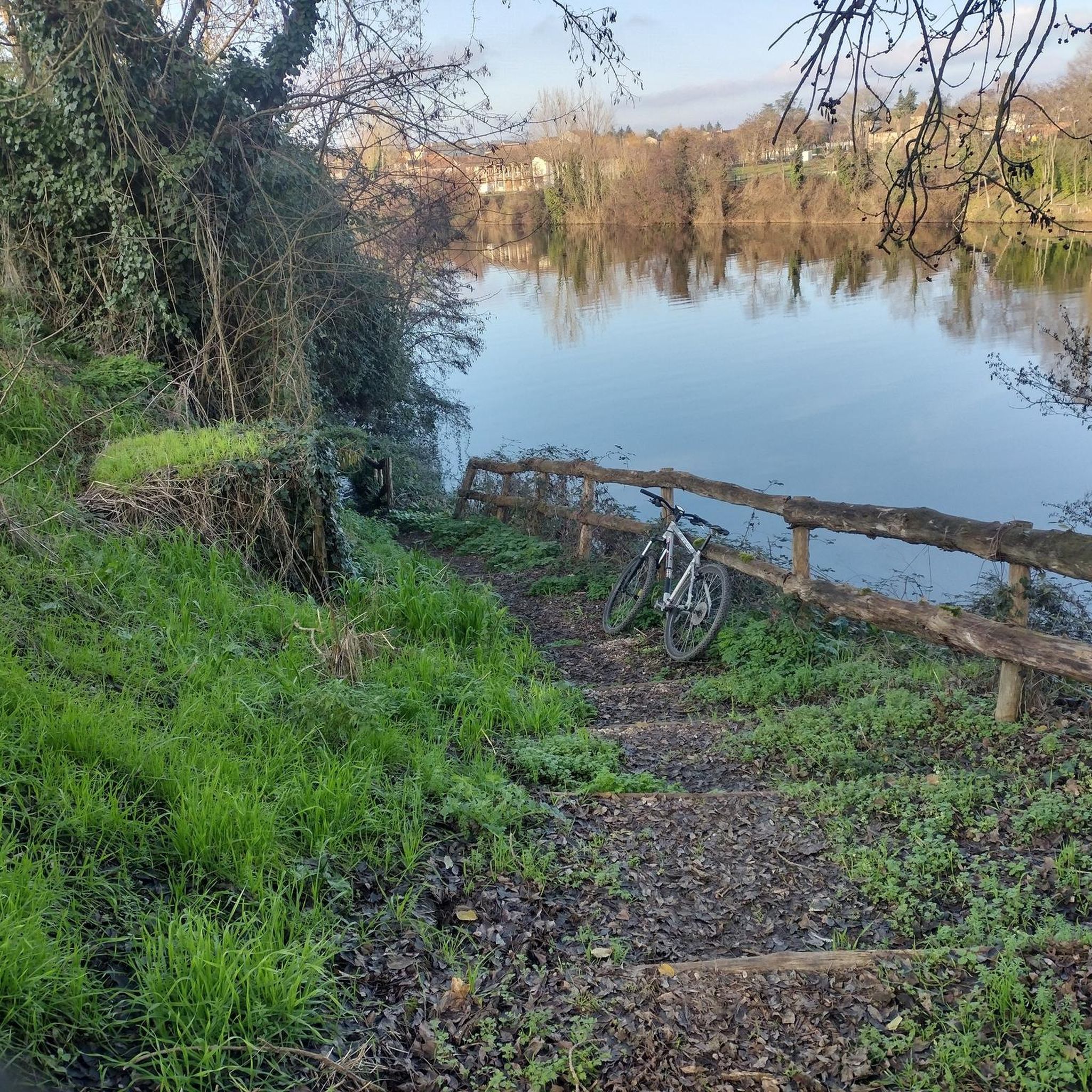
This beautiful Voie Verte created in 2008, 2009 and 2010, connects Villeneuve-sur-Lot to Casseneuil. It uses the land of two former railway lines on the outskirts of Villeneuve-sur-Lot and at the entrance to Casseneuil. Between these two sections, a pretty path has been created along the "La Masse" stream.
0
0
The architecture of Villeneuve-sur-Lot tells its story as a 13th-century river bastide, built for trade and defense. Its geometric checkerboard plan is organized around a central hub and opens onto the river. The checkerboard plan: Straight streets, typical of medieval bastides. Place Lafayette: Central square bordered by covered arcades (the cornières). The watchtowers: Fortified gates of Paris and Pujols in brick and stone. The Romanesque-Byzantine style: Used for the Sainte-Catherine church with its 55-meter high bell tower. The half-timbered facades: Medieval houses with timber framing and overhangs. The Pont des Cieutat: 13th-century structure with asymmetrical stone arches.
0
0

Passage through the cycle lane possible with a two-seater child trailer (Thule Cross)
0
0

One of three bridges to/from Villeneuve. Nice photo opportunity.
1
0

Be careful, there is a footbridge that serves as a cycle path, but its width is limited and does not allow pedestrians and cyclists to cross. It is unthinkable to use it with an electric bike with 70 cm handlebars... It is better to ride on the bridge, especially since there is a road sign authorizing cyclists at the entrance to the bridge... It seems that not all motorists know this sign.
0
0

The community, often referred to as the "Order of the Templars" for short, whose full name is "Poor Knights of Christ and of Solomon's Temple in Jerusalem", takes us back to the 13th century. Founded in the Holy Land, it spread surprisingly quickly with numerous branches in many countries in Central Europe. The order gained notoriety through the fact that it was dissolved in 1312 by the French king and the pope and its members were accused of being heretics. The main reason for the dissolution, however, was not the human and religious misconduct (heresy) of the members, which was merely a pretext, but the legendary wealth of this order. King Philip IV of France (1268 to 1314) wanted to use this measure primarily to improve his coffers and secure its treasures.
0
0
Frequently Asked Questions
What historical sites can I explore in Saint-Pastour?
Saint-Pastour itself is a historical bastide village founded in 1259, featuring remnants of its original fortifications. You can visit the largely ruined Château de Saint-Pastour, a feudal castle recognized as a historic monument. Don't miss the Porte Jeanne d'Arc, an ancient gate surmounted by a statue of Joan of Arc, and the historic Old Well within the village.
Are there any notable churches or religious buildings to visit?
Yes, the Église Gothique Saint-Pasteur (Saint-Pastour Church) is a significant Gothic church reconstructed between the late 15th and early 16th centuries. It features a wide nave, vaulted chapels, and a Renaissance portal. The church is typically open in the afternoons upon request. Additionally, the Chapel of Saint-Jean d'Aiguesvives, dating from the 11th and 12th centuries, is part of the area's rich architectural heritage. Further afield, the Sainte-Catherine Church of Villeneuve-sur-Lot is an imposing religious building in Romano-Byzantine style.
Where can I find panoramic views of the Lot-et-Garonne countryside?
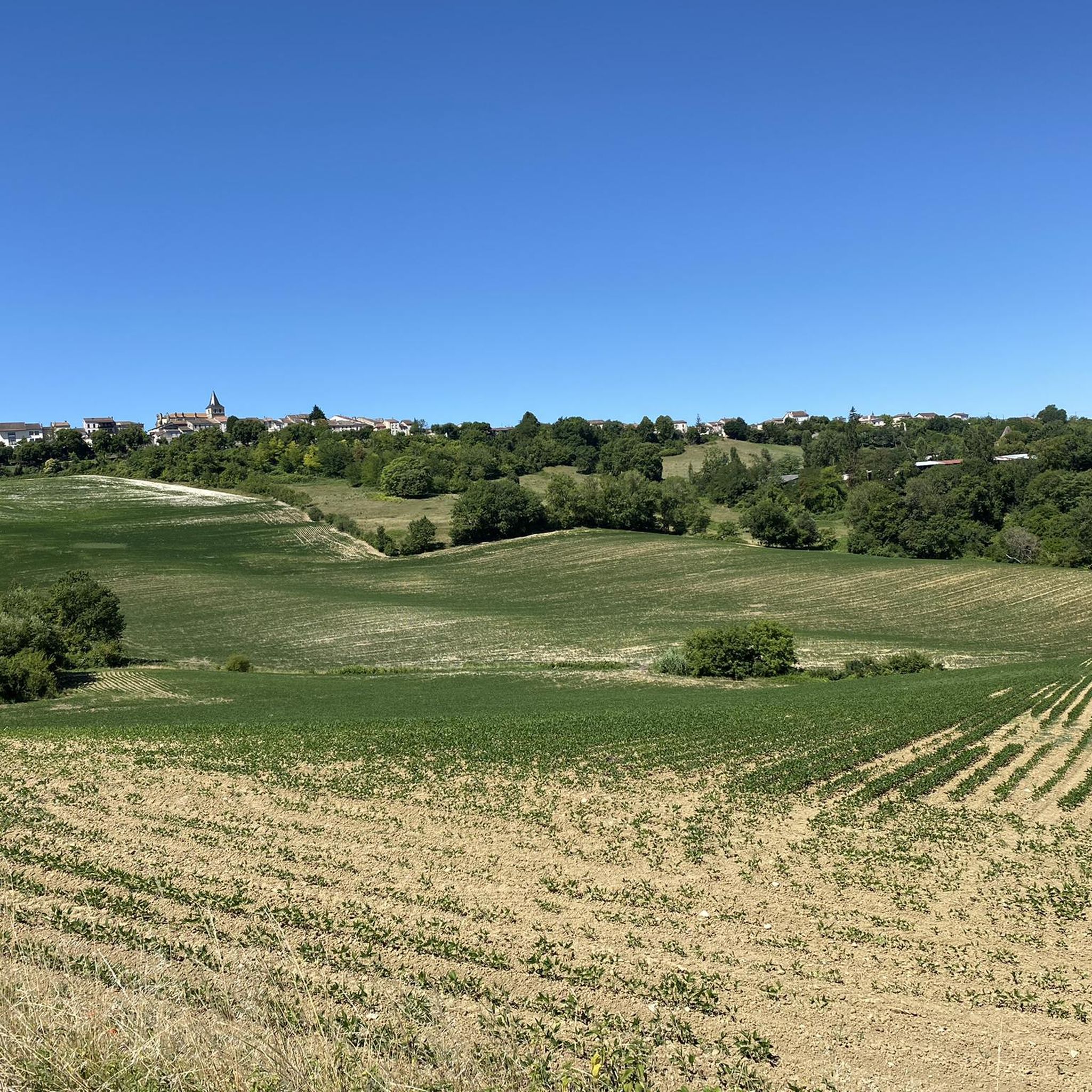
Due to its elevated position on a 'pech' (a narrow, elongated hill), Saint-Pastour offers commanding panoramic views of the surrounding Lot-et-Garonne countryside directly from the village. The area around the bastide provides excellent vantage points for scenic vistas.
What outdoor activities are available around Saint-Pastour?
The region around Saint-Pastour is ideal for outdoor activities, particularly hiking and cycling. There are various trails available for different skill levels. For cycling, you can explore routes like the Sainte-Livrade-sur-Lot – Le Temple-sur-Lot Greenway, built on an old railway line. You can find more detailed routes for cycling, road cycling, and mountain biking in the dedicated guides: Cycling around Saint-Pastour, Road Cycling Routes around Saint-Pastour, and MTB Trails around Saint-Pastour.
Are there family-friendly attractions or activities in the area?
Families can enjoy the Sainte-Livrade-sur-Lot – Le Temple-sur-Lot Greenway, which is wheelchair accessible and suitable for leisurely bike rides or walks. The nearby Latour-Marliac Waterlily Garden (about 13 km away) offers a beautiful and tranquil setting for all ages. Exploring the charming bastide villages like Pujols and Monflanquin can also be a delightful family outing.
What other charming villages or towns are worth visiting near Saint-Pastour?
Several charming villages and towns are located close to Saint-Pastour. Villeneuve-sur-Lot (13 km away) offers scenic views from its bridge and features the impressive Sainte-Catherine Church. Pujols and Monflanquin, both classified as
Are there local markets to visit near Saint-Pastour?
Yes, several nearby towns host vibrant local markets on different days. You can find markets in Cancon (Mondays), Sainte-Livrade-sur-Lot (Fridays), Castelmoron-sur-Lot (Wednesdays), and Pujols (Sundays). These markets are great places to experience local culture and find fresh produce.
What natural features or caves can I visit in the vicinity?
Beyond the panoramic views from Saint-Pastour, you can visit the Latour-Marliac Waterlily Garden, located about 13 km away, which showcases a stunning collection of waterlilies. For a natural underground experience, the Grottes de Fontirou, a site of natural beauty, are approximately 20 km from Saint-Pastour.
What do visitors particularly enjoy about the attractions around Saint-Pastour?
Visitors appreciate the blend of historical heritage and natural beauty. The Le pont des Martinets is noted for its historical significance and the cycle path offering views of the Lot river. The Sainte-Livrade-sur-Lot – Le Temple-sur-Lot Greenway is loved for its accessibility and scenic route along the Lot. The overall tranquility and opportunities for outdoor activities like cycling and exploring charming bastide villages are also highly valued.
Are there any wheelchair accessible routes or attractions?
Yes, the Sainte-Livrade-sur-Lot – Le Temple-sur-Lot Greenway is noted as being wheelchair accessible, providing a smooth path for enjoying the riverside scenery. While the historic bastide village of Saint-Pastour itself may have some uneven terrain due to its age, this greenway offers a good option for accessible outdoor enjoyment.
Can I find ruins of historical significance near Saint-Pastour?
Absolutely. Besides the ruined Château de Saint-Pastour within the village, you can visit the Saint-Germain Church Ruins in Le Temple-sur-Lot. These Romanesque church ruins date back to the 12th century and have a rich history tied to the Knights Templar and Hospitallers, featuring remnants of frescoes and a carved portal.

Get inspired with the komoot mobile app


Explore more
Still not found the Highlight you’re looking for? See guides of the top attractions in other regions:
