Attractions and Places To See around Marchais - Top 7
Best attractions and places to see around Marchais, a commune in the Aisne department of Hauts-de-France, offers insights into French history and culture. The area is characterized by its rural landscape, originally named for its marshland features. Marchais is situated in a region with historical and cultural sites, including the historic Château de Marchais.
Best attractions and places to see around Marchais
- The most popular attractions is Pierrepont Village, a settlement that features a bakery and a bar, distinguishing…
Last updated: July 21, 2026
Pierrepont Village
Highlight • Settlement
Translated by Google •
Tip by

Mountain Bike and Motocross Track in the Forest
Highlight • MTB Park
Translated by Google •
Tip by

Sign up now to discover places like this
Get recommendations on the best single tracks, peaks, & plenty of other exciting outdoor places.
Sign up for free
Village center of Ebouleau
Highlight • Other
- a dries (In a dries one finds houses around a central central square, which usually has a triangular shape)
- the Saint-Martin church;
- the town hall with school;
Translated by Google •
Tip by
Basilica of Our Lady of Liesse
Highlight • Religious Site
Translated by Google •
Tip by

German cemetery of Montaigu
Highlight • Other
Tip by

Sign up for free to discover even more attractions around Marchais.
Sign up for free
Already have an account?
Start today with a free account
Your next adventure awaits.
Login or Signup




Tips from the Community

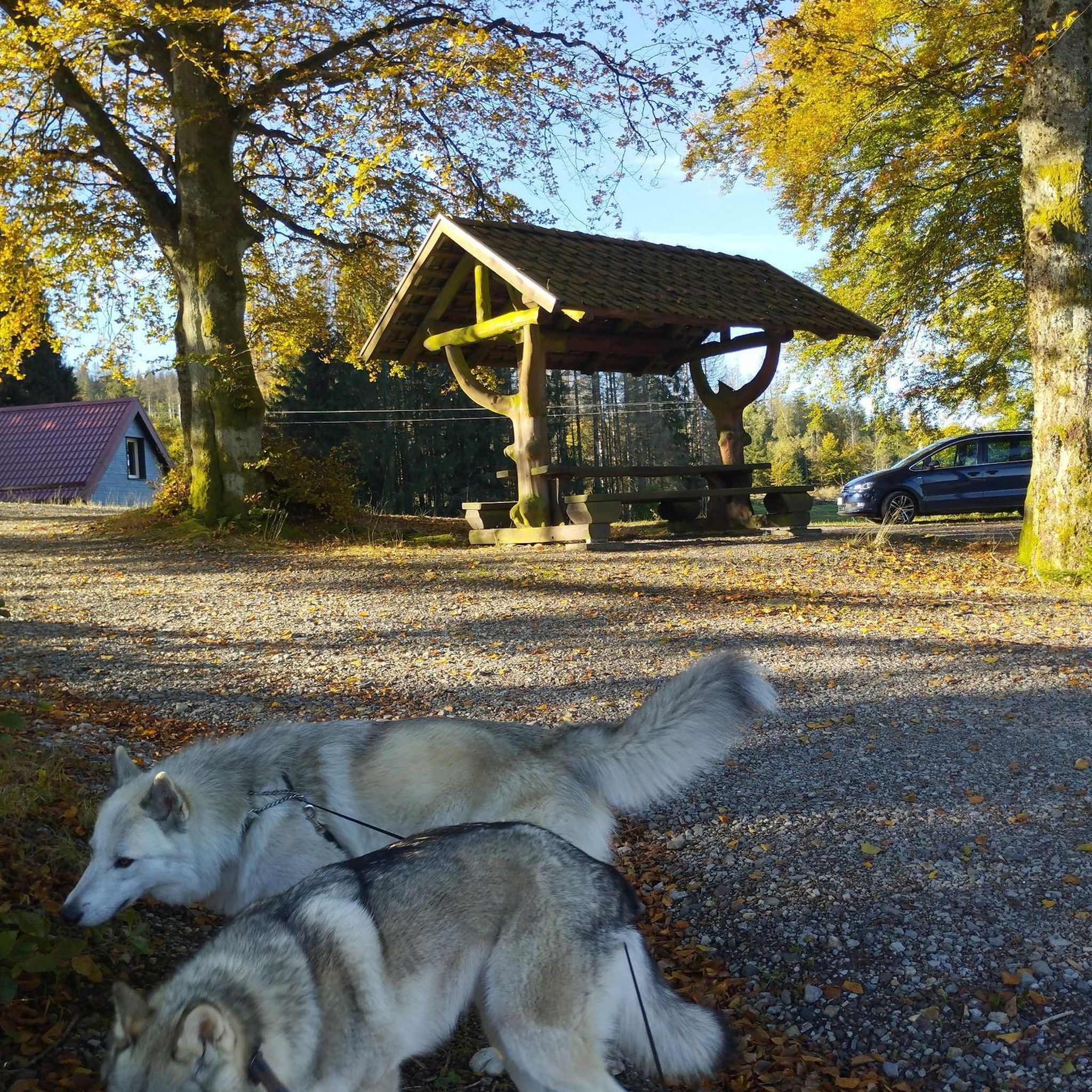
If you plan th ride this section GPS may not track you due to the wooden canopy blocking the signal
0
0
After the Volksbund took over, development work began in 1933, such as the planting of birch trees that give this cemetery a particular charm or the construction of a memorial site (Gedenkhalle) in pink Vosges sandstone based on the plans of the Volksbund's chief architect, Robert Tischler. Inside this building, which is located at the back of the necropolis and after taking a staircase, one reaches a cloister from which one accesses a crypt in which the names of all the men buried in this cemetery are engraved on large beech wood panels.
0
0
This cemetery, located in a town occupied by the Germans from September 1914 to October 1918, was created near a field hospital. From 1920 onwards, it served as a nucleus for the grouping of German graves located in around sixty communes, in particular those in the cemeteries created by the Germans during the war in the communes they occupied, such as Mauregny-en-Haye (more than 1,000 graves), Coucy-les-Eppes (more than 500) and Berrieux (600). The men buried here all fought east of the Chemin des Dames, mainly in the autumn of 1914, early 1915, in April and May 1917 (during General Nivelle's offensive), at the end of May 1918 and from September to October of that same year. Today, this necropolis houses 7,192 bodies: 5,402 are buried in individual and collective graves (of which 8 combatants could not be identified) and 1,790 rest in an ossuary (of which only 54 could be identified).
0
0
This cemetery, located in a town occupied by the Germans from September 1914 to October 1918, was created near a field hospital. From 1920 onwards, it served as a nucleus for the grouping of German graves located in around sixty communes, in particular those in the cemeteries created by the Germans during the war in the communes they occupied, such as Mauregny-en-Haye (more than 1,000 graves), Coucy-les-Eppes (more than 500) and Berrieux (600). The men buried here all fought east of the Chemin des Dames, mainly in the autumn of 1914, early 1915, in April and May 1917 (during General Nivelle's offensive), at the end of May 1918 and from September to October of that same year. Today, this necropolis houses 7,192 bodies: 5,402 are buried in individual and collective graves (of which 8 combatants could not be identified) and 1,790 rest in an ossuary (of which only 54 could be identified).
0
0
More design for motocross, rather than mtb
0
0

The Basilica of Notre Dame de Liesse is a Gothic basilica dating from the 12th century and dedicated to the Virgin Mary, who is said to have miraculously freed three knights from captivity during the Crusades. The basilica was a place of pilgrimage for many kings and queens of France, who came to pray for various favors and blessings. You can admire the beautiful architecture, the statue of the Black Madonna, the frescoes and relics of the basilica, and learn about its rich history and culture. The basilica is located in the town of Liesse-Notre-Dame.
2
0

Cross country terrain, very well equipped for mountain biking and motorcycling
1
0

The village of Pierrepont already stands out - even on comments on the internet - by the presence of a bakery and a bar. This compared to the other villages in the region that only house a church and a municipal school. We also noticed two beautiful scenes in the form of a letterbox incorporated into a bicycle and a fisherman on the other. The cross next to the Visser is also listed as a monument on Wikipedia.
3
0
Frequently Asked Questions
What historical sites can I explore in and around Marchais?
Marchais itself is home to the historic Château de Marchais, a 16th-century private residence with a rich history tied to the Monégasque princely family. You can also visit the 12th-century Marchais Church, known for its medieval appearance and artifacts reflecting Monégasque interest, and the mid-19th-century Calvary of Marchais. Further afield, the Basilica of Our Lady of Liesse is a Gothic basilica from the 12th century, a significant pilgrimage site for French royalty.
Are there any unique villages or settlements to visit near Marchais?
Yes, Pierrepont Village is a notable settlement that stands out with its bakery and bar, a rarity compared to other local villages. It also features unique scenes like a letterbox incorporated into a bicycle and a fisherman, along with a listed monument cross. Another charming spot is the Village center of Ebouleau, characterized by its 'dries' where houses are arranged around a central square, alongside the Saint-Martin church and town hall.
What kind of outdoor activities are available around Marchais?
The region around Marchais offers various outdoor activities. For running enthusiasts, there are several routes, including an easy 4.1 km loop from Coucy-lès-Eppes or a moderate 8 km loop from Marchais itself. Cyclists can enjoy routes like the easy 24.6 km 'Basilica of Our Lady of Liesse loop' from Liesse-Notre-Dame. Mountain biking is also popular, with trails such as the 'Descent to Mauregny-en-Haye' loop from Coucy-lès-Eppes. You can find more details on these activities in the dedicated guides for Running Trails around Marchais, Cycling around Marchais, and MTB Trails around Marchais.
Are there family-friendly attractions in the Marchais area?
Yes, several attractions cater to families. Pierrepont Village is considered family-friendly, offering a charming village experience with unique sights. The general rural landscape and the various easy running and cycling routes mentioned in the outdoor activity guides also provide opportunities for family outings.
What natural features can I expect to see in Marchais and its surroundings?
Marchais itself was named after its original marshland characteristics, reflecting the rural landscape of the Hauts-de-France region. The broader area features rolling hills and forested areas, offering opportunities to appreciate the natural environment. You can find a Mountain Bike and Motocross Track in the Forest, indicating the presence of accessible woodlands for outdoor enjoyment.
What are some significant cultural or religious sites near Marchais?
Beyond the Marchais Church, the Basilica of Our Lady of Liesse is a prominent Gothic basilica dedicated to the Virgin Mary, known for its architecture, a statue of the Black Madonna, frescoes, and relics. It has a rich history as a pilgrimage site for French royalty. Additionally, the German cemetery of Montaigu serves as a poignant historical site, commemorating soldiers from World War I.
What are the most popular attractions according to komoot visitors?
Komoot visitors particularly appreciate Pierrepont Village for its unique character, including a bakery and bar, and charming local scenes. The Basilica of Our Lady of Liesse is also highly regarded for its historical significance and beautiful architecture. The Village center of Ebouleau is noted for its cozy atmosphere and traditional layout.
Are there any World War I historical sites in the Marchais area?
Yes, the German cemetery of Montaigu is a significant World War I site. It was created near a field hospital during the war and later served as a grouping point for German graves from numerous communes. The cemetery houses thousands of bodies and features a memorial site with a crypt.
What are some nearby towns worth visiting for further exploration?
While Marchais is a small commune, it's well-situated for exploring other historical and cultural sites. Laon, about 15 km away, is known for its early Gothic cathedral. Reims, 40 km away, is a lively city with three UNESCO-listed heritage sites. Soissons (42 km) offers an abbey and cathedral, and Saint-Quentin (48 km) features a remarkable 16th-century town hall.
Where can I find places to eat or drink in the Marchais area?
In Pierrepont Village, you can find a bakery and a bar, which are notable amenities for a local village. While Marchais itself is a small commune, these local establishments offer options for refreshments.
What is the significance of the Château de Marchais?
The Château de Marchais is a 16th-century castle that has been a private residence of the Monégasque princely family since 1854. It's historically significant as the place where Prince Albert I of Monaco married Lady Mary Victoria Hamilton in 1869. The estate is remarkably large, six times the size of Monaco, and has even housed exotic animals in the past.

Get inspired with the komoot mobile app


Explore more
Still not found the Highlight you’re looking for? See guides of the top attractions in other regions:
