Attractions and Places To See around Béthincourt - Top 20
Best attractions and places to see around Béthincourt include historical sites and natural features. Located in the Meuse department of northeastern France, Béthincourt is notable for its World War I history and its setting along the Ruisseau de Forges. The area offers insights into 20th-century conflicts and opportunities to explore its natural landscape.
Best attractions and places to see around Béthincourt
- The most popular attractions is Cycle path along the Meuse Canal, a cycle way that features pleasant gravel…
Last updated: May 11, 2026
Cumières-le-Mort-Homme
Highlight • Other
It was in February 1916 that the heaviest fighting took place. …
Translated by Google •
Tip by

National Necropolis of Bras-sur-Meuse
Highlight • Historical Site
Translated by Google •
Tip by

Sign up now to discover places like this
Get recommendations on the best single tracks, peaks, & plenty of other exciting outdoor places.
Sign up for free
Church of Forges-sur-Meuse
Highlight • Religious Site
Translated by Google •
Tip by
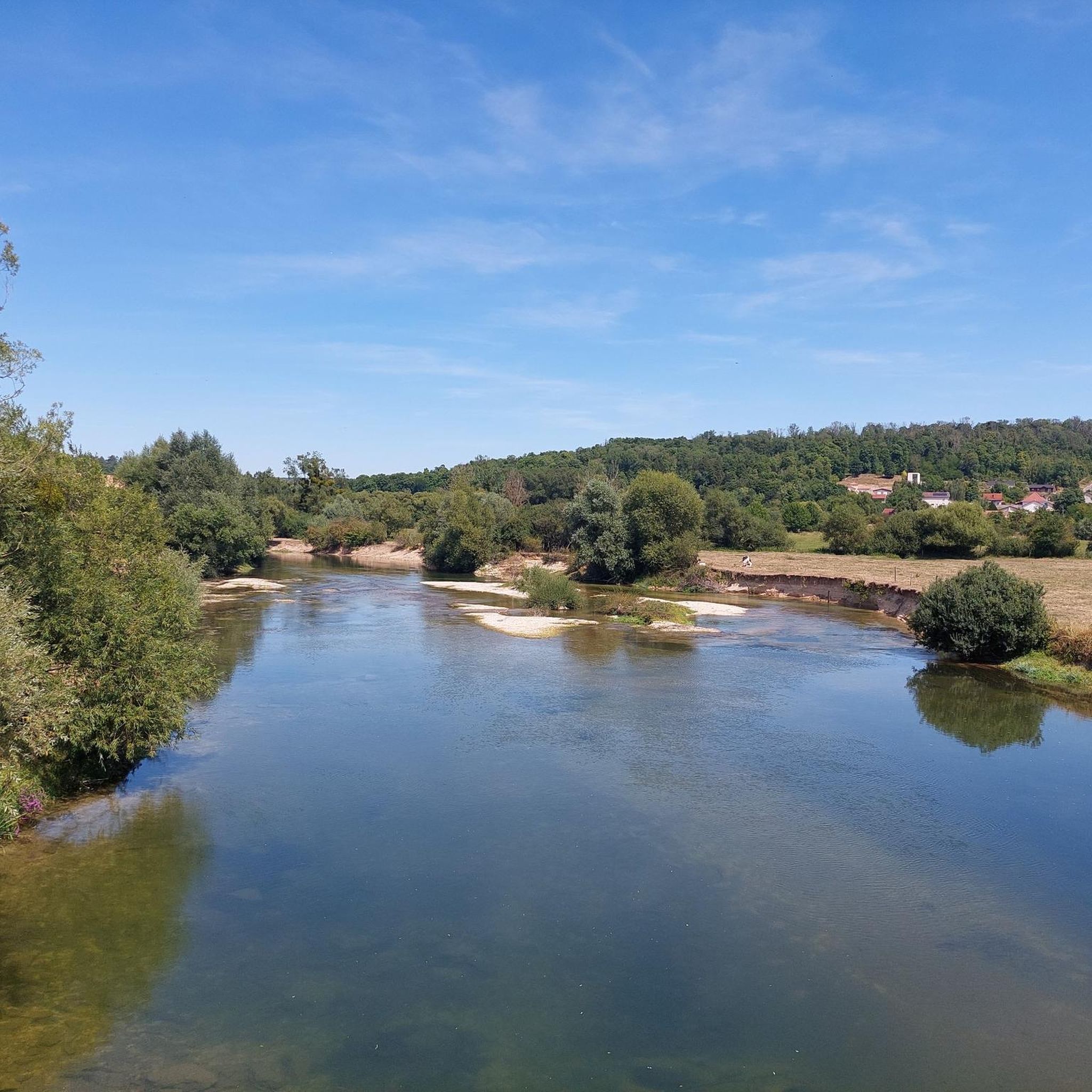
Water on both sides
Highlight (Segment) • Cycleway
Translated by Google •
Tip by
Church of Vacherauville
Highlight • Other
Translated by Google •
Tip by
Sign up for free to discover even more attractions around Béthincourt.
Sign up for free
Already have an account?
Start today with a free account
Your next adventure awaits.
Login or Signup


Tips from the Community

It is nice to see that the water level of the canal is much higher than the water level of the stream.
8
0
Tevens stands at the church's image: The Cross of the Hunters of Briant Cross of the Hunters of Driant in Vacherauville (Meuse) after the First World War. At the end of 1915, the monument in the form of a statue of France, sword in hand, imploring the heavens for victory was erected, but destroyed by the Germans in February 1916. At the end of the conflict, the former hunters erected a new, identical statue, but this time with the sword in its sheath, as shown on the Bleujonquille website.
7
0
Among the thousands of fallen soldiers who rest here is Caporal Louis Micol, a soldier of the 19th Battalion of Chasseurs à Pied. He was not only a soldier, but also the founder of one of the first French front newspapers: Le Son du Cor, a trench newspaper written by and for soldiers. Micol died on 18 September 1915 in Brabant-en-Argonne and is buried in grave no. 390. His story is a reminder that even in the midst of the violence of war, soldiers sought ways to make their voices heard, share experiences and preserve their humanity.
7
1
Military cemetery created in 1916 during the Battle of Verdun. It contains the remains of 6,537 French soldiers, including 2,000 in ossuaries. Most of them died in 1916 on the right bank of the Meuse, near strategic points such as Côte 344 and Thiaumont. In 1961, 151 soldiers who died in the Second World War were also buried there. The necropolis covers 3.2 hectares and was set up between 1919 and 1934
7
1
The church of Vacherauville was rebuilt after the destruction of the Battle of Verdun (1916) and is an example of sober reconstruction architecture. Inside is the “Vitrail du souvenir”, a commemorative stained glass window in honour of Lieutenant-Colonel Émile Driant, who died at the Bois des Caures. The window, designed by Jean-François Aute, shows Driant at the head of his battalions and was donated by veterans of the 56th and 59th Chasseurs à Pied.
7
0
This church, dedicated to Saint-Baudel, originally dates from the 11th century, as evidenced by the use of the typical opus spicatum masonry in the north wall. Over the centuries, the building has been modified and restored several times, resulting in a striking mix of architectural styles. Inside, you will find wooden seating boxes for the faithful and a 19th-century pulpit – silent witnesses to religious life in this village on the Meuse. Note the symbolic animal figures at the ends of the roof beams.
7
0

The national necropolis of Bras-sur-Meuse contains the remains of 6,537 soldiers who died for France. During the First World War, 6,386 French soldiers were gathered here, 2,000 of whom are in two ossuaries. It was created in 1916 during the Battle of Verdun (February-November 1916) and was gradually expanded from 1919 to 1934. It is a cemetery for the regrouping of bodies exhumed from military cemeteries on the right bank of the Meuse, in particular those of soldiers who died in the first aid post or in the ambulances stationed at La Fourche, the crossroads of the roads to Louvemont and Douaumont. The ossuaries contain the remains of unknown and unidentified soldiers who fell on hill 344, Haudromont, Froideterre, Cote du Poivre, Thiaumont, Louvemont, etc. In 1961, the remains of 151 soldiers who died during the fighting in June 1940 and were buried in various villages along the Meuse during the Second World War were collected here. Among the soldiers is Corporal Louis Micol, of the 19th Chasseurs Battalion, founder of one of the first newspapers on the front, Le son du cor , a trench newspaper of the chasseurs, who died in Brabant on 18 September 1915 (grave no. 390). Want to know more? Click on https://www.cheminsdememoire.gouv.fr/fr/bras-sur-meuse
5
1
The first church of Saint-Martin in Vacherauville was built in the 16th century. The house of worship was damaged by the Great War and was rebuilt. In 1930, the house was accessible again.
5
0
Frequently Asked Questions
What historical sites can I visit around Béthincourt?
Béthincourt is rich in history, particularly from World War I. You can visit Cumières-le-Mort-Homme, one of the villages destroyed during the Battle of Verdun, featuring a memorial statue. Another significant site is the National Necropolis of Bras-sur-Meuse, a military cemetery holding the remains of thousands of French soldiers from both World Wars. The Church of Forges-sur-Meuse, originally from the 11th century, also bears witness to the region's past, having been restored after WWI.
Are there any natural features or scenic viewpoints to explore near Béthincourt?
Yes, the area around Béthincourt offers beautiful natural settings. The Ruisseau de Forges, a tributary of the Meuse, flows through the village. For scenic views, consider cycling along the Cycle path along the Meuse Canal, which provides a peaceful landscape with banks and locks. Another option is the 'Water on both sides' cycle way, where you can enjoy waterfront views between the meandering Maas and the Maas Canal.
What cycling routes are available around Béthincourt?
The region is excellent for cycling. You can enjoy the Cycle path along the Meuse Canal, known for its pleasant gravel strips and tranquil scenery. Another popular option is 'Water on both sides', a cycle way that allows you to ride between the meandering Maas and the Maas Canal, offering unique waterfront perspectives. For more routes, explore the Gravel biking around Béthincourt guide or the MTB Trails around Béthincourt guide.
Are there hiking trails near Béthincourt?
Absolutely. The Grand Verdun agglomeration has developed new hiking circuits in the area, including trails focused on local resistance history. For specific routes, you can check the Hiking around Béthincourt guide, which includes routes like 'The Meuse in Verdun – Verdun loop' and the 'Mort Homme Monument loop'.
What do visitors enjoy most about the attractions around Béthincourt?
Visitors particularly appreciate the historical depth and the serene natural beauty. The cycling paths along the Meuse Canal and the 'Water on both sides' route are highly rated for their peaceful landscapes and unique waterfront views. The historical sites like Cumières-le-Mort-Homme and the National Necropolis of Bras-sur-Meuse offer profound insights into the region's past, making them very impactful experiences.
Are there family-friendly activities or attractions in the Béthincourt area?
Many of the outdoor activities, especially the cycling paths like 'Water on both sides', are suitable for families. Exploring the historical sites can also be a valuable educational experience for older children. The natural settings provide opportunities for gentle walks and picnics. When planning, consider the difficulty ratings of hiking or cycling routes to ensure they are appropriate for all family members.
What is the best time of year to visit Béthincourt attractions?
The spring and summer months (April to September) generally offer the most pleasant weather for outdoor activities like cycling and hiking, allowing you to fully enjoy the natural landscapes and historical sites. Autumn can also be beautiful with changing foliage. Winter can be cold, but the historical sites remain accessible, and some trails might be suitable for winter walks, though appropriate clothing is essential.
Are there any unique or lesser-known attractions in Béthincourt?
Beyond the well-known historical sites, Béthincourt is home to a seismological measurement station, which was officially put into service in August 2023, making it unique in the Meuse department. The village itself, rebuilt 500 meters from its original location after WWI, and its role as a command post for the French Forces of the Interior during WWII, also offer fascinating, lesser-known historical context.
Can I find accommodation or cafes near Béthincourt's attractions?
While Béthincourt is a small commune, the wider region around Verdun offers various accommodation options, from hotels to guesthouses. You will find cafes and restaurants in nearby towns and villages, particularly in Verdun itself, which is a short drive away. It's advisable to check in advance for specific opening hours and availability, especially in smaller localities.
What is the significance of the Church of Forges-sur-Meuse?
The Church of Forges-sur-Meuse, dedicated to Saint-Baudel, is notable for its architectural history, with parts dating back to the 11th century, evidenced by its 'opus spicatum' masonry. It has undergone several modifications and restorations, particularly after being destroyed during the Battle of Verdun. Its interior features 19th-century elements and symbolic animal figures on the roof beams, reflecting centuries of religious life in the village.
How long should I plan for visiting the historical sites around Béthincourt?
To fully appreciate the historical significance of sites like Cumières-le-Mort-Homme and the National Necropolis of Bras-sur-Meuse, you should allocate at least a half-day, or even a full day if you wish to explore multiple sites in depth. Many visitors combine these with other WWI battlefields and memorials in the wider Verdun area for a comprehensive historical tour.
Are there any dog-friendly trails or areas near Béthincourt?
Many of the natural trails and outdoor areas around Béthincourt are suitable for walks with dogs, provided they are kept on a leash and you follow local regulations. The cycling paths along the Meuse Canal and the various hiking routes mentioned in the Hiking around Béthincourt guide are generally good options for dog owners. Always remember to clean up after your pet.
Most popular routes around Béthincourt

Get inspired with the komoot mobile app


Explore more
Still not found the Highlight you’re looking for? See guides of the top attractions in other regions:
