The best cycling routes around Boisseuilh
4.8
(45)
240
riders
65
rides
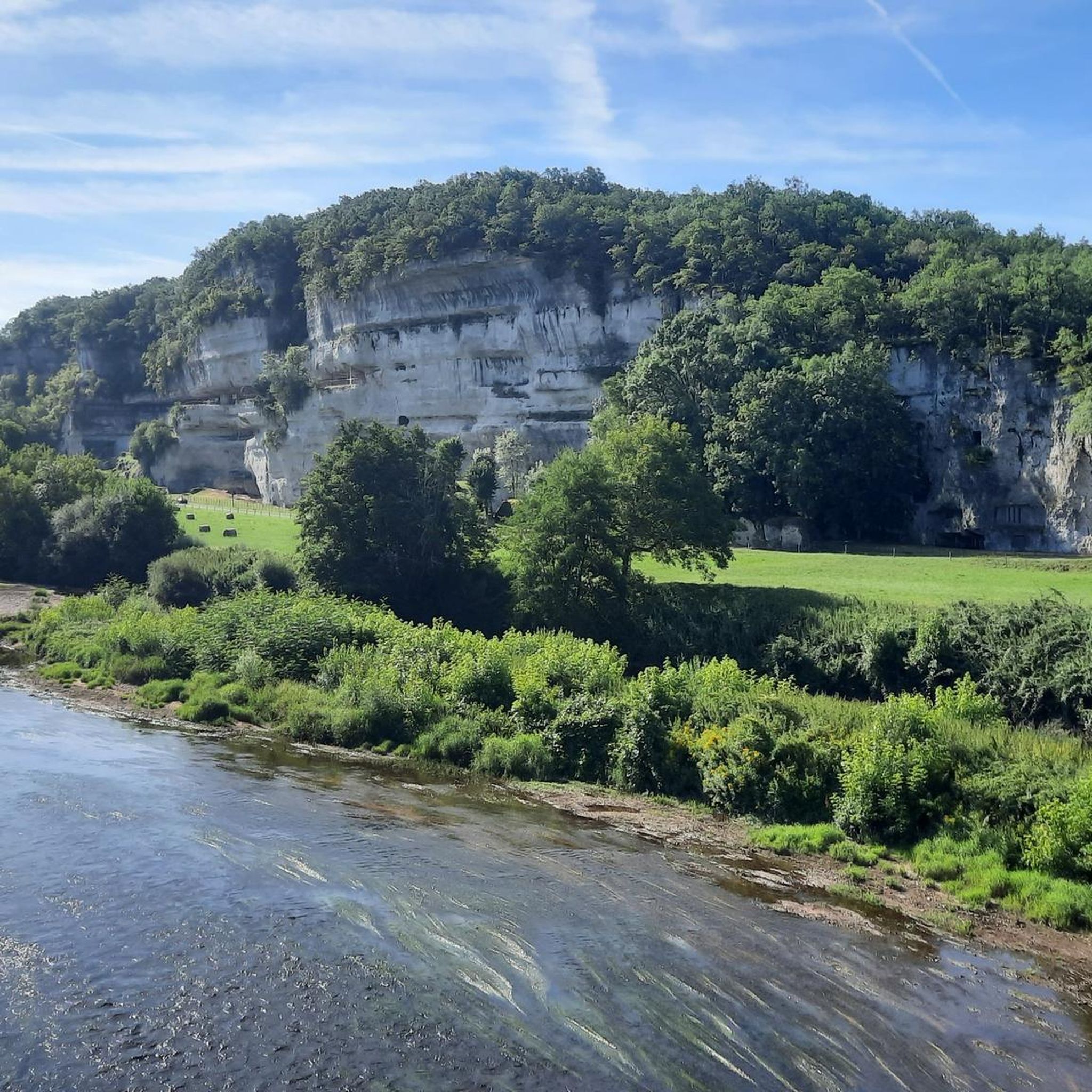
Touring cycling around Boisseuilh, located in the Dordogne region of France, offers routes through rolling countryside and farms. The area features varied terrain, from riverbanks along the UNESCO Biosphere Reserve Dordogne River to hills, with a mix of flat and undulating sections. Cyclists can experience picturesque landscapes and views of Hautefort and its château.
Best touring cycling routes around Boisseuilh
- The most popular touring cycling route is Hautefort Castle – Muratel railway tunnel loop from Hautefort, a 41.6 miles (67.0 km) trail that takes 4 hours 31 minutes to complete. This route includes a railway tunnel, offering a unique feature along its course.
- Another top favourite among local touring cyclists is Hautefort – Hautefort Castle loop from Hautefort, a difficult 22.3 miles (35.8 km) path. This route provides scenic views of the Hautefort Château and the surrounding rolling countryside.
- Local touring cyclists also love the Hautefort Castle – Hautefort loop from Hautefort, a 18.5 miles (29.8 km) trail leading through rolling countryside with views of the château, often completed in about 2 hours 3 minutes.
- Touring cycling around Boisseuilh is defined by rolling countryside, riverbanks, and hills, including sections of "Voies Vertes" (car-free greenways). The network offers options for different ability levels, from flat sections to more challenging climbs.
- The routes in Boisseuilh are highly rated by the komoot community with an average score of 4.6 stars from over 40 reviews. More than 200 touring cyclists have used komoot to explore Boisseuilh's varied terrain.
Last updated: May 18, 2026
5.0
(3)
17
riders
67.0km
04:31
980m
980m
Hard bike ride. Very good fitness required. Mostly paved surfaces. Suitable for all skill levels.
8
riders
34.8km
02:18
490m
490m
Hard bike ride. Very good fitness required. Mostly paved surfaces. Suitable for all skill levels.

Sign up for free
4.7
(6)
7
riders
26.9km
01:45
350m
350m
Moderate bike ride. Good fitness required. Mostly paved surfaces. Suitable for all skill levels.
5.0
(1)
4
riders
15.7km
01:02
210m
210m
Moderate bike ride. Good fitness required. Mostly paved surfaces. Suitable for all skill levels.
5.0
(1)
5
riders
60.0km
03:42
590m
590m
Hard bike ride. Very good fitness required. Mostly paved surfaces. Suitable for all skill levels.
Get access to more routes and recommendations from other explorers.
Sign up for free
Already have an account?
Our route recommendations are based on thousands of hikes, rides, and runs completed by other people on komoot.
Start today with a free account
Your next adventure awaits.
Login or Signup


Tips from the Community

The Muratel railway tunnel was dug between 1893 and 1895. It allowed the crossing of a meander of the Elle River on the Nontron-Sarlat railway line, crossing the Muratel hill. 215 meters long, it features a limestone vault with refuge niches for safety. The line operated until 1939, then the tunnel was decommissioned in 1941, its roadway even being paved for temporary road access during construction. Today, it is an unused historical railway remnant. Good luck if you dare venture there!
0
0
Hautefort Castle was built between the late 16th and late 17th centuries on the remains of an ancient medieval fortress. Its architecture is clearly reminiscent of the Loire Valley châteaux, with a classical style combining elegance and defensive elements, including crenellated towers and a large quadrangle. The Marquis Jacques-François de Hautefort, a great builder, carried out a significant transformation to create a refined residence with galleries, a chapel, and rich interior decoration. The castle is surrounded by magnificent French gardens designed in the 19th century by the Count of Choulot. It survived the Revolution thanks to the defense of the inhabitants and was restored after a fire in the 20th century.
0
0
The Excideuil hospital building, designed in reinforced concrete, is a hospital complex built from 1937, with an interruption during the war, then resumed in 1949. It comprises several buildings including a main hospital in the shape of a comb with a curved plan, with seven levels adapted to the slope of the land, allowing differentiated entrances. The architecture strictly separates the services by floor (medicine, surgery, children, etc.) with rooms open on the south facade to let in light. The building also has a central glass rotunda housing the reception hall and operating rooms, as well as an administrative building with a clock tower. The complex is located in a large sloping park overlooking the town of Excideuil
0
0

What you need to know Medieval origins: A Romanesque building dating from the 11th century, it is a testament to the religious architecture typical of Limousin. Style: Its robust structure, barrel vaults, and sculpted capitals invite you to immerse yourself in Romanesque art. Idyllic setting: Nestled in a village listed as one of the most beautiful in France, the church is surrounded by cobbled streets and old houses.
0
0
Hautefort Castle is one of the few surviving examples of classical architecture in southwest France. Situated on a rocky spur overlooking the village of Hautefort, it offers a majestic silhouette that is more reminiscent of the Loire Valley châteaux than the region's typical medieval fortresses.
1
0


The village and the Château de Hautefort are worth a little detour on the Flow Vélo route. At lunchtime, you can buy delicious cooked dishes at the butcher's shop "Levy" on rue Bertrand de Born and enjoy them in a small shaded square a few steps away on rue Bertrand Artigue.
0
0
Frequently Asked Questions
How many touring cycling routes are available around Boisseuilh?
There are over 60 touring cycling routes around Boisseuilh, offering a variety of experiences through the rolling countryside and farms of the Dordogne region. These routes are highly rated by the komoot community, with an average score of 4.6 stars.
What kind of terrain can I expect when touring cycling near Boisseuilh?
The terrain around Boisseuilh is varied, featuring rolling countryside, farms, and sections along riverbanks, including the UNESCO Biosphere Reserve Dordogne River. You'll find a mix of flat and undulating sections, with some routes offering more challenging climbs. The region also integrates "Voies Vertes" (car-free greenways) for smoother rides.
Are there any easy touring cycling routes suitable for beginners or families?
While many routes offer moderate to difficult challenges, there is at least one easy touring cycling route available around Boisseuilh. The wider Dordogne Valley also features numerous suggested and signposted routes on quiet roads suitable for all levels, including those looking for a more relaxed pace. For specific family-friendly options, it's best to check individual route details for elevation and distance.
What are some notable landmarks or attractions I can see along the cycling routes?
Many routes offer scenic views and pass by interesting landmarks. You can enjoy views of the impressive Hautefort Château, or cycle past the Château de Hautefort and Gardens itself. Other nearby attractions include the Saut Ruban Waterfall, the Suspension Bridge Over the Auvézère, and the Enchanted Forest.
Are there any circular touring cycling routes in the area?
Yes, many touring cycling routes around Boisseuilh are designed as loops. For example, the Hautefort Castle – Muratel railway tunnel loop from Hautefort is a popular 67 km route that includes a unique railway tunnel. Another option is the Hautefort – Hautefort Castle loop from Hautefort, offering scenic views over 35.8 km.
What is the best time of year for touring cycling around Boisseuilh?
The Dordogne region, including Boisseuilh, is generally pleasant for cycling from spring through autumn. The mild climate and beautiful landscapes are ideal for touring. While specific winter conditions can vary, the extensive network of trails and quiet roads makes it enjoyable during most seasons, allowing you to experience the changing scenery.
Is it possible to cycle to other towns or cities from Boisseuilh?
Yes, the region's cycling network allows for longer tours connecting various towns. For instance, you could embark on the Périgueux City Center – Saint-Front Cathedral loop from Hautefort, a challenging 90.5 km route that takes you towards the city of Périgueux and its cathedral, starting from Hautefort.
Where can I park my car if I want to go cycling in Boisseuilh?
Boisseuilh and nearby towns like Hautefort offer parking facilities suitable for cyclists. While specific designated cycling parking areas are not detailed, general village parking is usually available. It's advisable to check local signage upon arrival for the most convenient spots.
Are there any specific permits required for cycling on trails around Boisseuilh?
Generally, no specific permits are required for touring cycling on the public roads, designated cycling paths, or "Voies Vertes" in the Dordogne region. These routes are freely accessible. However, always respect private property and local regulations.
Are there cafes, pubs, or accommodation options for cyclists in Boisseuilh or nearby?
Boisseuilh itself is a tranquil village, but the wider Dordogne region is well-equipped for visitors. Nearby towns offer markets, cafes, and various accommodation options. The region is popular for self-guided tours, and you'll find places to replenish supplies or rest during longer rides.
Can I bring my dog on the touring cycling routes?
The Dordogne region is generally welcoming to dogs, especially on outdoor trails. However, specific rules can vary by route or protected area. It's recommended to keep dogs on a leash and ensure they are comfortable with the distance and terrain. Always carry water for your pet and clean up after them.
What makes the Boisseuilh area unique for touring cyclists?
Boisseuilh's appeal for touring cyclists lies in its blend of tranquil local routes with panoramic views and easy access to the extensive and diverse cycling infrastructure of the wider Dordogne region. The area offers a mix of natural beauty, historical sites like the Hautefort Château, and a network of quiet roads and greenways, making it suitable for varied cycling experiences.
How can I find more information about the natural heritage of the Dordogne Valley?
The Dordogne River is a UNESCO Biosphere Reserve, highlighting the region's commitment to preserving its unspoiled scenery. For more details on the natural heritage and diverse landscapes, you can visit the Visit Dordogne Valley website.
Most popular attractions around Boisseuilh

Get inspired with the komoot mobile app


Explore more
Browse the best Cycling routes in other regions.
