Attractions and Places To See around Pietracorbara - Top 20
Best attractions and places to see around Pietracorbara include a blend of natural beauty, historical landmarks, and cultural insights within the Cap Corse region of Corsica. The area features diverse landscapes, from sandy beaches to mountainous peaks, offering opportunities for exploration. Visitors can discover traditional architecture, ancient bridges, and significant historical sites. This region provides a rich experience of Corsican heritage and natural environments.
Best attractions and places to see around Pietracorbara
- The most popular attractions is View of Nonza…
Last updated: August 3, 2026
View of Nonza
Highlight • Other
Translated by Google •
Tip by

Old arch bridge in the Pietracorbara river
Highlight • Other
Translated by Google •
Tip by

Sign up now to discover places like this
Get recommendations on the best single tracks, peaks, & plenty of other exciting outdoor places.
Sign up for free
Quiet mountain road, no traffic
Highlight (Segment) • Other
Translated by Google •
Tip by

Asbestos Mine of Canari
Highlight • Monument
Showing Translation
Tip by

View of Nonza Beach
Highlight • Beach
Translated by Google •
Tip by

Sign up for free to discover even more attractions around Pietracorbara.
Sign up for free
Already have an account?
Start today with a free account
Your next adventure awaits.
Login or Signup
Tips from the Community

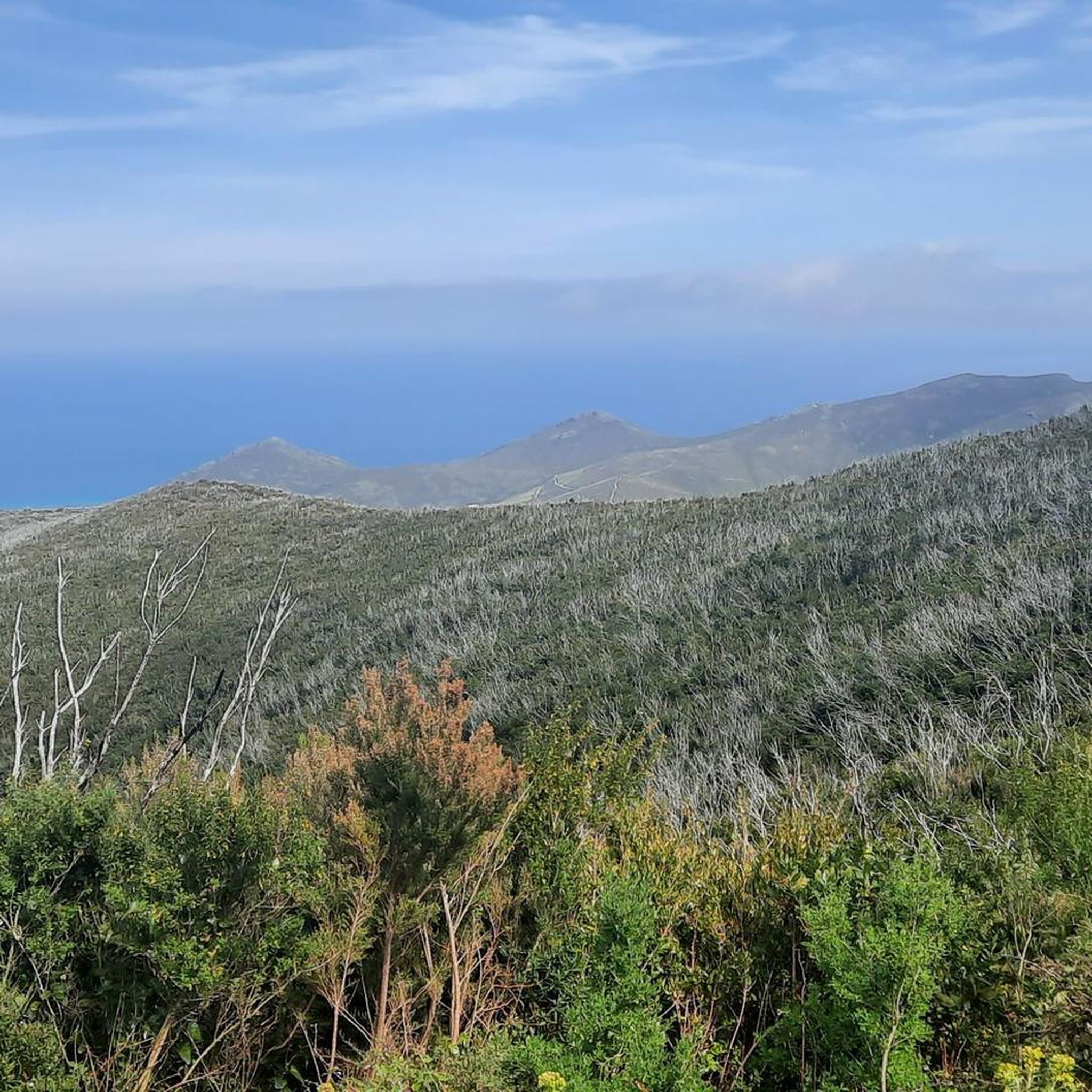
pretty here, very pretty
2
0

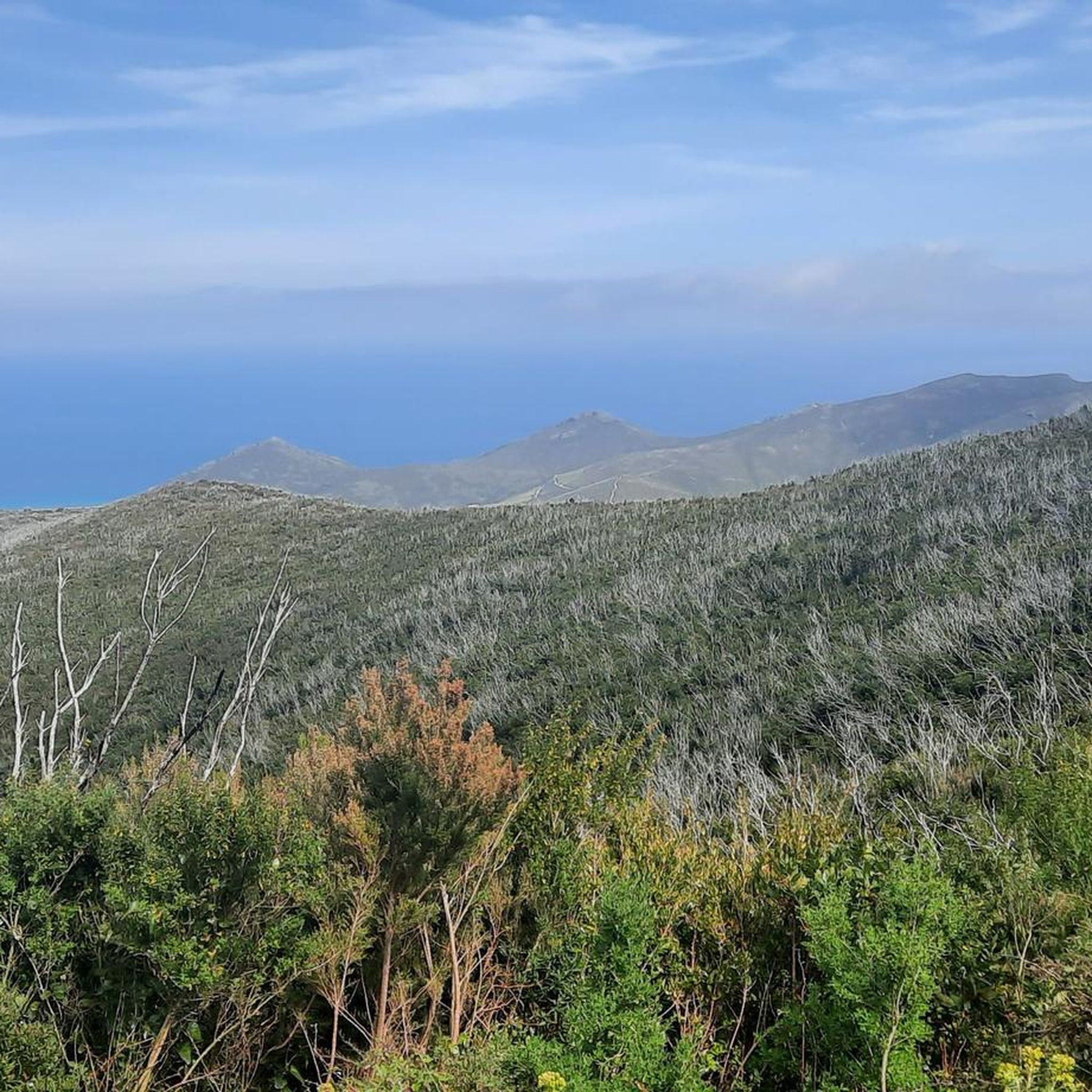
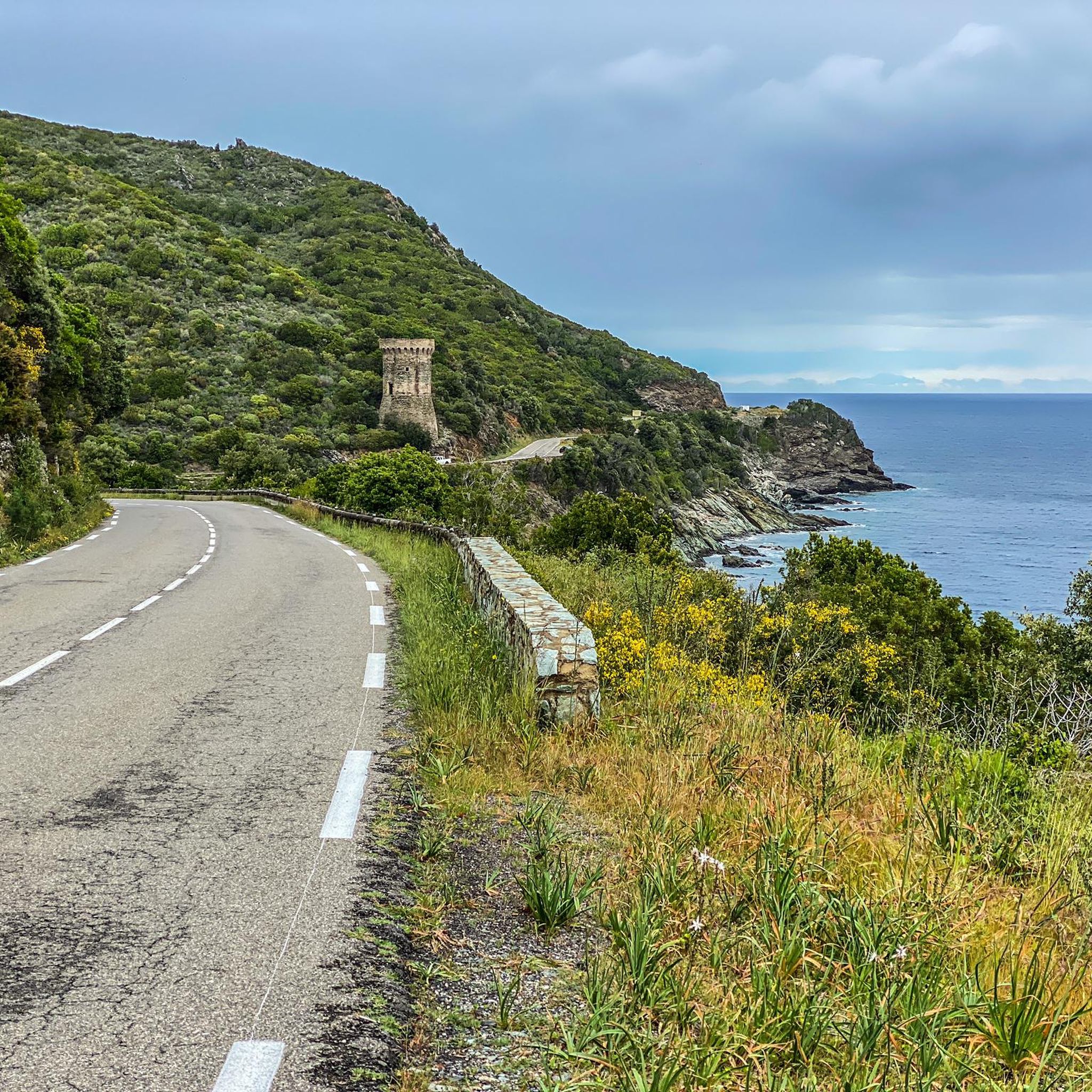
Incredibly narrow road across the North Cape, fantastic. Nowadays, you actually encounter other road users from time to time; cars and motorcycles also drive here. Therefore, be careful when descending on tight bends! (Also because wild boars are still sitting on the road in the very early morning.)
0
0


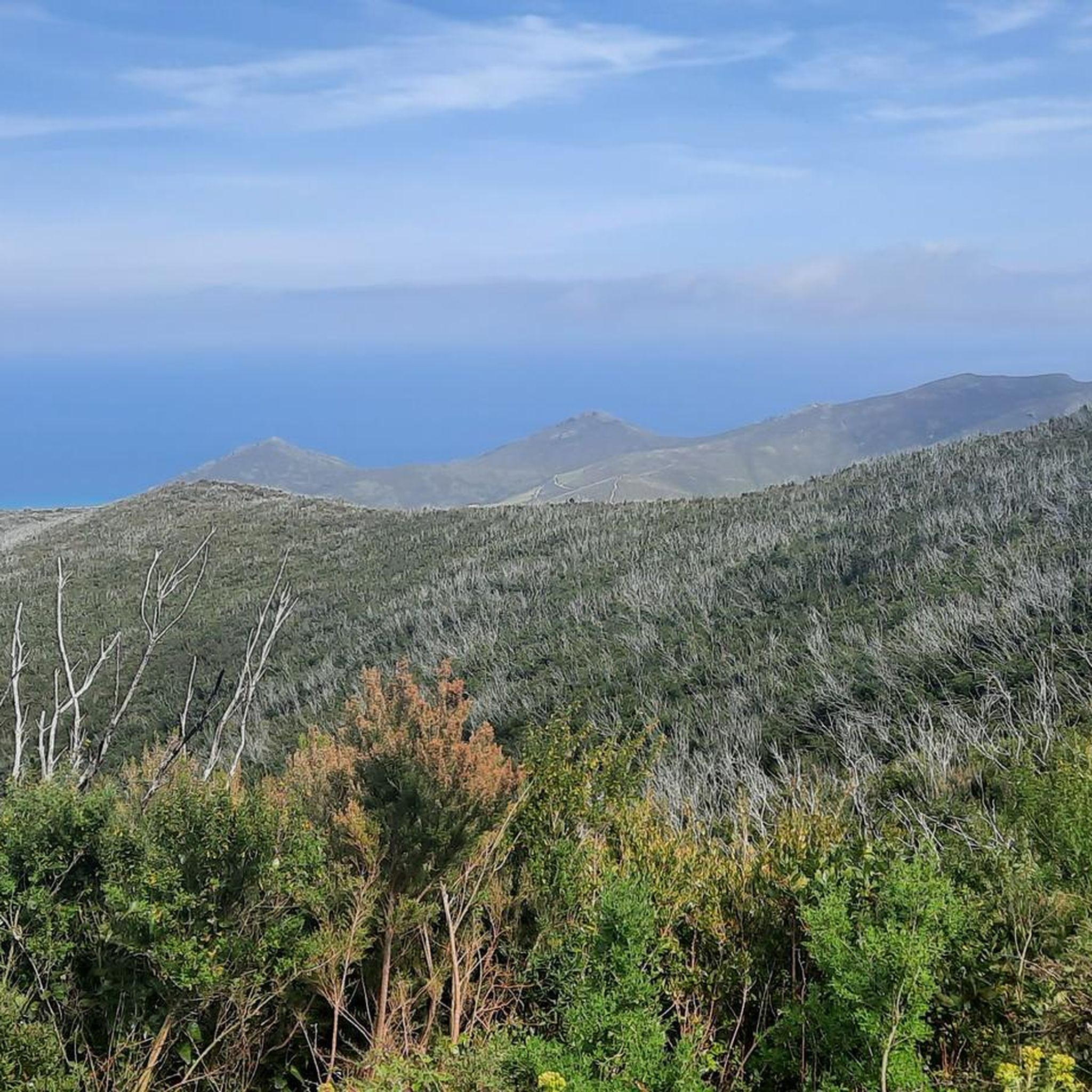
Overlooking the splendid Ghiraglia Island
0
0


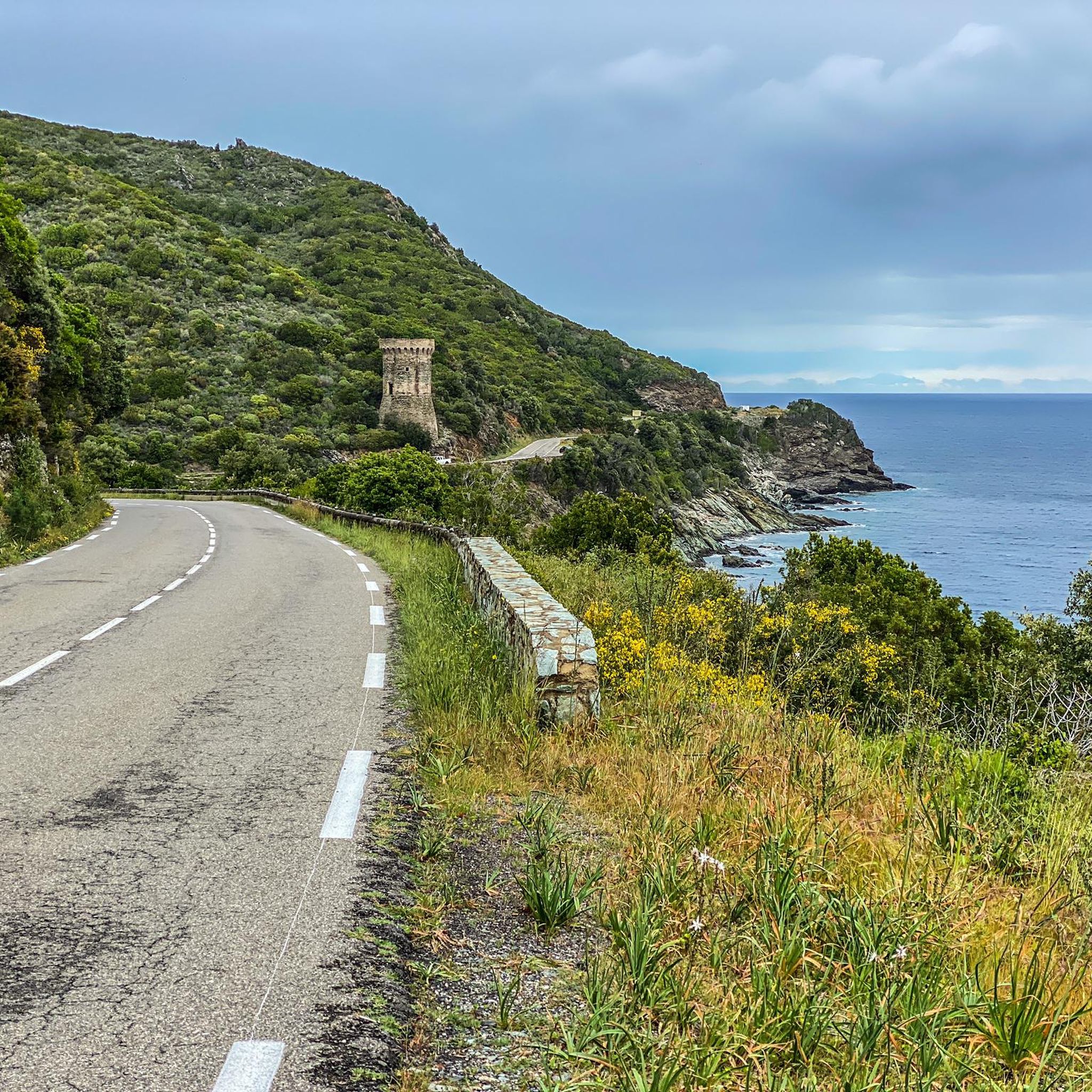
Very cool road, I passed two SUVs and a post bus while driving down
0
0

Doomed to eternity: In one of the most beautiful spots in Corsica, the ruins of the Canari asbestos mine remind us of man's obsession with making things possible. By Karl Spurzem and Loris Poidvin It is one of the most beautiful, if not the most beautiful, coastal road in the Mediterranean. From Centuri in the north to Saint-Florent, the tightly winding Corniche runs along the west coast of Cap Corse. On the right, deep below, the inky blue of the sea, on the left the Mediterranean palette of marble-grey rock, the silver of the olives, the matte emerald green of the maquis. Add to that the warm wind, the scent of wild thyme - paradise seems to lie behind every bend. But the dream journey ends abruptly. Between Canelle and Ogliastro, a huge concrete structure suddenly crouches on the rock that drops steeply into the sea - thrown down, it looks like a juggernaut, surreal, like a shattered spaceship or a dead prehistoric creature. It is the Canari mine, the largest open-cast asbestos mine in Europe in the middle of the 20th century. From the street, only the factory building can be seen. It rises up the rock in terraces, windows with broken glass, roofs full of holes, only the facade facing the street is covered with tarpaulins. Scattered signs prohibit entry to the ruins or warn of health risks. The signs do not say why. It takes some imagination, but this ruin was the pride of Corsican industry for two decades and its product was the source of wealth that the eternally poor island had never known before. Because half the post-war world was hungry for asbestos. The mine began operations in 1946. It was owned by the Société Minière de l’Amiante, its main shareholder Eternit, an Austrian-German-Belgian group that was founded in the 1920s and became a global company with asbestos. His successful product, fiber cement, was considered a miracle material. If asbestos didn't exist, it would have to be invented. The silicate minerals found in some rocks around the world, which crystallize in thread-like forms, can be processed into industrially usable fibers, which is why they are called mountain flax. They are incredibly strong, non-flammable, acid and weather-resistant, have outstanding insulating properties, can be easily mixed with other materials and can even be spun. With countless applications - in the shipyard, construction and automotive industries, in the electrical and textile industries - asbestos has become indispensable. If asbestos didn't exist, millions of people would have led longer, healthier lives. Its fibers are so fine that they are "alveolar-permeable", reaching the most delicate branches of the bronchi up to the alveoli, the lung sacs, where they cause terrible damage. They cause chronic inflammation, which leads to abestosis, a pathological change in the lung tissue, which in turn leads to lung cancer and, particularly often, mesotheliomas, which are malignant tumors of the peritoneum. The devilish thing about asbestosis is its enormous latency: it takes between ten and 60 years for the cancer to break out. By then it is often too late for a curative therapy - and the cause is usually not identified. The risks of asbestos dust have long been known. Asbestosis was first described in 1906, lung cancer as a result of asbestos exposure was recognized as an occupational disease in 1943, and it has been officially classified as carcinogenic since 1970. Individual countries banned asbestos earlier, but it took until 2005 for the EU to ban its use - the result of aggressive lobbying by producers, who in many countries achieved years of delays in classifying it as a hazardous substance. Asbestos is still mined and processed in emerging countries. This is an excerpt from the text. You can read the entire article in mare No. 152. Subscribers can also read it here in the mare archive - https://www.mare.de/archive/login.
0
1
Frequently Asked Questions
What natural attractions can I explore around Pietracorbara?
Pietracorbara offers a variety of natural beauty, from sandy beaches to mountainous peaks. You can visit the scenic Pietracorbara Beach, known for its turquoise waters. For panoramic views, head to Monte Stello, the second-highest peak in Cap Corse, offering exceptional vistas of the region and the Mediterranean Sea. The Old arch bridge in the Pietracorbara river is also a notable natural feature along a hiking trail, though swimming in the river is prohibited to protect the environment.
Are there any historical sites or landmarks to visit in Pietracorbara?
Yes, Pietracorbara is rich in history. You can find a 15th-century Genovese Tower, part of the island's historical defensive structures. Another reconstructed tower, the Tour d'Ampuglia, serves as a cultural site and tourist information center with an exhibition on Cap Corse history. The area also features several ancient Genovese bridges, baroque chapels, and traditional architecture with slate rooftops and old mills.
What kind of outdoor activities can I do near Pietracorbara?
The region around Pietracorbara is ideal for outdoor enthusiasts. You can find numerous marked hiking trails, such as the 'route de l'eau' which explores bridges and fountains, or the 'balade des fours' highlighting traditional bread ovens. For cycling, there are various routes available, including road cycling and touring bicycle options. You can explore more routes on the Road Cycling Routes around Pietracorbara and Cycling around Pietracorbara guide pages. Running trails are also available, with options like the Running Trails around Pietracorbara.
Where can I find the best viewpoints in the Pietracorbara area?
For stunning views, head to View of Nonza, which offers a remarkable panorama of the distinctive black sand beach and the picturesque village below. Another excellent spot is the Watchtower from 1760, perched high above Nonza Beach, providing fantastic vistas of the coastline and village. Additionally, the summit of Monte Stello provides an unparalleled vantage point over Cap Corse and the Mediterranean Sea.
Are there any family-friendly activities or attractions in Pietracorbara?
Pietracorbara offers several options for families. The Pietracorbara Beach is a great spot for relaxation and walks. Exploring the various hamlets of Pietracorbara can be an engaging activity, offering a glimpse into traditional Corsican village life and architecture. Easy walking trails like the 'chemin des deux hameaux' or the botanical path of Castellare ('u caminu vivu di u Castellare') can also be suitable for families.
What is the best time of year to visit Pietracorbara for outdoor activities?
The best time to visit Pietracorbara for outdoor activities like hiking and cycling is generally during the spring (April to June) and autumn (September to October). During these seasons, the weather is typically mild and pleasant, making it comfortable for exploration. Summers can be quite warm, especially for strenuous activities, while winters are cooler and can be rainy.
What are some unique cultural experiences available in Pietracorbara?
To experience the local culture, you can visit the Distillery of Pietracorbara to discover regional products and locally made liqueurs. Exploring the seven hamlets of Pietracorbara provides insight into traditional Corsican village life and architecture, with their characteristic slate rooftops, ancient fountains, and bread ovens. The reconstructed Tour d'Ampuglia also offers cultural insights into Cap Corse history.
Can I visit nearby picturesque villages from Pietracorbara?
Absolutely. Several charming villages are within easy reach. Nonza, located about 9 km away, is famous for its clifftop tower and distinctive black sand beach. Erbalunga, also around 9 km from Pietracorbara, is a small, picturesque fishing village. Further afield, about 35 km away, is Centuri, a charming fishing port known for its lobster fishing and colorful facades.
What kind of architecture can I expect to see in Pietracorbara?
Pietracorbara is characterized by its authentic charm and traditional architecture. You'll find beautiful houses with slate rooftops, large palaces built by Corsicans who made fortunes abroad, ancient mills, century-old fountains, and traditional bread ovens. The commune's various chapels and churches, including the Eglise San Clemente and Chapelle de confrérie Santa Croce, also showcase local architectural styles.
Are there any archaeological sites in the Pietracorbara region?
Yes, the area around Pietracorbara holds archaeological significance. You can find archaeological remains dating from the Mesolithic to the Bronze Age, offering a glimpse into the ancient history of the region.
What do visitors particularly enjoy about the attractions around Pietracorbara?
Visitors frequently highlight the remarkable panoramic views, especially from spots like View of Nonza and Monte Stello. The scenic hiking trails, such as the one along the Old arch bridge in the Pietracorbara river, are also very popular, with many appreciating the opportunity to explore old abandoned houses and cool off at fountains. The unique historical context of the watchtowers and the overall wild, undeveloped natural environment of Cap Corse are also highly valued.

Get inspired with the komoot mobile app


Explore more
Still not found the Highlight you’re looking for? See guides of the top attractions in other regions:
