Attractions and Places To See around Rots - Top 20
Best attractions and places to see around Rots include historical sites and natural features in the Normandy region of France. Rots is a commune located near Caen, offering access to significant cultural landmarks and scenic landscapes. The area provides opportunities to explore historical architecture and enjoy outdoor activities along waterways.
Best attractions and places to see around Rots
- The most popular attractions is Caen-to-the-Sea Canal at Blainville-sur-Orne, a canal that connects the English Channel to Caen. This 14 km…
Last updated: August 2, 2026
Caen-to-the-Sea Canal at Blainville-sur-Orne
Highlight (Segment) • Other
Translated by Google •
Tip by

Men's Abbey (Saint Stephen), Caen
Highlight • Religious Site
Translated by Google •
Tip by

Sign up now to discover places like this
Get recommendations on the best single tracks, peaks, & plenty of other exciting outdoor places.
Sign up for free
Caen Castle
Highlight • Castle
Translated by Google •
Tip by

Saint Peter
Highlight • Other
Translated by Google •
Tip by

Bazenville British War Cemetery
Highlight • Historical Site
Translated by Google •
Tip by

Sign up for free to discover even more attractions around Rots.
Sign up for free
Already have an account?
Start today with a free account
Your next adventure awaits.
Login or Signup




Tips from the Community

Quiet country roads lead to this small cemetery for approximately 630 British soldiers who died in WWII.
0
0

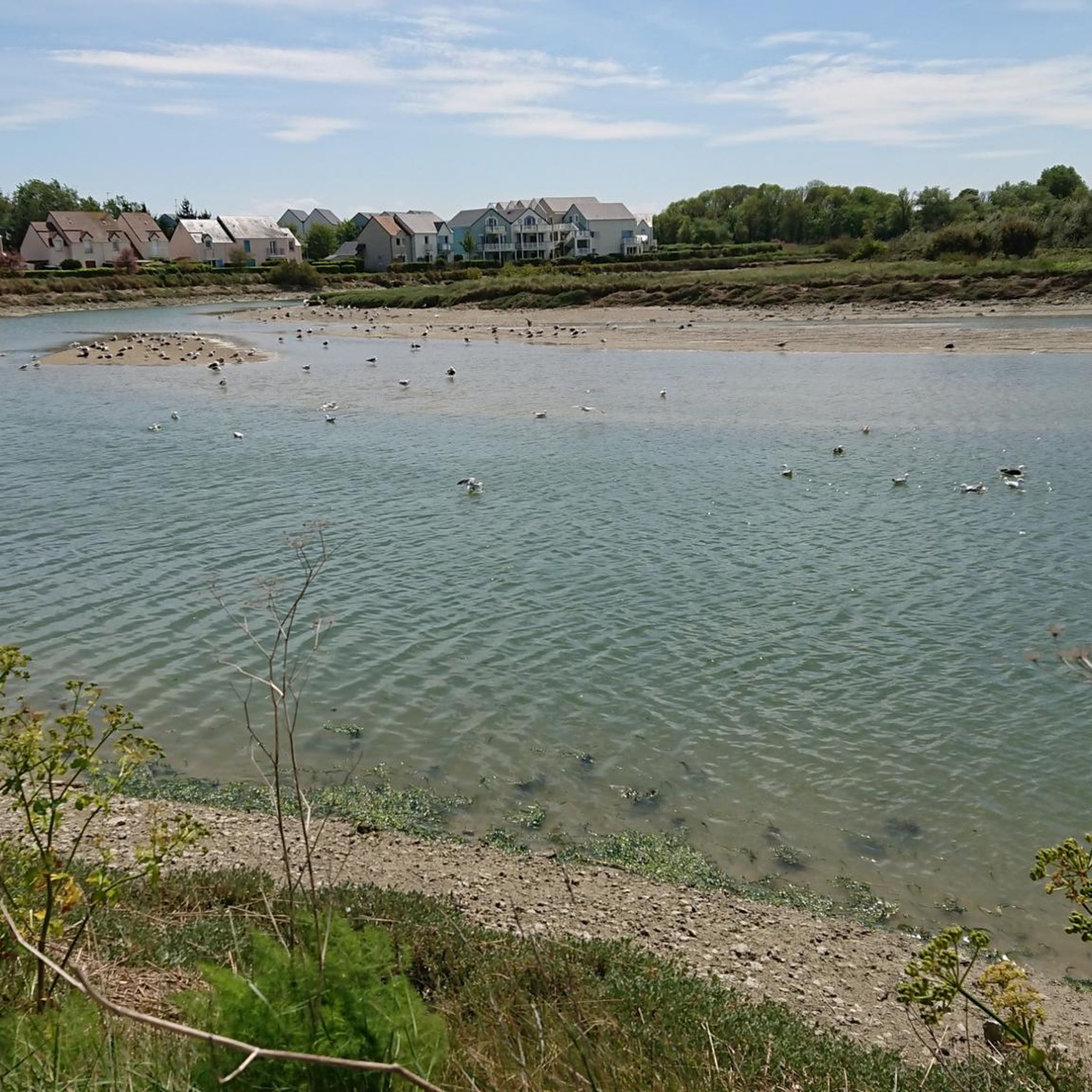
The Orne estuary is so beautiful with its wild environment.
0
0

Great walk along the seaside.
0
0

The Château de Caen is the former city fortress of the Norman dukes in the city of Caen in what is now the Normandy region in northern France. It houses, among other things, the cultural-historical Musée de Normandie[1] and the modern building of the Musée des Beaux-Arts. The entire complex has been recognized as a monument historique since 1997.
2
0
Built between the 13th and 16th centuries, it plays with the transition of styles: radiant and flamboyant Gothic and Renaissance. It has a magnificent 14th century bell tower, almost 80 m high, which is currently being restored. Particularly worth seeing are the vault of the choir, the chapels of the ambulatory in late Gothic style and the carved capitals of the third pillar of the nave on the north side, which depict four scenes from chivalric romances and satirical writings of the Middle Ages. J.F. Dupont organ, built in 1997.
2
0
Caen, first mentioned in documents in 1027, experienced rapid urban development in the 11th century. It was called a burgus (bourg), was the centre of an extensive ducal domain, lay at the crossroads of important roads and had markets and a port. It first developed as an important city in the Duchy of Normandy under William the Conqueror. He had a strong fortress built in Caen and around 1059 an abbey for women (Abbaye aux dames) and one for men (Abbaye aux hommes), in which he was also buried. Later, during the Huguenot Wars (1562), his grave was destroyed and his bones were lost. William's gravestone can still be seen in the church today. He had the monasteries built to atone for his marriage to his cousin Mathilde, which was disapproved of by the Pope. Both monasteries are among the most important monuments in Normandy and are today – by the monks and nuns during the French Revolution
2
0

As a memorial to the countless war dead, such a "Cimetiere militaire" - in German they are usually referred to as "war graves" or "soldiers' cemetery" - is still very important today. "Now, Lord, you let your servant depart in peace, as you have said..." it says in the so-called "Hymn of Simeon" (Luke's Gospel, Chapter 2, Verse 29). However, the many people buried here did not depart in peace, but became victims of war and an inhuman tyranny. The most important and at the same time everlasting function of soldiers' cemeteries or cemeteries of honor or war graves is therefore to keep the memory of this suffering alive and to remind each generation anew (!) of the need to maintain lasting peace.
0
1

Since March 2023 and until 2025, work will be carried out under the direction of architect Philippe Prost and landscape architect Thierry Lavergne to transform the castle grounds. Entitled "The castle within its walls", the 4-hectare site will be given over to 75% green space. The avenues will be redesigned to structure this large inner garden and guide visitors. A 700 m² reception area will be built towards the Porte des Champs. The "hidden treasures" will be highlighted, such as the remains of the keep, the towers of the ramparts and the dungeons of the Saint-Pierre gate.
4
0
Frequently Asked Questions
What historical and cultural sites can I visit near Rots?
Rots is ideally situated for exploring significant historical and cultural landmarks. You can visit the impressive Men's Abbey (Saint Stephen) in Caen, founded by William the Conqueror, known for its ancient cross-ribbed vaults. Another must-see is Caen Castle, a medieval fortress offering city views. For World War II history, the Bazenville British War Cemetery is a poignant site, and the Caen Memorial Museum is also nearby. The historic D-Day landing beaches are about 35 km away.
Are there family-friendly attractions around Rots?
Yes, several attractions near Rots are suitable for families. Caen Castle is a great option, offering space to explore and historical context. The Men's Abbey (Saint Stephen) is also listed as family-friendly. Additionally, the Caen-to-the-Sea Canal provides a pleasant paved cycle path perfect for family bike rides. The nearby Parc Festyland amusement park in Caen is another popular choice for families.
What natural features or outdoor activities can I enjoy near Rots?
The area around Rots offers beautiful natural settings and outdoor activities. The Caen-to-the-Sea Canal features a 14 km paved cycle path, ideal for cycling or roller skating. You can also explore the scenic Norman countryside, known for its ciders and cheeses. For more structured outdoor adventures, check out the various hiking trails, road cycling routes, and gravel biking routes available in the region.
Are there hiking trails suitable for different skill levels near Rots?
Yes, you'll find a variety of hiking trails around Rots catering to different skill levels. Options range from easy loops like 'Notre Dame Du Marais loop from Cairon' (5.8 km) and 'La Pierre Tourneresse loop from Lasson' (7.5 km) to moderate routes such as 'From the Thue valleys to Manneville' (12.9 km) and 'Rosel Cellar loop from Lasson' (9.8 km). You can find more details and routes in the Hiking around Rots guide.
What do visitors enjoy most about the attractions near Rots?
Visitors frequently praise the historical depth and scenic beauty of the area. For instance, the Men's Abbey (Saint Stephen) is appreciated for its ancestral beauty and tranquility. Caen Castle offers beautiful views of the old town from its walls, and its outdoor area can be visited for free. The Caen-to-the-Sea Canal is loved for its very smooth, pleasant paved cycle path, popular with roller skaters and racing cyclists.
What is the best time of year to visit Rots and its surrounding attractions?
The best time to visit Rots and the Normandy region is generally during the spring (April to June) and early autumn (September to October). During these periods, the weather is typically mild and pleasant for exploring historical sites and enjoying outdoor activities like cycling along the Caen-to-the-Sea Canal. Summer (July and August) is also popular, but attractions can be more crowded.
Are there any accessible attractions near Rots for visitors with wheelchairs?
While specific accessibility details for all attractions are not provided, many historical sites in France are working to improve accessibility. The outdoor areas of Caen Castle may offer some accessible paths. The paved cycle path along the Caen-to-the-Sea Canal could also be suitable for wheelchair users seeking a scenic outdoor experience. It's always recommended to check directly with individual venues for their most current accessibility information.
How can I get to the attractions around Rots using public transport?
Rots is a commune near Caen, which serves as a regional hub for public transport. From Caen, you can typically access many of the major attractions like Men's Abbey (Saint Stephen) and Caen Castle via local bus services. For destinations further afield, regional buses or trains might be an option. Checking local transport schedules in Caen is advisable for planning your routes.
Are there any hidden gems or less-known spots worth visiting near Rots?
Beyond the main attractions, consider exploring the charming medieval chateau in Creully, just 9 km from Rots. The general Norman countryside itself offers many picturesque villages and scenic drives, perfect for discovering local ciders and cheeses. For a unique historical perspective, the Bazenville British War Cemetery, while a significant site, might be less frequented than the larger D-Day museums, offering a more reflective experience.
What are the options for cycling enthusiasts near Rots?
Cycling enthusiasts have excellent options near Rots. The Caen-to-the-Sea Canal offers a flat, paved 14 km path perfect for a leisurely ride. For more challenging routes, the region provides numerous road cycling routes, including longer loops like 'Beuvron-en-Auge – Cabourg Beach' (104 km) and 'Le Mont Pinçon – Clécy' (137 km). Gravel biking is also popular, with routes such as 'Caen – Pegasus Bridge loop' (26 km) and more demanding options available in the Gravel biking around Rots guide.
How long should I plan to spend at the main attractions around Rots?
The time needed varies by attraction. For Men's Abbey (Saint Stephen) and Caen Castle, plan 1-2 hours for each to explore thoroughly. The Caen-to-the-Sea Canal can be enjoyed for a few hours if cycling or walking a significant portion. If you plan to visit the Caen Memorial Museum or the D-Day beaches, these are half-day to full-day excursions. Consider grouping nearby attractions to optimize your visit.
Are there cafes or restaurants near the attractions in Caen?
Yes, as Caen is a vibrant city, you'll find numerous cafes, restaurants, and shops, especially around its major attractions like Men's Abbey (Saint Stephen) and Caen Castle. The city center offers a wide range of dining options, from traditional Norman cuisine to international dishes, making it easy to find a place for a meal or a coffee break during your explorations.
Most popular attractions around Rots

Get inspired with the komoot mobile app


Explore more
Still not found the Highlight you’re looking for? See guides of the top attractions in other regions:
