The best road cycling routes around La Ferté-En-Ouche
4.9
(11)
392
riders
27
rides
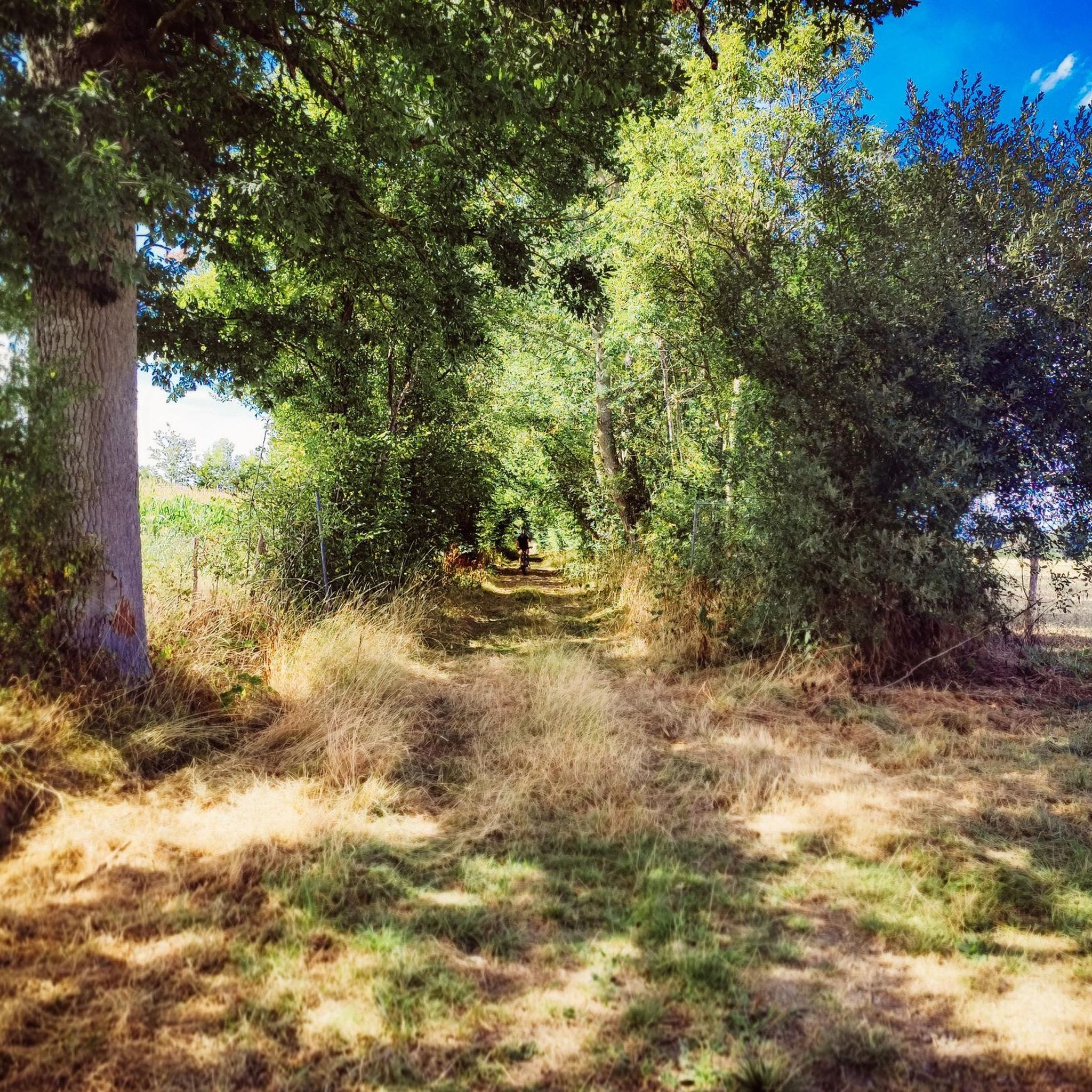
Road cycling routes around La Ferté-En-Ouche traverse a landscape characterized by rolling hills, agricultural fields, and river valleys. The region features a mix of open countryside and forested sections, with moderate elevation changes suitable for road biking. Many routes follow quiet country roads, passing through small villages and historical sites. The terrain offers varied gradients, providing options for different fitness levels.
Best road cycling routes around La Ferté-En-Ouche
- The most popular road cycling route is Bernay Greenway – Priory of…
Last updated: May 21, 2026
5
riders
90.3km
03:44
470m
470m
Moderate road ride. Good fitness required. Mostly well-paved surfaces and easy to ride.
7
riders
70.8km
02:56
370m
370m
Moderate road ride. Good fitness required. Mostly well-paved surfaces and easy to ride.

Sign up for free
4
riders
Moderate road ride. Good fitness required. Mostly well-paved surfaces and easy to ride.
4.0
(1)
5
riders
41.9km
01:51
310m
310m
Moderate road ride. Good fitness required. Mostly well-paved surfaces and easy to ride.
4
riders
Easy road ride. Great for any fitness level. Mostly well-paved surfaces and easy to ride.
Get access to more routes and recommendations from other explorers.
Sign up for free
Already have an account?
Our route recommendations are based on thousands of hikes, rides, and runs completed by other people on komoot.
Start today with a free account
Your next adventure awaits.
Login or Signup




Tips from the Community

The church of Chéronvilliers has been listed as a historical monument since April 24, 1953. The protection covers the entire building (interior and exterior). This building contributes to the beauty of the Eure landscapes and the richness of France's heritage. Over the centuries, the buildings, which have been grafted or agglomerated in the surrounding area, have been built within the framework of a social structure: the parish. These buildings constitute references in terms of local architecture, because they are often made with local materials: tiles or slates (from the 19th century), stones (flint, Grison, Seine Valley, sandstone, etc.), bricks or cob, lime plaster and nearby sand or earth. This gives colors that often range from beige to brown or red, and volumes perfectly suited to the Normandy climate (roof slopes, etc.). These churches have been the subject of specific analysis work because their surroundings are not completely urbanized. The empty spaces or breathing spaces located nearby help to preserve their setting. The site of the church is very interesting because, located in a very diffuse urban fabric, it opens onto the agricultural plots and offers beautiful views, particularly from the RD 21 to the south. These spaces must be preserved.
0
0
Notre-Dame Church (early 20th century) housing a 16th-century Virgin of Pity listed as a historic monument
0
0

superb monument
3
0

This former monastery church, the ruins of which still bear impressive witness to the former size and splendor of the abbey, was not dedicated to one of the many people we venerate as saints, but rather the ONE God in THREE persons - God the Father, God the Son (Jesus Christ) and God's Holy Spirit - was chosen as its patron saint. Father Reinhard Körner writes about the mystery of the Holy Trinity: "Among the great prayer-givers in the history of Christianity... I found prayer texts in which each of the divine three was explicitly addressed - in the same prayer. When I tried to recite the texts, I could sense that these people had not only had God the Father, Jesus Christ and the Holy Spirit in mind individually - they were addressing a divine community. And it seemed to me that they could only do this in their written prayers because they did it otherwise, quietly in their hearts."
1
0
This former monastery church, the ruins of which still bear impressive witness to the former size and splendor of the abbey, was not dedicated to one of the many people who died as martyrs (witnesses of faith) for their Christian beliefs, or who we venerate as blessed or saints because of their exemplary way of life. Rather, this parish has chosen God himself - in the "Holy Trinity" - as its patron saint. According to Christian teaching, we believe in ONE God who exists in THREE persons - God the Father, God the Son (Jesus Christ) and the Holy Spirit. The following description can be found on the EKD (Evangelical Church of Germany) website: "The word tries to express the seemingly impossible, namely that God is three and one at the same time. To understand this, it helps to consider how people have experienced God throughout history: as a creator who loves his world and people like a father loves his children. As a God who became human in Jesus Christ, his Son, and shared human life. And finally, as a God who is still present and alive among people in the Holy Spirit."
2
0

A life-size statue of Bourvil in Vieille-Lyre (Eure), a town where the film Le Trou normand was filmed in 1952, with Brigitte Bardot.
0
0

A little history !
0
0

Frequently Asked Questions
How many road cycling routes are available around La Ferté-En-Ouche?
There are over 25 road cycling routes around La Ferté-En-Ouche, offering a variety of distances and difficulty levels to explore the region's diverse landscape.
Are there easy road cycling routes suitable for beginners in La Ferté-En-Ouche?
Yes, La Ferté-En-Ouche features 4 easy road cycling routes. A good option is the Château de La Ferté-Frênel – Saint-Sylvestre Church loop from La Ferté-en-Ouche, a 45.3 km path with gentle gradients, perfect for a relaxed ride through the countryside.
What kind of routes are available for advanced road cyclists in the region?
For advanced cyclists seeking a challenge, La Ferté-En-Ouche offers 2 difficult routes. These typically involve more significant elevation gains and longer distances, traversing the region's rolling hills and providing a more demanding experience.
Are there any long-distance road cycling trails near La Ferté-En-Ouche?
Yes, for longer rides, consider the Bernay Greenway – Priory of the Holy Trinity loop from Glos-la-Ferrière. This route spans over 90 km and incorporates a greenway section, offering a substantial journey through the landscape.
What is the best season for road biking in La Ferté-En-Ouche?
The spring and summer months (April to September) are generally ideal for road biking in La Ferté-En-Ouche. The weather is typically milder, and the agricultural fields and river valleys are at their most vibrant. Autumn also offers pleasant conditions with colorful foliage.
Are there circular road bike routes in La Ferté-En-Ouche?
Many of the road cycling routes in La Ferté-En-Ouche are designed as loops, allowing you to start and finish at the same point. For example, the La Charentonne loop from Ternant D12 is a popular 41.9 km circular route through the Charentonne river valley.
What scenic viewpoints or attractions can I expect along the road cycling routes?
The routes often pass through picturesque agricultural fields, river valleys, and small villages. You might encounter historical sites like the Château de La Ferté-Frênel or the Abbaye de Saint-Evroult. The Washhouse on the banks of the Iton – Sollerot lighthouse loop from La Ferté-en-Ouche offers views along the Iton river.
Are there places to stop for refreshments or food along the routes?
Many routes pass through small villages and towns where you can find local cafes, bakeries, or small shops. While specific establishments aren't listed, the region's quiet country roads often lead to charming spots for a break.
What do other road cyclists enjoy most about road cycling in La Ferté-En-Ouche?
The area is highly rated by the komoot community, with an average score of 4.7 stars. Reviewers often praise the region's quiet country roads, the charming passage through small villages, and the varied gradients that cater to different fitness levels.
Are there less crowded road cycling trails in La Ferté-En-Ouche?
The road cycling routes in La Ferté-En-Ouche generally follow quiet country roads, making most trails less crowded than urban areas. For a peaceful ride, consider routes that venture deeper into the agricultural landscapes away from main thoroughfares, such as the To Le Sap – Unexpected watering hole loop from Saint-Laurent-du-Tencement.
What kind of terrain can I expect when road cycling in La Ferté-En-Ouche?
The terrain around La Ferté-En-Ouche is characterized by rolling hills, agricultural fields, and river valleys. You'll encounter a mix of open countryside and forested sections, with moderate elevation changes and varied gradients, providing a dynamic cycling experience.
Most popular routes around La Ferté-En-Ouche
Most popular attractions around La Ferté-En-Ouche

Get inspired with the komoot mobile app


Explore more
Browse the best Road cycling routes in other regions.
