The best road cycling routes around Éole-En-Beauce
4.7
(4)
224
riders
77
rides
Road cycling routes around Éole-En-Beauce traverse the expansive Beauce plain, characterized by its linear horizons and open skies. This region in the Eure-et-Loir department of northern France offers flat to gently rolling terrain, making it suitable for covering distances efficiently. Beyond the agricultural landscapes, cyclists can encounter natural features such as the Conie Valley with its riverine and marshland areas, along with scattered woodlands. The area's topography provides a mix of long, open stretches and routes that incorporate historical architecture…
Last updated: November 16, 2026
10
riders
10.4km
00:25
40m
40m
Easy road ride. Mostly well-paved surfaces and easy to ride.
8
riders
Easy road ride. Mostly well-paved surfaces and easy to ride.

8
riders
13.6km
00:31
30m
30m
Easy road ride. Mostly well-paved surfaces and easy to ride.
3
riders
Easy road ride. Mostly well-paved surfaces and easy to ride.
4
riders
59.8km
02:20
170m
170m
Moderate road ride. Good fitness required. Mostly well-paved surfaces and easy to ride.
Get access to more routes and recommendations from other explorers.
Already have an account?
Our route recommendations are based on thousands of hikes, rides, and runs completed by other people on komoot.
Start today with a free account
Your next adventure awaits.
Popular around Éole-En-Beauce

Tips from the Community

The Saint-Pierre de Guilleville church is a typical example of the rural religious architecture of the Beauce region in Eure-et-Loir. It is characterized by its sobriety and its strong architectural link with the agricultural daily life of the commune. Architectural description The church features a simple structure in local rubble and limestone masonry, topped by a double-pitched roof covered with slate. • The Nave and Walls: The exterior facades (north and south walls) are buttressed by massive cut stone buttresses, ensuring the stability of the structure. The openings consist of arched windows that provide diffuse light to the interior. • The Bell Tower: It has a traditional tower bell, integrated into the body of the building, which overlooks the vast expanses of the surrounding plains. • The adjoining Arsenal: The major visual and historical feature of the site lies in the immediate presence of the old communal arsenal (fire pump shed or community storage building) adjacent to or directly neighboring the church, creating a unique rural heritage ensemble. Historical elements • Medieval origins: Like the majority of parishes in the Beauce plateau, the church's establishment dates back to the Middle Ages to serve the local agricultural community. It has endured through the centuries, undergoing minor modifications, particularly to its openings and roof structure. • Parish life: The church was long the beating heart of the village of Guilleville (which had up to over 450 inhabitants in the 19th century). It historically belonged to the diocese of Chartres and saw the succession of many local priests, particularly well-documented in the 17th and 18th centuries.
0
0
The Saint-Jean-Baptiste church is mentioned in the diocese's pouillé, from 1250: the parish then had 220 faithful; the presence of a crypt under the apse has led to the assumption that the building has very ancient origins. A beautiful dwelling, the remains of an old priory, stands near the church in the village; its surroundings, houses forming a circle around the cemetery, were modified when the rue de la Gare was opened, at the beginning of the 20th century.
0
0
The parish church of Baignolet, under the invocation of Saint Sebastian, was a simple priory dependent on the Benedictine abbey of Saint-Florentin de Bonneval, in the diocese of Chartres. The foundation of this priory is said to date back before 870. For their protection, the monks were under the authority of the vidame of Chartres. From the Romanesque period, the three-bay nave, the choir area, and the semi-circular apse vaulted in a cul-de-four (11th-12th centuries) remain. This part of the building has retained its small rubble masonry. The numerous endowments the priory received in the 13th century made it very prosperous and were likely the origin of a new construction phase; it is from this period, it seems, that the imposing, particularly tall bell tower dates, built in dressed stone, supported by massive corner buttresses. It was likely rebuilt on an earlier foundation. In the 15th century, a three-bay side aisle was added to the nave on the north side. Forming a sequence of three gables externally, this side aisle in dressed stone harmonizes with the bell tower. Also in the 15th century, a large flamboyant tracery window with two mullions was pierced in the east wall of the bell tower, in the same style as the windows of the side aisle. The 19th-century work consisted of building a three-sided apse within the volume of the Romanesque choir. The dividing wall between the third bay of the side aisle and the base of the bell tower was then demolished, opening up the perspective of the side aisle, as evidenced by a plan by the departmental surveyor dated July 25, 1852. This same report, which mentions the ribbed vaults of the aisle and the choir area, states, "the vaults of the choir and those of the low nave are in rubble masonry, they are decorated with diagonal ribs and ogives in 'pierre de caille' stone"; it specifies that the nave was then covered with an "oak paneling"; it is currently covered by a brick vault plastered over. The gable wall of the facade also bears the trace of the former roof slope, which was redone at that time. The facade of the church is particularly striking: the door is surmounted by four rows of torus moldings in the center; it is flanked by two powerful buttresses that support the gable wall and between which is a rose window whose design appears late. For the repair of the 'pierre de caille' stone facings of the south and west facades of the bell tower, the renovation of the roof structure and covering of the choir and the north chapel, the Sauvegarde de l’Art Français granted aid of 100,000 F in 1994 to this unprotected church.
0
0
It was at the request of the parishioners of Orgères that the decision was made to demolish the old church. Typically, this type of partial or total destruction comes from the religious hierarchy. The current church was rebuilt at the end of the 19th century. The reconstruction is quite successful, judging by the choice of materials and the proportions of the building. The stained-glass windows created by the master glazier Loire are perfectly integrated into this new ensemble.
0
0
The Saint-Martin de Viabon church dates back to the 11th century. Its plan includes a nave ending in a semicircular apse. In the 15th century, a four-bay aisle forming gables was erected to the north. The bell tower also dates from this period. Adjacent to the south wall of the choir, it is octagonal in shape and pierced by sixteen overlapping pointed arches. It rests on a quadrangular tower with powerful buttresses. A semicircular arch known as a "wolf's tooth" arch survives between two buttresses in the south wall of the nave. It is surmounted by a small sculpted stone head at the base of the pointed arch window. The apse's framework is ancient. In 1862, the paneling of the main nave was replaced by a plaster-covered latticework with faux stone carvings. The restoration of the choir walls and vault, as well as the hollow brick vault of the side aisle, also dates from the same period. This building underwent numerous interior alterations in the 19th century. The eastern end of the side aisle is occupied by the Chapel of the Virgin, entirely decorated with paintings and gilding in 1887. For the restoration of the framework and roof, particularly the end of the side aisle, the Sauvegarde de l'Art Français (French Art Protection Agency) awarded a donation of €17,000 in 2002.
0
0
Building built to commemorate the battles of Loigny-la-Bataille on December 2, 1870. Nine thousand men fell in combat. The church was designed by the architect Lucien Douillard. The apse and the ossuary crypt, square in plan, are connected by two spiral staircases. The walls of the apse and the vault are decorated with paintings of historical and religious motifs, and covered with commemorative marble plaques bearing the names of the 700 recognized soldiers. The crypt preserves the tombs of Generals de Sonis and de Charette, as well as the bones of killed soldiers.
0
0
The church of Guillonville, in Eure et Loir, in the Center-Val de Loire, is attached to the parish of Saint Martin en Beauce, of the Deanery of Beauce, in the diocese of Chartres. The church is placed under the protection of Saint Peter.
0
0
The Saint André church (13th-15th-16th centuries) In the 7th century, the Benedictine abbey of Bonneval created a priory-curate. Its existence is confirmed by a bull from Pope Gregory second half of the 16th century. In 1793 the church was desecrated and transformed into wine and spirits warehouses. In 1801, the church was returned to worship and changed diocese: from the diocese of Chartres, to which it belonged before the Revolution, it passed to the diocese of Orléans, notably for reasons of distance: Chartres is 48 km from Patay then that Orléans is only 27 km away. The church is 30 m long and 17 m wide. The oldest parts are located near the large porch (13th century). One of the pillars of the nave is decorated with a vestige of Danse Macabre from the mid-15th century. A small masonry door on the right communicated with the old priory, of which ruins remain to the south of the church. The choir dates from the 14th century; the apse wall was decorated with paintings at the end of the 19th century, the chapels were then redeveloped and equipped with new stained glass windows. The keystones of the large nave were made from casts taken from the figurines which adorn the Thesis Room of the University of Orléans, built in 1411. The bell tower, located to the north of the choir, would be an old watchtower. Its pinnacles and eight openings were made after the Wars of Religion. The four bells were melted in 1868. The largest was cracked by a Prussian shell in 1870 and was recast in 1871. Since that year, Ernestine (809 kg, 1 m 12 in diameter at the base, sounding the F), Gabrielle (550 kg, 0.981 m in diameter, sounding the ground), Anne (398 kg, 0.573 m in diameter) and Marie (222 kg, 0.724 m in diameter, sounding the C) give rhythm to the daily life of the small town of Patay, old Beauceron railway junction. On August 15, 1944, an ammunition train was blown up at Patay station. The station was blown up, except for the carriage shed, and all the windows in the town were shattered. Luckily, a providential storm limited the damage. The only two stained glass windows that survived the explosion are those on the right side aisle which date from 1930 and relate the communion of Joan of Arc in the Patay church in 1429. The church was listed as a Historic Monument in 1925 by decree of October 6, 1925.
0
0
Frequently Asked Questions
What is the typical terrain and difficulty level for road cycling in Éole-en-Beauce?
The region is characterized by the expansive Beauce plain, offering predominantly flat to gently rolling terrain. This makes it ideal for covering distances efficiently. While many routes are easy, such as the Roadbike loop from Fontenay-sur-Conie, there are also moderate and difficult options available, with some routes featuring over 500 meters of elevation gain.
Are there road cycling routes suitable for beginners or those looking for an easy ride?
Yes, Éole-en-Beauce offers several easy road cycling routes. For instance, the Roadbike loop from Fontenay-sur-Conie is a gentle 10.2 km path that can be completed in about 25 minutes, perfect for a relaxed ride through the local countryside.
What about more challenging road cycling routes for experienced cyclists?
For experienced cyclists seeking a challenge, routes like the The Eure at Ver les Chartre – Ponds of Fontenay sur Eure loop from Voves offer significant distances and elevation. This route spans 132.6 km with over 440 meters of ascent, providing an extensive ride across the Beauce landscape.
What natural features or landmarks can I expect to see while cycling in Éole-en-Beauce?
Beyond the vast agricultural plains and open skies, you can discover the ecologically rich Conie Valley, known for its riverine and marshland areas and diverse birdlife. Historic windmills, such as the Moulin de la Garenne in Ymonville, also dot the landscape, offering glimpses into the region's heritage.
Are there any historical sites or cultural points of interest along the road cycling routes?
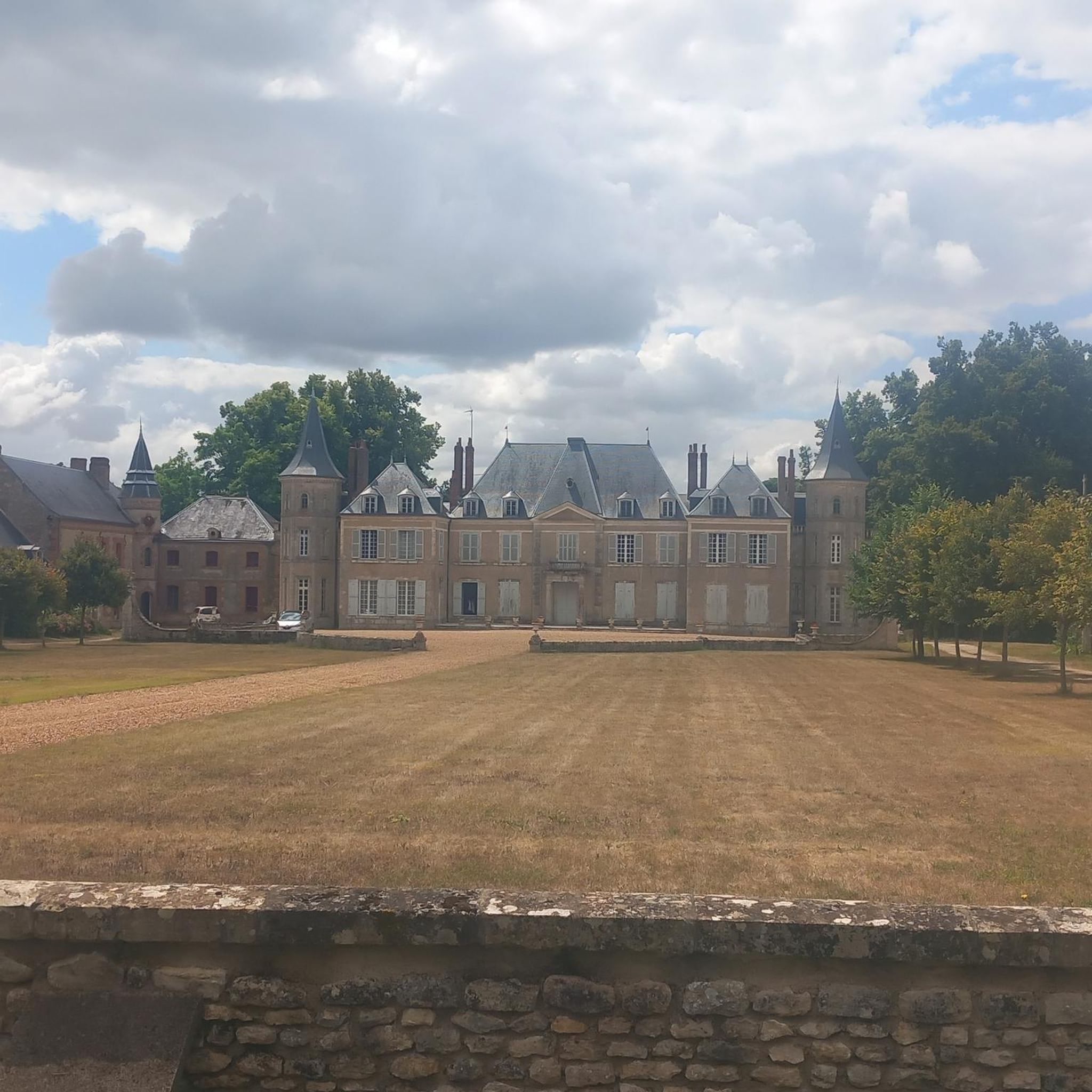
Yes, the communes forming Éole-en-Beauce, including Viabon and Germignonville, feature historical buildings. You might encounter charming churches like Saint Peter's Church or Église Saint Hilaire, and even châteaux such as the Château de Cambray, providing cultural stops during your ride.
When is the best time of year to go road cycling in Éole-en-Beauce?
The flat and gently rolling terrain of Éole-en-Beauce makes it enjoyable for road cycling across many seasons. Spring and autumn generally offer pleasant temperatures and less extreme weather, ideal for longer rides. Summer can also be excellent, though it's advisable to cycle earlier in the morning or later in the afternoon to avoid the midday heat.
Are there family-friendly road cycling routes in the Éole-en-Beauce area?
Yes, the region's generally flat terrain is well-suited for family cycling. Shorter, easy loops like the Roadbike loop from Fontenay-sur-Conie are excellent choices for families looking for a relaxed ride without significant climbs.
Can I bring my dog on these road cycling routes?
While many outdoor activities can be dog-friendly, road cycling routes are generally not ideal for dogs due to traffic, speed, and the hard surfaces. It's best to consider specific cycling paths or trails designed for multi-use if you wish to bring your dog along.
Where can I park my car when starting a road cycling route in Éole-en-Beauce?
Many routes start from villages or towns like Voves or Fontenay-sur-Conie. You can typically find public parking in these areas, often near town centers or local amenities, providing convenient access to the start of your chosen route.
Is public transport an option for reaching the cycling routes in Éole-en-Beauce?
While Éole-en-Beauce is accessible, public transport options specifically designed to accommodate bicycles might be limited. It's advisable to check local bus or train services for their bicycle policies if you plan to use public transport to reach your starting point.
What do other road cyclists enjoy the most about road cycling in Éole-en-Beauce?
The komoot community highly rates road cycling in Éole-en-Beauce, with an average score of 4.75 stars. Cyclists often praise the vast, open landscapes and linear horizons that provide a unique sense of freedom and tranquility. The mix of agricultural plains with surprising natural elements like the Conie Valley also adds to the appeal.
How many road cycling routes are available around Éole-en-Beauce?
There are over 80 road cycling routes available around Éole-en-Beauce, offering a wide variety of options for different skill levels and preferences. This includes 28 easy routes, 53 moderate routes, and 3 difficult routes.
Are there any long-distance road cycling routes in the area?
Yes, for those looking for longer rides, routes like the Orrouer Church – Vérigny Castle loop from Voves cover an impressive 139.2 km with over 570 meters of elevation gain, providing a substantial challenge and extensive exploration of the region.
Most popular routes around Éole-En-Beauce
Most popular attractions around Éole-En-Beauce

Get inspired with the komoot mobile app


Explore more
Browse the best Road cycling routes in other regions.
