The best cycling routes around Senillé-Saint-Sauveur
4.3
(145)
1,003
riders
137
rides
Touring cycling around Senillé-Saint-Sauveur offers diverse landscapes within the Vienne department of Nouvelle-Aquitaine. The region features varied terrain, including rolling hills and tree-lined routes, providing a mix of challenge and scenic beauty. Cyclists can explore riverside trails along the Vienne River and shaded paths through local woods. This area provides suitable conditions for touring cyclists seeking routes with natural features.
Best touring cycling routes around Senillé-Saint-Sauveur
- The most popular touring cycling route is Châtellerault: Ligne Verte and Vienne River Loop…
Last updated: November 19, 2026
3.9
(11)
20
riders
30.3km
01:51
120m
120m
4.6
(8)
15
riders
30.8km
01:58
280m
280m

4.7
(3)
6
riders
30.5km
02:03
280m
280m
Moderate bike ride. Good fitness required. Mostly paved surfaces.
1
riders
37.9km
02:18
300m
310m
Moderate bike ride. Good fitness required. Mostly paved surfaces.
4.4
(10)
79
riders
Hard bike ride. Very good fitness required. Mostly paved surfaces.
Get access to more routes and recommendations from other explorers.
Already have an account?
Our route recommendations are based on thousands of hikes, rides, and runs completed by other people on komoot.
Start today with a free account
Your next adventure awaits.




Tips from the Community

On 30/08/2026, the Francois Mitterand space, right in front of the kiosk, welcomed almost 1400 clarinettists to break the world record held by Hong Kong and entered in the Guinness Book. This has been done and recorded by an official member of the organization who came specifically for this purpose. The objective announced for months by the Poitiers conductor Emmanuel Boulanger has been largely achieved. The old record, set in Hong Kong with 448 clarinettists, has been smashed. Amateurs, music school students and professionals played together, in front of a large audience. The performance should now feature in the Guinness Book of Records. Below is the press article and video published locally. https://share.google/KJQ2WCRdVkkB0aF61
0
0
🏭 1. A museum set up in the former “Manu” Le Grand Atelier - Museum of Art and Industry is located on the site of the former Châtellerault Arms Factory ("Manufacture d’armes"). The Manufacture was created by royal ordinance on July 14, 1819, under Louis XVIII. Construction began in 1820. Its location in Châtellerault was notably due to the presence of the Vienne river, which allowed for the use of hydraulic energy, and the existence of a significant local tradition of cutlery and metallurgy. Initially, it mainly produced edged weapons: sabers, swords, lances, and cuirasses. From the 1830s onwards, production also turned to firearms. The Manufacture gradually became a huge industrial complex, employing several thousand people. It played a considerable role in the economic and social history of Châtellerault. 🔧 2. The museum building The building now occupied by the Grand Atelier is particularly interesting. It is part of the former assembly and finishing workshop, built between 1886 and 1887, notably in the context of the production of the Lebel rifle. It is a characteristic industrial building from the late 19th century, with vast spaces, large glass bays, and saw-tooth roofs allowing for significant natural light. It is now protected as heritage. The Manufacture closed permanently in 1968. 🚗 3. The birth of the automobile museum After the closure of the Manufacture, part of the buildings was reused for cultural purposes. As early as 1969, the site hosted a museum, notably stemming from Bernard de Lassée's vehicle collection. It was first named Musée de la Technique et de l’Automobile, then became Musée Auto-Moto-Vélo. The town of Châtellerault acquired part of Bernard de Lassée's collection and gradually developed the museum. The collections include, in particular, vintage cars, motorcycles, bicycles, engines, posters, and accessories, featuring prestigious brands such as Panhard-Levassor, Delahaye, Talbot, Darracq, or Bugatti. 🏛️ 4. The merger with the former Sully museum This is an important step in understanding why the museum today bears the name “museum of art and industry”. Châtellerault also had another museum, located in the Hôtel Sully, dedicated to the history and heritage of the town: archaeology, fine arts, weapons, cutlery, ethnology, local artists, etc. Gradually, the collections of the two institutions were brought together on the site of the former Manufacture. The Ministry of Culture thus indicates that the collections were regrouped on the Manufacture site, first under the name Musée de la technique et de l’automobile, then Musée Auto-Moto-Vélo, and finally Grand Atelier. 🎭 5. The transformation into “Grand Atelier” After significant renovations, the museum was reorganized and took its current name in 2019: Le Grand Atelier – Musée d’art et d’industrie. It is therefore no longer just a museum dedicated to automobiles. It now offers three main tours: 🚗 Auto-Moto-Vélo: the evolution of transport from the 19th century to the 2000s; 🔫 Manufacture d’armes: the industrial and social history of the “Manu” and its workers; 🎭 Cabaret du Chat Noir: dedicated to Rodolphe Salis, born in Châtellerault and founder of the famous Montmartre cabaret. The museum now covers over 3,000 m² of exhibition space. An important clarification It is therefore necessary to distinguish: - The Arms Factory (“La Manufacture d’armes”) → the large industrial site created in 1819, closed in 1968. - The Grand Atelier building → a former workshop of the Manufacture, built in 1886-1887. - Le Grand Atelier – Museum of Art and Industry → the museum gradually created on this site, whose current name dates from 2019. - And the former Sully museum → a historic museum institution in Châtellerault, part of whose collections have been integrated into the Grand Atelier.
0
0


I entered Chauvigny by this path and I must say that I am very happy with it: the view of the ruins is incredible and even more perfect with the sunset.
0
0
Frequently Asked Questions
How many touring cycling routes are available around Senillé-Saint-Sauveur?
There are over 130 touring cycling routes available in the Senillé-Saint-Sauveur area. These routes cater to various skill levels, with approximately 28 easy, 71 moderate, and 32 difficult options to choose from.
What kind of terrain can I expect on touring cycling routes near Senillé-Saint-Sauveur?
The region around Senillé-Saint-Sauveur offers diverse terrain for touring cyclists. You can expect a mix of rolling hills, tree-lined routes, and picturesque riverside trails, particularly along the Vienne River. Some areas, like the Woods of Saint-Sauveur, feature shaded and hilly landscapes with beautiful viewpoints.
Are there any easy touring cycling routes suitable for beginners or families?
Yes, the area offers several easy routes. One popular option is the Châtellerault: Ligne Verte and Vienne River Loop, which is 30.3 km long and follows a greenway, offering pleasant views along the Vienne River. This route is generally flat and well-suited for a relaxed ride.
Are there any circular touring cycling routes in the Senillé-Saint-Sauveur area?
Many routes in the region are designed as loops, allowing you to start and finish at the same point. For example, the Lac du Gros Caillou Loop in offers a moderate 30.8 km ride with varied terrain around the lake. Another option is the Châtellerault - loop in the Ozon valley, a 30.5 km trail through scenic landscapes.
What are some notable attractions or landmarks I can see while cycling in the region?
While cycling, you can explore several interesting sites. The charming spa town of La Roche-Posay, known for its medieval fortifications, is a great stop. Near Poitiers, you can visit the significant archaeological site of the Gallo-Roman Theatre of Old Poitiers. The nearby town of Châtellerault also features notable 18th-century townhouses.
Are there any long-distance touring cycling routes or greenways nearby?
Yes, the EuroVelo 3, also known as the 'Pilgrims Route' or 'Scandibérique,' traverses the southern Vienne area, offering a well-established path for long-distance touring cyclists. Additionally, routes like the Châtellerault: Ligne Verte and Vienne River Loop utilize greenways, providing dedicated and scenic paths.
What do other touring cyclists enjoy most about cycling in Senillé-Saint-Sauveur?
The area is highly rated by the komoot community, with an average score of 4.3 stars from over 100 reviews. Cyclists often praise the varied terrain, the mix of rolling hills and riverside trails, and the overall scenic beauty that provides a good balance of challenge and enjoyment.
Is it possible to access cycling routes using public transport in the Senillé-Saint-Sauveur area?
While Senillé-Saint-Sauveur is a smaller commune, the broader Vienne department has public transport options. For specific route access, it's advisable to check local bus or train schedules for connections to larger towns like Châtellerault, which is about 7 km away and serves as a starting point for several routes.
Are there specific cycling events or initiatives in the Vienne region?
The Vienne department actively promotes cycling. Events like the national 'Mai by bike' operation encourage participation with various routes. The presence of local cycling races also indicates an active cycling community and suitable infrastructure in the area.
Where can I find more information about official cycling routes in the Vienne department?
For more information on official cycling routes and initiatives in the wider Vienne department, you can refer to resources like the local tourism board. For example, the 'Mai by bike' operation is detailed on the Tourisme Vienne website, which also highlights various routes.
Are there any routes that pass through forests or offer shaded paths?
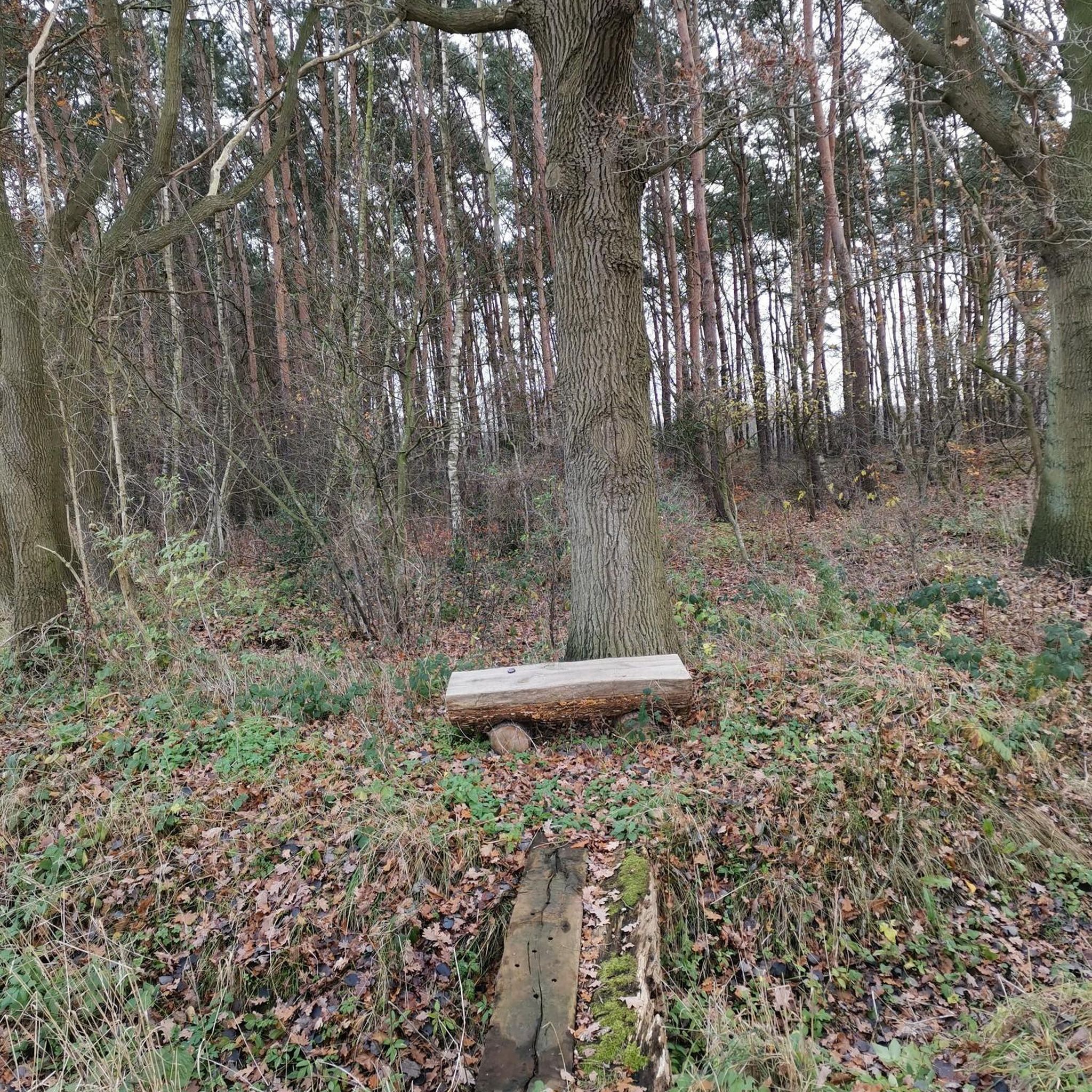
Yes, the region features routes that take you through wooded areas. The 'Woods of Saint-Sauveur - Circuit n°46' is specifically highlighted for its shaded and hilly landscapes, providing beautiful viewpoints and natural sites, including a remarkable oak tree. This offers a refreshing experience, especially during warmer months.
Can I find routes that explore castles or historical sites?
Certainly. The Château et forêt de la Guerche – loop in the Creuse valley is a moderate 37.9 km route that allows you to explore historical elements like the Château de la Guerche while enjoying the natural surroundings of the Creuse valley.
Most popular routes around Senillé-Saint-Sauveur
Most popular attractions around Senillé-Saint-Sauveur

Get inspired with the komoot mobile app


Explore more
Browse the best Cycling routes in other regions.
