The best walks and hikes around Ballinlea Upper
4.6
(281)
2,017
hikers
34
hikes
Hiking around Ballinlea Upper offers access to the diverse landscapes of County Antrim, Northern Ireland. The region is characterized by its proximity to the Glens of Antrim, featuring deep forests, river valleys, and dramatic coastal cliffs. This area, part of an Area of Outstanding Natural Beauty, provides a mix of terrain from well-maintained forest trails to rugged coastal paths. The topography includes ancient woodlands, moorlands, and hill summits, shaped by glacial and volcanic activity.
Best hiking trails around Ballinlea Upper
- The most popular hiking route is Ballintoy to Dunseverik Castle via Causeway Coast Way — Causeway Coast, an 8.5 miles (13.6 km) trail that takes 3 hours 34 minutes to complete. This moderate route follows the scenic Causeway Coast Way with coastal views.
- Another top favourite among local hikers is Causeway Coast Way: Whitepark Bay to Ballintoy, an easy 4.3 miles (7.0 km) path. This route offers a coastal walk along White Park Bay, known for its sandy stretches and dunes.
- Local hikers also love the Causeway Coast Way, a 7.1 miles (11.5 km) trail leading through coastal scenery, often completed in about 3 hours 6 minutes.
- Hiking around Ballinlea Upper is defined by dramatic coastal paths, forested glens, and open moorlands. The network of routes offers options for various ability levels, from easy strolls to more challenging climbs.
- The routes in Ballinlea Upper are highly rated by the komoot community with an average score of 4.6 stars from over 270 reviews. More than 1,900 hikers have used komoot to explore Ballinlea Upper's varied terrain.
Last updated: May 13, 2026
4.6
(11)
50
hikers
13.6km
03:34
100m
100m
Embark on a moderate hike along the Causeway Coast Way, stretching 8.5 miles (13.6 km) from Ballintoy to Dunseverick Castle. This route offers a diverse landscape, from sandy beaches to rugged cliff paths, with an elevation gain of 330 feet (101 metres) that you can complete in about 3 hours and 33 minutes. You will traverse tracks, rocky sections, and even some road walking, experiencing the varied terrain of Northern Ireland's coastline. Highlights include the stunning golden sands of White Park Bay, where cows often graze, and the picturesque hamlet of Portbraddan with its small cottages. Expect dramatic rock arches, sea stacks, and views of the mighty cliffs of Benbane Head as you make your way.
Before you set out, it is crucial to check tide times, as high tide can make parts of White Park Bay impassable, requiring a detour onto the A2 road between Dunseverick village and Ballintoy. While the trail is generally considered easy, be prepared for some careful boulder hopping in certain areas. The route is well-suited for a day trip, allowing you to immerse yourself in the coastal scenery without needing extensive planning for overnight stays. Ensure you wear appropriate footwear for varied terrain, including sand, rocks, and grassy sections.
This section of the Causeway Coast Way is rich in both history and geology. You will pass by Dunseverick Castle, a site believed to have been visited by Saint Patrick in the 5th century, and White Park Bay, which holds evidence of Neolithic settlement. The unique geological features, such as the striking basalt and limestone formations, are a constant marvel along the path. As part of the Causeway Coast Area of Outstanding Natural Beauty, a World Heritage Site, the trail offers spectacular and protected landscapes, including panoramic views of Rathlin Island to the northeast.
4.8
(6)
41
hikers
6.97km
01:52
80m
80m
Embark on an easy coastal hike along the Causeway Coast Way, stretching 4.3 miles (7.0 km) from Whitepark Bay to Ballintoy. This route offers a gentle experience with only 260 feet (79 metres) of elevation gain, typically taking around 1 hour and 51 minutes to complete. You will traverse expansive white sands, grassy paths, and cliff-top sections, enjoying diverse views of Northern Ireland's rugged coastline and its dramatic rock formations.
Before you set out, it is important to check the tide times for this section of the Causeway Coast Way. Certain parts of the beach and rocky areas can become impassable during high tide, which might require you to take a detour along the A2 road. Planning ahead ensures a smooth and enjoyable journey without unexpected interruptions.
This hike immerses you in the stunning natural beauty of the Causeway Coast Area of Outstanding Natural Beauty. As you walk, look out for distinctive features like sea stacks and rock arches, and you might even catch a glimpse of Elephant Rock. The trail culminates at the picturesque Ballintoy Harbour, a location famously used in the filming of Game of Thrones, adding a touch of cinematic history to your adventure.

Sign up for free
4.8
(6)
29
hikers
11.5km
03:05
140m
140m
Embark on a moderate hike along the Causeway Coast Way, a 7.1 miles (11.5 km) route that offers stunning coastal vistas. You will gain 459 feet (140 metres) over an estimated 3 hours and 5 minutes, traversing clifftop paths and sandy beaches. As you hike, you will encounter unique geological formations, such as Elephant Rock, and pass through charming fishing villages like Ballintoy Harbour. The trail provides expansive views of the sea, with the possibility of spotting Rathlin Island on a clear day. This section of the route stretches from White Park Bay to Carrick-a-Rede Quarry, promising a memorable journey.
Before you set out on the Causeway Coast Way, be aware that weather conditions can change quickly, bringing wind and rain that might make parts of the path muddy. It is important to check tide times, as some beach sections, particularly around White Park Bay, can become impassable at high tide, requiring you to use the main road as a detour. The route is generally accessible, and you will find good public transport connections to both the start and end points of this section. Plan your visit accordingly to ensure a smooth and enjoyable experience.
The Causeway Coast Way is a highlight within the Causeway Coast Area of Outstanding Natural Beauty, known for its dramatic basalt cliffs and wide, sweeping bays. This region is celebrated for its unique geology, offering a glimpse into ancient volcanic activity that shaped the landscape. The trail provides an excellent opportunity to immerse yourself in the natural grandeur of Northern Ireland's coastline, connecting you with both its rugged beauty and its quaint seaside communities.
5.0
(2)
16
hikers
5.21km
01:26
90m
90m
Embark on the Ballintoy loop via Carrick-a-Rede Quarry, an easy hike along the stunning Causeway Coast. This 3.2-mile (5.2 km) route, with an elevation gain of 287 feet (87 metres), typically takes around 1 hour and 26 minutes to complete. You'll traverse a mix of coastal paths, including gravel, grass, and some winding rocky sections, offering continuous views of rugged cliffs and sea stacks. The path passes by sandy stretches like White Park Bay, where you might even spot local cows. Be prepared for some moderately steep ascents and descents, especially near the Carrick-a-Rede Rope Bridge, where steps are cut into the cliffside.
This easy hike is suitable for all skill levels, though some sections can be uneven and grassy areas might become muddy after rain. If you plan to cross the famous Carrick-a-Rede Rope Bridge, be aware there is a fee, and advance booking is essential to secure your allocated slot. The trail is generally accessible, but consider the weather conditions, as rain can affect path surfaces.
The route is rich in dramatic and diverse scenery, showcasing unique geology with white limestone, chalk, and dark volcanic basalt. You'll pass the historic Carrick-a-Rede Quarry and reach the iconic Carrick-a-Rede Rope Bridge, which connects the mainland to a tiny island. Crossing the bridge offers exhilarating views of the clear green water and ancient caverns. The area is also an Area of Special Scientific Interest due to its flora, and you can enjoy birdwatching from Carrick-a-Rede Island. On clear days, you might even glimpse Rathlin Island and Scotland's Mull of Kintyre.
6
hikers
3.55km
01:04
110m
110m
Hike the Kinbane Head & Castle trail for a captivating coastal experience along Northern Ireland's Causeway Coast. This 2.2-mile (3.5 km) route, though rated easy, presents a challenge with its around 140 steep, twisting stone steps leading down to the historic 16th-century Kinbane Castle. You navigate rugged terrain, where Cretaceous limestone meets volcanic basalt, offering dramatic cliffs and the sound of crashing waves. The path can be narrow and slippery in places, especially near the castle, so wear sturdy footwear. From Kinbane Head, you enjoy sweeping panoramic views of the Antrim coastline, the deep blue sea, and Rathlin Island, with the distant Scottish coast visible on clear days. The trail typically takes about 1 hour and 4 minutes to complete, with an elevation gain of 365 feet (111 metres).
This trail is located off Whitepark Road and is generally quieter than other tourist spots, allowing for a more immersive experience. While the overall distance is short, the steep ascent back to the car park makes it unsuitable for individuals with limited mobility. Barriers are present along much of the descent, but some areas near the castle are unfenced, requiring you to be sure-footed. The path can be uneven and slippery underfoot, so appropriate hiking boots are essential for your safety and comfort.
The primary draw of this route is the dramatic 16th-century Kinbane Castle, perched on a narrow limestone headland. Its name, "Kinbane," means "The White Head" in Irish, referring to the white limestone cliffs. Though largely in ruins, you can still see fragments of its original structure, including a two-story tower. The area also holds historical significance, having played a role in 16th-century power struggles, and features "Lag na Sassenach," or "the Hollow of the English," below the castle.
Get access to more routes and recommendations from other explorers.
Sign up for free
Already have an account?
Our route recommendations are based on thousands of hikes, rides, and runs completed by other people on komoot.
Start today with a free account
Your next adventure awaits.
Login or Signup
Popular around Ballinlea Upper

Tips from the Community

A rather photogenic rock formation on the Atlantic coast
0
0
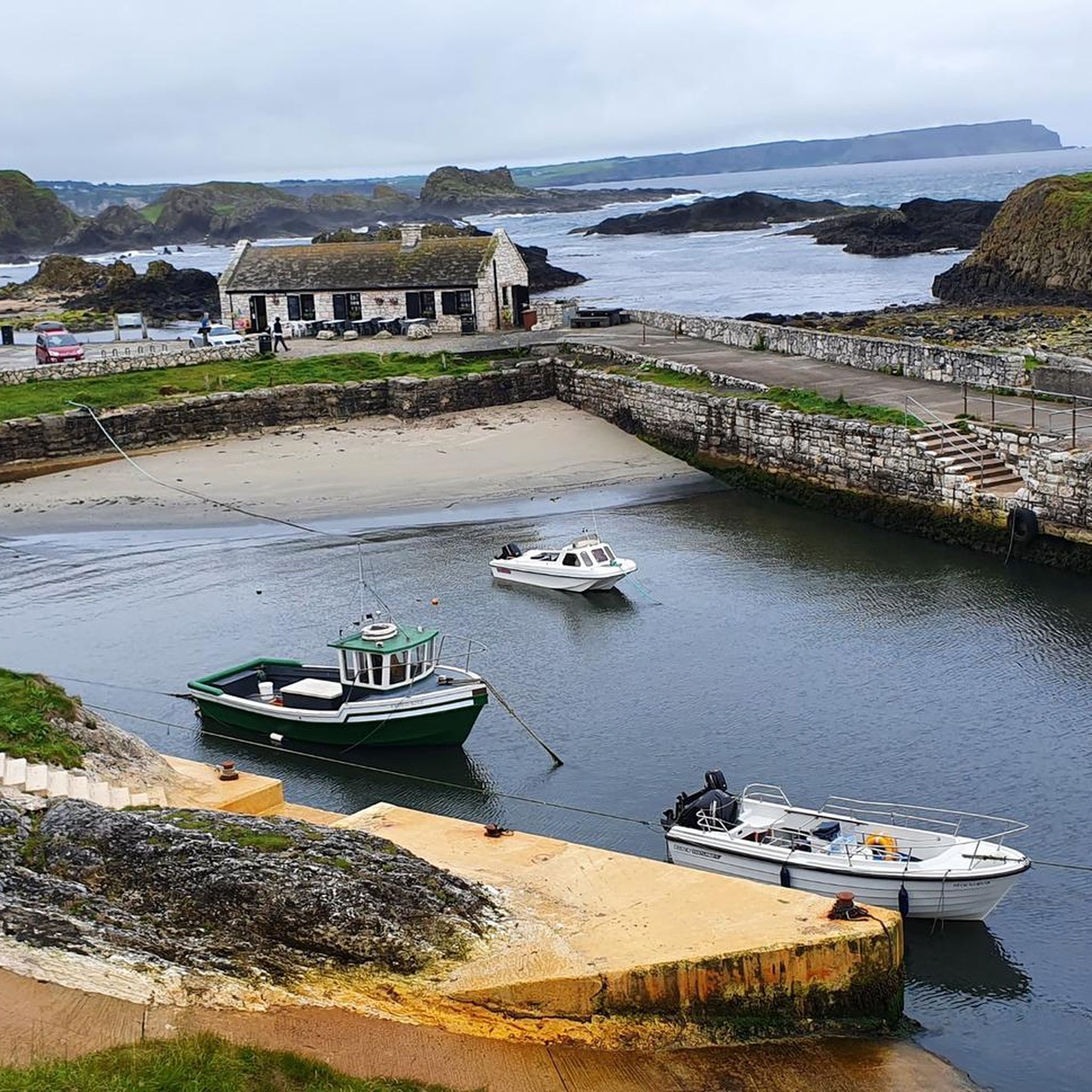
In Game of Thrones, this was Lordsport on the Iron Islands.
0
0

Only a solitary ruined gate tower remains - a standing testament to the turbulent times experienced at Dunseverick Castle. It's free to visit and open year-round, but take care exploring as there are sheer cliffs on three sides.
1
0

After a rocky and dreary section, the "view into paradise" comes through this bottleneck, almost out of nowhere. This walking section is unique!
0
0

Without the Games of Thrones reference this rather boring old quarry tzranformed into a parlink lot would definitely not be worth a visit - now at least for fans it is a destination.
3
0

Frequently Asked Questions
How many hiking trails are available around Ballinlea Upper?
There are over 30 hiking trails around Ballinlea Upper, offering a diverse range of experiences. These include 20 easy routes, 12 moderate routes, and 2 more challenging options, catering to various fitness levels.
Are there any family-friendly hiking options in the Ballinlea Upper area?
Yes, the area offers several family-friendly options. Glenariff Forest Park, often called the 'Queen of the Glens,' has well-maintained trails suitable for families, including the 3 km Waterfall Walk. Coastal paths like the easy Causeway Coast Way: Whitepark Bay to Ballintoy, which features sandy stretches, are also great for families.
Can I bring my dog on the hiking trails near Ballinlea Upper?
Many trails in the Glens of Antrim and along the North Antrim Coast are dog-friendly, but specific rules may apply in certain areas, especially nature reserves or working farmland. Glenariff Forest Park generally welcomes dogs on leads. Always check local signage or park regulations before heading out.
What kind of natural features or landmarks can I expect to see while hiking?
The region is rich in natural beauty. You can explore dramatic waterfalls like Ess-na-Crub and the Mare's Tail in Glenariff Forest Park. Along the coast, you'll find the iconic basalt columns of the Giant's Causeway, the thrilling Dunseverick Castle, and the picturesque Carrick-a-Rede Rope Bridge. The Glens themselves offer ancient woodlands and stunning panoramic views.
Are there any circular walks available around Ballinlea Upper?
Yes, there are several circular walks. For instance, the Ballintoy loop via Carrick-a-Rede Quarry is an easy 5.2 km circular route along the Causeway Coast. Glenariff Forest Park also features various loop trails, including its famous Waterfall Walk.
What is the best time of year to go hiking in Ballinlea Upper?
The Glens of Antrim and North Antrim Coast are beautiful year-round. Spring brings vibrant greenery and wildflowers, while autumn offers stunning foliage. Summer provides longer daylight hours and generally milder weather, ideal for coastal walks. Even in winter, the landscapes can be dramatic, though some trails might be more challenging due to weather conditions.
Where can I find parking for hiking trails in the area?
Parking is generally available at popular trailheads and attractions. For example, Glenariff Forest Park has dedicated parking facilities. Along the Causeway Coastal Route, you'll find parking areas near key points like Ballintoy Harbour and White Park Bay. Always check for specific parking information for your chosen starting point.
What do other hikers say about the trails around Ballinlea Upper?
The trails around Ballinlea Upper are highly regarded by the komoot community, with an average rating of 4.6 stars from over 270 reviews. Hikers often praise the stunning coastal views, the dramatic waterfalls of Glenariff, and the diverse landscapes that make each route unique.
Are there any challenging hikes for experienced hikers?
While many routes are easy to moderate, there are options for more experienced hikers. The broader Glens of Antrim region includes hill summits and moorlands that offer more challenging climbs and longer distances. There are 2 difficult routes recorded in the area for those seeking a greater challenge.
Can I access Glenariff Forest Park using public transport?
Public transport options to Glenariff Forest Park can be limited. It's advisable to check local bus schedules or consider driving. For detailed information on accessing the park, you can visit the official Northern Ireland Direct website: nidirect.gov.uk/articles/glenariff-forest-park.
What kind of scenery can I expect on the coastal trails?
The coastal trails around Ballinlea Upper, part of the Causeway Coastal Route, offer breathtaking scenery. You'll experience dramatic cliffs, golden sandy beaches like White Park Bay, picturesque harbours such as Ballintoy, and expansive views across the sea, sometimes even reaching Scotland's Mull of Kintyre on clear days.
Are there any places to eat or stay near the hiking areas?
Yes, the region offers various options for food and accommodation. Nearby towns and villages along the North Antrim Coast and within the Glens of Antrim provide pubs, cafes, and guesthouses. Ballintoy Harbour, for example, is a scenic spot with local amenities.
Most popular routes around Ballinlea Upper
Most popular attractions around Ballinlea Upper

Get inspired with the komoot mobile app


Explore more
Browse the best Hikes in other regions.
