The best walks and hikes in the Yanartas Mountains
4.6
(1511)
9,638
hikers
139
hikes
Hiking in the Yanartas Mountains offers a unique experience within the Olympos Beydagları National Park in southwestern Turkey. The region is characterized by the natural phenomenon of the eternal flames of Chimera, fueled by natural gas vents on rocky slopes. Hikers will find a landscape of pine forests, rocky terrain, and elevated viewpoints offering panoramic Mediterranean Sea views. The area is also part of the Lycian Way, providing diverse trails amidst historical and mythological sites.
Best hiking trails in the…
Last updated: November 5, 2026
4.6
(72)
540
hikers
5.04km
01:29
140m
140m
Easy hike. Easily walkable paths.
4.6
(98)
387
hikers
14.3km
03:52
200m
200m
Moderate hike. Good fitness required. Easily walkable paths.

4.7
(80)
252
hikers
11.0km
03:13
300m
300m
Moderate hike. Good fitness required. Easily walkable paths.
4.9
(65)
328
hikers
19.5km
08:45
1,140m
1,140m
Hard hike. Very good fitness required. Mostly walkable paths. Sure-footedness required.
4.7
(26)
134
hikers
11.7km
03:57
300m
300m
Moderate hike. Good fitness required. Mostly walkable paths. Sure-footedness required.
4.6
(25)
147
hikers
10.7km
03:21
360m
360m
Moderate hike. Good fitness required. Easily walkable paths.
4.8
(17)
87
hikers
10.9km
03:48
310m
310m
Moderate hike. Good fitness required. Mostly walkable paths. Sure-footedness required.
4.7
(37)
247
hikers
9.12km
02:45
250m
250m
Moderate hike. Good fitness required. Mostly walkable paths. Sure-footedness required.
4.5
(25)
87
hikers
17.4km
05:13
490m
490m
Hard hike. Very good fitness required. Easily walkable paths.
4.8
(29)
101
hikers
9.09km
02:31
160m
160m
Moderate hike. Good fitness required. Easily walkable paths.
Get access to more routes and recommendations from other explorers.
Already have an account?
Our route recommendations are based on thousands of hikes, rides, and runs completed by other people on komoot.
Start today with a free account
Your next adventure awaits.


Tips from the Community

The Gelidonya Lighthouse – one of the beacons in the Mediterranean – is located at Cape Taşlık (Taşlık Burnu) in the Kumluca district. It is the highest lighthouse on the Turkish coast; its location is 227 meters above sea level and about 3 kilometers inland. Since the lighthouse, built on rugged rocks and difficult to access, could not be connected to the power grid, it had to be wound up by hand for a long time to function. Since 2017, the facility has been powered by solar energy with 220-volt electricity. In the area near the lighthouse, you can also camp. However, be sure to bring enough water and food and be prepared to see scorpions and snakes.
1
0
The volcanic island of Suluada is located off the coast of Adrasan in the Antalya region and is also known as the "Maldives of Turkey" because of its white pebble beach and crystal-clear, turquoise water. Suluada translates to "water island" and owes its name to natural freshwater springs that emerge from the rocks. Since the island is very popular, it can be very crowded with boat tourists during the high season.
1
0
Beşadalar or Beş Adalar (Turkish meaning "five islands"; Χελιδόνιαι and Χελιδόνεαι, which means "swallow islands"; Latin: Chelidoniae Insulae; Italian: Celidoni) is an island group off Cape Gelidonya on the southern coast of Anatolia, Turkey. The largest island is called Devecitaşı Adasi. https://en.wikipedia.org/wiki/Be%C5%9Fadalar
1
0
This was a three-aisled basilica that was built between the 5th century AD and the 6th century. This architectural style is typical for this period.
1
0
Directly below the fires are the remains of the Temple of Hephaestus, the Greek god who was associated with fire through his role as the blacksmith of the gods. Hephaestus was the main deity of the city of Olympos in Roman times. Some inscriptions and ruins of the temple can still be seen today. In the Byzantine period, after the advent of Christianity, a basilica was built over the temple.
1
0
Chimaira (Ancient Greek: Χίμαιρα Chímaira (f. sg.), Latinized: Chimaera) or Turkish: Yanartaş ('burning stone') is a site in Lycia, Asia Minor, known since antiquity, where a rare, millennia-old natural phenomenon can still be observed today. Flames erupt from the rocky ground of a mountainside in two separate areas at several points – the 'eternal fires of the fire-breathing Chimaira,' which gave the place its ancient name. There are two fire fields about one kilometer apart, of which usually only the lower one is visited. It can be reached from Çıralı in about 30 minutes uphill. An entrance fee is charged. The path to the upper fire field from Ulupınar is free of charge, but more arduous. https://de.wikipedia.org/wiki/Chimaira_(Lykien)
1
0
Chimaira (Ancient Greek Χίμαιρα Chímaira (f. sg.), Latinized Chimaera) or Turkish Yanartaş ("burning stone") is a place in Lycia, Asia Minor, known since antiquity, where a rare, millennia-old natural phenomenon can still be observed today. Flames erupt from the rocky ground of a mountainside in two separate areas at several points – the "eternal fires of the fire-breathing Chimaira," which gave the place its ancient name. There are two fire fields about a kilometer apart, of which usually only the lower fire field is visited. You can reach it from Çıralı in about 30 minutes uphill. An entrance fee is charged. The path to the upper fire field from Ulupınar is free of charge, but more arduous.
1
0
Chimaira (Ancient Greek Χίμαιρα Chímaira (f. sg.), Latinized Chimaera) or Turkish Yanartaş ("burning stone") is a place in Lycia, Asia Minor, known since antiquity, where a rare, millennia-old natural phenomenon can still be observed today. Flames erupt from the rocky ground of a mountainside in several places across two separate areas – the "eternal fires of the fire-breathing Chimaira," which gave the place its ancient name. There are two fire fields about one kilometer apart, of which usually only the lower one is visited. It can be reached from Çıralı in about 30 minutes uphill. An entrance fee is charged. The path to the upper fire field from Ulupınar is free of charge, but more arduous. https://de.wikipedia.org/wiki/Chimaira_(Lykien)
1
0
Frequently Asked Questions
How many hiking trails are available in the Yanartas Mountains?
The Yanartas Mountains offer a wide variety of hiking experiences, with over 140 trails recorded on komoot. These range from easy walks to more challenging ascents, catering to different fitness levels.
What is the best way to experience the eternal flames of Chimera?
The most direct way to reach the eternal flames is via the Ruins at Yanartaş (Chimera) – Chimera (Yanartaş) loop from Information Chimaera. This easy 1.2-mile (1.9 km) path takes about 45 minutes. While a daytime visit offers a quieter experience, many hikers prefer to visit after sunset to witness the dramatic glow of the flames, which are fueled by natural gas vents.
Are there any family-friendly hiking options in the Yanartas Mountains?
Yes, the region offers several easy trails suitable for families. The short hike to the eternal flames of Chimera is a popular choice. For a slightly longer, yet still manageable option, consider the Göynük Canyon – View of Göynük Canyon loop from Göynük, an easy 3.2-mile (5.1 km) trail that takes about 1 hour 30 minutes.
Can I find circular hiking routes in the Yanartas Mountains?
Many of the trails in the Yanartas Mountains are designed as loops, allowing you to start and end at the same point. For example, the Chimera (Yanartaş) – Yanartaş (Chimaera) loop from Çıralı is a moderate 6.6-mile (10.6 km) circular path offering varied terrain and coastal views.
What kind of natural features and viewpoints can I expect to see?
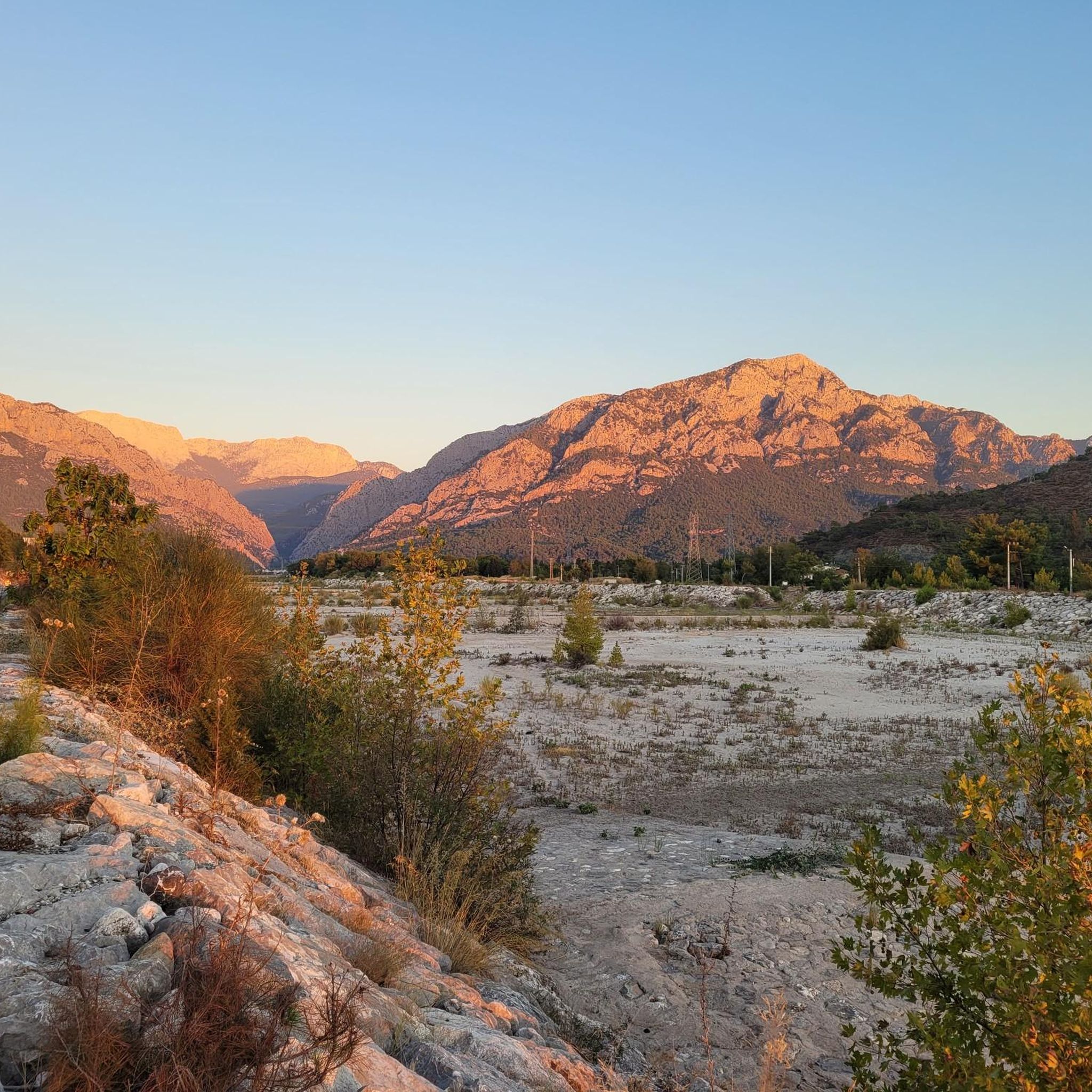
The Yanartas Mountains are part of the Olympos Beydagları National Park, characterized by lush pine forests, rocky slopes, and the unique eternal flames of Chimera. Hikers can enjoy breathtaking panoramic views of the Mediterranean Sea from elevated points. Notable natural features include Göynük Canyon and the dramatic landscapes surrounding Mount Olympos.
Are there any historical or ancient sites to explore while hiking?
Absolutely. The region is rich in history and mythology. The eternal flames themselves are linked to ancient legends and the ruins of the Temple of Hephaistos. The area is also part of the renowned Lycian Way, and you can find ancient ruins like the Ancient City of Olympos and the Ancient City of Phaselis nearby, offering a glimpse into the past.
What is the best time of year to go hiking in the Yanartas Mountains?
The Yanartas Mountains are generally pleasant for hiking during spring (April-May) and autumn (September-November) when temperatures are milder. Summer can be very hot, making early morning or late afternoon hikes preferable. Winter offers a different, quieter experience, though some paths might be more challenging due to weather conditions.
Is it possible to hike with dogs in the Yanartas Mountains?
While many trails in the Yanartas Mountains are suitable for dogs, it's important to keep them on a leash, especially within the Olympos Beydagları National Park to protect wildlife and ensure the safety of other hikers. Always carry enough water for your dog, particularly on longer routes or during warmer months, as water sources can be limited.
Where can I park when visiting the Yanartas Mountains for a hike?
Parking is typically available near popular trailheads, especially for the hike to the eternal flames of Chimera, which has a designated car park near Çıralı. For other routes, parking might be found in nearby villages or designated areas, though it's always advisable to check specific route details on komoot for the most accurate information.
What do other hikers enjoy most about the Yanartas Mountains?
The Yanartas Mountains are highly rated by the komoot community, with an average score of 4.5 stars from over 1000 reviews. Hikers frequently praise the unique natural phenomenon of the eternal flames, the stunning Mediterranean sea views, the diverse terrain, and the blend of natural beauty with historical significance.
Are there any challenging hikes for experienced trekkers?
Yes, for those seeking a more demanding experience, the Yanartas Mountains offer several difficult routes. An example is the Rocky Slope Near Kemer – View of Adrasan Beach loop from Mount Markiz, a challenging 12.1-mile (19.5 km) trail with significant elevation gain, offering expansive views.
Are there any permits required for hiking in the Yanartas Mountains?
Generally, no specific hiking permits are required for most trails in the Yanartas Mountains. However, as the area is within the Olympos Beydagları National Park, there might be entrance fees for certain attractions, such as the site of the eternal flames of Chimera. It's always a good idea to check local regulations before your visit.
Most popular routes in the Yanartas Mountains
Most popular attractions in the Yanartas Mountains

Get inspired with the komoot mobile app


Explore more
Browse the best Hikes in other regions.
