The best walks and hikes around Tattenhall and District
4.5
(701)
4,937
hikers
216
hikes
Hiking around Tattenhall and District explores the rolling Cheshire plains, characterized by a patchwork of fields, meadows, and small woodlands. The region's terrain is defined by gentle slopes and notable sandstone ridges, which are part of the Sandstone Trail. This landscape offers a variety of routes through pastoral scenery, with historical features like Beeston Castle often visible from the trails.
Best hiking trails around Tattenhall and District
- The most popular hiking route is The Pheasant Inn – View from Rawhead…
Last updated: November 19, 2026
4.7
(67)
319
hikers
12.2km
03:29
270m
270m
Moderate hike. Good fitness required. Easily walkable paths.
4.6
(26)
144
hikers
7.63km
02:08
150m
150m
Moderate hike. Good fitness required. Easily walkable paths.

5.0
(14)
107
hikers
15.5km
04:21
320m
320m
Moderate hike. Good fitness required. Easily walkable paths.
4.9
(9)
84
hikers
3.02km
00:54
90m
90m
Easy hike. Easily walkable paths.
4.6
(13)
69
hikers
12.1km
03:15
160m
160m
Moderate hike. Good fitness required. Easily walkable paths.
Get access to more routes and recommendations from other explorers.
Already have an account?
Our route recommendations are based on thousands of hikes, rides, and runs completed by other people on komoot.
Start today with a free account
Your next adventure awaits.
Tips from the Community

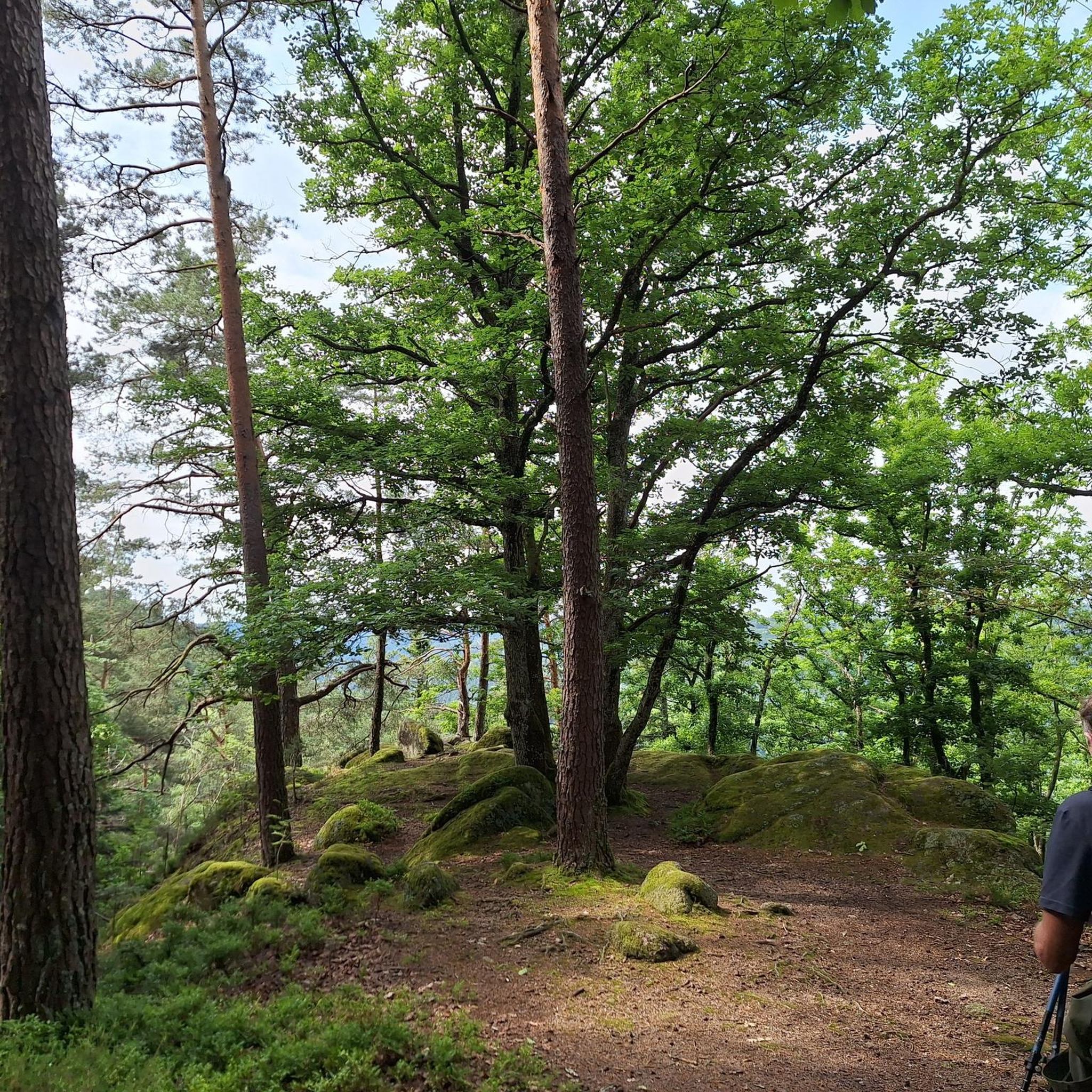
An old estate track / packhorse route built between quarry sites with sandstone setts and cobbles so it wouldn't wash away on the steep slope.
0
0
Beeston was listed in the Domesday Book in 1086 as a parish within the ancient hundred of Rushton. In the 13th century the hundreds were reorganised and Beeston became a township within Bunbury parish. The village is known for Beeston Castle on the crag above, built in 1228 by Ranulph de Blondeville, which later became a royal garrison and was dismantled in 1645 by order of Parliament. Below the castle there is a famous deep well said to go down 122 yards to Beeston Brook in the valley. The castle and much of the surrounding land were historically the property of Lord Tollemache, who was lord of the manor and principal landowner.
0
0
Peckforton Castle itself is not actually medieval. It was built between 1844 and 1850 as a Victorian country house in the style of a Norman castle, for John Tollemache, who was the largest landowner in Cheshire at the time and was described by William Gladstone as the greatest estate manager of his day. It was designed to look like a real medieval fortress, complete with a gatehouse, portcullis, dry moat, arrow slots and large towers. The gateway is a tall, imposing arch with twin towers and battlements, built of the same red sandstone as the rest of the castle. It sits on Stone House Lane in woodland at the north end of the Peckforton Hills, about a mile north-west of the village of Peckforton and less than a mile from Beeston Castle. It is Grade I listed. The castle has had a varied history, serving as a family home, a hostel for 200 physically disabled children evacuated from London during the Second World War, and now as a hotel, wedding venue and conference centre.
0
0
It is dedicated to St John the Evangelist, and it is often called St John the Divine. The church originates from the 17th century, although it has a buttress dated 1730. It was restored in 1795, and then restored again in 1871 by the Chester architect John Douglas, who added a bell turret with a pyramidal roof. Another restoration, with the addition of a chancel, was carried out around 1878.
0
0
It was built in 1839 as a chapel of ease to St Oswald's in Malpas, because the local population was growing quickly. The architect was Edmund Sharpe from Lancaster, who was well known for his Gothic Revival churches. The land was donated by Sir Philip Grey Egerton of Oulton, and the money was raised by public subscription. Around £2,000 was collected in total, but only £700 of that was spent on building the church itself. Another £300 went towards a house for the minister, and the rest was invested to provide an income for him. The church also received a grant of £120 from the Incorporated Church Building Society. It was consecrated on the 7th of January 1840 by John Sumner, the Bishop of Chester, and it became a separate parish church in its own right in 1869. It is Grade II listed and is still an active parish church. In the churchyard, overlooking the crossroads, there is a war memorial.
0
0
It is the last visible bit of Cheshire's forgotten copper rush. Copper mining here was first recorded in 1696, owned by the Egerton family of Oulton. Eight miners worked it between 1696 and 1698. There were six shafts, one deepened to 156 feet in 1807. The mines were worked on and off until 1906. The chimney belonged to the mine engine house, probably around 150 years old now, Grade II listed. It once pumped water and hauled ore from the shafts. Now it stands in the woods as a weird industrial monument in the middle of what looks like completely rural hill country.
0
0

A good Christian welcome of the Sermon on the Mount sort - tea, coffee and milk offered for anyone who drops in 😊. Make it yourself and place a donation in the offering box. And a toilet round the back 😊! Church blesses the community 😊👏👏. Well done and thank you!
0
0

Frequently Asked Questions
How many hiking trails are there around Tattenhall and District?
There are over 200 hiking routes to explore around Tattenhall and District. The trails range from easy strolls through the countryside to more challenging hikes along sandstone ridges, with the majority being easy or moderate.
Are there any good circular walks in the area?
Yes, circular walks are very common in the region. Many trails are designed as loops, allowing you to start and end in the same place without retracing your steps. A great example is the View of Beeston Castle – Beeston Castle Gates loop from Burwardsley, which offers fantastic views of the historic castle on a varied path.
What are the walks like for families with children?
The area is well-suited for family outings. You can find many gentle trails, such as the short Hiking loop from Burwardsley. For a full day of adventure, the nearby Crocky Trail offers an adventure course with slides and swings, while Delamere Forest has gentle paths and child-friendly facilities.
Can I bring my dog on the trails?
Absolutely. The Tattenhall area is very dog-friendly, with many trails passing through open fields and woodlands. A popular spot for dog walkers is the Countess of Chester Country Park, which has designated paths and secure fields where dogs can run off-lead.
Where can I find the best views while hiking?
For some of the best panoramic views, head to the trails along the Sandstone Trail. The ridges around Burwardsley and Bickerton Hill offer breathtaking vistas across the Cheshire Plain towards the Welsh hills. The climb to the top of Beeston Castle also provides a stunning 360-degree viewpoint.
Are there any trails with historical significance?
Yes, the region is rich in history. Many walks lead to or pass by significant landmarks. You can hike to the 13th-century ruins of Beeston Castle or explore the Iron Age hillfort, Maiden Castle, on Bickerton Hill. The village of Tattenhall itself has historic buildings and passageways worth exploring.
What is the Sandstone Trail and can I walk a section of it?
The Sandstone Trail is a renowned 34-mile long-distance path. A popular section is easily accessible from the Tattenhall area, running from Burwardsley over the Bickerton Hills. This stretch offers a moderately challenging hike with dramatic sandstone ridges and beautiful woodland scenery.
Are there any easy-access or pram-friendly walks?
For flatter, more accessible paths, consider visiting the Countess of Chester Country Park, which has paved paths suitable for wheelchairs and buggies. The trails within Delamere Forest are also generally gentle and well-maintained, making them a good option for families with prams.
Where is a good place to park for a walk?
Parking is available at several key locations. Many popular routes start near villages like Burwardsley or Beeston, which have public parking areas. Beeston Castle has its own large car park (a fee applies), which is a convenient starting point for many trails in the Peckforton Hills.
Are there any pubs on the walking routes?
Yes, several traditional pubs are located along or near the main walking trails, particularly around Burwardsley and Tattenhall village. They are perfect for a post-hike meal or drink. Many routes, like those starting from Burwardsley, are planned with a convenient pub at the start or end of the trail.
What do other hikers say about the trails in Tattenhall?
The komoot community rates the hikes around Tattenhall and District very highly. Reviewers often praise the stunning views from the sandstone ridges, the peaceful woodlands, and the mix of gentle countryside with more rugged heathland found on Bickerton Hill.
Are there any waterfalls in the area?
While the immediate Tattenhall area is known more for its ridges and rolling hills, a short drive will take you to Three Shires Head. This scenic spot, where Cheshire, Derbyshire, and Staffordshire meet, features charming packhorse bridges and a series of small, cascading waterfalls popular with photographers and wild swimmers.
Most popular routes around Tattenhall and District
Most popular attractions around Tattenhall and District

Get inspired with the komoot mobile app


Explore more
Browse the best Hikes in other regions.
