The best walks and hikes around Wenzenbach
4.5
(383)
1,596
hikers
147
hikes
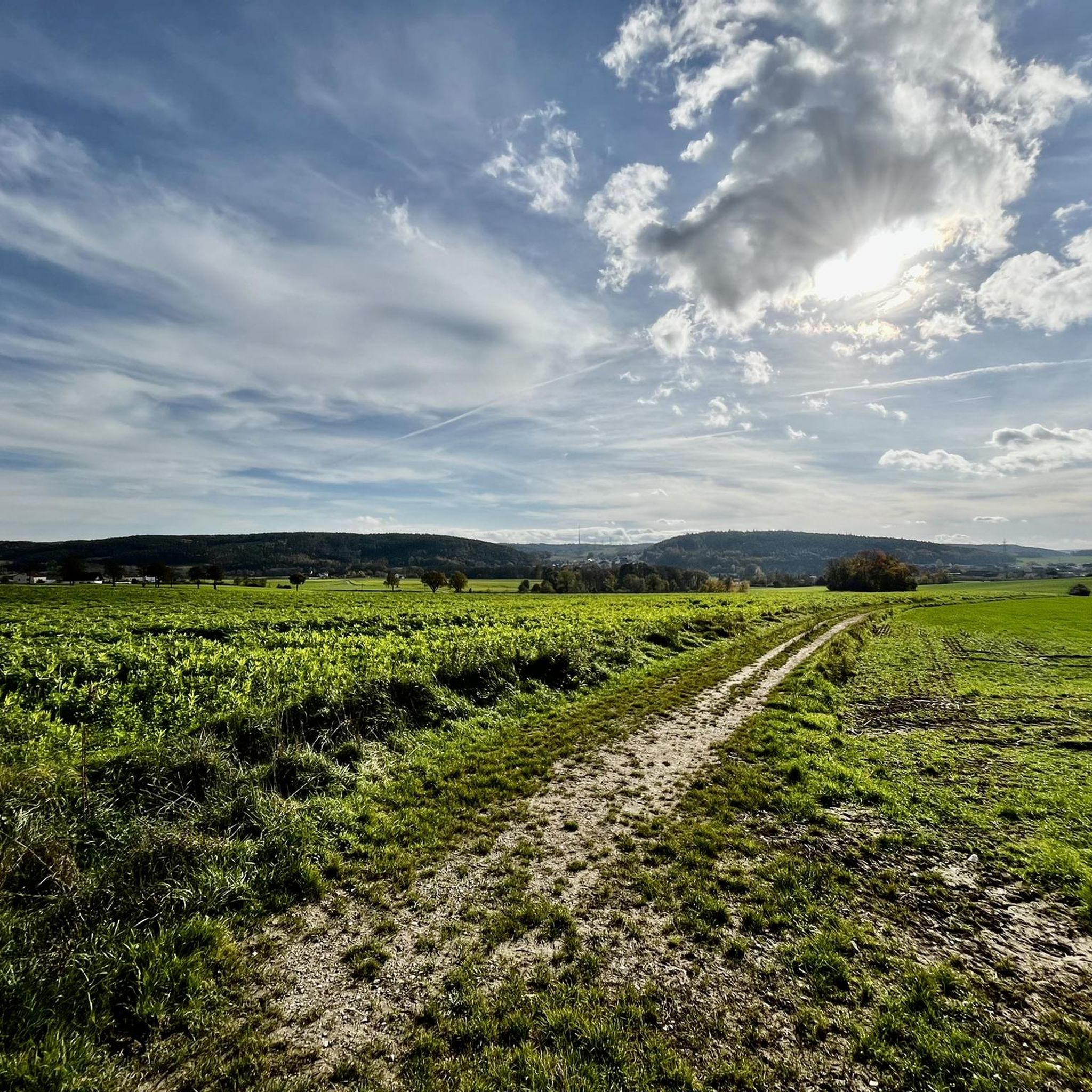
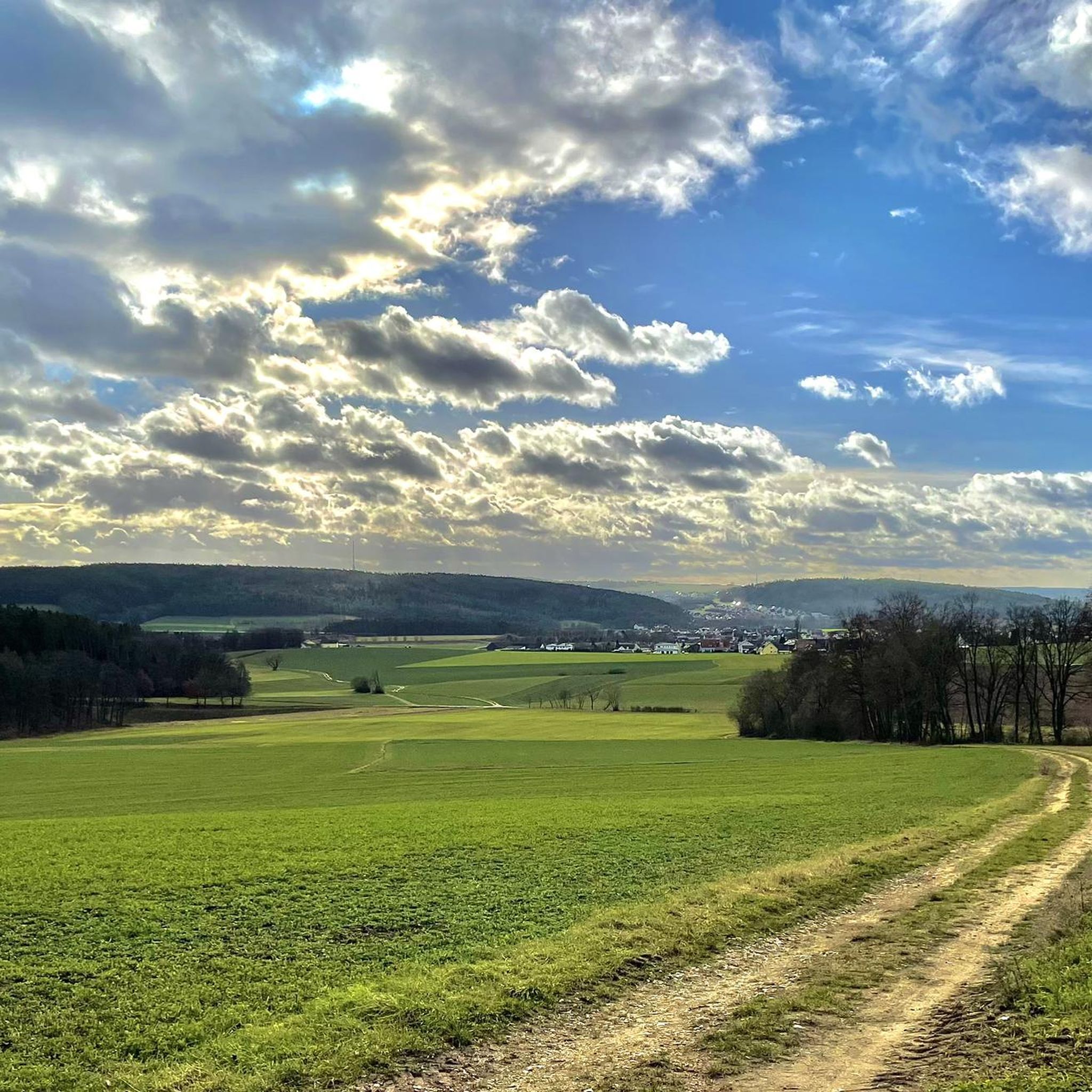
Hiking around Wenzenbach offers diverse landscapes characterized by forests, hills, and the meandering Wenzenbach River. The region features a mix of forest paths, paved sections, and meadows, providing varied terrain for outdoor activities. Many trails follow the Wenzenbach River, offering pleasant walks alongside the water. The area is also close to the Bavarian Forest Nature Park, providing extensive natural opportunities.
Best hiking trails in Wenzenbach
- The most popular hiking route is Hauzenstein Castle – Schlossgut Hauzenstein loop from Fußenberg, a 7.4 miles (11.9 km) trail that takes 3 hours 14 minutes to complete, leading past historical sites and through varied terrain.
- Another top favourite among local hikers is Schönberg Castle – Pond at Wenzenbach loop from Wenzenbach, a moderate 5.3 miles (8.6 km) path that winds through wooded areas and past water features.
- Local hikers also love the Schlossgut Hauzenstein – Sonnenspiegel Pond loop from Hauzenstein, a 3.2 miles (5.2 km) trail leading through forest paths and past a pond, often completed in about 1 hour 22 minutes.
- Hiking around Wenzenbach is defined by forests, hills, and the Wenzenbach River. The network offers options for different ability levels, from easy walks to more challenging treks.
- The routes in Wenzenbach are highly rated by the komoot community with an average score of 4.6 stars from over 300 reviews. More than 1600 hikers have used komoot to explore Wenzenbach's varied terrain.
Last updated: September 30, 2026
4.6
(50)
110
hikers
11.9km
03:15
170m
170m
Moderate hike. Good fitness required. Easily-accessible paths. Suitable for all skill levels.
4.4
(26)
70
hikers
8.54km
02:24
170m
170m
Moderate hike. Good fitness required. Easily-accessible paths. Suitable for all skill levels.

4.8
(19)
56
hikers
5.20km
01:22
50m
50m
Easy hike. Great for any fitness level. Easily-accessible paths. Suitable for all skill levels.
4.2
(11)
60
hikers
9.35km
02:36
170m
170m
Moderate hike. Good fitness required. Easily-accessible paths. Suitable for all skill levels.
4.5
(19)
50
hikers
8.61km
02:19
110m
110m
Moderate hike. Good fitness required. Easily-accessible paths. Suitable for all skill levels.
Get access to more routes and recommendations from other explorers.
Already have an account?
Our route recommendations are based on thousands of hikes, rides, and runs completed by other people on komoot.
Start today with a free account
Your next adventure awaits.
Tips from the Community

The small stream is called Gambach and flows into the pond at Fußenberg.
0
0
It's not Falkenstein, but Schönberg Castle 🏰
0
0
Beautiful hiking trail along the Gambach stream. The MTB trail is not easy (S2 difficulty).
0
0

Highly recommended for a fun family outing. A very well-maintained facility, extremely friendly staff, and an exciting show.
2
0

St. Peter's Parish Church The historic hall building, built between 1425 and 1482, rises on a rectangular floor plan, to which the recessed, four-part apse and the square-plan tower are connected to the east. Today, the old building forms the entrance hall with the sacristy and weekday chapel. The modern extension is accessed via the former north portal of the historic church. It has an elliptically inspired floor plan, tapering towards the new chancel in the south, thus forming the characteristic nave shape. Two additional entrances are located on the east and west sides of the new building. Approaching the church from the northeast via the main street, the only thing that immediately catches your eye is the narrow, metal-clad window protruding from the roof and wall of the old church. This window, along with the portal below it, marks the new main entrance. The west side of the old building and the entire extension – a construction of iron girders and glass on a brick base – are clad with 15-meter-high wooden slats. The sanctuary is highlighted externally by a ship's prow-like roof elevation and a cross. The tower dates from the Romanesque period and is crowned by a regionally typical pointed helmet on four triangular gables with finials and gargoyles. The entire furnishings of the new church were created by the artist Helmut Langhammer from Pressath, Upper Palatinate. A uniform granite floor connects the old and new buildings. At the junction stands the baptismal font, a silver bowl on a gray stone body. The altar, also made of stone and framed by four candlesticks, encloses a bronze column of Christian faith. Behind the altar, a bronze, slightly curved sail repeats the ship motif. To the right of the altar rises the silver tabernacle in the shape of an oar. On the left, a bronze figure of the Virgin Mary supports the Christ Child, raised in a cruciform position. The weekday chapel still features, among other things, the original high altar and stained-glass windows from the neo-Gothic remodeling in the mid-19th century. Source: Excerpts from www.strasse-der-moderne.de
2
1
Schönberg Castle The castle was built in the 13th century. In 1269, it was mentioned as the property of the Lords of Hohenfels. Later owners were the Bishops of Regensburg and the Dukes of Bavaria. In the following centuries, there was a constant change of ownership, including the Satelbog family, the Hauzendorf family, the Auer family, the Hof family, the Murach family, and the Zenger family. On September 12, 1504, the castle was conquered by the Holy Roman Emperor Maximilian I. After the Battle of Wenzenbach, Duke Albrecht moved into Schönberg and granted it in 1508 to Bernhardin von Stauff, Baron of Ehrenfels. Schönberg passed as a dowry to the Lerchenfelder family, who resided here until 1753, when it was sold to the Breslau canon Georg Karl Joseph von Stingelheim. The Stingelheim family remained in possession of Schönberg until 1817, when Karl Alexander von Thurn und Taxis purchased the estate. In 1927, the castle passed to the Vilsmeier family, who established an inn in the outbuildings a year later. In 1957, the property came into the possession of the Fichtl family. The current owner is the physician Hans-Hermann Klünemann, who, with the assistance of the German Foundation for Monument Protection, initiated the renovation of the complex. The renovation of the castle was largely completed in 2010. The castle is a three-story, hipped-roof building with a bay window and an irregularly oriented south-facing floor plan. The core building dates from 1253/54 with a medieval extension. Alterations took place from the late 17th to the early 18th century and around 1770/71. The roof structure dates from 1820/23. There is a Baroque castle chapel of St. Joseph. Also preserved are parts of the circular wall with shell towers, as well as the presumably late medieval moat wall with its ditch and outer wall made of granite rubble. Source: Excerpts from www.wikipedia.de
2
0

A castle near Wenzenbach, towering high above the valley. Built in the 13th century and now privately owned.
1
0
Hauzenstein Castle Hauzenstein Castle was first mentioned in 1372. The castle was probably the youngest castle in the Regensburg district. Its owner at the time was Hermann Hauzendorfer. Later owners were the Paulsdorf family, and from 1592 onwards, the Freidl family and Brentano von Brentheim. The current complex was built at the end of the 17th century by the Freidl family using stones from the old castle destroyed in the Thirty Years' War. Since 1830, it has been privately owned by the Walderdorff family. The two-story side wing was added in 1915. The complex features a striking bell tower with an onion dome and a three-story hipped-roof main building with plasterwork. At the rear are a two-story wing with a gable roof and a two-story mansard-roofed building with a dormer window dating from the 17th/18th centuries. The castle chapel, dating from around 1835, is located in the columned hall on the ground floor. The chapel was probably originally a horse stable. The chapel is a square, four-story tower with a clock, pyramidal roof, and onion-domed dome. The gateposts with seated lions and the cast-iron fence date from around 1870. A Baroque garden is located to the south of the complex. Scattered remains of the old medieval castle can be found in the forest about 150 meters west of the castle. Source: Excerpts from www.wikipedia.de
3
0
Frequently Asked Questions
How many hiking trails are available around Wenzenbach?
There are over 150 hiking trails around Wenzenbach, offering a wide range of options for different fitness levels and preferences. This includes over 90 easy routes, 60 moderate routes, and a few more challenging treks.
Are there easy hiking trails suitable for beginners or families in Wenzenbach?
Yes, Wenzenbach offers many easy hiking trails perfect for beginners or families. Over 90 routes are classified as easy, often following the gentle inclines along the Wenzenbach River or traversing forest paths and meadows. These paths provide accessible points for cooling off or playing in the stream, and some routes are even low-barrier.
What kind of landscapes can I expect to see while hiking in Wenzenbach?
Wenzenbach's hiking trails lead through diverse landscapes characterized by forests, rolling hills, and the meandering Wenzenbach River. You'll encounter a mix of forest paths, paved sections, and open meadows, ensuring a varied and engaging experience. The region's proximity to the Bavarian Forest Nature Park also means you're close to extensive natural areas.
Are there any circular hiking routes in Wenzenbach?
Yes, many of the hiking routes in Wenzenbach are circular, allowing you to start and end at the same point. For example, the Schönberg Castle – Pond at Wenzenbach loop from Wenzenbach is a popular moderate circular path, and the Schlossgut Hauzenstein – Sonnenspiegel Pond loop from Hauzenstein offers an easy circular option through forest paths.
What historical sites or landmarks can I see along the hiking trails?
Several hiking trails in Wenzenbach pass by historical sites. You can often catch a glimpse of Schloss Schönberg, whose courtyard is accessible, and information boards along the routes provide details. Some trails also utilize former railway lines, like the one used by the "Falkensteiner Bockerl," offering historical context with impressive rock cuttings. Nearby, you can also explore highlights like the Stone Bridge (Steinerne Brücke) or the Regensburg Cathedral.
Are there any viewpoints or scenic spots on the trails?
While specific panoramic viewpoints are not always highlighted, the varied terrain and elevation changes in the Wenzenbach region often present opportunities for scenic overlooks. The wider Regensburg countryside is known for its magnificent views and breathtaking scenery, and many trails offer individual views of the surrounding forests and hills.
Can I bring my dog on the hiking trails in Wenzenbach?
Generally, dogs are welcome on hiking trails in Wenzenbach. The region's natural environment, with its forests and river paths, is well-suited for walks with canine companions. However, always ensure your dog is on a leash, especially near wildlife or in agricultural areas, and be mindful of local regulations.
What do other hikers enjoy most about hiking in Wenzenbach?
The hiking trails in Wenzenbach are highly rated by the komoot community, with an average score of 4.6 stars from over 300 reviews. Hikers often praise the diverse terrain, the peaceful forest paths, and the pleasant walks alongside the Wenzenbach River. The well-maintained network and the variety of routes for different skill levels are also frequently appreciated.
Are there any natural attractions or water features to explore?
Yes, the Wenzenbach River itself is a prominent natural feature, with many paths following its course, offering pleasant walks and accessible points for cooling off. The region also features recreational areas like the leisure area with a lake and playground at Forstbach, known as "Falkensteiner Bockerl." You can also find natural monuments nearby, such as the Confluence of the Naab and Danube.
Is public transport available to reach hiking trailheads in Wenzenbach?
Wenzenbach is part of the broader Regensburg district, which has public transport connections. While specific trailhead access by public transport might vary, the community's infrastructure generally supports reaching various starting points. It's advisable to check local bus schedules for the most convenient options to your chosen trailhead.
Are there parking facilities available near the hiking trails?
Yes, parking facilities are generally available near popular hiking trailheads in and around Wenzenbach. Many routes start from easily accessible points within the community or nearby villages, where parking is provided for hikers. It's always a good idea to check specific route descriptions for detailed parking information.
What is the best time of year to go hiking in Wenzenbach?
Wenzenbach offers enjoyable hiking experiences throughout much of the year. Spring and autumn provide pleasant temperatures and beautiful scenery with blooming flowers or colorful foliage. Summer is also popular, especially for trails offering shade in the forests or along the river. Winter hiking is possible, though conditions may vary, and some paths might be icy or snowy.
Most popular routes around Wenzenbach
Most popular attractions around Wenzenbach

Get inspired with the komoot mobile app


Explore more
Browse the best Hikes in other regions.
