Attractions and Places To See around Norwell - Top 20
Attractions and places to see around Norwell offer a range of historical sites, natural paths, and architectural landmarks. This area features former railway lines converted into multi-use trails, significant religious buildings, and preserved industrial heritage. Visitors can explore routes suitable for cycling and walking, discover ancient structures, and learn about local history.
Best attractions and places to see around Norwell
- The most popular attractions is Fledborough to Doddington & Harby Railway Path, a cycle_way that is a well-surfaced ex-railway…
Last updated: August 2, 2026
Fledborough to Doddington & Harby Railway Path
Highlight (Segment) • Cycleway
The path crosses over the Trent on a long, old viaduct.
Tip by

Southwell Minster
Highlight • Religious Site
Tip by

Sign up now to discover places like this
Get recommendations on the best single tracks, peaks, & plenty of other exciting outdoor places.
Sign up for free
Fledborough Viaduct
Highlight • Historical Site
Tip by

Rufford Icehouse
Highlight • Historical Site
Tip by

Caudwell's Mill
Highlight • Monument
When Charles Caudwell, whose family originated from Derbyshire, bought the mill in 1851 he made …
Tip by

Sign up for free to discover even more attractions around Norwell.
Sign up for free
Already have an account?
Start today with a free account
Your next adventure awaits.
Login or Signup
Tips from the Community

Caudwell's Mill stands on the River Greet on the site of Southwell’s mediaeval Burgage mill. When Charles Caudwell, whose family originated from Derbyshire, bought the mill in 1851 he made changes, thus greatly increasing the mill’s capacity. Wheat was transported to the mill by road, rail and water. Local corn arrived by horse and cart, supplies from further afield came from the R.Trent by barge to a wharf at Fiskerton which still stands. The mill suffered serious fires on three occasions in 1867, 1893 and 1917. On each occasion the opportunity was taken to modernise the plant. Local bakers took their supply of flour from the mill, best known was ‘Mosedale’s’ Bakery and Caudwell’s ‘Greet Lily Flour’ won the Nottinghamshire’s Bakers Cup in 1907, 1908, 1909, 1912 and 1914. The mill was taken over by Associated British Foods, who closed it in 1977 and in 1989 the mill was converted into residential apartments.
0
0
The earliest church on the site is believed to have been founded in 627 by Paulinus, the first Archbishop of York, when he visited the area while baptising believers in the River Trent. The legend is commemorated in the Minster's baptistry window. In 956 King Eadwig gave land in Southwell to Oskytel, Archbishop of York, on which a minster church was established. The Domesday Book of 1086 recorded the Southwell manor in great detail. The Norman reconstruction of the church began in 1108, probably as a rebuilding of the Anglo-Saxon church, starting at the east end so that the high altar could be used as soon as possible and the Saxon building was dismantled as work progressed. Many stones from this earlier Anglo-Saxon church were reused in the construction. The church was originally attached to the Archbishop of York's Palace which stood next door and is now ruined.
0
0

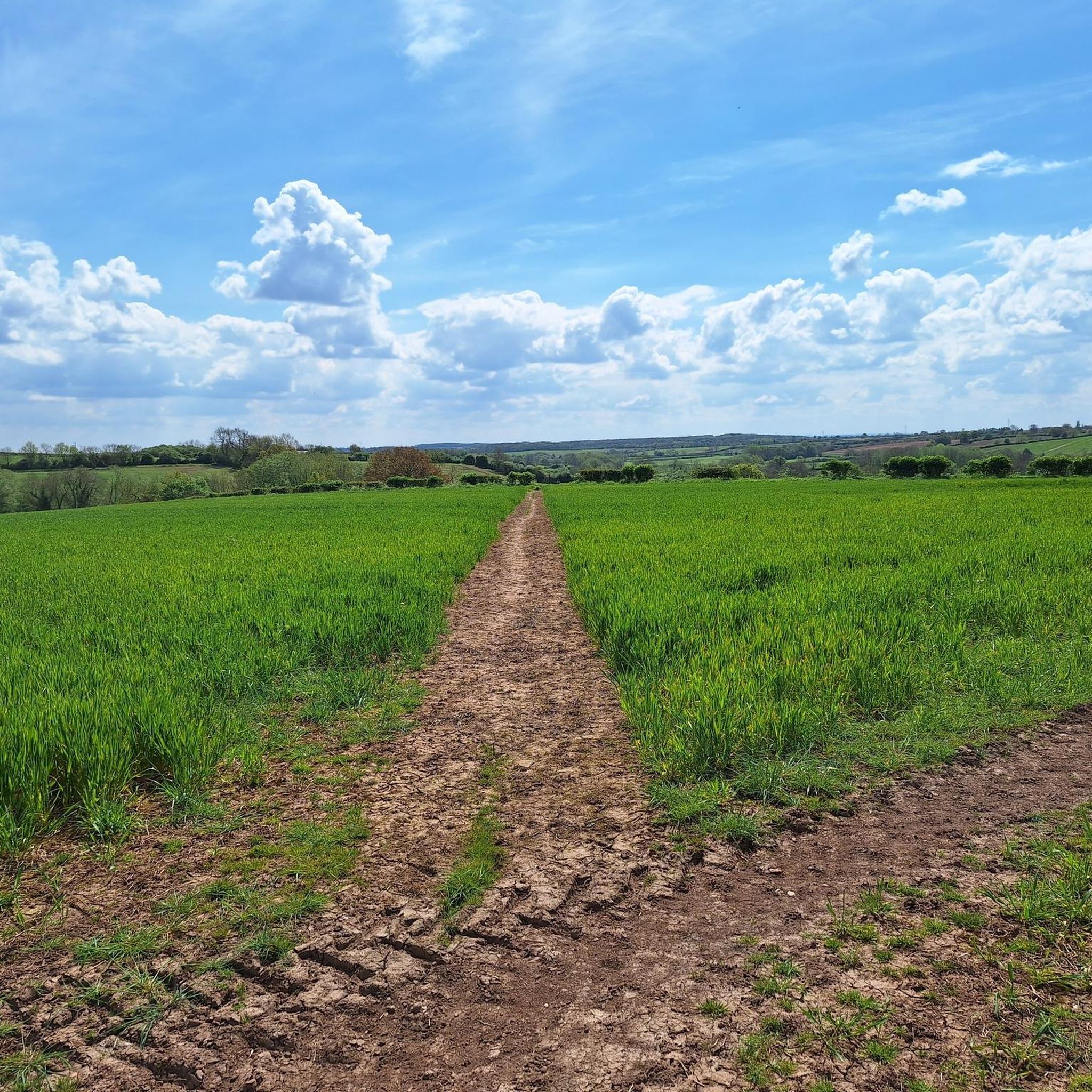
A great track , starting at Fledborough where High Marnham power station was located and going to Braeford Wharf in Lincoln City centre.Twenty five miles return trip if you park at Fledborough.Parking there is fine in the side road.
0
0

If you carry on through Skellingthorp you come to the Pyewipe pub, or you can carry on the Lincoln. Harby has a nice pub as well, there’s a theme here?
1
0

Between 1729 and c.1845 many improvements were made to the Rufford estate. For example, the addition of the bath house, the creation of the lake and mill buildings, the construction of the brewhouse, water tower and coach house, and also the addition of five ice houses. Although Rufford Abbey once boasted five ice houses, only two remain today. All were constructed around 1820, when the estate was owned by John Lumley-Savile, 8th Earl of Scarbrough (1788–1856). The five ice houses are located near Rufford lake, created c. 1750; for the simple reason that the movement of ice from its source was easier. Not all of Rufford's ice houses faced north, as accessibility and the logistics of the ice may have meant that the builders found it easier to place the doorways facing the lake rather than northerly. It is believed that ice was mainly taken from Blackwalk Pond, which was drained to make way for housing in the 20th century. Blackwalk Pond was used to serve the abbey in Rufford's monastic era, and later supplied water to Rufford's water tower and brewhouse, which remain on site today.
0
0

Used as part of a ride from Sheffield to Lincoln - Newark. Wet day, and the sand, grit on the trail got into my chain, and subsequently wore it out. This was part of a round England ride, and the option for full cleaning of the chain was not possible. The trail is good, just be
0
0

Southwell has a number of interesting historic buildings, such as the old coaching inn of the Saracen's Head and Burgage Manor, vacation spot for Lord Byron. Though the jewel in Southwell's crown is undoubtedly St Mary's Minster. One of the smallest cathedrals in the country, it is nonetheless one of the most interesting from an architectural perspective.
2
0
Frequently Asked Questions
What are the most popular attractions around Norwell?
Visitors frequently enjoy the Fledborough to Doddington & Harby Railway Path, a well-surfaced ex-railway line perfect for cycling, horses, and walkers, which crosses the River Trent on an old viaduct. Another highly-rated spot is Southwell Minster, one of the country's smallest cathedrals, known for its rich architectural history dating back to 627 AD.
Are there family-friendly attractions near Norwell?
Yes, several attractions are suitable for families. The Fledborough to Doddington & Harby Railway Path offers a flat, traffic-free route ideal for cycling and walking with children. Southwell Minster is also considered family-friendly, offering an engaging historical experience. Additionally, the Rufford Icehouse provides an interesting historical site to explore.
What historical sites can I visit around Norwell?
Norwell and its surroundings are rich in history. You can explore Southwell Minster, a cathedral with origins in 627 AD and significant Norman architecture. The Fledborough Viaduct, an old railway bridge, is now part of a Sustrans route and offers a glimpse into industrial heritage. Another historical point of interest is the Rufford Icehouse, one of two remaining ice houses from the 19th-century Rufford estate. Caudwell's Mill, though now residential apartments, has a long history as a significant mill on the River Greet.
Are there opportunities for cycling near Norwell's attractions?
Absolutely. The Fledborough to Doddington & Harby Railway Path is a dedicated cycle way, offering a flat, well-surfaced route across the River Trent. The Fledborough Viaduct is also part of a Sustrans route, providing a hard-packed gravel surface suitable for cycling. For more cycling options, you can find various routes in the Cycling around Norwell guide, including routes like 'The Bike Chain – Newark Market loop from Collingham'.
Where can I find easy hiking trails around Norwell?
For easy hikes, consider exploring the areas around the attractions. The Fledborough to Doddington & Harby Railway Path is also suitable for walkers. You can find more specific easy hiking routes in the Easy hikes around Norwell guide, such as the 'Daffodil Tearoom – Eakring Windmill loop from Nottinghamshire' or the 'Mansey Common Nature Reserve loop from Dukes Wood'.
What kind of terrain can I expect on the railway paths?
The railway paths, such as the Fledborough to Doddington & Harby Railway Path and the route over Fledborough Viaduct, are generally flat and well-surfaced. They often feature hard-packed gravel, making them suitable for various activities including cycling, walking, and even horse riding.
Are there any natural features or viewpoints to enjoy?
While the guide focuses on man-made attractions, the Fledborough to Doddington & Harby Railway Path offers scenic views as it crosses the River Trent on an old viaduct. This provides a pleasant natural backdrop to your activity. The area also features agricultural landscapes and forests along these paths.
What do visitors say about the railway paths?
Visitors praise the railway paths for being 'nice and flat and reasonably well surfaced,' making them ideal for cycling, horses, and walkers. The path over the Trent on the old viaduct is highlighted as a 'great section of hardpacked gravel cycle route' that provides a traffic-free way to cross the river. Many appreciate the selection of seats made from old railway sleepers along the way.
Can I find mountain biking trails near Norwell?
Yes, there are mountain biking opportunities nearby. The Gravel biking around Norwell guide lists several routes, including 'Sherwood Pines Adventure Trail – Kitchener's Rocky Drop loop from Ollerton' and 'Bilsthorpe Railway Path – Death Valley Trail loop from Nottinghamshire', offering various difficulty grades for mountain bikers.
What is the history behind Southwell Minster?
Southwell Minster has a deep history, with the earliest church on the site believed to have been founded in 627 AD by Paulinus, the first Archbishop of York. The current Norman reconstruction began in 1108, reusing stones from the earlier Anglo-Saxon church. It was originally attached to the Archbishop of York's Palace, which is now in ruins.
What is the significance of Caudwell's Mill?
Caudwell's Mill, located on the River Greet, was a significant flour mill with a history dating back to 1851 when Charles Caudwell bought it. It underwent several modernizations after fires and was known for its 'Greet Lily Flour,' which won multiple awards. Although converted into residential apartments in 1989, it stands as a testament to the area's industrial past.
Most popular attractions around Norwell

Get inspired with the komoot mobile app


Explore more
Still not found the Highlight you’re looking for? See guides of the top attractions in other regions:
