The best road cycling routes around Merchtem
4.2
(8)
808
riders
44
rides
Road cycling routes around Merchtem are characterized by a mix of flat riverine landscapes and gently rolling terrain, offering varied experiences for cyclists. The region features extensive dikes along rivers like the Dender and Schelde, providing smooth, scenic paths. Dedicated cycle highways and bicycle streets ensure well-maintained surfaces suitable for road bikes. While generally low in elevation, some routes include short, moderate climbs, adding diversity to the rides.
Best road cycling routes around Merchtem
- The most popular road cycling route…
Last updated: May 6, 2026
4.0
(1)
103
riders
50.7km
02:14
100m
100m
Moderate road ride. Good fitness required. Mostly well-paved surfaces and easy to ride.
5.0
(1)
90
riders
Moderate road ride. Good fitness required. Some segments of this route may be unpaved and difficult to ride.

Sign up for free
64
riders
94.9km
04:17
220m
220m
Moderate road ride. Good fitness required. Some segments of this route may be unpaved and difficult to ride.
43
riders
86.8km
04:04
170m
170m
Moderate road ride. Good fitness required. Mostly well-paved surfaces and easy to ride.
4.0
(1)
33
riders
48.7km
02:33
470m
470m
Moderate road ride. Good fitness required. Some segments of this route may be unpaved and difficult to ride.
Get access to more routes and recommendations from other explorers.
Sign up for free
Already have an account?
Our route recommendations are based on thousands of hikes, rides, and runs completed by other people on komoot.
Start today with a free account
Your next adventure awaits.
Login or Signup

Other adventures around Merchtem

Tips from the Community


At the top of the bridge, you have enough space and even benches to safely overlook the Dender. This provides beautiful reflections.
5
0

The Oude Hansbrug has been a protected monument since 1988. It is a cast-iron, late 19th-century bridge over the Dijle between Keerbergen and Haacht. There has been a lot of history surrounding the Oude Hansbrug. It can already be found in the 13th century, albeit as a wooden bridge. In the 19th century, it was replaced by a cast-iron riveted bridge with a fixed section on the Keerbergen side and a drawbridge section on the Haacht side. During the First and Second World Wars, it was repeatedly destroyed and rebuilt. In 1958, a new concrete bridge was built 200 meters upstream, and the Oude Hansbrug was retired. It could no longer handle the traffic flow. Deterioration began, and it soon had to be closed, even to pedestrians and cyclists, because it was no longer safe. It simply rusted away. Together with the historical societies of Haacht and Keerbergen and both municipal administrations, a battle against time began. It soon became clear that this battle was being lost, and restoration was out of the question because there was simply nothing left to restore. Rebuilding the bridge by perfectly replicating it was the only alternative to save this now-classified monument. While pillars and bridgeheads were being restored, the Flemish Region began replicating the old bridge: a perfect copy in the same materials as the original bridge. In the night of June 14 to 15, 2005, this bridge was brought to the site in pieces by three semi-trailers, and the next day it was assembled by a large crane. On August 27, 2005, the bridge was officially reopened. The Oude Hansbrug has been a protected monument since March 16, 1998. Source: https://www.keerbergen.be/product/292/oude-hansbrug
4
0
Iron balance bridge over the Dijle, built to replace a worn-out swing bridge from 1822 (3 wooden spans on 2 stone pillars). A bridge was already located at this site in 1234 (deed drawn up by Knight Walter van Haacht). Earliest depiction of 'a' Hansbrug with toll house of the de Croy Family (figurative pre-cadastral plans by Adriaan van Montigny). Sometimes the bridge had to be replaced by a ferry or pontoon (including around 1820). The current bridge was damaged by the Belgian Army in 1914 and then repaired. Tolls were levied until after 1886. On December 23, 1890, the Municipalities of Keerbergen (Province of Antwerp) and Haacht (Province of Brabant) were granted permission to build a new bridge by the Ministry of Agriculture, Industry and Public Works, Bridges and Roads Department. After some changes to the original plans, this bridge was completed and delivered in 1893 (February 22). The total cost was 46,550 BEF paid by the Belgian State, the Province of Brabant, and the two municipalities involved. The iron parts were built by the Van Aerschot company from Herentals, also widely known as a caster of iron mill axle heads and as a constructor of riveted iron mill rods. Inventory Immovable Heritage: Hansbrug, https://id.erfgoed.net/erfgoedobjecten/200147
5
0

This church in the village of Vlassenbroek – built without a steeple but with a roof turret above the intersection of the nave and transept – was dedicated to Saint Gertrude of Nivelles. In the Rhineland, she is known – and this is by no means meant disrespectfully – as the "Mouse Saint," since in the Middle Ages she was invoked primarily against those pests that constantly helped themselves to the food supplies in the house and barn.
4
0

Tucked away in a meander of the Scheldt River, the village welcomes thousands of hikers, cyclists, and bon vivants every year. The Gothic St. Gertrude's Church, visible from the Scheldt banks, towers over the landscape and is an iconic sight. It's open to the public every Sunday in July and August. Did you know that Vlassenbroek is also a uniquely creative village? This artists' village has a magnetic pull on anyone who loves art and beauty. In these narrow streets, you'll discover a rich collection of works by sculptors and painters. The picturesque surroundings must have something to do with it. It's the perfect place to get lost. (Scheldeland)
13
0

Since 1988, the Old Hans Bridge has also been protected. It is a cast-iron bridge from the late 19th century that spans the Dijle River between Keerbergen and Haacht. The Old Hans Bridge has been the subject of much discussion. It dates back to the 13th century, albeit as a wooden bridge. In the 19th century, it was replaced by a riveted cast-iron bridge with a fixed section on the Keerbergen side and a retractable section on the Haacht side. During the First and Second World Wars, it was repeatedly destroyed and rebuilt. In 1958, a new concrete bridge was built 200 meters upstream, and the Old Hans Bridge was retired. It could no longer handle the flow of traffic. Deterioration began, and soon it had to be closed, including to pedestrians and cyclists, because it was no longer safe. It simply rusted away. Together with the historical societies of Haacht and Keerbergen and both municipal councils, a battle against time began. It soon became clear that this battle was being lost, and restoration was out of the question because there was simply nothing left to restore. Reconstruction by perfectly replicating the bridge was the only alternative to save this now-listed monument. While the piers and bridgeheads were being repaired, the Flemish Region began the reconstruction of the old bridge: a perfect copy using the same materials as the original. During the night of June 14-15, 2005, this bridge was delivered in sections by three semi-trailers, and the following day it was assembled by a large crane. On August 27, 2005, the bridge was officially reopened. The Oude Hansbrug has been a listed monument since March 16, 1998. Source: https://www.keerbergen.be/product/292/oude-hansbrug
6
0

It can get busy (and dangerous) there during rush hours. At less busy times, it's a nice street for cycling.
0
0
Frequently Asked Questions
How many road cycling routes are available around Merchtem?
There are over 45 road cycling routes around Merchtem, offering a diverse range of experiences for cyclists of all levels. The komoot community has explored these routes over 800 times.
Are there easy road cycling routes suitable for beginners in Merchtem?
Yes, Merchtem offers several easy road cycling routes, with 9 routes specifically categorized as easy. These typically feature flat terrain and well-maintained paths, ideal for those new to road cycling or looking for a relaxed ride.
What are the best times of year for road cycling in Merchtem?
The spring and autumn months generally offer the most pleasant conditions for road cycling in Merchtem, with milder temperatures and beautiful scenery. Summer can also be excellent, though it's advisable to start earlier in the day to avoid the midday heat. Winter cycling is possible, but be prepared for colder temperatures and potentially wet conditions.
Are there any challenging or advanced road cycling routes in the Merchtem area?
While Merchtem is known for its generally flat to gently rolling terrain, there are 7 routes categorized as difficult, offering more challenging experiences. For instance, the Rustberg Climb – Mazier Climb loop from Merchtem includes significant elevation gain, providing a good workout for advanced cyclists.
Can I find circular road cycling routes around Merchtem?
Yes, many of the road cycling routes around Merchtem are designed as loops, allowing you to start and finish at the same point. Examples include the popular Denderbelle Slalom – Dike towards Dendermonde loop from Merchtem and the Schelde Bend at Sint-Amands – Scheepvaartmuseum Mariekerke loop from Merchtem.
What kind of scenery can I expect on road cycling routes in Merchtem?
Road cycling routes in Merchtem offer a mix of scenic landscapes. You'll often find yourself cycling along extensive dikes beside rivers like the Dender and Schelde, through open agricultural fields, and on dedicated cycle highways. The region's low elevation provides open views, with some routes featuring short, moderate climbs that add variety.
Are there any interesting landmarks or attractions to see along the road cycling routes?
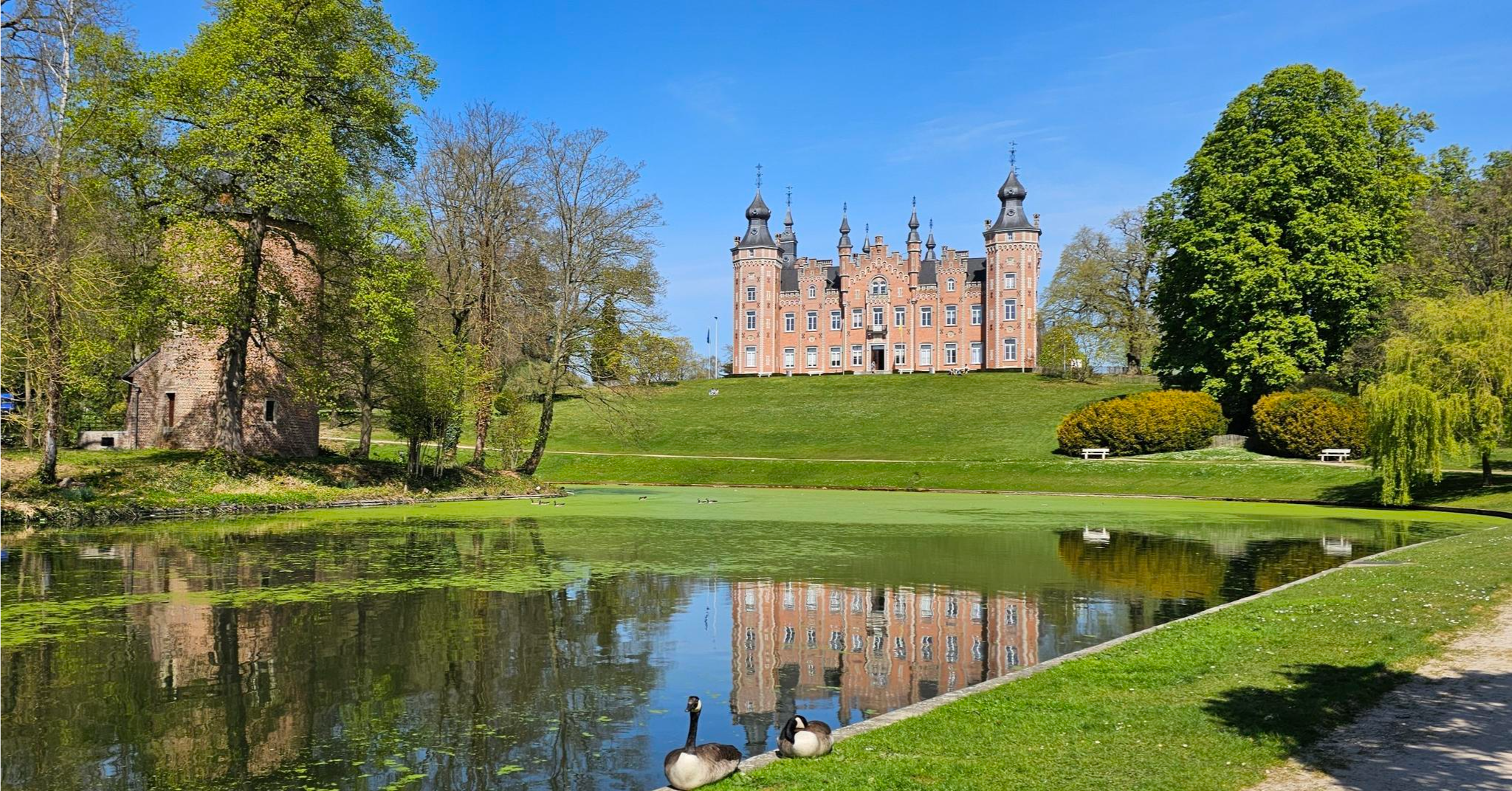
Yes, the region around Merchtem features several points of interest. You can explore historical sites like Fort Liezele, or admire impressive structures such as The Prinsen Castle and De Viron Castle. Nature lovers might enjoy views of the Meise Botanic Garden or the tranquil Pond of the Old Sandstone Quarry Kravaalbos.
What is the average length and duration of road cycling routes in Merchtem?
The routes around Merchtem vary significantly in length and duration. Many popular routes range from 30 to 60 miles (50 to 95 km), typically taking between 2 to 4.5 hours to complete. For example, the Muizenbroekstraat – Bicycle Street loop from Merchtem is about 54 miles (87 km) long.
What do other cyclists enjoy most about road cycling in Merchtem?
The area is highly rated by the komoot community, with an average score of 4.3 stars. Reviewers often praise the well-maintained cycle paths, the scenic river dikes, and the variety of routes that cater to different skill levels, from leisurely rides to more challenging loops.
Are there specific routes that utilize dedicated cycle highways?
Yes, Merchtem's road cycling network includes routes that make use of dedicated cycle highways. A notable example is the Pathway to Perk – F3 Cycle Highway loop from Merchtem, which offers a smooth and efficient cycling experience on these specialized paths.
Are the road cycling routes in Merchtem suitable for families?
Many of the easier and flatter routes, particularly those along river dikes or dedicated cycle paths, are well-suited for families. These routes often avoid heavy traffic and provide a safe and enjoyable environment for cyclists of all ages. Look for routes categorized as 'easy' for the most family-friendly options.
Most popular attractions around Merchtem

Get inspired with the komoot mobile app


Explore more
Browse the best Road cycling routes in other regions.
