The best walks and hikes around Linter
4.5
(407)
2,356
hikers
176
hikes
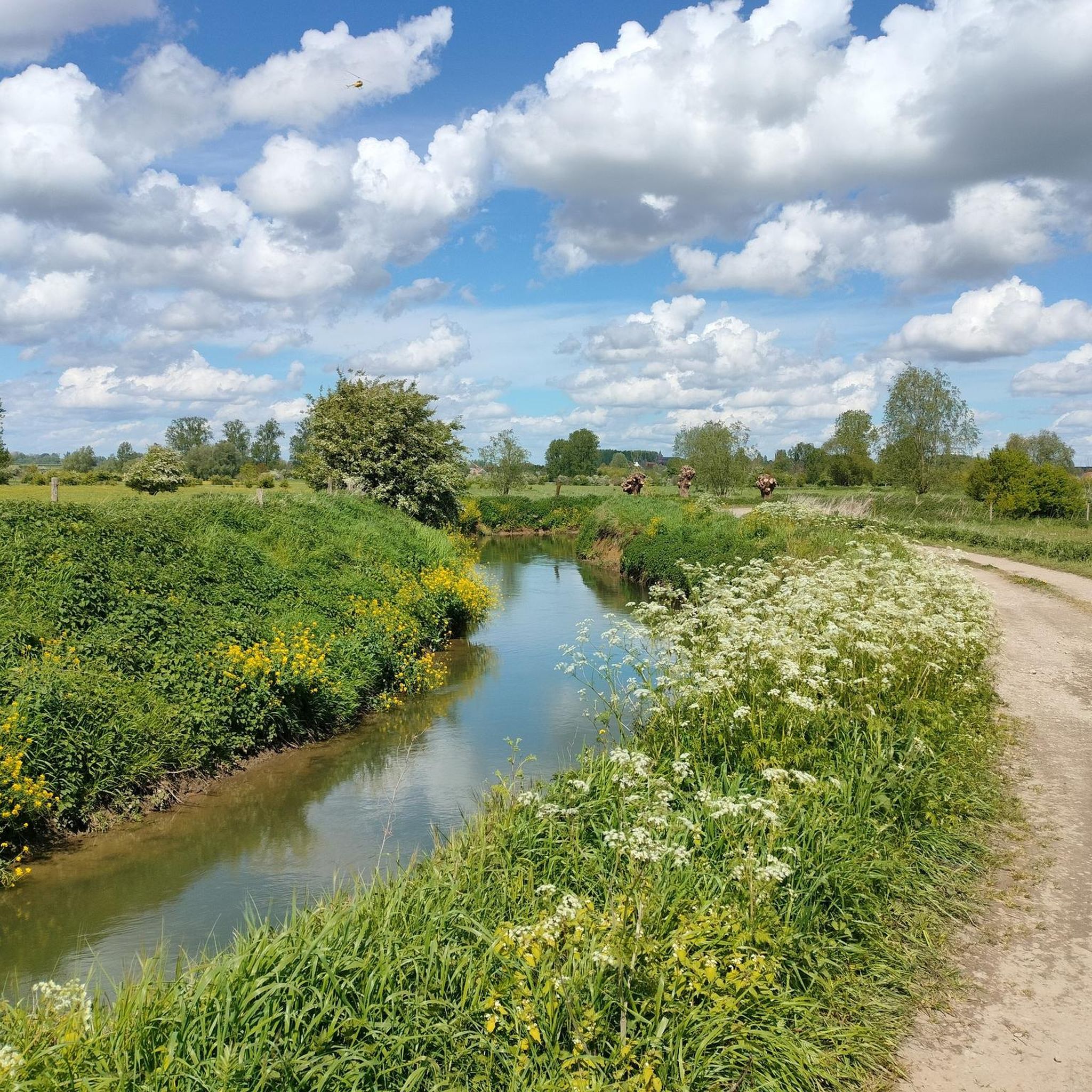
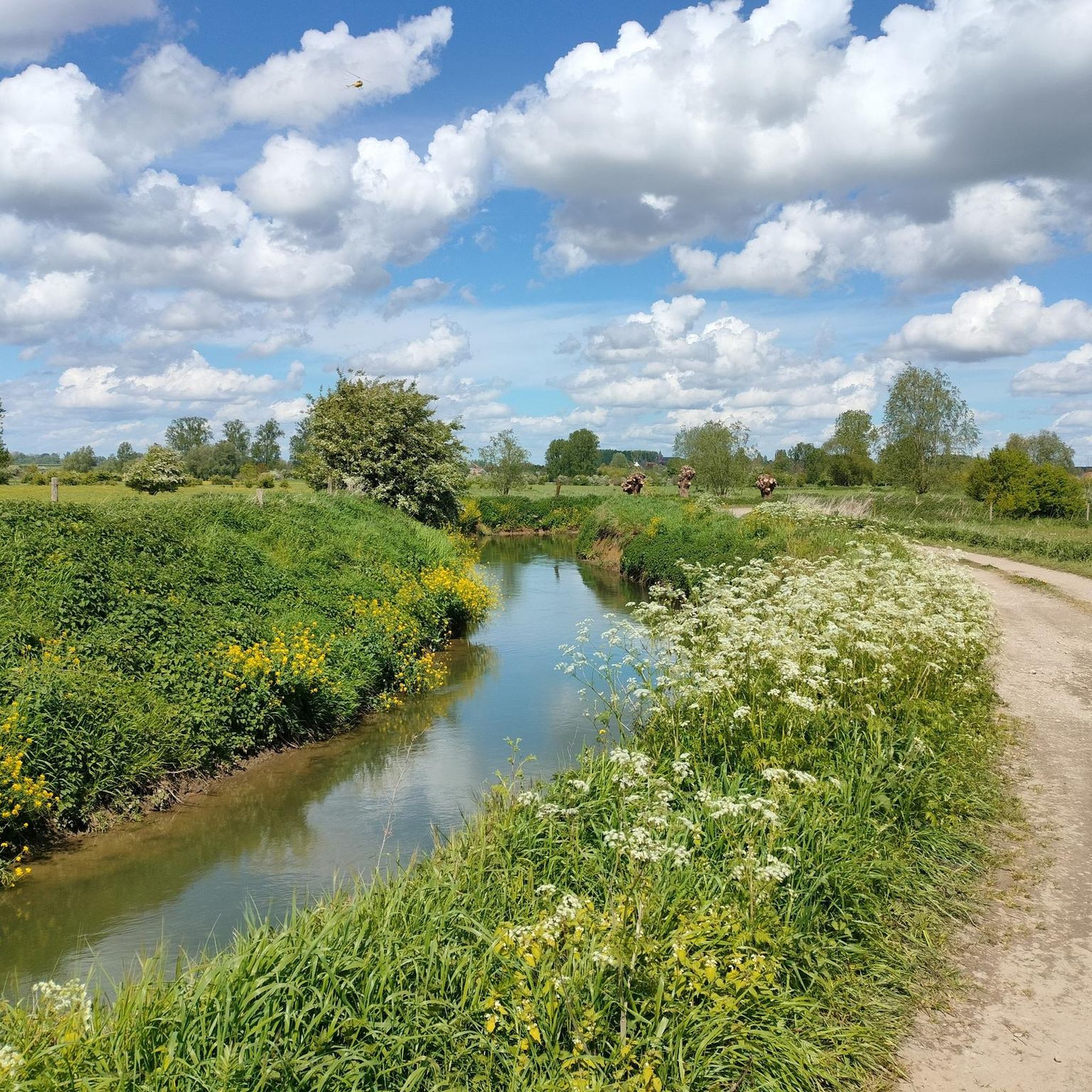
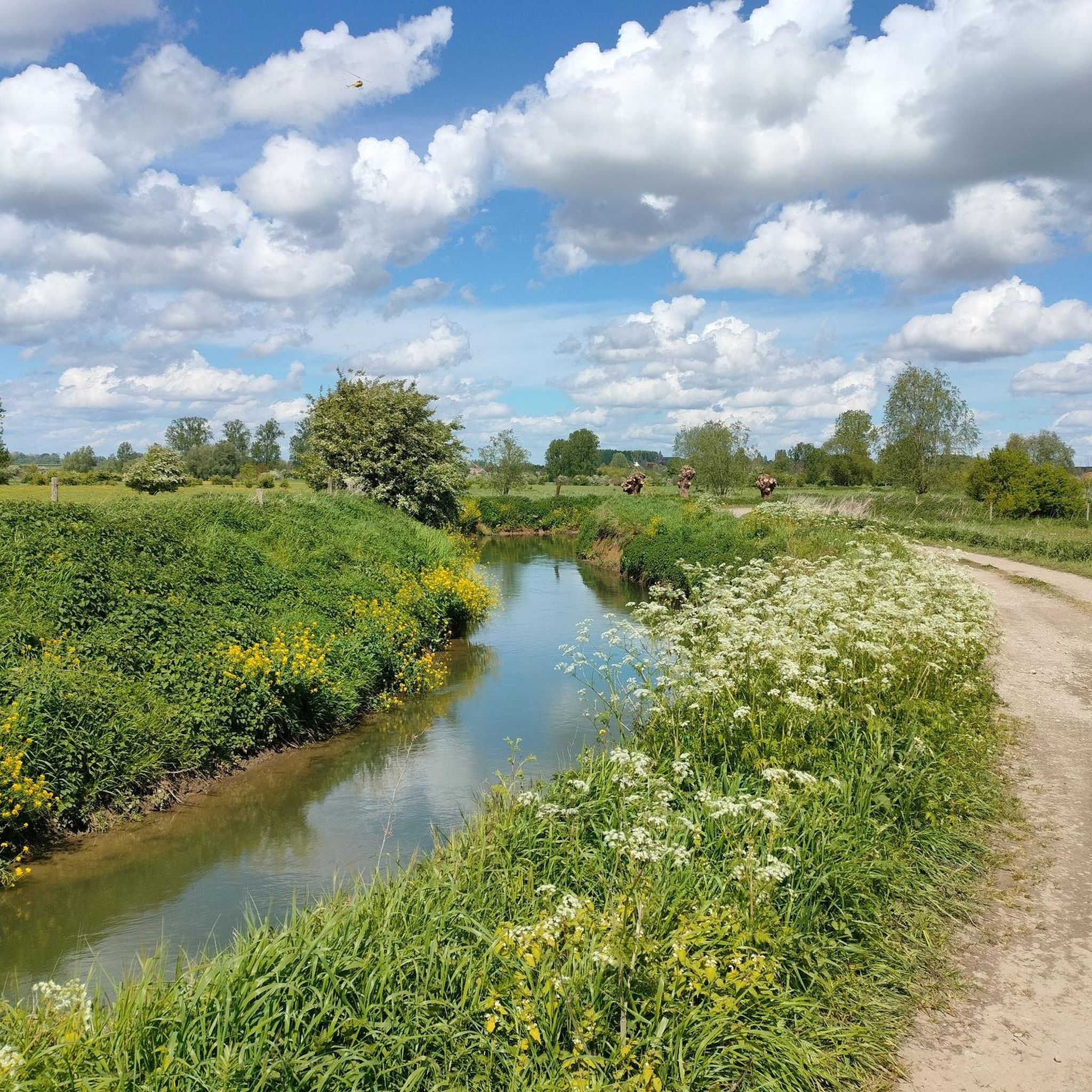
Hiking around Linter offers routes through a landscape characterized by low elevation changes and a network of waterways. The region features paths along rivers like the Grote Getedijk and Kleine Gete, alongside wetlands and agricultural areas. Many Linter hiking trail lengths and elevations are suitable for relaxed walks, often forming circular routes through the countryside.
Best hiking trails around Linter
- The most popular hiking route is Grote Getedijk – Kamsalamander Hut loop from Drieslinter, a 3.5 miles (5.6 km)…
Last updated: November 15, 2026
4.7
(37)
182
hikers
13.3km
03:22
30m
30m
Moderate hike. Good fitness required. Easily walkable paths.
4.4
(25)
134
hikers
5.59km
01:25
10m
10m
Easy hike. Easily walkable paths.

4.6
(17)
100
hikers
9.16km
02:20
30m
30m
Moderate hike. Good fitness required. Easily walkable paths.
4.8
(5)
38
hikers
Moderate hike. Good fitness required. Easily walkable paths.
4.4
(5)
39
hikers
12.9km
03:15
20m
20m
Moderate hike. Good fitness required. Easily walkable paths.
Get access to more routes and recommendations from other explorers.
Already have an account?
Our route recommendations are based on thousands of hikes, rides, and runs completed by other people on komoot.
Start today with a free account
Your next adventure awaits.

Other adventures around Linter

Tips from the Community

On the site of the current Sint-Leonardus church, there was a chapel – whose construction date is unknown – in honor of Saint Leonard of Noblac. After this chapel was elevated to a parish church in 1231, it was replaced by the current church, which had a long construction history: the monumental Gothic building was largely erected between the 13th and 16th centuries. The Sint-Leonardus church is rich in art treasures and owes its international fame mainly to them. The Iconoclastic Fury of 1566 and the French Revolution passed by the church without major damage, so that the impressive artistic heritage built up over centuries has largely been preserved: altarpieces, paintings, statues of saints, copper and silverware, vestments, and other devotional objects.
4
0
On the site of the current Sint-Leonarduskerk, there was a chapel – the construction date of which is unknown – in honor of Saint Leonard of Noblac. After this chapel was elevated to a parish church in 1231, it was replaced by the current church, which had a long construction history: the monumental Gothic building was largely erected between the 13th and 16th centuries. The Sint-Leonarduskerk is rich in art treasures and owes its international fame primarily to them. The Iconoclasm in 1566 and the French Revolution passed by the church without major damage, meaning that the impressive art heritage built up over centuries was largely preserved: altarpieces, paintings, statues of saints, copper and silverware, vestments, and other devotional objects.
3
0
Earthen houses (or earth building) are among the oldest and most ecological building methods in the world, using a mixture of clay, sand, water, and organic material (such as straw or hay) to build walls. In the Low Countries, this is historically mainly seen in traditional half-timbered construction. In the Middle Ages and the centuries that followed, houses were built with a wooden frame (half-timbering). The spaces in between were filled with woven branches (often willow twigs), which were then plastered with a thick layer of clay. This was often whitewashed afterwards to protect the clay from the rain.
3
0
The Zoutleeuw Tourist Office is located in the old Cloth Hall (Lakenhalle), Grote Markt 11, Zoutleeuw. During opening hours, you can also visit the adjacent town hall from the office. Currently, there is an exhibition about the city's rich fortification past: https://www.zoutleeuw.be/ontdek-het-verborgen-vestingverleden-van-zoutleeuw-expo. The exhibition runs until March 31, 2027.
4
0

nice view of the church
0
0

This Gothic chapel is dedicated to Our Lady of the Seven Sorrows. The convent community of the Seven Sorrows in 's-Hertogenbosch grew up around this small church. During the Wars of Religion, the convent was destroyed, and in 1584, the sisters found refuge in the Bethania Convent in Leeuw. The building features a single-nave, a short transept, and a rectangular closed choir. The alternation between sandstone and brick is typical. The nave and the northern transept arm are in the Gothic style, while the southern transept arm is in the Late Gothic style, which is evident in the flamboyant tracery of the window. The sacristy was presumably added in the 18th century. The facade is partially constructed of tufa stone. The Gothic entrance door is decorated with a trefoil arch. Above it stands a sculpted Christ and the year 1559. Inside the chapel, there are also several works of art from the 16th century, such as the piscina niche in the choir, the holy water font, and the crucifix above the altar. This crucifix, made of polychrome wood, depicts the evangelists at the ends of the arms. Furthermore, the chapel possesses the central part of a Baroque confessional and a statue of Our Lady from a Calvary group, both from the 17th century. The main altar dates from ca. 1900. Source: https://www.zoutleeuw.be/kerk-te-bos
4
0
Historical information about the Town Hall building: In 1526, the city council of Leeuw decided to build a new town hall. The building was constructed between 1530 and 1538, based on a design by Rombout II Keldermans. It is a rather rare monument in the transitional Gothic-Renaissance style: structurally Gothic, but the decorative elements are clear expressions of the Renaissance. The facade's façade is made of blue stone: it has a pedestal with richly decorated panels and a beautifully carved frame. At the foot of the town hall tower, remnants of the first defensive wall around the city, dating from the 12th century, can still be seen. The interior is magnificent: the ground floor housed the mayor's office, the council chamber, and the reception room, where the mural by Maurice Langaskens (early 20th century) is particularly striking. On the first floor, you can visit the exhibition "Archaeological Finds from the Kleine Gete." Explanation of the Lakkenhalle (Ladder Hall): The hall, next to the town hall, was built because Zoutleeuw was an important trading center in the Middle Ages. The city already had a Vleeshuys (butcher's hall) in 1281, but the current hall was intended to replace the building that had become too small and also testify to the greatness of Leeuw. The new hall was built on the wall of the first rampart, which still forms the rear facade. Besides trading, the hall was also used as a meeting place and barracks for the Schuttersgilde (shooting guild), which had a purely military function in the Middle Ages. The grain supplies for the Tafel van de Heilige Geest (Holy Spirit's Table), or poor relief, were stored in the attic: poor relief in Leeuw dates back to 1235 and is perhaps the oldest in the country. Source: https://www.zoutleeuw.be/activiteiten/detail/91/historisch-stadhuis-en-halle-zoutleeuw
4
0
On the site of the current St. Leonard's Church stood a chapel—the date of construction of which is unknown—in honor of Saint Leonard of Noblac. After this chapel was elevated to a parish church in 1231, it was replaced by the current church, which had a long construction history: the monumental Gothic building was largely constructed between the 13th and 16th centuries. St. Leonard's Church is rich in art treasures and owes its international fame primarily to them. The Iconoclasm of 1566 and the French Revolution passed the church by without significant damage, thus preserving most of the impressive artistic heritage accumulated over centuries: altarpieces, paintings, statues of saints, copper and silverwork, vestments, and other devout objects. Below, a few of these showpieces are presented. Upon entering, the first thing that catches the eye is the Marianum: this double statue (1533) is situated within the 15th-century veneration of Mary, which depicted the Virgin Mary as the apocalyptic woman and mediatrix of grace. Not-to-be-missed highlight inside: The Sacrament Tower: A tabernacle crafted from white Avesnes stone is undoubtedly the church's showpiece. The artwork was created in the workshops of Cornelis II Floris de Vriendt in Antwerp and erected in Zoutleeuw in 1552. The tower is 18 meters high, has nine stories, and contains approximately 200 statues depicting scenes from the Old and New Testaments. A replica is on display at London's Victoria and Albert Museum. The Paschal Candlestick This copper candlestick is 5.68 meters high and weighs approximately 950 kg. It was cast by Renier van Thienen, based on a design by Jan Bornam, and installed in the choir by the founder himself in 1483. It is the second-largest Easter candlestick in Europe. Source: https://www.zoutleeuw.be/sint-leonarduskerk
6
0
Frequently Asked Questions
What are the typical lengths and elevations of hiking trails in Linter?
Hiking trails in Linter are generally characterized by low elevation changes, making them suitable for relaxed walks. Most routes range from 3.5 miles (5.6 km) to around 11.5 miles (18.5 km). For example, the Grote Getedijk – Kamsalamander Hut loop from Drieslinter is an easy 3.5-mile (5.6 km) trail with minimal elevation gain.
Are there family-friendly hiking options in Linter?
Yes, Linter offers several family-friendly hiking options, particularly due to the low elevation changes and well-maintained paths. Many routes are suitable for relaxed strolls with children. The Grote Getedijk – Kamsalamander Hut loop from Drieslinter is an easy 3.5-mile (5.6 km) trail that is popular with families.
Are Linter's hiking trails dog-friendly?
Generally, Linter's hiking trails are dog-friendly, especially those through open countryside and along river paths. It's always recommended to keep dogs on a leash, particularly when passing through agricultural areas or near wildlife habitats. Always check local signage for specific restrictions.
What is the best time of year to hike in Linter?
The best time to hike in Linter is typically during spring, summer, and early autumn. These seasons offer pleasant weather for exploring the riverine landscapes and open fields. Spring brings blooming nature, while autumn showcases beautiful foliage. Winter hiking is also possible, but some paths might be muddy.
Are there circular hiking routes around Linter?
Yes, Linter is known for its network of circular hiking routes. Many trails are designed as loops, allowing you to start and end at the same point. Examples include the moderate Kamsalamander Hut – Geens Mill loop from Linter, which connects natural areas with historical sites, and the Bridge Over the Kleine Gete – Gatehouse near the Kleine Gete loop from Orsmaal-Gussenhoven.
What kind of natural landscapes can I expect to see while hiking in Linter?
Linter's hiking landscape is characterized by its low elevation, river paths, wetlands, and agricultural areas. You'll often find yourself walking along rivers like the Grote Getedijk and Kleine Gete, through open countryside, and past natural areas that are home to diverse flora and fauna.
What do other hikers enjoy most about hiking in Linter?
The komoot community highly rates hiking in Linter, with an average score of 4.6 stars from over 300 reviews. Hikers often praise the region for its peaceful river paths, the ease of access to nature, and the variety of circular routes suitable for different fitness levels. The blend of natural beauty and historical sites is also frequently mentioned.
Are there any interesting landmarks or attractions to see along the trails?
Yes, Linter's trails often lead past interesting landmarks and natural attractions. You can explore areas like Lake Het Vinne, which features a Boardwalk through Het Vinne and a Birdwatching Hut on the Lake. Additionally, there are several historical castles nearby, such as Hélécine Estate and Nieuwenhoven Castle, which can be incorporated into longer hikes.
How many hiking trails are available around Linter?
There are over 120 hiking trails available around Linter, offering a wide range of options for different preferences and fitness levels. This includes 65 easy routes, 50 moderate routes, and a few more challenging trails.
Are there any longer, moderate hikes in the Linter area?
Yes, for those looking for a longer, moderate challenge, Linter offers several options. The Kleine Gete – Zoutleeuw Town Hall loop from Linter is a moderate 8-mile (12.9 km) route. Another option is the Het Vinne Loop — Zoutleeuw – Birdwatching Hut on the Lake loop from Melkwezer, which is about 11.5 miles (18.5 km) long.
Do I need any special equipment for hiking in Linter?
Given the low elevation and generally well-maintained paths, special equipment is not typically required for hiking in Linter. Comfortable walking shoes or hiking boots are recommended, especially if trails might be muddy after rain. Bringing water and snacks is always a good idea for longer routes.
Most popular attractions around Linter

Get inspired with the komoot mobile app


Explore more
Browse the best Hikes in other regions.
