Top 20 Castles around Tervuren
Best castles around Tervuren provide a historical and cultural experience, highlighting past architectural grandeur. While the original Tervuren Castle no longer stands, its archaeological remnants and the prominent Royal Museum for Central Africa, housed in a château-like building, offer insights into the region's history. The area features expansive parks and historical sites, providing a blend of natural beauty and cultural significance.
Best castles around Tervuren
- The most popular castles is Château de La Hulpe, a castle built in 1842 on the model of the Loire castles. It is surrounded by lush gardens decorated with sculptures, with the park and associated domain freely accessible.
- Another must-see spot is Domaine Solvay, a castle located a few minutes from Brussels. This public park houses the Château de Béthune, built in 1842, and covers 227 hectares of forest, lawn, and ponds.
- Visitors also love Sint-Hubertus Chapel, a baroque castle chapel of the former Castle of Tervuren. Built in 1617, this stone structure replaced an earlier wooden chapel and is located within Tervuren Park.
- Tervuren is known for archaeological sites, grand châteaux, and historical chapels. The variety of castles to see and explore includes both remnants of medieval structures and impressive 19th-century estates.
- The castles around Tervuren are appreciated by the komoot community, with more than 1500 upvotes and over 300 photos shared.
Last updated: May 11, 2026
Château de La Hulpe
Highlight • Castle
Translated by Google •
Tip by

Domaine Solvay
Highlight • Castle
The castle is not open to the general public, but is suitable for all kinds of events.
destinationbw.be/nl/ontdekken/de-hoogtepunten/het-gewestelijk-domein-solvay
Translated by Google •
Tip by

Sign up now to discover places like this
Get recommendations on the best single tracks, peaks, & plenty of other exciting outdoor places.
Sign up for free
Hoeilaart Castle
Highlight • Castle
Translated by Google •
Tip by
The Little Mermaid of the Lake
Highlight • Monument
Last Sunday June 30 (2019), it was the inauguration of the Little Mermaid of Lake Genval. A Little Mermaid, like the one in Copenhagen, but smaller. The small bronze statue sits on a rock in the waters of Lac de Genval, in front of the Château du Lac. It is the work of Michal, whose real name is Michel Alexandre Neuwels, sculptor from Plancenoit (Lasne).
facebook.com/MagazineBW/posts/2586373058053274
Translated by Google •
Tip by
Arenberg Castle
Highlight • Castle
This green area on the outskirts of Leuven now belongs to KU Leuven and is the campus for Science and Technology.
Translated by Google •
Tip by

Sign up for free to discover even more castles around Tervuren.
Sign up for free
Already have an account?
Start today with a free account
Your next adventure awaits.
Login or Signup
Popular around Tervuren
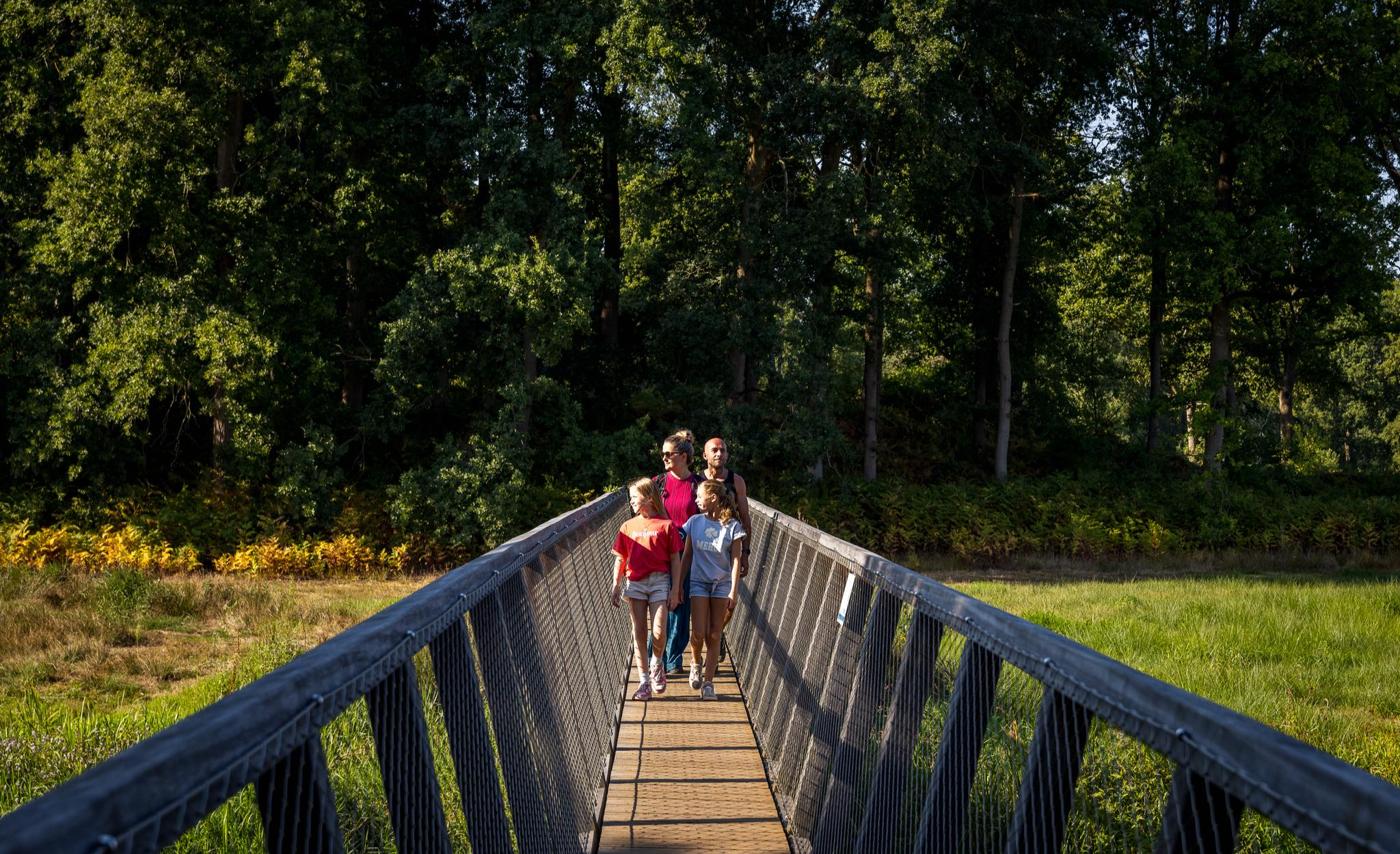
Flanders’ Finest Hiking Routes
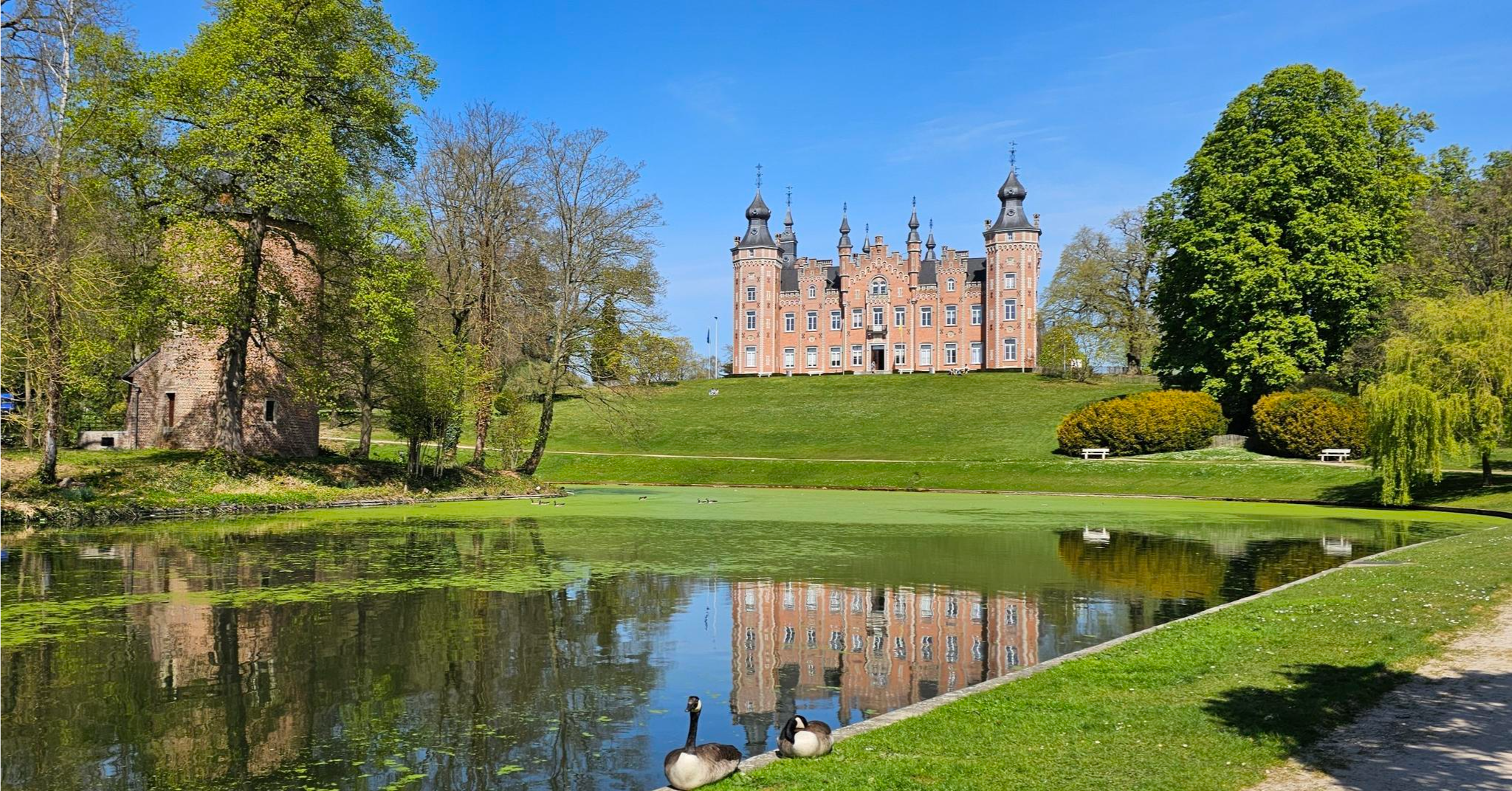
Tour around Brussels – Streek-GR Groene Gordel
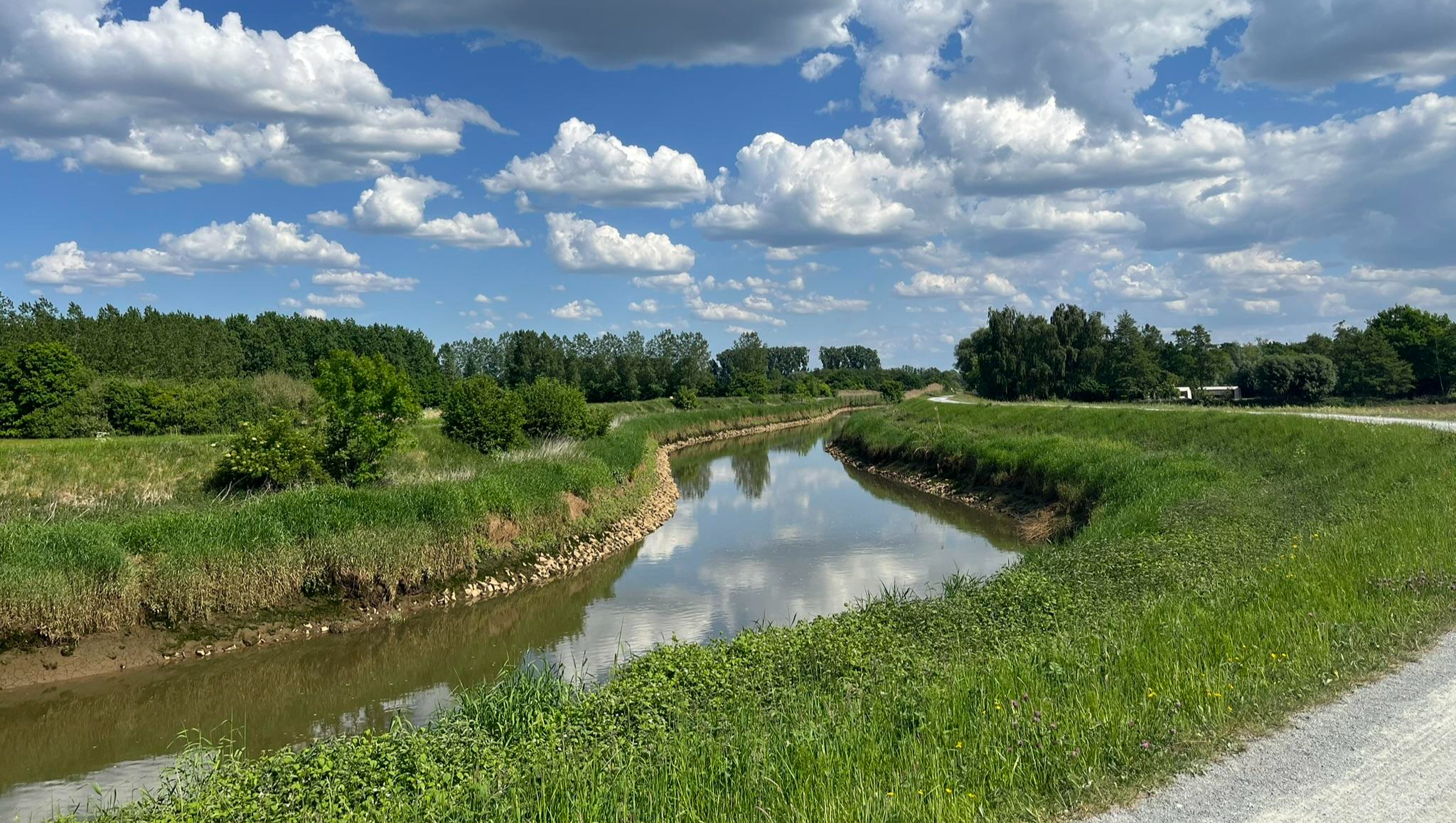
Through the valley of the Dijle – Streek-GR Dijleland
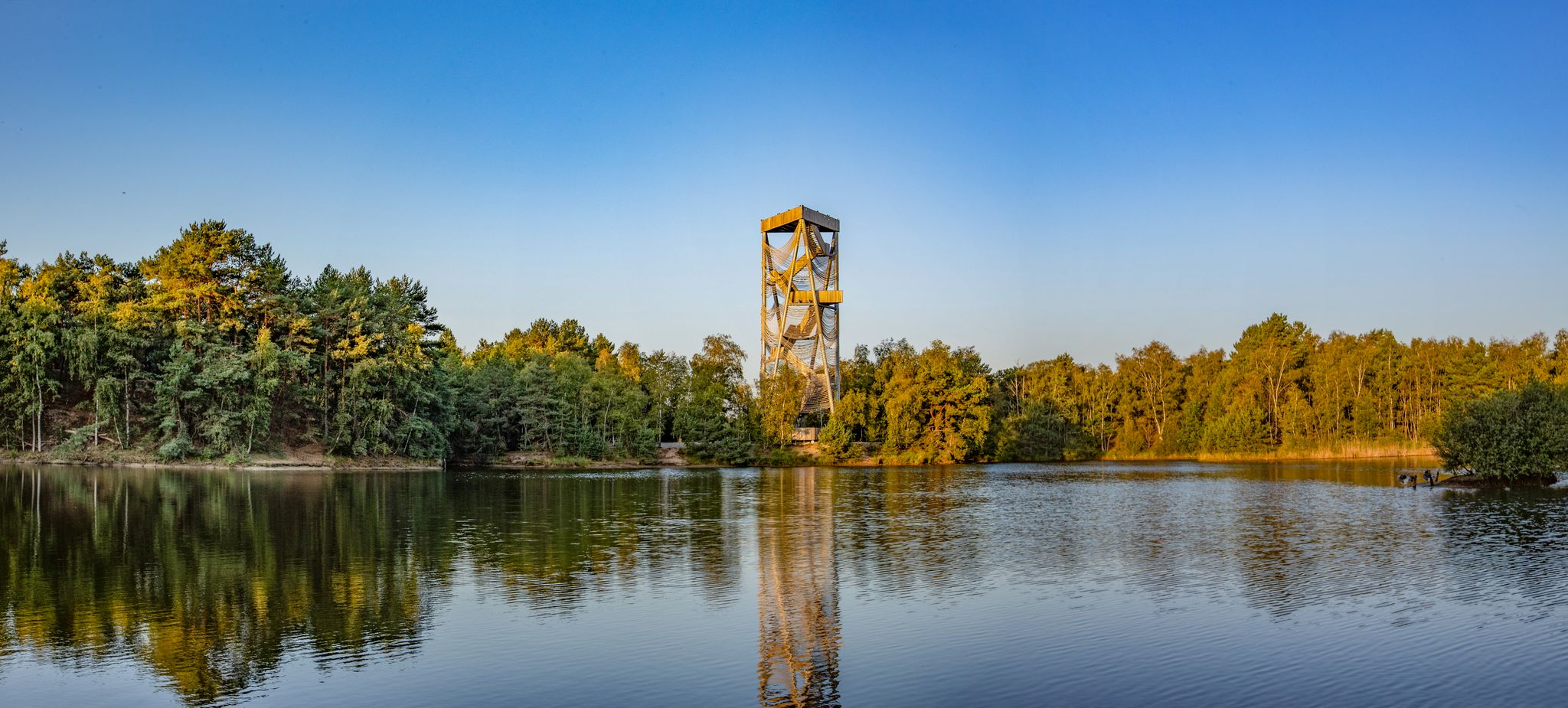
Art, culture and more – hiking in Belgium’s Flanders
Running Trails around Tervuren
Hiking around Tervuren
Cycling around Tervuren
MTB Trails around Tervuren
Road Cycling Routes around Tervuren

Gravel biking around Tervuren
Other adventures around Tervuren


Tips from the Community

Two important lordships formed the basis of the current Hoeilaart: the lordship of Ter Heyde south of the IJse on the one hand, and the lordship of Holaer or Hoeilaart north of the IJse on the other. Here once stood the castle of the Ter Heyde lordship from the fifteenth century. That lordship ceased to exist after the abolition of the ancien régime. The current castle was built in 1858 on the orders of baron Jean de Man d’Attenrode (mayor of Hoeilaart from 1854-1878) and his wife Maria Carolina d’Ormesson. It is therefore not a remnant of the old lordship. BUT: the chapel and former closed farm next to it are. This building has now, as others have mentioned, been given a different function and dominates the view in the park. Inventory of Immovable Heritage: Kasteel van Hoeilaart, https://id.erfgoed.net/erfgoedobjecten/39785
6
0

Excellent quality hotel and restaurant
0
0

To see and don't hesitate to get lost there
1
0

Beautiful but very busy. Good to know!
4
0
The watermill at Arenberg Castle was probably rebuilt around 1636 on a watermill site known before 1286, which was then equipped with two waterwheels. Major repairs were carried out on the locks around 1722-23 and 1733-35, and images of the mill also indicate modifications to the mill building in the 18th century. Around 1875, the watermill underwent a facade restoration and extension according to the then prevailing views, under the direction of architect Claes. At the same time (1870-80), the mill was equipped with a new bluestone lock and two wooden waterwheels. The waterwheels were replaced by metal wheels at the end of the 19th century, and the locks were also modified in the early 20th century. In 1940, the mill was demolished and the mill was converted into a drawing room; externally the mill was preserved, as well as the lock and the two water wheels. Source and more information: https://inventaris.onroerenderfgoed.be/erfgoedobjecten/42570
7
0
The first mention of a castle dates from 1371 when it was a heavy keep built by Rasse de Grez, also known as Raes van Graven, a knight who lived from 1368 to 1450 and was lord of Heverlee, Vaalbeek, Bertem, Blanden, Malève and Terbruggen, among other things. The castle was demolished and the domain was ceded to the Croys (family of Croÿ) in 1446. During the first half of the sixteenth century, the reconstruction of the castle was restarted under Guillaume II de Croÿ (Willem II van Croÿ). His successor and nephew, Philip II van Croÿ, had it completed and finished, including a moat. He also had the park laid out and the avenue to Leuven extended. After the death of Charles III of Croÿ in 1612, the castle went via his sister, Anna, to the Dukes of Arenberg who lived there until the First World War. In 1920 the university acquired the domain. Sources and more info: - https://inventaris.onroerenderfgoed.be/erfgoedobjecten/42570 - https://www.kuleuven.be/erfgoed/gebouwen-en-monumenten/arenbergkasteel
7
0

Early in the morning to avoid the crowds
4
0
Le Château du Lac is best known today as a 5-star hotel. Events are also often organised there and that is why I know it from a professional long-gone past. But the building, whether you call it a castle or rather a glorified villa, it does have a fairly intense past. In the past, the mineral water of Genval was collected and bottled here. Together with the source of Bonne Fontaine, the Château du Lac was the true symbol of Genval-les-Eaux. The Etablissement des Eaux, as it was originally called, was built between 1905 and 1907 by the architect Julien Wendrickx, the future production director of the Compagnie Internationale des Eaux Minérales, to house the collection of sources and the bottling of the mineral water of Genval. After the First World War and the receivership of the companies that managed the Genval site, the castle became the property of an English company before being taken over by the Princes of Merode, who leased the facilities to Schweppes Belgium. The Belgian branch was then managed by John Martin, an English brewer based in Antwerp, who had been importing beers from Great Britain and Ireland to the continent since 1909, including the famous Guinness. He obtained the exclusive production rights for the Schweppes range, which he transferred to Genval in 1952 following the deterioration in the quality of Antwerp's drinking water, which was now pumped into the Albert Canal. Since the divestment of Schweppes in 1988, the John Martin group has further diversified its range, with speciality beers (Timmermans, Gordon, etc.), soft drinks (Orangina) and fruit juices (Looza). After the Schweppes factory moved to Rue du Cerf, the château, now owned by the Martin family, was converted into the five-star Château du Lac Source: https://www.parismatch.be/lifestyle/voyages/2020/08/23/le-lac-de-genval-et-ses-villas-2D3Q25DBTVANBFBV5WXJG3R2NI/
8
0
Frequently Asked Questions
What can I see of the historic Tervuren Castle today?
While the original Kasteel van Tervuren was demolished in 1782, its archaeological remnants are visible within Tervuren Park. The Sint-Hubertus Chapel, a baroque castle chapel built in 1617, is one of the few surviving elements related to the original ducal residence and is located within the park.
Are there any grand château-like buildings to visit in Tervuren?
Yes, the Royal Museum for Central Africa, also known as the AfricaMuseum, is housed in an impressive neoclassical building that resembles a château. It features spectacular architecture and extensive collections on Central African cultures and history, set within beautiful gardens and a large park.
Which castles around Tervuren are known for their beautiful parks and gardens?
Both Château de La Hulpe and Domaine Solvay (which houses the Château de Béthune) are renowned for their expansive and well-maintained parks. Château de La Hulpe is surrounded by lush gardens with sculptures, while Domaine Solvay covers 227 hectares of forest, lawn, and ponds, featuring a perfectly symmetrical French garden.
Are there family-friendly castles or sites to visit near Tervuren?
Many of the castle parks are excellent for families. Château de La Hulpe and Domaine Solvay offer vast spaces for children to explore. The Sint-Hubertus Chapel and its surrounding Tervuren Park also provide a historical setting for a family outing.
What kind of outdoor activities can I do near these castles?
The areas around the castles offer various outdoor activities. You can find numerous hiking, running, and cycling routes. For example, there are many trails in Tervuren Park, which surrounds the former Tervuren Castle site and the Sint-Hubertus Chapel. You can explore options like the 'Warande Route' for hiking or 'Among the Sequoias' for running. Find more details on hiking, running, and cycling routes around Tervuren.
Is Arenberg Castle accessible to visitors?
Arenberg Castle, located in Heverlee (Leuven), is now part of KU Leuven's campus for Science and Technology. While the castle itself houses university facilities, the surrounding Arenberg Park is a protected villagescape and is accessible for walks, offering a blend of historical architecture and natural beauty.
Are there any castles near Tervuren that are wheelchair accessible?
The parks surrounding castles like Château de La Hulpe and Arenberg Castle often have accessible paths, making them suitable for wheelchair users to enjoy the grounds and exterior views. However, the interiors of many historical castles are not always fully accessible.
Can I bring my dog to the castle grounds around Tervuren?
Many of the expansive parks associated with castles, such as Tervuren Park and the grounds of Château de La Hulpe and Domaine Solvay, are generally dog-friendly, often requiring dogs to be on a leash. It's always advisable to check specific park regulations before your visit.
What is the best time of year to visit the castles and their parks?
The castles and their surrounding parks are beautiful year-round. Spring offers blooming flowers, while autumn provides stunning foliage, especially in the extensive woodlands of Tervuren Park and Domaine Solvay. Summer is ideal for outdoor activities, and even winter walks can be picturesque.
What is the history behind the Château du Lac mentioned with 'The Little Mermaid of the Lake'?
The Château du Lac, located on Lake Genval, was built in 1904. Originally a bathhouse, it now serves as a five-star hotel. Its neo-Romanesque appearance, with many round arches and a round tower, is quite striking. The Little Mermaid statue was added to the lake in front of the château in 2019.
Are there any less crowded castle sites near Tervuren?
While popular, the vastness of parks like Château de La Hulpe and Domaine Solvay allows visitors to find quieter spots, especially away from the main castle buildings. The archaeological site of the original Tervuren Castle within Tervuren Park also offers a serene, reflective experience.
What do visitors enjoy most about the castles and historical sites around Tervuren?
Visitors frequently appreciate the blend of historical significance and natural beauty. The impressive architecture of châteaux like those in La Hulpe and Domaine Solvay, combined with their extensive, well-maintained parks, offers a perfect setting for walks and relaxation. The historical connection to the Dukes of Brabant through sites like the Sint-Hubertus Chapel also draws many.
Most popular routes around Tervuren
Most popular attractions around Tervuren

Get inspired with the komoot mobile app


Explore more
Looking for the best castles somewhere else? Discover other guides around Tervuren:
