The best cycling routes around Rendeux
4.3
(215)
2,013
riders
110
rides
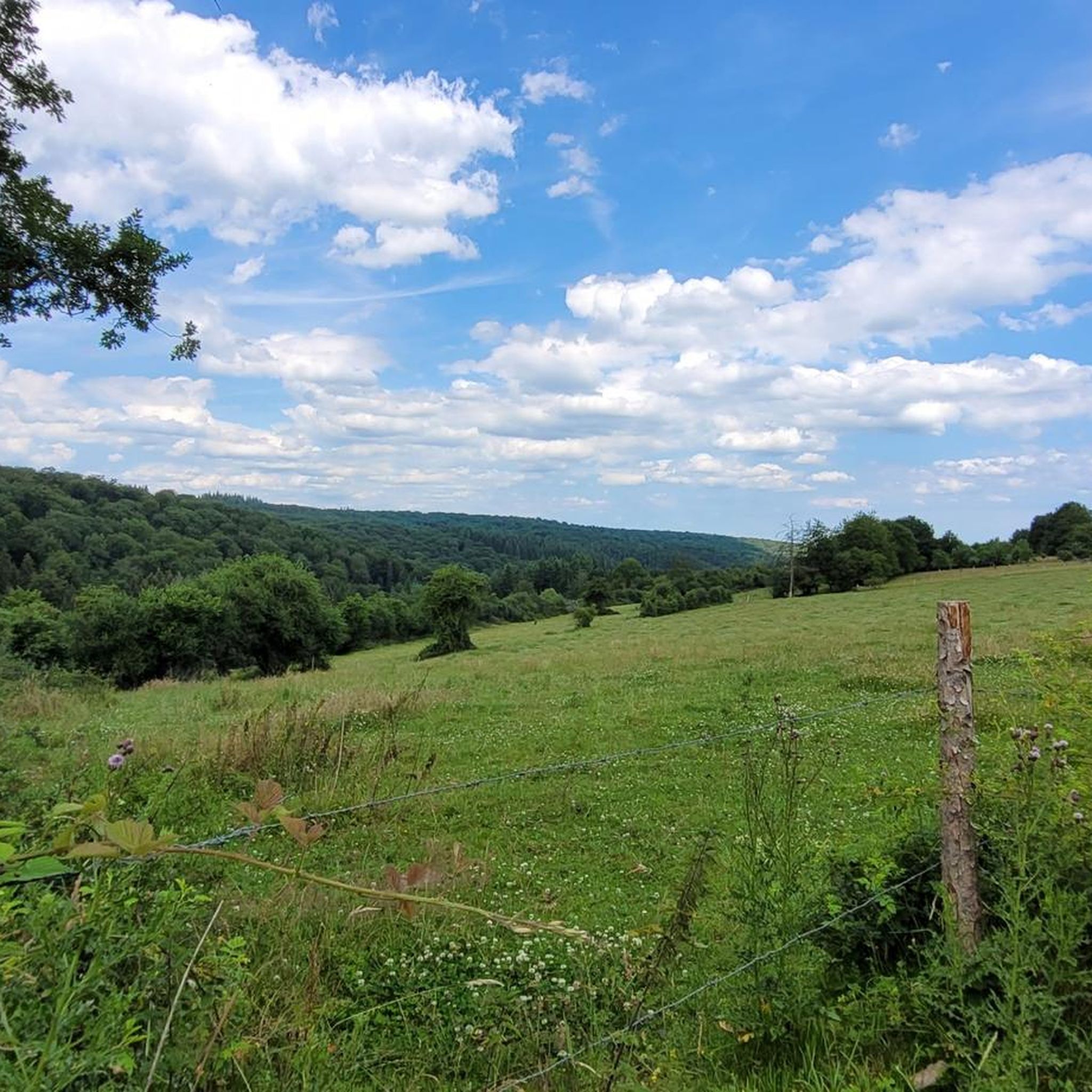
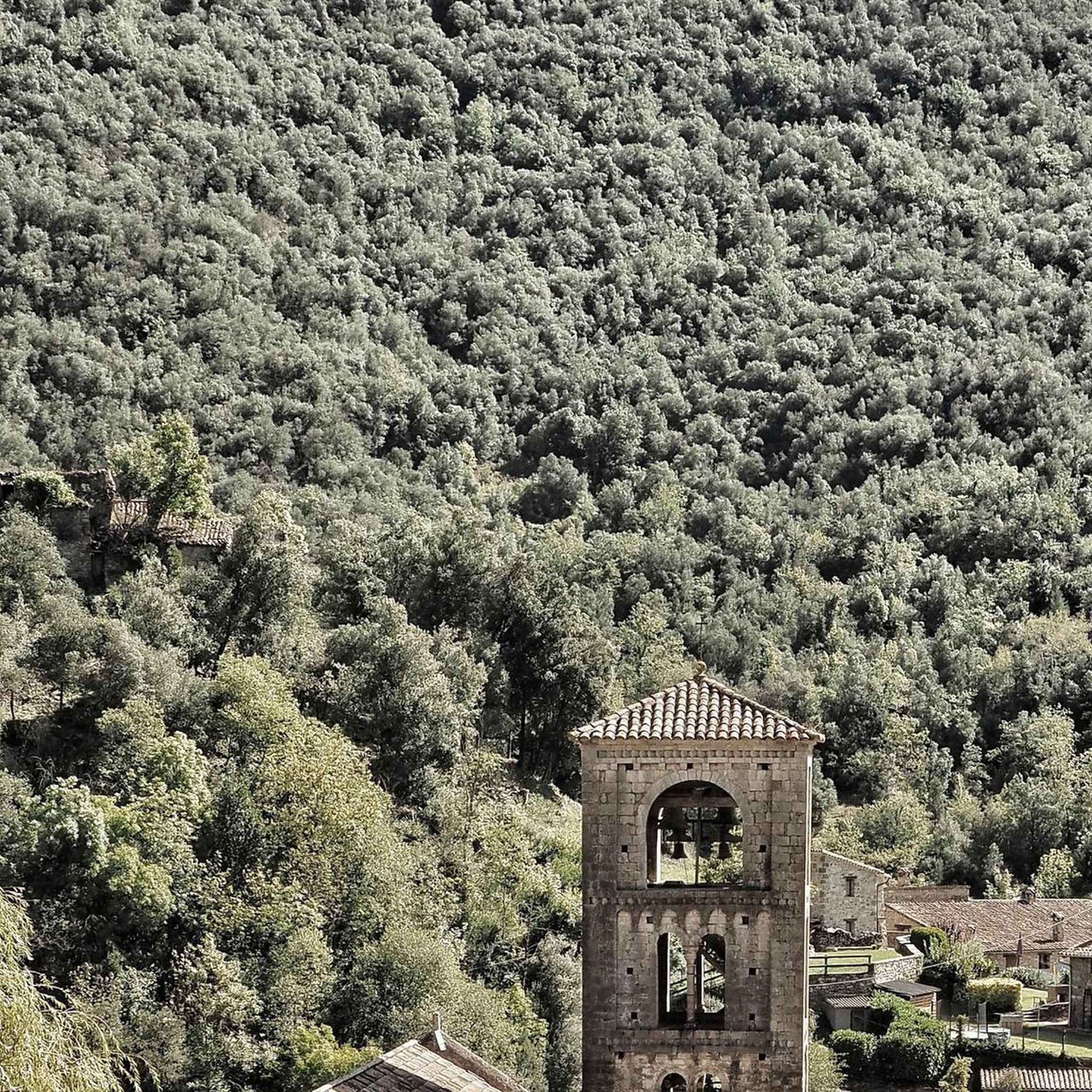
Touring cycling routes around Rendeux traverse the diverse landscapes of the Belgian Ardennes, characterized by dense forests and the scenic Ourthe Valley. The Ourthe river carves numerous wooded meanders through the region, creating varied terrain for cyclists. This area features an extensive network of routes, including sections of the RAVeL network, offering a mix of paved paths and more challenging ascents. Cyclists can experience hilly topography and lush valleys.
Best touring cycling routes around Rendeux
- The most popular touring cycling…
Last updated: May 2, 2026
4.7
(132)
631
riders
52.4km
03:19
520m
520m
Hard bike ride. Very good fitness required. Mostly paved surfaces. Suitable for all skill levels.
4.4
(17)
126
riders
44.9km
02:57
590m
590m
Hard bike ride. Very good fitness required. Mostly paved surfaces. Suitable for all skill levels.

Sign up for free
4.6
(12)
115
riders
49.5km
03:19
720m
710m
Hard bike ride. Very good fitness required. Mostly paved surfaces. Suitable for all skill levels.
4.0
(2)
83
riders
Hard bike ride. Very good fitness required. Mostly paved surfaces. Suitable for all skill levels.
79
riders
23.8km
02:01
450m
450m
Hard bike ride. Very good fitness required. Mostly paved surfaces. Suitable for all skill levels.
Get access to more routes and recommendations from other explorers.
Sign up for free
Already have an account?
Our route recommendations are based on thousands of hikes, rides, and runs completed by other people on komoot.
Start today with a free account
Your next adventure awaits.
Login or Signup
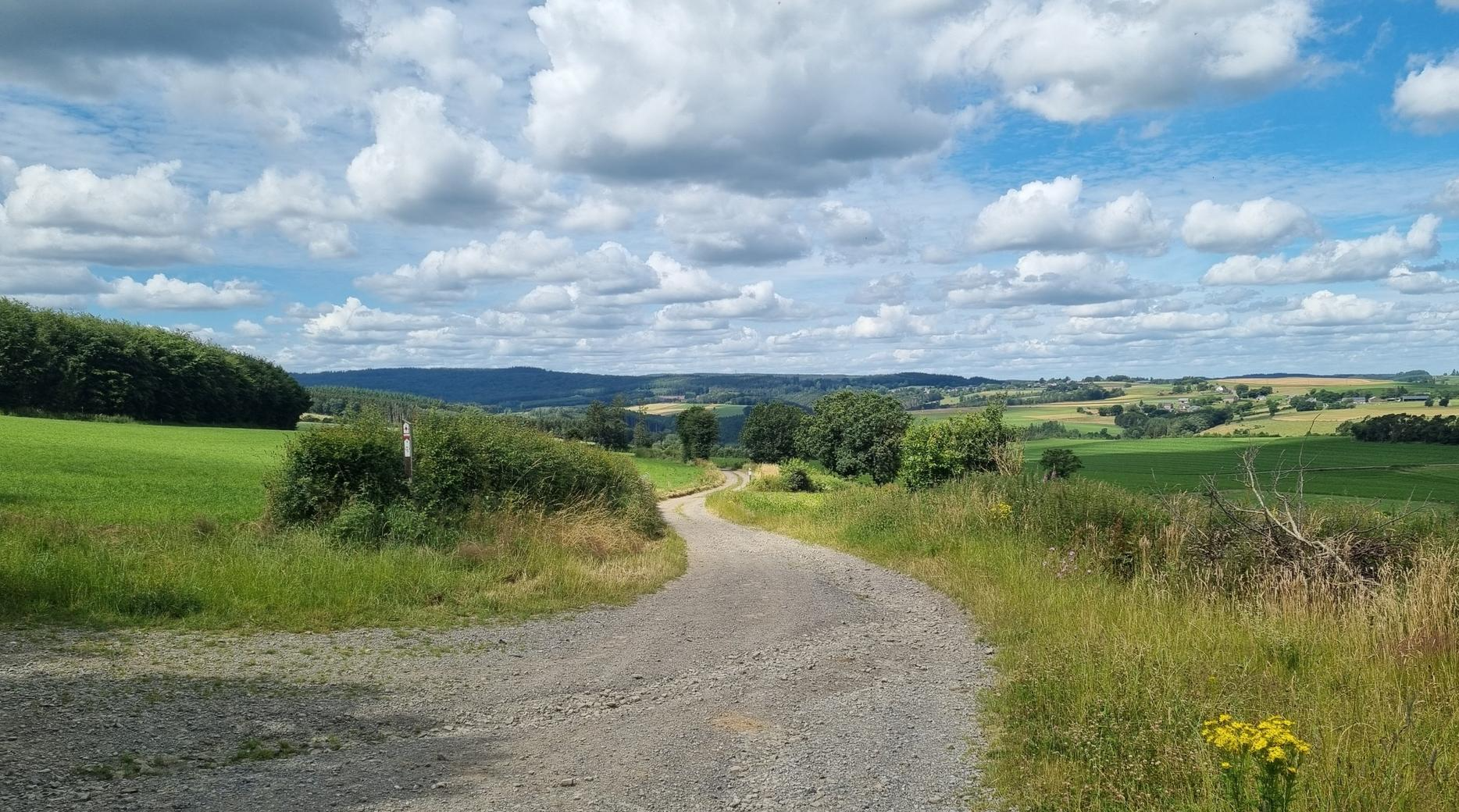
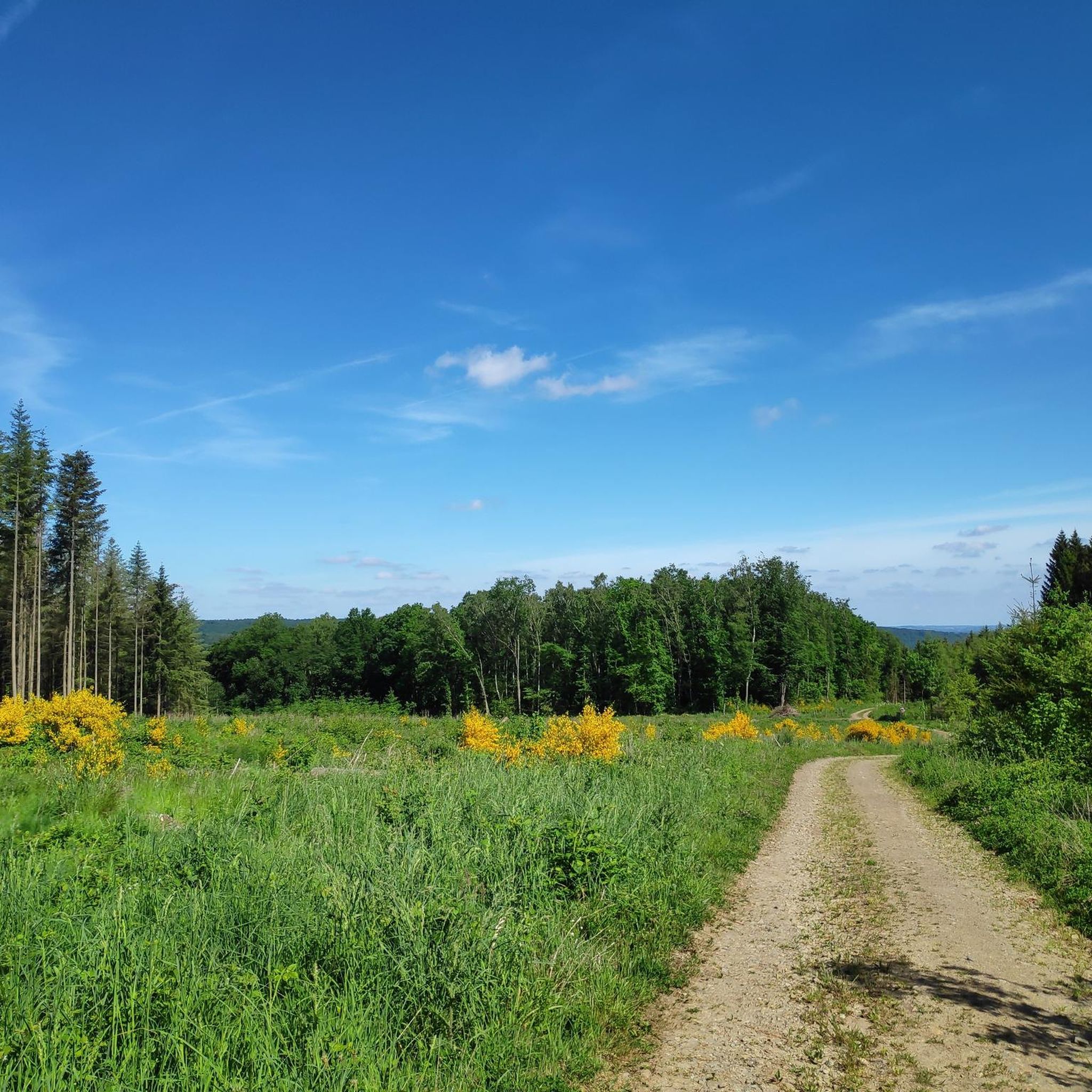
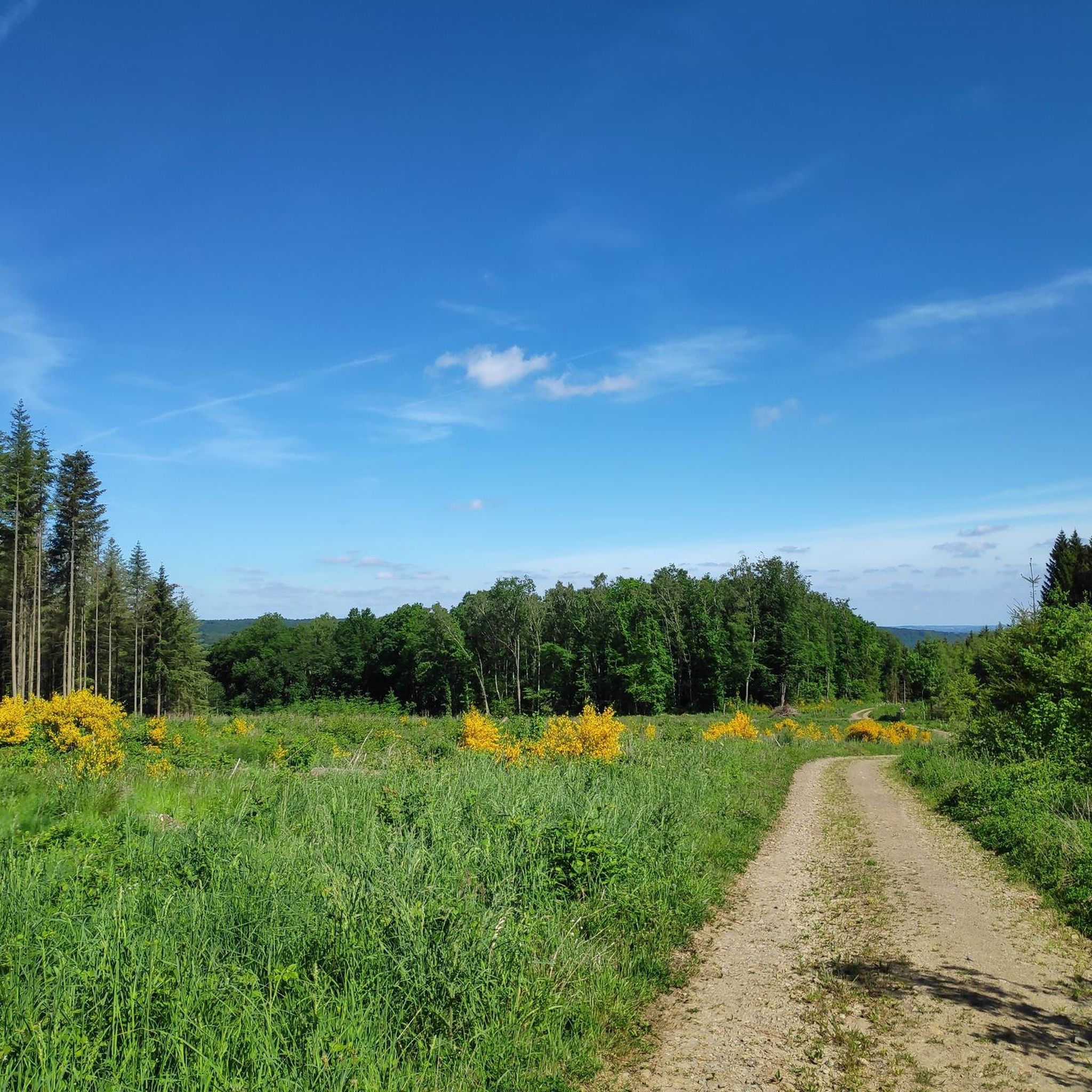
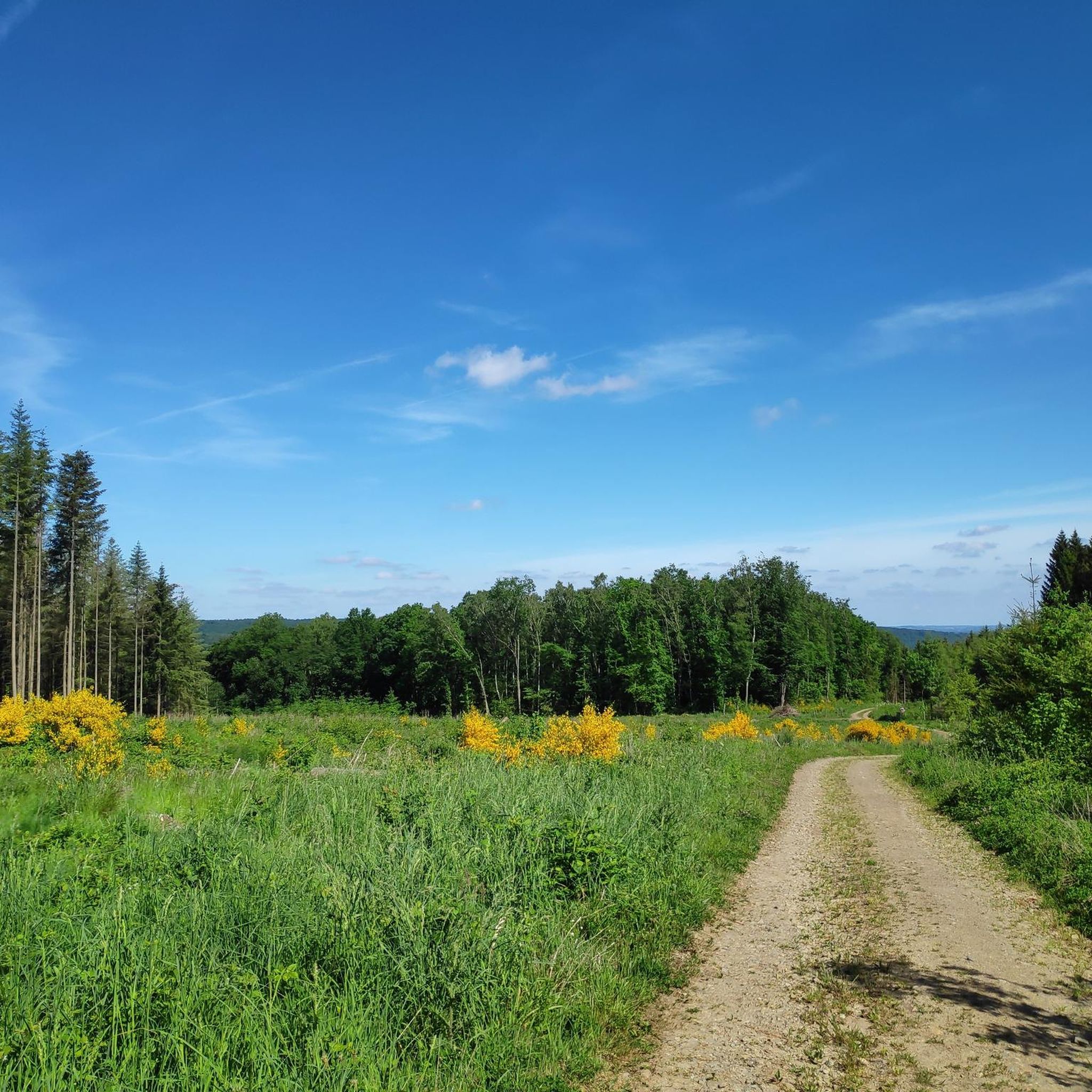
Other adventures around Rendeux

Tips from the Community

The Chapel, a Remnant of Montaigu Castle The castle of the Counts of Montaigu was built in 1050 as their family residence. In the 17th century, the county also included the lordships of Ochain (Condroz), Harzé (Aywaille), Yernée (Huy), and Flône Abbey (Amay). Five dynasties ruled this county, including the Montaigu dynasty from 1050 to 1147. In 1413, under the De La Marck dynasty, the castle was destroyed by fire following a family dispute. Remains of the castle walls are still visible today. Approximately 200 meters below the site lies the "spring that never runs dry." After several significant miracles, in 1608, a cross was erected in homage to Saint Thibaut on the summit of the mountain and the mound formed by the collapse of the castle's central tower. The chapel itself was built in 1639 on the site of the castle's outermost tower. It is this hillside location that affords Saint-Thibaut its breathtaking panoramic view of the villages of Marcourt, Marcouray, Jupille, Warisy, Cielle, and others. Later, the hermitage was also built. It consists of two small rooms adjoining the chapel, designed to house a hermit, in other words, the guardian of the site. Several hermits succeeded one another until 1968. The management of the site was then taken over in 1969/1970 by the non-profit organization Saint-Thibaut, which still organizes two pilgrimages a year: the first Saturday of May and July. On March 3, 2020, the non-profit organization received the title of Royal and thus became the Royal Non-Profit Organization of the Chapel and Hermitage of Saint-Thibaut. It should be noted that the site and buildings have been listed as historical monuments since 1973. https://stthibaut.be/
0
0

A wonderful rest stop along the Ourthe River with seating and (portable) toilets. Our kids loved climbing trees and playing by the river.
0
0

Durbuy is first mentioned in 1078 (as Dolbui) and in 1084 (under the current name). The first traces of habitation are found during excavations in the Anticlinaal cave by Count Pierre d'Ursel. The d'Ursel family still inhabits Durbuy Castle. Before the current castle, there were already others. Based on the archives of Luxembourg, a castle was destroyed and in the eleventh century, another was built by Henry II the Lame, who had received the domain from his mother Rageline, sister of Pope Stephen II, and her husband Albert II of Namur. Around 1156, that castle was severely damaged by flames and during the succession wars of the Duchy of Limburg, it was destroyed several more times. From 1412, Durbuy came into the hands of the House of Burgundy and at the end of the fifteenth century, the then-existing castle was destroyed by Maximilian of Austria, like all the castles of the la Marck family: besides Durbuy, these also include the castles of Logne and La Roche. In 1628, Baron Antoine Schetz of Grobendonck leased the Durbuy estate for 40,000 gold marks, a very considerable sum. Besides being a baron, he was also Count of Grobbendonk, Lord of Tilburg and Goirle, Pulle and Pulderbos, and Wezemaal. He was in the service of the Spanish and had led the defense of 's-Hertogenbosch during the Eighty Years' War. At the age of 71, he was also governor of the city of Leuven during the Siege of Leuven. And he was the first in a long line of the d'Ursel family who, to this day, inhabit the castle. In 1731, the castle was rebuilt by the then Duke of Ursel. Countess Auguste d'Ursel, who acquired the d'Ursel family's possessions in Durbuy, then modernized the castle from 1880 to 1882 with the help of architect Thirian from Namur. During the Second World War, the castle was occupied several times and in 1944, during the Battle of the Bulge, it was used as a field hospital by the American liberators, with the billiard table serving as an operating table. Sources: historical overviews in Word documents on the website of Count Jean-Michel d'Ursel, current resident, at https://www.chateaudedurbuy.be/historique.html
6
0


This superb wooden bridge impresses with its two towers positioned on each bank. It offers a magnificent view of the Ourthe, the river that accompanies you on many cycling routes.
0
1

Magnificent view of the meanders of the Ourthe, from the Hermitage Saint-Thibaut/
0
0

Very nice mill and seriously old
1
0
Frequently Asked Questions
What is the general difficulty level of touring cycling routes in Rendeux?
Rendeux offers a diverse range of touring cycling routes. While there are some accessible circuits, many routes, especially those exploring the Ardennes forests and Ourthe Valley, require a good level of fitness. Out of over 100 routes, 62 are classified as difficult, 49 as moderate, and 5 as easy, indicating a prevalence of more challenging terrain.
Are there family-friendly touring cycling routes in Rendeux?
Yes, Rendeux does offer options suitable for families. The region includes sections of the RAVeL network, which are generally flatter and more accessible. For example, the 'Rendeux & its villages' circuit is mostly on tarmac and winds through picturesque villages, making it a good choice for a relaxed family ride.
What natural attractions can I see while cycling in Rendeux?
The touring cycling routes in Rendeux are rich with natural beauty. You can explore the scenic Ourthe Valley with its wooded meanders and potentially spot local wildlife like deer or kingfishers. Notable natural features include the impressive Steep Climb in Parc naturel des deux Ourthes and the unique Karst Spring of the Isbelle, where a stream disappears underground.
Are there any historical sites or landmarks to explore along the routes?
Absolutely. Rendeux's routes often pass by historical and cultural points of interest. You can cycle past the ruins of the feudal La Roche-en-Ardenne castle, or visit ancient dolmens and megaliths near the village of Wéris. The Faber Watermill – Rendeux Castle loop from Marcourt specifically highlights historical sites like the Faber Watermill and Rendeux Castle.
Can I find circular touring cycling routes in Rendeux?
Yes, many touring cycling routes in Rendeux are designed as loops, allowing you to start and end in the same location. Examples include the popular RAVeL route along the Ourthe – Wéris Dolmen loop from Marche-en-Famenne and the La Roche-en-Ardenne – Cycling Bridge over the Ourthe River loop from Ronzon.
What do other touring cyclists enjoy the most about cycling in Rendeux?
The area is highly rated by the komoot community, with an average score of 4.4 stars from over 250 reviews. Reviewers often praise the diverse landscapes, the extensive network of routes, and the stunning panoramic views of the Ardennes landscape. The mix of challenging climbs and beautiful descents is also frequently highlighted.
Are there good viewpoints along the touring cycling routes in Rendeux?
Yes, Rendeux is known for its breathtaking panoramic views. The region's topography, with the Ourthe river carving through the landscape, creates numerous elevated spots offering splendid vistas. The Dragon's Back is one such highlight known for its views.
What is the best time of year for touring cycling in Rendeux?
While cycling is possible for much of the year, the spring, summer, and early autumn months generally offer the most pleasant conditions for touring cycling in Rendeux. During these seasons, the weather is typically milder, and the Ardennes forests are at their most vibrant, providing beautiful scenery for your rides.
Are there any specific routes that offer a good mix of nature and culture?
The Faber Watermill – Rendeux Castle loop from Marcourt is an excellent choice for this. It takes you through the countryside around Marcourt, allowing you to experience both the natural beauty of the region and its historical heritage, including the Faber Watermill and Rendeux Castle.
How many touring cycling routes are available in the Rendeux area?
There are over 100 touring cycling routes available around Rendeux, offering a wide variety of distances and difficulty levels to suit different preferences and fitness levels.
Can I find routes that connect to longer-distance cycling networks?
Yes, Rendeux is well-connected to broader cycling networks. The area allows access to longer-distance routes such as the Vennbahn cycle route and EuroVelo 5, providing opportunities for extended tours and discovering the diverse nature and culture of the wider region.
Are there any routes that pass through charming villages?
Many routes in Rendeux will take you through picturesque Ardennes villages. The 'Rendeux & its villages' circuit, for instance, winds through Marcourt, Ronzon, Hampteau, and Trinal, allowing you to experience the local charm and architecture of these traditional settlements.
Most popular attractions around Rendeux

Get inspired with the komoot mobile app


Explore more
Browse the best Cycling routes in other regions.
