Top 19 Castles around Hamois
Best castles around Hamois are situated in a region known for a high density of castles per square kilometer. Hamois, a municipality in the Belgian province of Namur, features a rich architectural heritage. This includes ancient medieval sites and more recent stately homes. The area offers diverse historical and cultural experiences for visitors.
Best castles around Hamois
- The most popular castles is Crupet Donjon, a castle that is a medieval fortified residential tower. The keep was built in the…
Last updated: July 28, 2026
Crupet Donjon
Highlight • Castle
Translated by Google •
Tip by

Faulx-les-Tombes Castle
Highlight • Castle
Translated by Google •
Tip by
Sign up now to discover places like this
Get recommendations on the best single tracks, peaks, & plenty of other exciting outdoor places.
Sign up for free
Haltinne Castle
Highlight • Castle
It was then owned by Gérard de Mérode, Jean-Hubert de Tignée then Jacques-Remy de …
Translated by Google •
Tip by

Château de Saint-Fontaine
Highlight • Castle
Translated by Google •
Tip by
Leignon Castle
Highlight • Castle
In 1817, the castle was rebuilt by Dupont de Wéve, mayor of Leignon. Through …
Translated by Google •
Tip by

Sign up for free to discover even more castles around Hamois.
Sign up for free
Already have an account?
Start today with a free account
Your next adventure awaits.
Login or Signup



Tips from the Community

At the end of 2025, the urban planning permit for the renovation of the castle and its outbuildings was granted. It will be a large-scale restoration project – the complete renovation of the main castle and the improvement of the facades and roofs – aiming to breathe new life into this 17th-century gem, classified as exceptional heritage of Wallonia. The project includes the operation of the castle as a large guest house, combining historical preservation with public access. During my visit in July 2026, it was clearly visible that the works had started: there were construction containers along the driveway, where there was quite a bit of activity. source: haltinne.be
2
0
The domain of the Haltinne castle covers 279.98 ha of agricultural land, forests and meadows. The 'Struviaux' stream and several springs supply water to four ponds and the castle's moat. From an architectural point of view, the Haltinne castle is an exceptional heritage. Its appearance today is the same as when it was built in the mid-1600s. The imposing towers, loopholes and moat are reminiscent of a military function, but this is indeed a castle farm. Not only the facades, roofs and moat, but also the castle's monumental staircase are protected as exceptional heritage of Wallonia. This stone staircase has steps two meters wide, with a wide handrail also in stone. The massive character of this staircase contrasts with the statuettes representing the allegories of the four seasons. The wrought iron gate originally intended for King Leopold II and the 'Ciergnon' castle, the false windows in the east tower and the barn with a straw roof consisting of round limestone pillars are some other points of interest of the castle, which is however not publicly accessible. source: haltinne.be
2
0

The current castle was built in 1820 by Count Emile de Liederkerke on the site of a previously burned-down castle, the origins of which likely date back to the 13th century. Many important noble families (Haultepenne, de Eynatten, Horion, etc.) owned the Lordship of Centfontaine. During the nineteenth century, the castle came into the possession of the Cornet d’Elzius family, who gave the facade its current appearance around 1900.
1
0

The Château de Faulx-les-Tombes was originally built in the 10th century as a fortified tower, of which few remains remain of the medieval structure. Around 1340, the castle came into the possession of the Marbaix family. The castle changed hands several times and in 1665 came into the possession of Count Rasse Erasme de Corswaren, whose descendants retained the castle until the French Revolution. The western facade of the current building dates from 1563, but most of the castle was completely rebuilt between 1867 and 1872 in the Romantic style by architect Henri Beyaert, who also designed several famous buildings in Brussels. In 1961, the castle was severely damaged by fire, but it was fully restored to its original style. From 1972 onwards, it was owned by the municipality of Etterbeek and used for purposes including school trips and social tourism. The castle was converted into a hotel and restaurant, but the business eventually went bankrupt in 1988, and the property was put up for sale. Today, the castle is privately owned and not open to the public. It is idyllically situated in a wooded setting along the Samson River.
3
0


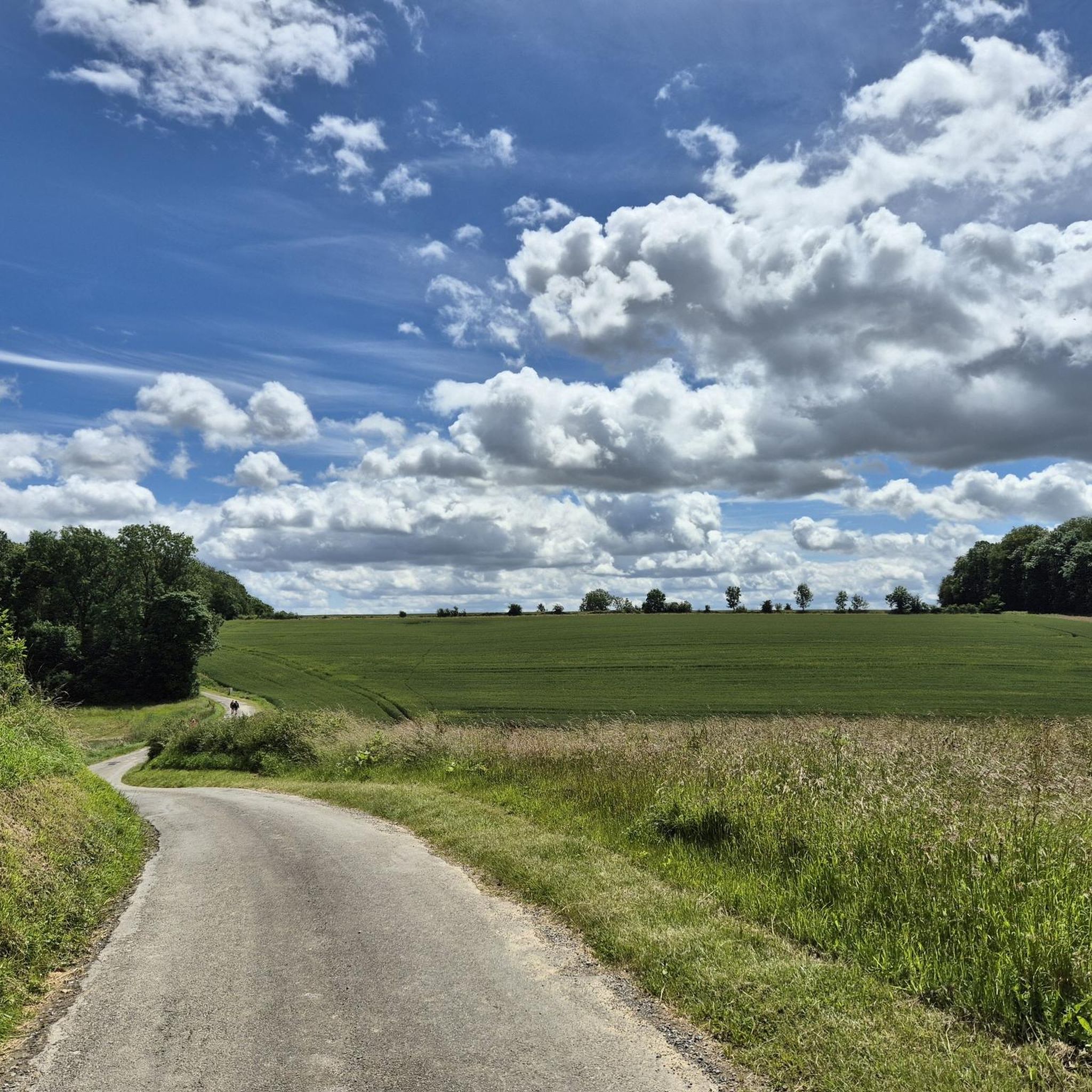
Very nice tour with a few tough calf biters. Beautiful views with beautiful authentic villages. Well signposted with cycle junctions and very quiet roads.
0
1
Frequently Asked Questions
What are some of the most historically significant castles around Hamois?
The Hamois region is rich in history. The Crupet Donjon, a 13th-century medieval fortified tower, is recognized as an Exceptional Heritage of Wallonia. The site of Château d'Achet includes vestiges of a medieval castle, along with a mill and forge, offering a diverse look into the past. The Hubinne Site, while now ruins, was once a medieval castle and features a 17th-century chapel with pillars dating back to the 7th century.
Are there any castles near Hamois that offer unique experiences like accommodation or dining?
Yes, Château Pickeim, built in 1905, has been converted into an hotel-restaurant since 1966, offering a unique opportunity to stay or dine in a historic château. Additionally, the Crupet Donjon can be rented for events, providing a distinctive setting.
Which castles near Hamois are known for their architectural style?
The region showcases diverse architectural styles. Château de Buresse is a notable neoclassical castle from 1822. Château Pickeim blends a comfortable villa with an English manor style from 1905. The Faulx-les-Tombes Castle is a striking neo-Gothic structure, largely rebuilt in the 19th century. Château Sans-Soucis in Scy features contemporary architecture, replacing an older castle destroyed in 1963.
Can I visit castles with medieval origins in the Hamois region?
Absolutely. The Crupet Donjon is a well-preserved 13th-century medieval fortified tower. The Château de Spontin, with its massive walls and moat, corresponds well to the image of a medieval castle, with its core dating back to the 13th century. The Château d'Achet also features vestiges of a medieval castle, and the Hubinne Site is built on the ruins of an old medieval castle.
Are there family-friendly castles to visit near Hamois?
Yes, several castles are considered family-friendly. The Faulx-les-Tombes Castle and Château de Spontin are both tagged as family-friendly. The connection of Château de Skeuvre (Natoye) to the *Spirou* comic strip as 'Champignac Castle' also makes it a fun point of interest for families and comic fans.
What kind of natural features or viewpoints can I find near the castles?
Many castles are set within beautiful natural surroundings. Château de Buresse is within a beautiful, tree-lined park. The Château de Saint-Fontaine is surrounded by a magnificent park and overlooks the valley of the Saint-Lambert stream. Château Sans-Soucis is set within a magnificent wooded park. The Faulx-les-Tombes Castle is located on a rock on the banks of the Samson River, offering scenic views.
Are there any castles near Hamois that are particularly famous or have unique cultural connections?
Château de Skeuvre in Natoye is particularly famous for being immortalized by Franquin in the *Spirou* comic strip, where it is known as 'Champignac Castle'. This connection makes it a unique cultural landmark for fans of the series.
What outdoor activities can I do near these castles?
The Hamois region offers various outdoor activities. You can find numerous routes for gravel biking, mountain biking, and general cycling. For example, you can explore routes like the 'Wooden Bridge over the River Bocq – View of Walzin Castle loop' for gravel biking, or the 'Path Along the Bocq River – River View loop' for mountain biking. There are also cycling routes such as the 'Royseux Castle Farm – Old Station loop'. You can find more details on these and other routes in the Gravel biking around Hamois, MTB Trails around Hamois, and Cycling around Hamois guides.
Are there hiking trails near the castles in Hamois?
While specific hiking trails directly linked to individual castles aren't detailed, the region's guides for gravel biking, mountain biking, and cycling often traverse scenic areas that can be explored on foot. Many routes follow rivers like the Bocq and offer views of the natural landscape and historical sites. For detailed hiking options, exploring the broader Wallonia region, known for its extensive trail networks, is recommended.
What is the best time to visit castles around Hamois?
The best time to visit castles in the Hamois region generally aligns with pleasant weather for exploring the grounds and surrounding areas. Spring and autumn offer mild temperatures and beautiful scenery, with fewer crowds. Summer is also popular, though it can be warmer. Some castles may have specific seasonal opening hours, so it's always advisable to check ahead for individual sites.
Are there any castles near Hamois that are private but still worth seeing from the outside?
Yes, several castles are privately owned but offer impressive views from the exterior. Faulx-les-Tombes Castle and Haltinne Castle are both private properties, but their architecture and historical presence make them worth admiring from a distance. The Château de Saint-Fontaine, though private, is also notable for its magnificent park and historical significance.
What do visitors enjoy the most about the castles around Hamois?
Visitors appreciate the diverse historical and cultural experiences offered by the castles. The medieval fortified tower of Crupet Donjon is noted for its special view and historical significance. The region's blend of ancient ruins and well-preserved estates, often set in picturesque natural surroundings, is highly valued by the komoot community, with many upvotes and photos shared.
Most popular attractions around Hamois

Get inspired with the komoot mobile app


Explore more
Looking for the best castles somewhere else? Discover other guides around Hamois:
