The best walks and hikes around Uccle
4.6
(628)
3,247
hikers
93
hikes
Hiking around Uccle offers access to extensive green spaces and diverse natural features within the Brussels-Capital region. The area is characterized by the expansive Sonian Forest, which covers a significant portion of Uccle, and the adjacent Bois de la Cambre, a large park with a hilly landscape. Numerous smaller parks like Wolvendael Park and Brugmann Park, along with tree-lined residential avenues, contribute to the municipality's leafy ambiance. The terrain includes varied landscapes such as small forests, orchards, and meadows, providing a range of hiking environments.
Best hiking trails around Uccle
- The most popular hiking route is Drowned Children's Ponds – Vuilbeek Valley loop from Kauwberg, a 5.5 miles (8.8 km) trail that takes 2 hours 20 minutes to complete, leading through the Vuilbeek Valley.
- Another top favourite among local hikers is Green Field – Paved road loop from Linkebeek, an easy 4.1 miles (6.6 km) path. This route features green fields and accessible paved sections.
- Local hikers also love the Hoefijzervijver – Drowned Children's Ponds loop from Ixelles - Elsene, a 9.2 miles (14.8 km) trail leading through areas with ponds, often completed in about 3 hours 53 minutes.
- Hiking around Uccle is defined by expansive woodlands like the Sonian Forest, varied park landscapes, and numerous green spaces. The network offers options for different ability levels, from easy walks to moderate treks.
- The routes in Uccle are highly rated by the komoot community with an average score of 4.6 stars from over 500 reviews. More than 3000 hikers have used komoot to explore Uccle's varied terrain.
Last updated: July 17, 2026
4.8
(114)
444
hikers
8.85km
02:21
90m
90m
Moderate hike. Good fitness required. Easily-accessible paths. Suitable for all skill levels.
4.5
(21)
112
hikers
14.8km
03:54
120m
120m
Moderate hike. Good fitness required. Easily-accessible paths. Suitable for all skill levels.

Sign up for free
4.5
(31)
96
hikers
7.40km
01:59
90m
90m
Easy hike. Great for any fitness level. Easily-accessible paths. Suitable for all skill levels.
4.3
(21)
57
hikers
10.9km
02:55
130m
130m
Moderate hike. Good fitness required. Easily-accessible paths. Suitable for all skill levels.
4.6
(11)
56
hikers
Moderate hike. Good fitness required. Easily-accessible paths. Suitable for all skill levels.
Get access to more routes and recommendations from other explorers.
Sign up for free
Already have an account?
Our route recommendations are based on thousands of hikes, rides, and runs completed by other people on komoot.
Start today with a free account
Your next adventure awaits.
Login or Signup

Tips from the Community

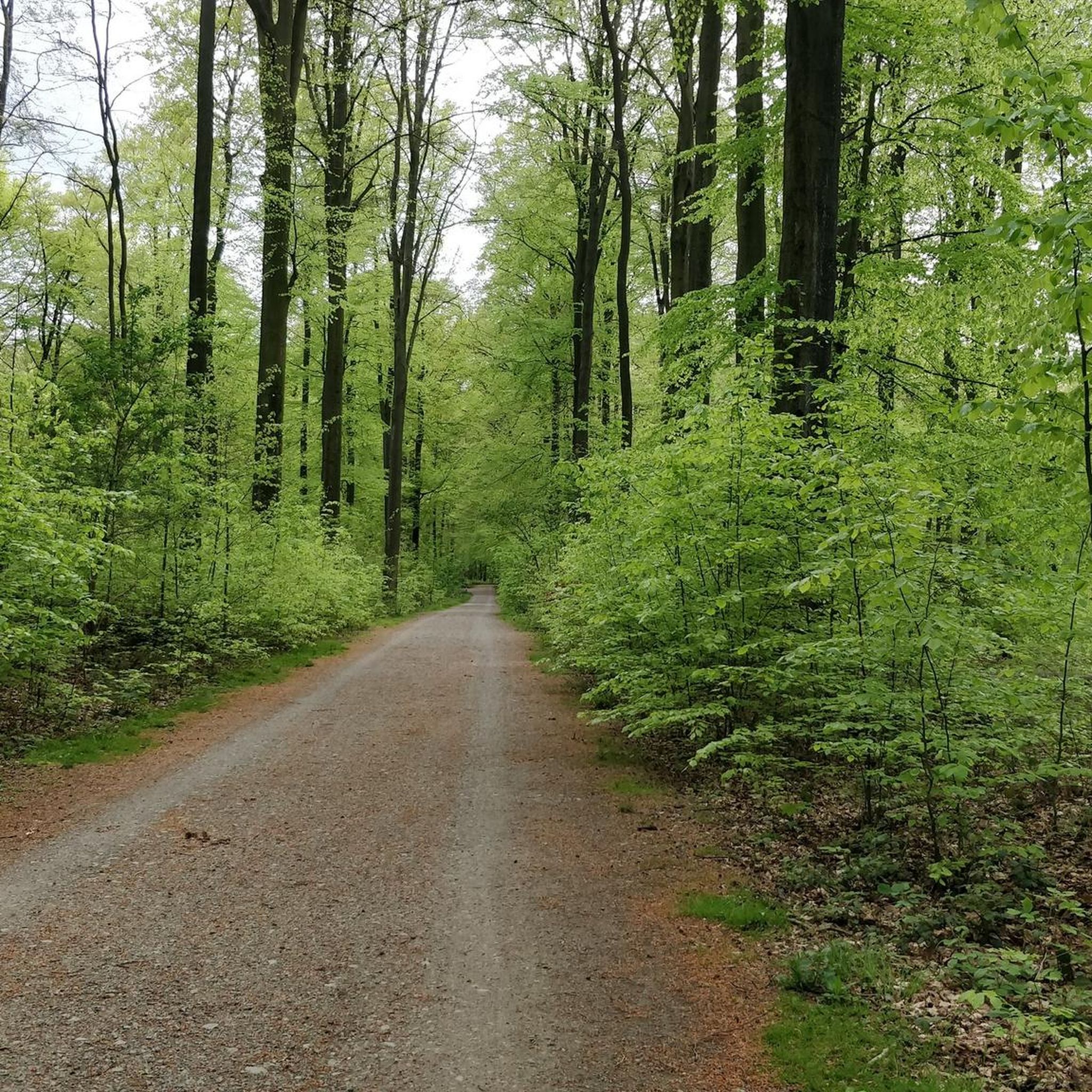
one of the most beautiful trails in the Soignies forest
0
0

Any time of year... here with goldenrod. Bosvoorde pond, Vuursteenweg near IS. Just review it.
0
0

A 1600m long racecourse ideal for interval training. It has a fine gravel surface.
0
0

Don't go on a Sunday when the weather is nice. Crowds of walkers, joggers, cyclists...you can't hear the birds singing anymore!
2
0


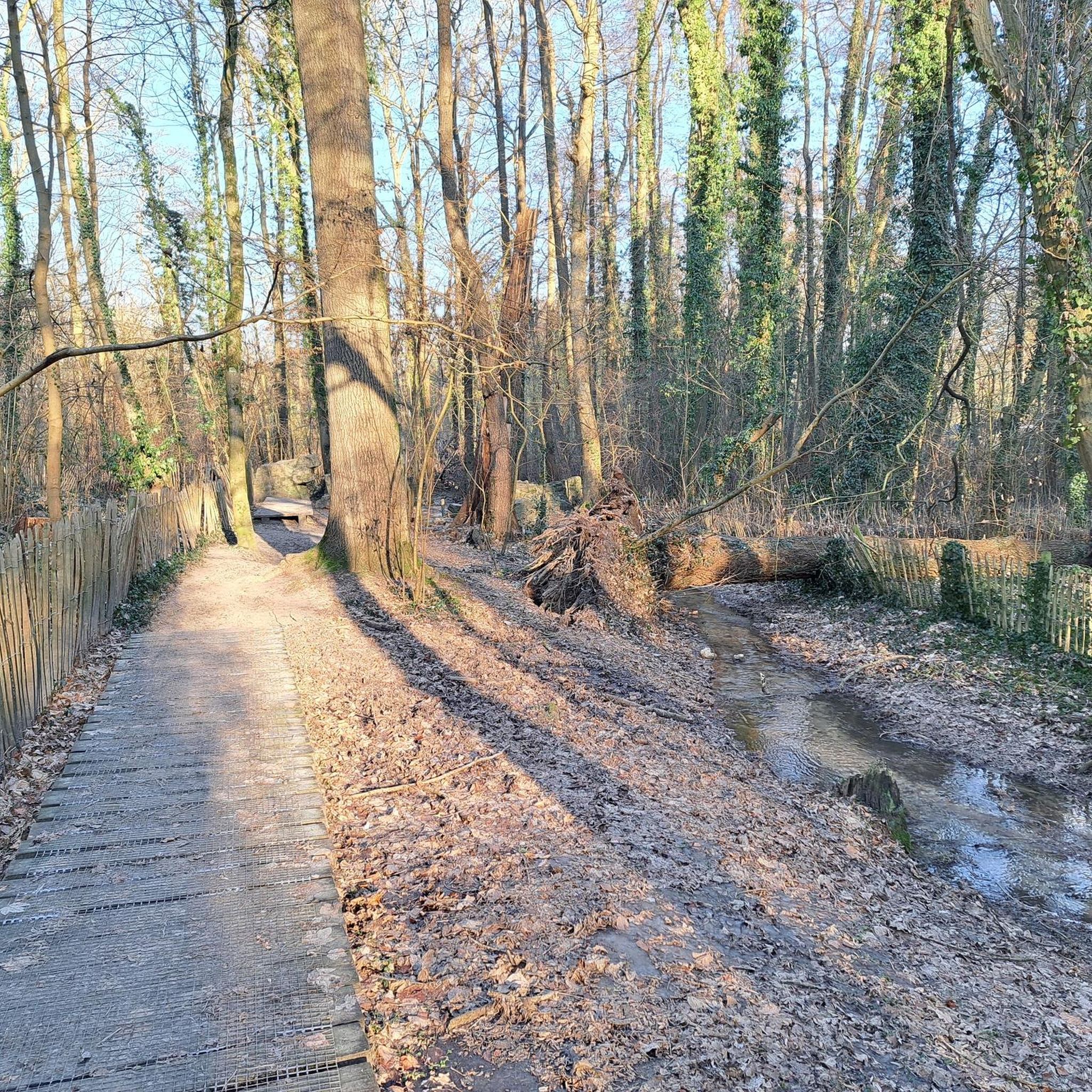
Here we see a watercourse, which is enough for a beaver. If the beaver builds a dam here, it can become a pond or a lake in two or three years. The animal can change an entire ecosystem, simply because its dam retains water and rain. These natural beaver dams are very efficient in combating floods and droughts, because they regulate the flow of small watercourses. Locally, they can shape the forest through flooding by flooding parts of the forest, causing the tree vegetation to die. When the beavers leave their dam and their beaver pond, a succession from pioneer forest to climax forest can start again after the reservoir has drained.
1
0
Beech forests are the end point of spontaneous forest evolution, they form the climax vegetation in places that are not too dry, too warm or too wet. If nature were to take its course, the beech would cover most of our continent. Old, almost untouched beech forests are extremely rare in Europe today and are mainly found in places that are difficult to exploit or develop. Compared to the rest of the world, beech forests are among the seriously endangered habitats in Europe, even though the beech as a species is not endangered. For this reason, the few remaining old and untouched European beech forests that have not or hardly been changed by humans have been included on the UNESCO World Heritage List. This cross-border heritage includes 94 sub-areas in 18 countries. Since the end of the last ice age, the European beech has spread from a few isolated refuges in the Alps, Carpathians, Dinarides, the Mediterranean and the Pyrenees over a large part of the continent in a relatively short time, a few thousand years. The success of the beech throughout Europe is due to its adaptability and tolerance to different climatic, geographical and physical conditions. These forests contain an invaluable population of old trees and a genetic reservoir of beech and many other species that depend on these old forest areas. Throughout the year and during their life cycle, beech forests undergo different stages and processes. From the germination of young trees that grow close together in their first years, to decades of competition for space, water and light, the growth into impressive trees, and finally the decay and breakdown. Without human intervention, these natural processes unfold in an undisturbed way. Together, over tens and even hundreds of years, these typical wilderness phenomena shape the forest. Please note: this information is a general description of the UNESCO World Heritage site, which is located elsewhere in the Sonian Forest. In 2017, five parts (located in Ticton, Joseph Zwaenepoel and Grippensdelle) of the Sonian Forest were recognised as UNESCO World Heritage as part of the ‘Ancient and pristine beech forests of the Carpathians and other regions of Europe’. It is the only UNESCO natural world heritage site in Belgium.
1
0
A beech tree likes shade in its youth. They can establish themselves in the shade of other more light-loving tree species. Conversely, no tree is able to establish itself under a closed canopy of beeches. We therefore call the beech the climax tree species. It closes off the natural forest succession and can maintain it for a very long time, provided that no large-scale and brutal disturbances disrupt its kingdom. This place is very typical of the forest management of the Sonian Forest: all the trees are the same age and of the same species. In this part you see monospecific forest management, they are all beeches.
1
0
Frequently Asked Questions
How many hiking trails are available in Uccle?
Uccle offers a wide selection of hiking opportunities, with over 80 trails recorded on komoot. These range from easy strolls through parks to more challenging treks through the Sonian Forest.
What kind of terrain can I expect on Uccle's hiking trails?
Uccle's hiking terrain is quite varied, featuring expansive woodlands like the Sonian Forest, often described as a 'beech cathedral,' and the picturesque, hilly landscapes of Bois de la Cambre. You'll also find smaller parks, orchards, and meadows, providing a mix of natural surfaces and some paved sections, particularly on easier routes.
Are there easy hiking options suitable for beginners or casual walkers?
Yes, Uccle has plenty of easy hiking options. Approximately 60 of the trails are classified as easy, perfect for beginners or those looking for a relaxed walk. An example is the Green Field – Paved road loop from Linkebeek, an easy 6.6 km path featuring green fields and accessible paved sections.
Are there any family-friendly hiking trails in Uccle?
Uccle is very family-friendly, with many parks and trails suitable for all ages. Brugmann Park, for instance, covers 16.2 acres and includes a playground. The unique Uccle Farm is another excellent spot, offering varied landscapes, farm animals, and even opportunities to pick apples or feed donkeys, making it an engaging experience for children.
Can I bring my dog on the hiking trails in Uccle?
Many of Uccle's green spaces, including large parts of the Sonian Forest and Bois de la Cambre, are generally dog-friendly, though regulations may vary by specific park or section. It's always advisable to keep dogs on a leash and check local signage for any restrictions.
Are there circular hiking routes available in Uccle?
Yes, many of the trails in Uccle are designed as circular routes, allowing you to start and end at the same point. A popular moderate option is the Drowned Children's Ponds – Vuilbeek Valley loop from Kauwberg, which is 8.8 km long and takes about 2 hours 20 minutes to complete.
What are some notable natural features or landmarks to look out for while hiking?
Uccle is rich in natural beauty. The majestic Sonian Forest is a highlight, known for its 'beech cathedral' canopy. You can also explore the scenic Bois de la Cambre with its picturesque, hilly landscape and the charming Robinson chalet on an island. Other notable features include the ponds found along routes like the Hoefijzervijver – Drowned Children's Ponds loop from Ixelles - Elsene.
How can I reach Uccle's hiking trails using public transport?
Uccle is well-integrated into the Brussels public transport network. Many trails, such as the 'Stalle Loop Trail' mentioned in regional research, are easily accessible by public transport from Brussels Central Station. Specific bus and tram lines serve various parts of Uccle, providing convenient access to its green spaces.
Is parking available near the hiking areas in Uccle?
Parking is generally available near the larger parks and trailheads in Uccle, though it can sometimes be limited, especially on busy weekends. Residential streets surrounding green spaces often offer street parking, but it's always a good idea to check local parking regulations.
What is the best time of year to go hiking in Uccle?
Uccle offers enjoyable hiking experiences throughout the year. Spring brings beautiful cherry blossoms and lush greenery, especially around Uccle Farm. Autumn transforms the Sonian Forest into a spectacle of colors. Summer is ideal for long walks, and even winter can be charming with crisp air, though some paths might be muddy.
What do other hikers enjoy most about hiking in Uccle?
The hiking experience in Uccle is highly rated by the komoot community, with an average score of 4.6 stars from over 500 reviews. Reviewers often praise the quiet woodlands, the diverse park landscapes, and the well-maintained paths that offer a refreshing escape into nature within the Brussels-Capital region. The variety of routes, from easy to moderate, is also frequently highlighted.
Are there any moderate hiking trails for those looking for a bit more challenge?
Yes, Uccle offers several moderate trails for hikers seeking a bit more challenge. For example, the Gateway to Holleke – Green Field loop from Uccle - Ukkel is a moderate 10.8 km route with some elevation changes, providing a good workout while exploring varied landscapes.
Are there any castles or historical sites near the hiking trails?
While Uccle itself is known for its green spaces, the broader region around Uccle features several historical sites. You can find various castles nearby, such as Château de La Hulpe or Domaine Solvay, which can be explored as separate excursions or combined with a hike in the surrounding areas.
Most popular attractions around Uccle

Get inspired with the komoot mobile app


Explore more
Browse the best Hikes in other regions.
