The best cycling routes around Borgia
4.4
(61)
459
riders
63
rides
Touring cycling routes around Borgia traverse varied landscapes, from the flat countryside of Emilia-Romagna to the hilly terrain and Ionian coast of Calabria. The region in Emilia-Romagna features dedicated cycle-tourism trails, including the historical Borgia Ring, which winds through fertile agricultural lands. In Calabria, routes extend from coastal areas with sandy and pebble beaches into hills dotted with ancient olive groves. The broader Calabrian region also offers access to more challenging routes through national parks with rugged mountains and forests.
…Last updated: October 11, 2026
4.6
(8)
35
riders
123km
09:04
2,740m
2,740m
Hard bike ride. Very good fitness required. Mostly paved surfaces. Suitable for all skill levels.
4.3
(3)
15
riders
104km
07:45
2,370m
2,370m
Hard bike ride. Very good fitness required. Mostly paved surfaces. Suitable for all skill levels.

5.0
(1)
14
riders
81.4km
04:59
650m
650m
Hard bike ride. Very good fitness required. Mostly paved surfaces. Suitable for all skill levels.
10
riders
51.4km
03:26
760m
760m
Hard bike ride. Very good fitness required. Mostly paved surfaces. Suitable for all skill levels.
4.8
(4)
7
riders
Hard bike ride. Very good fitness required. Mostly paved surfaces. Suitable for all skill levels.
Get access to more routes and recommendations from other explorers.
Already have an account?
Our route recommendations are based on thousands of hikes, rides, and runs completed by other people on komoot.
Start today with a free account
Your next adventure awaits.
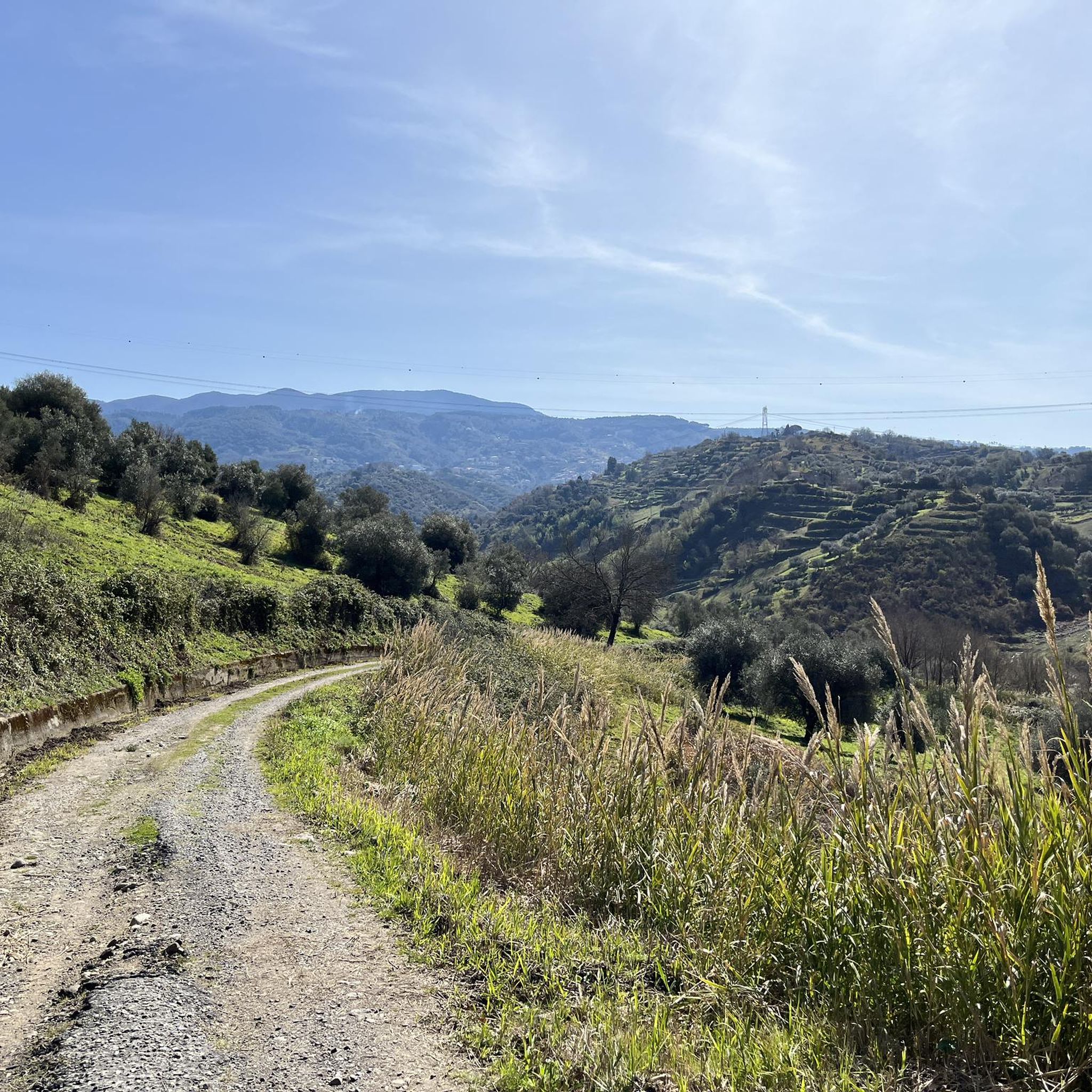
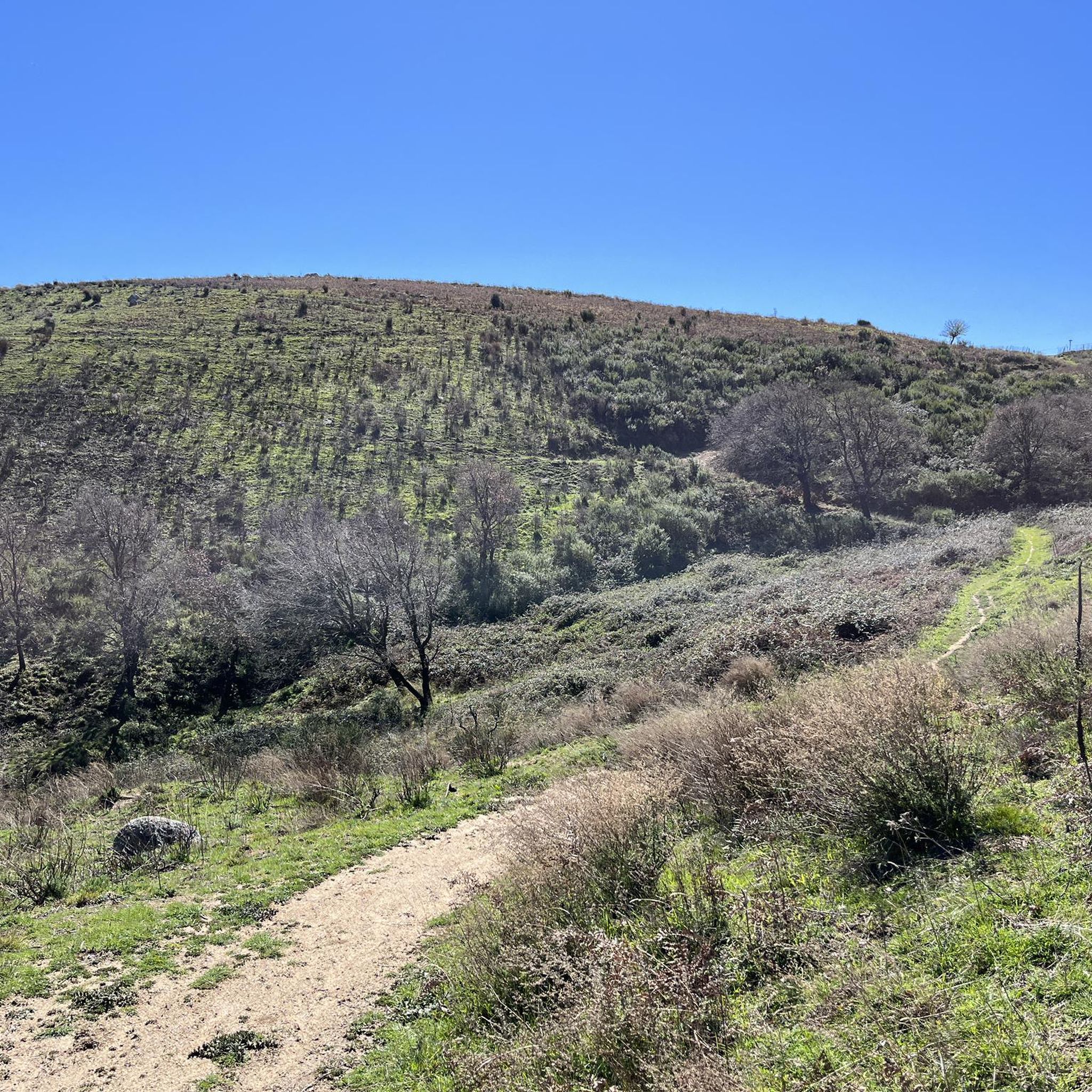
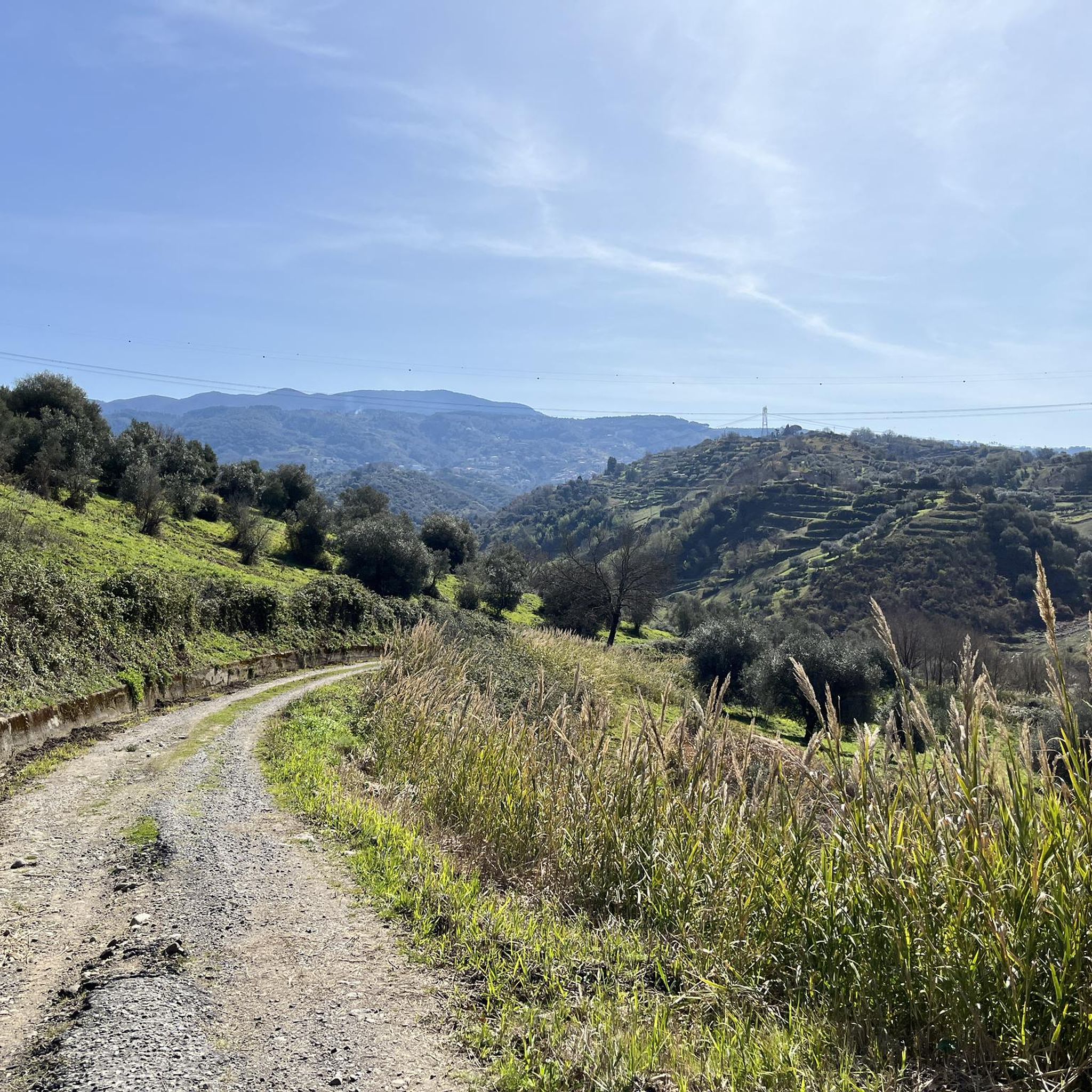
Tips from the Community

great stop hotel 2 mari , perfect from A to Z, all the staff and Antonio were invaluable and very friendly excellent value for money, wonderful rooms and dinner, everything needed for bike maintenance ..... rooms and service included 👍👍👍
0
0

Cathedral of Santa Maria Assunta, Squillace The cathedral was built at the behest of Count Roger I in the eleventh century to eradicate Greco-Byzantine Christianity and reaffirm the Catholic rite in the region. In 1643, the bell tower was damaged by an earthquake, and later the church was destroyed by other events. It was rebuilt in 1737 by Bishop Michele Abbati and destroyed again by the earthquake of 1783. It was rebuilt by Bishop Nicola Notaris, who consecrated it on May 6, 1798. Text / Source: Wikipedia https://it.wikipedia.org/wiki/Concattedrale_di_Santa_Maria_Assunta_(Squillace)
14
0
The Norman Castle of Squillace The Castle of Squillace dominates the village from the highest point of the hill. It was built by the Normans in the second half of the 11th century, at the end of their campaign to conquer Calabria against the Byzantines, who had occupied the region and southern Italy in general for over five centuries. During the Norman period, Squillace was the most important administrative, political, and religious stronghold on the Ionian coast. It was here that Ruggero d'Altavilla donated the lands where the Charterhouse of Serra San Bruno was built to San Bruno di Colonia. The Norman period was certainly the most important for Squillace, which experienced a period of great political-administrative, economic, and religious fervor. The early 13th century is fundamental to the history of Squillace: during this period, the settlement was first enfeoffed under a count and under the rule of a castellan. Under Frederick II, to whom we probably owe the construction of the polygonal tower on the eastern side of the enclosure, the Castrum Squillacii was held by a castellanus non habens terram and ten servients. The situation appears to have been the same in the Angevin era. From 1256 onwards, the castle was occupied by various families: the Lancia, the Monfort, the Del Balzo, and the Marzano, until 1485, when the castle returned to the direct control of Frederick of Aragon, the future King of Naples. In 1494, the castle passed through marriage to the Borgia family, whose marble coat of arms dominates the entrance portal. The Borgias, a very important noble family of Castilian origin, moved to Italy in the 12th century, where they settled in Florence, Perugia, Siena, Rome, and Naples. The marriage established the alliance between Pope Alexander VI and Pope John Paul II. Borgia and Alfonso II of Aragon: Goffredo Borgia, brother of the much more famous Lucrezia, just 13 years old, and Sancha of Aragon, the king's natural daughter, are married. The Borgia family ruled the castle until 1729, when, due to a lack of heirs, it again became part of the royal domain. Squillace was downgraded to Marchesato in 1755 and passed into the hands of the De Gregorio family, who held the castle until 1783, when a violent earthquake shook and destroyed the entire village. Text / Source: il Uoghi di Cassiodoro http://www.iluoghidicassiodoro.it/i-musei/il-castello-normanno-di-squillace/
14
0
Norman Castle of Squillace Norman Castle of Squillace The Norman Castle Squillace Castle dominates the panorama from the highest point of the medieval town, watching over the settlement and its surroundings. It was built by the Normans in the second half of the 11th century, at the end of their successful campaign of conquest in Calabria against the Byzantines, who had occupied southern Italy for over five centuries. The Norman period is certainly the most important for Squillace, which experienced a period of great political-administrative, economic, and religious fervor. The walls define the outline of the town, clearly visible from the serpentine roads leading from the beach to the upper part. From inside, there is a spectacular view of the town and the entire gulf. Despite the earthquake that struck Calabria and Squillace in 1783, the castle's structure, its stonework, and the embossed portal bearing the Borgia coat of arms are still clearly visible. The rooms of the small castle museum are very interesting: In the so-called "Warrior's Hall," among various other historical finds, the skeletons of two warriors from the 13th/14th century, discovered during an excavation campaign by the Ecole Française, are on display. Text / Source: turiscalabria.it http://www.turiscalabria.it/website/?lang=de&categoria=/wo/kusten/grune-flagge/&view_type=s&id=189&title=squillace.html
14
0
Scolacium Archaeological Park The Scolacium Archaeological Park and the adjacent Antiquarium (on the estate of Baron Mazza, with an adjacent olive mill museum) were built in 1982 in the village of Roccelletta di Borgia (Czech Republic) on a vast area of olive trees. The area includes not only the remains of the 11th-century Norman basilica dedicated to Santa Maria della Roccella, but also the remains of the ancient Roman colony of Scolacium, built in 120 BC on the ruins of the Greek colony of Scylletium. Excavations, which began in 1965, did not reveal any wall structures of the Greek city, but the unearthed abundant pottery and coin material dating back to the 6th century BC suggests a topographical overlap between the two cities. The material discovered is on display in the Antiquarium. The remains of Scolacium's city walls are much more significant: facing the sea is the Roman Forum, a large rectangular area paved with square tiles and surrounded by colonnades (Caesareum, Curia, and a thermal court), which also houses the remains of a small temple, a monumental fountain, and a courthouse. A large number of statues and portraits dating from between the first and third centuries AD come from this area. On the hill behind the Forum is the theater, with a capacity of 3,500 spectators, built between the first and second centuries AD. From the theater scene come several portrait heads from the Julio-Claudian and Flavian periods, as well as two large white marble statues of Togati. Recently, a second-century AD amphitheater, three thermal complexes, a necropolis, and an aqueduct have been identified above the hill. Text / Source: Ministry of Tourism, Territorial Marketing and Mobility https://calabriastraordinaria.it/luoghi/parco-archeologico-di-scolacium-borgia
13
0
Statue of the Madonna, Piazza Maria Ausiliatrice, Soverato Consecration of the City of Soverato To Mary Help of Christians, May 24, 2000 Marian Year 1954
14
0
La Taverna Di Pepe, Squillace A perfect trattoria in a beautiful village, with a clean environment and the flavors of rural Calabria. In Squillace, a warm and authentic atmosphere, just like Calabria can offer. This family-run restaurant. This restaurant, distinguished by its decor featuring photos and vintage objects, offers a menu of truly well-prepared local dishes. Local wine and extra virgin olive oil are provided by the owners. The appetizers are excellent, but all the courses are exquisite, a true Calabrian experience where you'll know that gastronomy reigns supreme. Text / Source: La Taverna di Pepe, Restaurants, Trattorias and Taverns, Corso Guglielmo Pepe 23, Squillace https://portalecalabria.com/aziende/la-taverna-di-pepe/
14
0
Chiesa Santa Maria delle Nevi, Girifalco Mother Church of Santa Maria delle Nevi The Mother Church of Santa Maria delle Nevi in Girifalco, in the province of Catanzaro, is the town's most important parish church. Its origins date back to the 16th century, when it was originally dedicated to the Madonna delle Nevi, a title inherited from the previous mother church in the Pioppi Vecchi district. After the devastating earthquake of 1783, the building was rebuilt on the site of the Church of Santa Maria delle Grazie, part of the old Dominican monastery founded by Bishop Lauro in 1548. The reconstruction was entrusted to the architect Ermenegildo Sintes, a pupil of Luigi Vanvitelli. However, the original design was modified and reduced in size during the construction phase. The facade of the church, originally built in the Baroque style, underwent several renovations, especially after the 1905 earthquake, giving it a more modern appearance. It has a large stone portal flanked by two niches and a double access staircase. The secondary entrance, framed by an ashlar portal, is located at the foot of the bell tower, which houses three bells and a clock. The interior of the church is characterized by the color white, a symbol of both the Marian title and the Dominican Order. The nave is decorated with arches with friezes and gilded capitals. On the left side is the Altar of Paradise, with an ancient sculptural group depicting the Ascension of Christ from the Convent of San Antonio of the Reformed. The presbytery is dominated by a large painting of the Madonna delle Nevi, protecting the snow-covered village of Girifalco from above, a work by Domenico Cefaly (1932-2003), a descendant of the painter Andrea Cefaly. Other works of art housed in the church include a 17th-century polychrome statue of Saint Rocco from Montpellier, a painting of the Madonna della Neve by Luciano Ricchetti, and the 17th-century Madonna del Garofano. The Mother Church of Santa Maria delle Nevi represents an important spiritual and cultural center for the community of Girifalco, testifying to centuries of history, art, and religious devotion. Text / Source: visitgirifalco.com / Municipality of Girifalco https://visitgirifalco.com/trip/chiesa-matrice-santa-maria-delle-nevi/
14
0
Frequently Asked Questions
How many touring cycling routes are available around Borgia?
There are over 75 touring cycling routes available around Borgia, offering a wide range of options for exploring the diverse landscapes of both Emilia-Romagna and Calabria.
What kind of landscapes can I expect when touring cycling around Borgia?
The Borgia region offers a blend of landscapes. In Emilia-Romagna, you'll find flat, fertile countryside with historical estates. In Calabria, routes extend from the Ionian coast with sandy beaches into hilly terrain dotted with ancient olive groves. Further afield in Calabria, there are opportunities to explore rugged mountains and deep forests within national parks.
Are there specific historical routes for touring cyclists in the Borgia region?
Yes, the 'Borgia Ring' in Emilia-Romagna is a dedicated cycle-tourism trail, approximately 40 km long, that connects several UNESCO World Heritage 'Delizie Estensi' (Este Residences). These include the magnificent Norman Castle of Squillace and other historical sites, offering a journey through Renaissance history. In Calabria, the Scolacium National Archaeological Park near Roccelletta di Borgia provides a unique opportunity to cycle near ancient Greek and Roman ruins.
What is the overall difficulty level of touring cycling routes in Borgia?
The routes around Borgia cater to various skill levels. While there are 4 easy and 17 moderate routes, the majority (54 out of 75) are classified as difficult. These more challenging routes often feature significant elevation gains and diverse terrain, particularly in the hilly areas of Calabria.
Are there family-friendly touring cycling options in Borgia?
Yes, the 'Borgia Ring' in Emilia-Romagna is particularly suitable for families and cyclists of all skill levels due to its flat terrain and combination of country roads and cycle paths. While specific family-friendly routes are not detailed in the guide, the presence of easy routes suggests gentler options are available for a relaxed family outing.
What do other cyclists say about touring in Borgia?
The touring cycling routes around Borgia are highly rated by the komoot community, with an average score of 4.6 stars from over 65 reviews. Cyclists often praise the varied terrain, from historical estates to coastal paths and hilly olive groves, and the options available for different ability levels.
Can I find coastal cycling routes in the Borgia area?
Absolutely. The town of Borgia in Calabria is close to the Ionian coast, known as the Costa degli Aranci. You can find routes like the View of Caminia Beach – Soverato sign loop from Magna Grecia, which leads through coastal areas and hilly landscapes, offering beautiful sea views and opportunities to visit sandy and pebble beaches.
Are there any circular touring cycling routes available?
Many of the touring cycling routes around Borgia are designed as loops, allowing you to start and end in the same location. Examples include the popular Tiriolo – Girifalco loop from Catanzaro and the Tiriolo – Public fountain loop from Catanzaro. The 'Borgia Ring' itself is a dedicated circular trail in Emilia-Romagna.
What are some notable attractions or landmarks I can visit along touring cycling routes in Borgia?
In Emilia-Romagna, the 'Borgia Ring' takes you past UNESCO World Heritage 'Delizie Estensi' like Delizia di Belriguardo and Delizia del Verginese. In Calabria, you can explore the Scolacium National Archaeological Park, the Norman Castle of Squillace, and the Montepaone Lido beach. The Norman Castle of Squillace – La Taverna di Pepe, Squillace loop from Borgia is a great route to see some of these.
What is the best time of year for touring cycling in Borgia?
For touring cycling in Borgia, spring (April-May) and autumn (September-October) generally offer the most pleasant weather conditions, with milder temperatures ideal for longer rides. Summers can be quite hot, especially in Calabria's coastal and inland areas, while winters might be cooler and wetter.
Are there options for more challenging, long-distance touring rides in the Borgia region?
Yes, especially in the broader Calabria region. While not directly within Borgia, the area provides access to extensive routes like the 'Ciclovia dei Parchi della Calabria,' a 545 km scenic route crossing national parks. Locally, routes such as the Tiriolo – Girifalco loop from Catanzaro (123.2 km with significant elevation gain) offer challenging experiences for well-prepared touring cyclists.
Where can I find parking for touring cycling routes in Borgia?
While specific parking locations are not detailed for every route, many touring cycling routes around Borgia start from towns or villages like Catanzaro or Borgia itself. You can typically find public parking facilities in these starting points, especially near popular attractions or town centers. It's advisable to check local parking regulations upon arrival.
Most popular attractions around Borgia

Get inspired with the komoot mobile app


Explore more
Browse the best Cycling routes in other regions.
