Attractions and Places To See around Travacò Siccomario - Top 20
Best attractions and places to see around Travacò Siccomario offer a blend of natural beauty and historical significance. Situated at the confluence of the Po and Ticino rivers, the area features rich environmental interests. Its proximity to Pavia provides access to numerous cultural sites, including ancient churches, castles, and iconic landmarks. Visitors can explore both natural areas and historical architecture within and near Travacò Siccomario.
Best attractions and places to see around Travacò Siccomario
- The most popular attractions is Certosa of Pavia (Charterhouse of Pavia), a religious building that is a monumental complex including a monastery and a sanctuary. This historical site is located along the Naviglio Pavese and is known for its art and history.
- Another must-see spot is Ponte Coperto (the Covered Bridge) in Pavia, a bridge connecting the historic city center to Borgo Ticino. The current structure, built in 1949, reproduces the form of the original 14th-century bridge and includes a small religious chapel in the center.
- Visitors also love Cathedral of Pavia, a religious building with a history dating back to 1487. Its architecture features a central plan with a large dome and a Greek cross structure, influenced by designs from Leonardo da Vinci.
- Travacò Siccomario is known for its historical sites, religious buildings, and natural features. These include ancient castles, significant cathedrals, and scenic river confluences, offering a variety of attractions to see and explore.
- The attractions around Travacò Siccomario are appreciated by the komoot community, with more than 400 upvotes and over 120 photos shared by visitors.
Last updated: May 9, 2026
Ponte Coperto (the Covered Bridge) in Pavia
Highlight • Bridge
Translated by Google •
Tip by

Certosa of Pavia (Charterhouse of Pavia)
Highlight • Religious Site
Translated by Google •
Tip by

Sign up now to discover places like this
Get recommendations on the best single tracks, peaks, & plenty of other exciting outdoor places.
Sign up for free
Certosa Mills
Highlight • Monument
Translated by Google •
Tip by

Visconti Castle of Pavia
Highlight • Castle
Translated by Google •
Tip by
Cathedral of Pavia
Highlight • Religious Site
Cardinal Ascanio Sforza received permission from Pope Innocent VIII in 1488 to demolish the ancient cathedral and supervise the project.
The architecture of the cathedral follows a central plan with arms converging under a large central dome, influenced by structures such as the cathedral of Santa Maria del Fiore in Florence and the studies of Leonardo da Vinci. Donato Bramante initially led the project, while subsequent architects made some changes while maintaining Bramante's original ideas.
The construction of the dome was resolved at the end of the nineteenth century by Carlo Maciachini, who chose a masonry dome with a Greek cross plan.
The Cathedral of Pavia, completed in 1885, has an imposing façade surmounted by a dome and a loggia inside. The interior has a Greek cross structure with four arms divided into three naves. The dome is supported by eight elaborately shaped pillars, while all the other pillars have the same design. The presbytery is illuminated by high windows with frescoes and an image of the Assumption. The completion of the Cathedral involved several construction phases, including the addition of a reinforced concrete transept in the 20th century by several architects and engineers.
Translated by Google •
Tip by

Sign up for free to discover even more attractions around Travacò Siccomario.
Sign up for free
Already have an account?
Start today with a free account
Your next adventure awaits.
Login or Signup
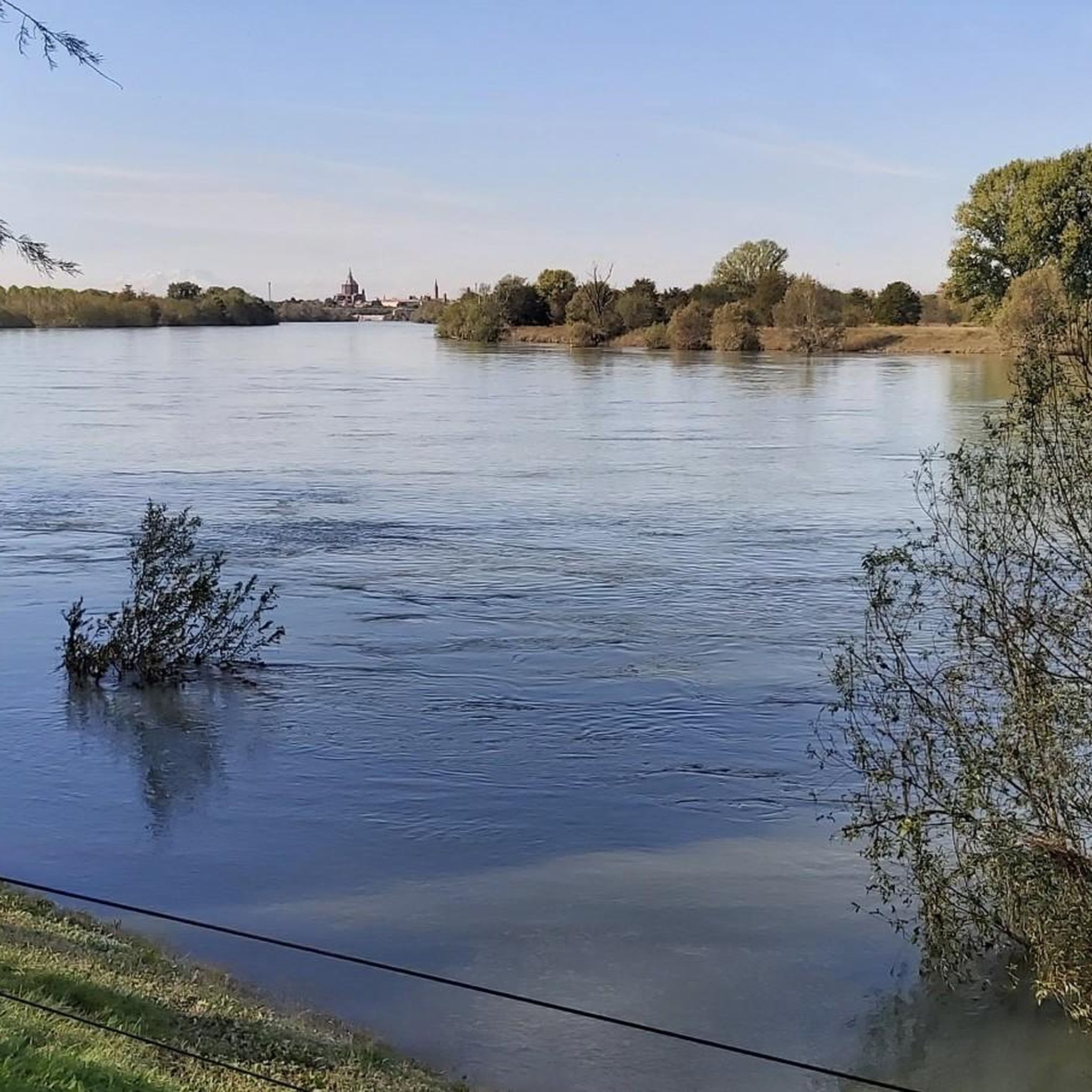

Tips from the Community

The crypt of this cathedral has a soothing atmosphere!
1
0

A dignified, impressive building in a wonderful park. A must-see.
1
0

Construction of this gigantic cathedral, crowned with one of the largest domes in Italy, began in 1488. Bramante and Leonardo da Vinci are said to have worked on the design. Because of the complexity of the dome, it was not completed until 1887. The facade is 19th century.
3
0
This imposing brick castle was built between 1360 and 1365 by order of Galeazzo Visconti and served as a fortification and residence. The north wing of the castle was destroyed at the battle of Pavia (1525) between the French and the Spanish. Petrarch loved the building and assembled a rich library there, which later moved to France. The large courtyard has arcades and an ornate loggia with twin windows.
6
0
According to legend, some pilgrims wanted to attend midnight mass in the city on Christmas Eve in 999, but due to the thick fog their boats could not cross the river. Suddenly, a man dressed in red arrived and promised that he would immediately build a bridge in exchange for the first soul to cross the bridge. The man in red was the devil, and only the Archangel Michael, who had come from the nearby church, recognized him. Michael pretended to agree to the deal, but once the bridge was built, a goat crossed it first. The bridge is therefore also known as the Ponte del Diavolo ("Devil's Bridge").
7
0
The covered bridge has its origins in Roman times. The current one was constructed in the 14th century and covered in 1583. Upstream of the bridge you can still see pillars of the original bridge, reconstructed after the Second World War. A memorial stone on the bridge tells that Albert Einstein stayed in Pavia for several months and loved the place.
7
0

Very beautiful and impressive castle!
5
0
Very large, covered bridge of Pavia…
5
0
Frequently Asked Questions
What historical sites can I explore near Travacò Siccomario?
The area around Travacò Siccomario is rich in history, particularly with its close proximity to Pavia. You can visit the impressive Visconti Castle of Pavia, a prime example of Renaissance architecture housing the Civic Museums. Another significant historical site is the Certosa of Pavia (Charterhouse of Pavia), a monumental complex with a monastery and sanctuary dating back to the late 1300s, known for its frescoes and art.
Are there any family-friendly attractions in Travacò Siccomario or nearby?
Yes, several attractions are suitable for families. The Ponte Coperto (the Covered Bridge) in Pavia is a charming spot for a stroll, connecting the historic city center to Borgo Ticino. The Cathedral of Pavia, with its grand architecture, can also be an engaging visit for older children interested in history and art. Additionally, the Statue of the Washerwoman offers a unique cultural insight into the region's past.
What natural features can I discover around Travacò Siccomario?
Travacò Siccomario is located at the confluence of the Po and Ticino rivers, offering significant natural beauty. You can explore 'The Great Forest between the Two Rivers,' a natural area integrated into a network of pedestrian and cycling paths. The Oasi Lipu Bosco Negri is another notable natural oasis. Don't miss the 'Big Bench' (number 114) in Travacò Siccomario for a unique viewpoint of the surrounding landscape.
What outdoor activities, like hiking, are available near Travacò Siccomario?
There are several hiking opportunities around Travacò Siccomario. You can find moderate trails like the 'Borgoticino Loop' or the 'Siccomario Loop'. For a longer adventure, consider the 'From Pavia to the Santuario di Santa Maria del Novello – loop tour'. More details and routes can be found in the Hiking around Travacò Siccomario guide.
Are there cycling routes suitable for different skill levels?
Yes, the area offers various cycling routes. For an easy ride, try the 'Ticino River at Pavia loop from Pavia' or the 'Ticino River at Pavia – Ponte Coperto of Pavia loop from Pavia'. More moderate options include 'Campagna pavese between Po River and Ticino' or the 'Basilica of San Teodoro – Strada Nuova, Pavia loop from San Martino Siccomario'. Explore these and more in the Cycling around Travacò Siccomario guide.
What are some lesser-known historical buildings or hidden gems in the area?
Beyond the major landmarks, you can discover the Statue of the Washerwoman in Pavia, a touching tribute to the women who worked along the Ticino River. Other historical buildings include the Castello di Argine, built between the fourteenth and fifteenth centuries, and the remains of Colombarone di Mezzano 'Castrum Mezzani' and La Dogana austriaca, offering glimpses into the region's past.
What do visitors particularly enjoy about the attractions near Travacò Siccomario?
Visitors often appreciate the blend of natural beauty and rich history. The Certosa of Pavia is frequently praised for its artistic and historical significance. The Ponte Coperto is loved for its characteristic architecture and the scenic views it offers of the Ticino river. The area's charm is also reflected in the over 400 upvotes and 120 photos shared by the komoot community for these attractions.
Are there any mountain biking trails in the vicinity?
Yes, mountain biking enthusiasts can find trails near Travacò Siccomario. Options include the 'Zerbolò Loop' and the 'Siccomario Loop Trail', both offering a moderate challenge. For longer rides, consider 'Da Pavia alla Certosa e al ponte di barche – giro ad anello'. You can find more details and routes in the MTB Trails around Travacò Siccomario guide.
What are some significant religious sites to visit?
The region is home to several important religious buildings. The Cathedral of Pavia, with its impressive dome and Greek cross structure, is a must-see. The Certosa of Pavia is another monumental religious complex. Other notable churches include Chiesa Santa Maria del Carmine and the ancient Monastero della Pusterla (Santa Maria Teodote) in Pavia.
Is the area around Travacò Siccomario suitable for dog-friendly walks?
While specific dog-friendly designations for all trails are not always available, many natural areas and paths along the rivers, such as 'The Great Forest between the Two Rivers' and the Naviglio Pavese, are generally suitable for walks with dogs, provided they are kept on a leash and owners clean up after them. Always check local regulations for specific parks or protected areas.
What is the best time of year to visit Travacò Siccomario for outdoor activities?
The spring (April-June) and autumn (September-October) months generally offer the most pleasant weather for outdoor activities like hiking and cycling, with milder temperatures and beautiful natural scenery. Summers can be warm, especially in July and August, but still enjoyable for early morning or late afternoon excursions. Winters are cooler, but some historical sites remain open.
Are there any attractions that are wheelchair accessible?
While many historical sites may have limitations due to their age, some areas are more accessible. The Statue of the Washerwoman in Pavia is noted as wheelchair accessible. When planning visits to older buildings like castles or churches, it's advisable to check specific accessibility details directly with the venue beforehand.
Most popular routes around Travacò Siccomario
Most popular attractions around Travacò Siccomario

Get inspired with the komoot mobile app


Explore more
Still not found the Highlight you’re looking for? See guides of the top attractions in other regions:
