The best MTB trails around Butera
4.3
(59)
120
riders
23
rides
Mountain biking around Butera offers a range of routes across varied terrain. The region features a landscape suitable for exploring on two wheels, with options that traverse different elevations and natural settings. These mountain bike trails provide opportunities to experience the local environment, from open areas to more secluded paths, catering to different preferences for outdoor activity.
Best mountain bike trails around Butera
- The most popular mountain bike trail is Giro ad anello da Mazzarino, an 18.2 miles (29.3…
Last updated: May 11, 2026
5.0
(1)
9
riders
29.3km
02:32
630m
630m
Moderate mountain bike ride. Good fitness required. Advanced riding skills necessary.
46.5km
04:11
990m
990m
Hard mountain bike ride. Very good fitness required. Advanced riding skills necessary.

Sign up for free
3.0
(1)
2
riders
22.6km
02:10
610m
610m
Mountain bike the moderate 14.1-mile Via Fabaria Castelli: Butera Loop, gaining 1990 feet with views of Butera Historic Hilltop Town.
50.2km
03:55
760m
760m
This 31.2-mile moderate mountain biking loop near Gela offers technical singletrack, forest views, and a historic hilltop town.
4.9
(8)
7
riders
27.5km
01:34
180m
180m
Easy mountain bike ride. Great for any fitness level. Suitable for all skill levels.
Get access to more routes and recommendations from other explorers.
Sign up for free
Already have an account?
Our route recommendations are based on thousands of hikes, rides, and runs completed by other people on komoot.
Start today with a free account
Your next adventure awaits.
Login or Signup
Tips from the Community

The idea of placing a large Cross in Montelungo was born about seven years ago (first procession 30 July 1998) from a group of young people who rediscovered the hill east of Gela as a simple, quiet place, suitable for contemplation and prayer. Thus began the first organized Via Crucis, starting from the Parish of San Giovanni Evangelista in Gela, the Pro Croce Committee was born in Montelungo, while waiting for the project to be realized. Every year on September 14, the Feast of the Exaltation of the Cross, Mass is celebrated with the participation of the people. On January 19, 2001, the "Holy Cross of Jerusalem" was brought from Rome. From there the Franciscan Father, raising the Cross, blessed the city, the sea and all the surrounding territory. The project was created by the architect. Roberto Loggia and, for the structural calculations, the engineer collaborated. Salvatore Catania. The appropriate authorizations were obtained from the competent authorities and the first stone was laid on Friday 24 April 2001. The three structural walls (about 4 meters high) were built in 2003. Waiting to complete the work with the large metal Cross (approximately 12.50 meters high). A large "sign", the Cross, visible from the whole city and permanently illuminated, will be placed on the top of the mountain which, in its extreme formal purity and absolute respect for the environment, will be able to communicate the spiritual meaning of the Jubilee experienced: it will be the Cross of the Third Millennium! Source: http://www.corrieredigela.it/
1
0

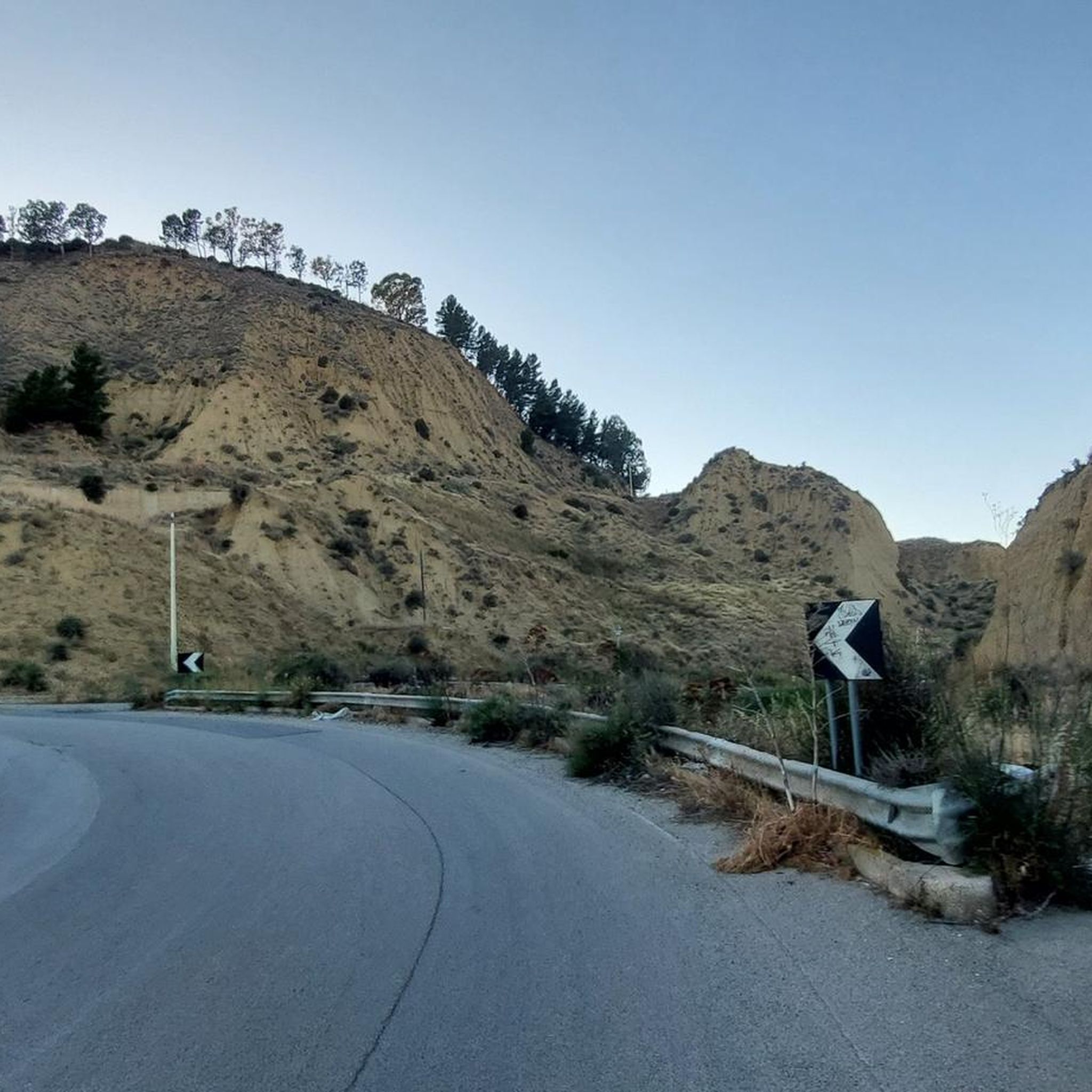
Difficult crossing by bike...
0
1

I recommend a visit to this area which bears witness to a past of hard work that was important for the area. It is an ancient sulfur mine.
0
0

Ancient sulfur mines closed in 1975. These mines played a fundamental role in the Sicilian economy in the past. They are a sad testimony to the extreme working conditions to which the workers who worked within them were subjected.
1
0
Church of Maria Santissima delle Grazie Isolated and outside the town of Mazzarino, the small church dedicated to Santa Maria delle Grazie rises to the south, the foundation of which dates back to the Norman age and, according to local literature, must have been in the shape of a Greek cross. The current longitudinal layout of the church dates back to the restoration works of the 17th century. It has a rectangular hall, divided by an arch about two thirds of the length, starting from the entrance and ending with a semicircular apse; from here you enter the only annexed room, used as a sacristy. floor plan Longitudinal planimetric layout with a single rectangular nave, concluded by a semicircular apse. Starting from the entrance, at about two thirds, the length of the hall is divided by an arch. In the first part, on the walls, there are two side entrances, one on each side. A single window, placed on the façade above the entrance, illuminates the interior of the nave. From the presbytery, raised with a step, you enter a room, used as a sacristy, with an essential toilet and with independent access to the outside of the church. covers The roof of the church has two pitches, made with wooden structures, hidden by the barrel vault and surmounted by Sicilian coppi tiles. The sacristy compartment has a single pitch. main prospectus The simple facade is barely characterized by the essential frame of the triangular tympanum, surmounted in the center by a modest bell loggia. The masonry is made with exposed stone. Only the entrance is framed by jambs and a round arch made with squared stone ashlars. In the centre, above the door, a frameless window opens, the only source of natural light for the interior of the classroom. secondary prospectuses The wall facings are made with exposed stone. During the last restoration works, the two original side entrances were restored. On the right side is the only and small annexed room. interior The flooring is made with terracotta tiles. The walls are plastered and painted. The vault has no decoration and is set up without any characterization that distinguishes it from the wall facing. Source: beweb.chiesacattolica.it
1
0
City on the sea overlooking the Gulf of Gela. The plain develops around it and some hills rise. Pass by Piazza Umberto I to admire the Mother Church (church of Santa Maria Assunta)
2
0
The mother church of Gela or church of Santa Maria Assunta, derived from the primitive church of Santa Maria de 'Platea, is an example of neoclassical that stands out in the historic center of the town on the gulf. The external façade appears interesting as well as the interior rich in works of art The mother church was built in 1760, in front of the main town square (Piazza Umberto I, formerly of the Duomo), replacing the fourteenth-century church of Santa Maria de 'Platea and was completed with the construction in 1844 of the neoclassical facade in sandstone and with the 'raising of the bell tower in 1837 on a project by Emanuele Di Bartolo. For its construction, the boulders of the old church were probably exploited, which in turn came from the temples and monuments of the ancient Greek city. The facade has two orders of Doric and Ionic columns and two groups of statues. There are the main entrance and two secondary side entrances, with inscribed tombstones on them. At the top of the facade is a large window. The imposing facade is preceded by a staircase on the square. The southern side has an entrance and several large windows in the shape of semicircles; on the northern side there is a side entrance, the parish garden, the bell tower and the old parish house. Once on Largo Matrice (south) there was a small parish cemetery.
1
0
Frequently Asked Questions
How many mountain bike trails are available around Butera?
There are over 20 mountain bike trails in the Butera area. These include 3 easy routes, 13 moderate routes, and 6 difficult routes, offering options for various skill levels.
Are there easy mountain bike trails suitable for beginners in Butera?
Yes, Butera offers 3 easy mountain bike trails. These routes are generally shorter and have less challenging terrain, making them suitable for beginners or those looking for a more relaxed ride.
What kind of terrain can I expect on mountain bike trails near Butera?
Mountain biking around Butera features varied terrain, including rolling hills and paths that traverse different elevations and natural settings. You'll encounter a mix of open areas and more secluded paths, often with historical points of interest along the way.
Are there any long mountain bike routes for advanced riders?
For advanced riders seeking a challenge, there are several difficult routes. One notable option is Anello Riesi Ferrovia Miniera da Riesi, a demanding 28.9-mile (46.5 km) path that explores areas with historical connections, including old railway and mining landscapes.
Are there mountain bike trails that form a loop around Butera?
Yes, many mountain bike trails in the area are designed as loops. For example, the Via Fabaria Castelli: Butera Loop is a 14.1-mile (22.6 km) trail that leads through areas with historical sites, typically completed in about 2 hours 9 minutes.
What are some interesting landmarks or attractions I can see while mountain biking near Butera?
The region around Butera is rich in historical sites. You might encounter places like Castelluccio di Gela or Mazzarino Castle. Some routes, like the Via Fabaria Castelli: Butera Loop, specifically pass through areas with historical significance.
What do other mountain bikers enjoy most about mountain biking in Butera?
The mountain bike trails around Butera are highly rated by the komoot community, with an average score of 4.4 stars from over 40 reviews. Riders often praise the varied terrain and the opportunities to explore historical points of interest while enjoying their ride.
Are there any family-friendly mountain bike trails in the Butera area?
While specific 'family-friendly' designations are not always available, the 3 easy trails in Butera are generally suitable for families with some biking experience. These routes offer a less strenuous ride through the local landscape.
Is there public transport available to reach mountain bike trails near Butera?
Public transport options directly to the trailheads can be limited in rural areas like Butera. It's often recommended to check local bus schedules or consider driving to the starting points of the routes.
Where can I find parking near the mountain bike trails in Butera?
Parking availability varies by trailhead. Many routes start near towns or villages where public parking might be available. For routes like Giro ad anello da Mazzarino or Mazzarino Town Center loop from Mazzarino, you would typically find parking within or on the outskirts of Mazzarino.
Are there mountain bike trails with good viewpoints in Butera?
Given the rolling hills and varied elevations in the Butera region, many trails offer scenic viewpoints of the surrounding landscape. Routes that traverse higher ground or pass through open areas are likely to provide panoramic vistas.
What is the best time of year for mountain biking in Butera?
The Mediterranean climate of Sicily generally makes spring (April-May) and autumn (September-October) ideal for mountain biking in Butera. During these seasons, temperatures are milder, and the weather is typically pleasant for outdoor activities, avoiding the intense heat of summer.
Most popular attractions around Butera

Get inspired with the komoot mobile app


Explore more
Browse the best MTB trails in other regions.
