Attractions and Places To See around Falconara Marittima - Top 20
Best attractions and places to see around Falconara Marittima, a coastal town in Italy's Marche region, include historical landmarks, natural beauty, and cultural sites. Situated along the Adriatic Sea, it features sandy beaches and a seaside promenade. The area offers a mix of medieval fortresses, religious buildings, and natural attractions. It serves as a convenient entry point to the Adriatic coast.
Best attractions and places to see around Falconara Marittima
- The most popular attractions is Monument to the Fallen of…
Last updated: August 4, 2026
Church of Saint Mary of the Square
Highlight • Religious Site
Translated by Google •
Tip by

Cathedral of San Ciriaco
Highlight • Religious Site
Translated by Google •
Tip by
Sign up now to discover places like this
Get recommendations on the best single tracks, peaks, & plenty of other exciting outdoor places.
Sign up for free
Palazzo degli Anziani
Highlight • Historical Site
Translated by Google •
Tip by
Mole Vanvitelliana
Highlight • Historical Site
Translated by Google •
Tip by

Ancona Cathedral
Highlight • Religious Site
Translated by Google •
Tip by

Sign up for free to discover even more attractions around Falconara Marittima.
Sign up for free
Already have an account?
Start today with a free account
Your next adventure awaits.
Login or Signup

Tips from the Community

The Cathedral of San Ciriaco is the spectacular landmark of Ancona, majestically enthroned on top of Guasco Hill! 🏛️🌊 The impressive cathedral combines Romanesque and Byzantine architecture and welcomes you at the main portal with its famous two red marble lions 🦁✨ Pro-Tip: The climb is especially worth it for the scenery! From the cathedral square, you have an unobstructed 360-degree view over the Adriatic Sea and the bustling activity in the harbour 📸⛵ Come in the late afternoon – the warm sunlight on the white stone walls and the sea in the background are simply breathtaking! 🌅💙
0
0

The Church of Santa Maria della Piazza is an example of particular significance both for its architectural value and for its testimonial value regarding the origins of Christianity in the city of Ancona. Built at the end of the 12th century on the remains of the church dedicated to Saint Stephen, the first Christian martyr whose relic is preserved in the Diocesan Museum, it represents the historical continuity of the Christian religion expressed through the monuments that have come down to us and is at the same time a document of the evolving history of the city. The Church is a jewel of Romanesque architecture: it has a rectangular plan, a Latin cross layout, and is divided into three naves. The bell tower originally had a strategic function, being a tower attached to the fortification that connected to the hill behind. The richly ornamented portal strikes with the movement and fine interweaving of the small arches and pilasters. After the consolidation work initiated following the earthquake of 1972, it seems possible to connect the history of this church to the most ancient memories of Christian worship in Ancona between the 2nd and 4th centuries, identifying its title with that of the very ancient basilica dedicated to the protomartyr Stephen, built on the ruins of imperial buildings from the Trajanic era.
1
0
Municipal seat of the city until 1947, and from 2007 to the present day, the Palazzo degli Anziani is located in Piazza Benvenuto Stracca. It boasts very ancient origins, dating back to 425 AD, as the seat of the Roman imperial administration. This first building was seriously damaged in 839 during the Saracen invasion. The current building was erected in Gothic style in 1270, based on a design by Margaritone d'Arezzo. Built on a very steep slope, it has a rather particular architectural structure, leaning against the slope and originally having six floors towards the port and only three towards the hill. It has two main facades, one western, facing the sea, and the other eastern, facing the square in front. While the facade towards the port largely retains its original form, the upper one, which was entirely made of Conero limestone, was modified during the 17th century. During the terrible fire of 1348, which destroyed large areas of the city, the Palace was seriously compromised. With the papal rule, recovery work was finally carried out to readapt it as the seat of the city administration. After repairing the damage from World War II, the palace first became the seat of the Civic Art Gallery, then the seat of the Faculty of Economics and Commerce of the University of Ancona. After the completion of the latest interior renovations, on November 21, 2011, the city council returned to meet again within the ancient palace.
1
0
The Lazzaretto of Ancona, also known as the Mole Vanvitelliana, is an 18th-century monumental complex designed by architect Luigi Vanvitelli. It stands on a specially constructed artificial island in the southern part of the port basin. Originally completely isolated from the mainland, over the two centuries following its construction, it was connected to the shore by three bridges. Covering a surface area of 20,000 m², it was originally a multipurpose medical and military facility and has been a national monument since 1909. Today, it is a cultural center, home to the Omero Tactile Museum, an auditorium, and events and art exhibitions. The canal separating it from the mainland is called the Mandracchio, and houses the city's fishing fleet. The main building consists of two pentagonal structures, both designed by Vanvitelli; the two structures are adjacent, one inside the other, sharing a perimeter wall. The building occupying the ravelin dates back to the early decades of the 20th century. The main portal is made entirely of Istrian stone and is located on the side facing Porta Pia. A second, simpler, masonry portal still faces the Mandracchio side, and is therefore known as the "Water Gate." The gate remained closed for decades and opens onto a short dock that once housed clam traps. At the center of the courtyard stands the Temple of San Rocco, a small Doric-style sacred building, also built of Istrian stone, with transitional forms between Baroque and Neoclassicism. https://anconatourism.it/arte-e-cultura/monumenti/mole-vanvitelliana/
1
0
The Cathedral of Ancona, dedicated to Saint Cyriacus, is the metropolitan cathedral of the Archdiocese of Ancona-Osimo. It is a medieval church blending Romanesque and Byzantine styles, evident in its Greek cross plan and in the many works of art housed within. It stands in a scenic location atop Colle Guasco, formerly occupied by the acropolis of the Greco-Doric city, overlooking the entire city of Ancona and its gulf. It was designated a basilica in May 1926 by Pope Pius XI, and has been a national monument since 1940. Inside is the painting of Our Lady Queen of All Saints, the subject of an event considered "miraculous" by Catholic tradition, known as the Marian Miracle of Saint Cyriacus. The building has a history of over 2,000 years, during which five major events can be distinguished: - 4th-2nd century BC - Construction of the Temple of Aphrodite, whose perimeter corresponds exactly to the transept and the left wing of the current church; - 6th century AD - Construction of the early Christian Basilica of San Lorenzo, built on the ruins of the ancient temple; - 11th century AD - The Basilica of San Lorenzo became a cathedral and was expanded. With the translation of the body of Saint Cyriacus, it changed its name and took on its current title; - 12th century AD - Transformation of the plan into a Greek cross, giving the church an oriental layout, its main characteristic. - 13th century AD - Construction of the dome and porch, interventions that gave the building its current appearance.
1
0


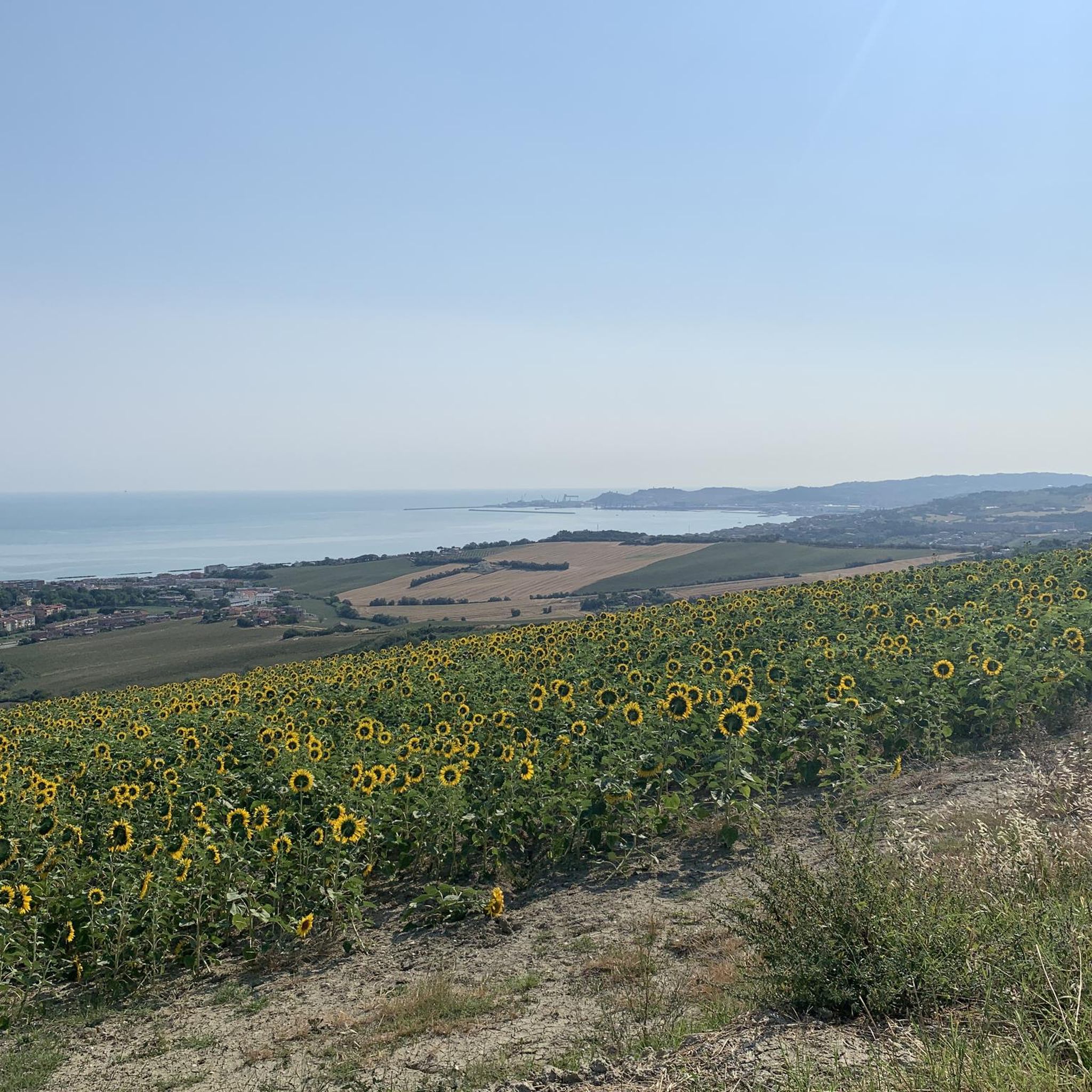
Beautiful view of the Ancona hills and the port
0
0
Definitely worth a visit
0
0
Frequently Asked Questions
What historical landmarks can I explore in Falconara Marittima?
Falconara Marittima boasts several historical sites. You can see the medieval Castello di Falconara Alta, which offers views of the coastline, or the historic Rocca Priora. Other notable sites include Castelferretti and Palazzo Mengoni - Ferretti, which now houses the Municipal Library.
Are there any significant religious sites to visit in the area?
Yes, the region has several religious buildings. The 15th-century Church of Santa Maria della Misericordia features late Romanesque style and 14th-century frescoes. Further afield, the Cathedral of San Ciriaco, built between the 11th and 13th centuries on Monte Guasco, offers wide views over land and sea.
What natural attractions are there in Falconara Marittima?
The town is known for its coastal beauty. You can visit the Spiaggia di Falconara Marittima, a long stretch of pebbly and sandy beach. The Passetto Beach is also popular, known for its rocky coast and dozens of colored fishermen's caves. The Lungomare di Falconara offers scenic strolls along the sea, and various public parks like Parco UNICEF provide green spaces.
What family-friendly activities are available in Falconara Marittima?
Families will enjoy the Parco Zoo Falconara, located in the inland hills, which is home to a variety of animals and focuses on conservation. The Spiaggia di Falconara Marittima is popular with families for swimming, and public parks like Parco UNICEF have playgrounds for children.
Where can I learn about the local history and culture?
For cultural insights, visit the Piero Pergoli Cultural Center, housed in a restored former elementary school. The Resistance Museum, located in the Falconara Alta castle, showcases artifacts and photographs of the Liberation. Additionally, the Franciscan Library hosts the International Franciscan Art Gallery.
What outdoor activities can I do near Falconara Marittima?
The area around Falconara Marittima offers various outdoor activities. You can explore hiking trails, go road cycling, or try mountain biking. For detailed routes and guides, check out the Hiking around Falconara Marittima, Road Cycling Routes around Falconara Marittima, and MTB Trails around Falconara Marittima guides.
Are there hiking trails available around Falconara Marittima?
Yes, there are several hiking opportunities. You can find easy to moderate hiking loops starting from various points like Montemarciano, Castelferretti-Falconara Aeroporto delle Marche, or directly from Falconara Marittima. For more information and specific routes, refer to the Hiking around Falconara Marittima guide.
Can I go cycling in the area?
Absolutely! Falconara Marittima is a great base for cycling. You can find road cycling routes, including panoramic roads and loops to nearby villages, as well as mountain biking trails. Explore options like the Monte Conero Panoramic Road or trails with river views. Detailed routes are available in the Road Cycling Routes around Falconara Marittima and MTB Trails around Falconara Marittima guides.
What is the best time to visit Falconara Marittima for outdoor activities?
The summer months are ideal for enjoying the beaches and seaside promenade. For hiking and cycling, spring and autumn offer milder temperatures, making outdoor exploration more comfortable. The Lungomare also hosts various events and festivals during the summer.
What is the Monument to the Fallen of World War I?
The Monument to the Fallen of World War I is a significant man-made monument located in Piazza IV Novembre in Ancona, near Falconara Marittima. Designed as a circular temple with a Doric order, it's made of Istrian stone and offers a beautiful view, connecting to Passetto beach below via a grand staircase.
Are there any central gathering places or squares in Falconara Marittima?
Piazza Mazzini is considered the pulsating heart of Falconara Marittima. Located in the city center near the train station, it connects to pedestrian avenues leading towards Piazza Garibaldi, making it a central hub for locals and visitors alike.
What is the Lungomare di Falconara?
The Lungomare di Falconara is the seaside promenade that runs parallel to the beach. It's a popular spot for evening strolls or bike rides, offering open sea views. The promenade is lined with cafes, ice cream shops, and seasonal market stalls, and often hosts music events, fairs, and food festivals during the summer months.
Most popular routes around Falconara Marittima

Get inspired with the komoot mobile app


Explore more
Still not found the Highlight you’re looking for? See guides of the top attractions in other regions:
