The best cycling routes around Santo Stefano D'Aveto
4.4
(67)
808
riders
42
rides
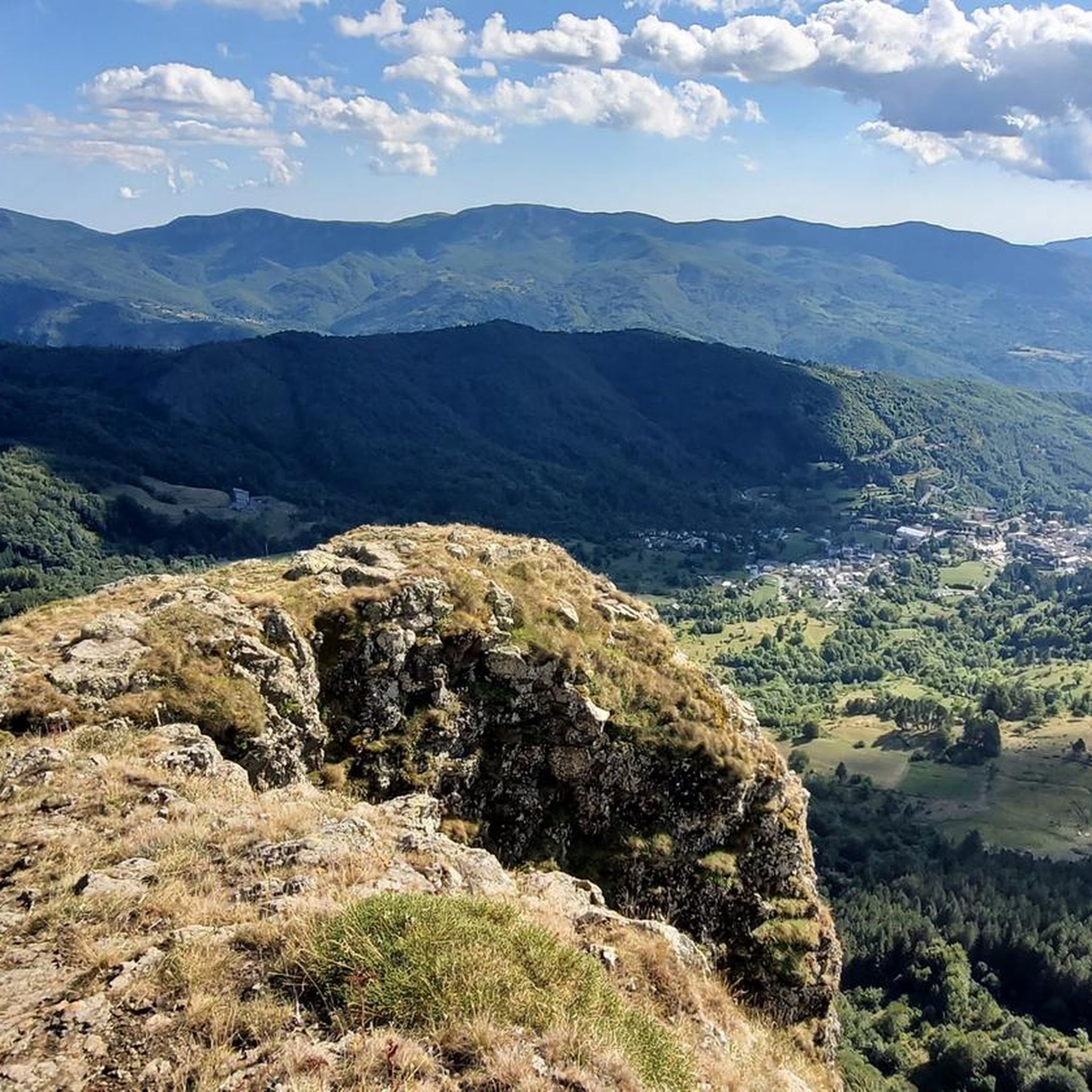
Touring cycling around Santo Stefano D'Aveto offers routes through the Aveto Valley, characterized by its position within the Aveto Natural Regional Park. The area features high peaks of the Apennine Mountains, including Monte Maggiorasca, surrounded by extensive chestnut, beech, and fir forests. Mountain passes such as Passo del Chiodo and Incisa Pass are prominent features, providing varied terrain for cyclists.
Best touring cycling routes around Santo Stefano D'Aveto
- The most popular touring cycling route is Rifugio Monte Penna – View…
Last updated: July 27, 2026
4.3
(4)
81
riders
42.5km
03:47
1,200m
1,200m
Hard bike ride. Very good fitness required. Mostly paved surfaces. Suitable for all skill levels.
4.7
(3)
32
riders
16.8km
01:47
450m
450m
Hard bike ride. Very good fitness required. You may need to push your bike for some segments of this route.

Sign up for free
29
riders
33.6km
03:11
880m
880m
Hard bike ride. Very good fitness required. Mostly paved surfaces. Suitable for all skill levels.
4.3
(4)
20
riders
48.0km
04:04
1,540m
1,540m
Hard bike ride. Very good fitness required. Mostly paved surfaces. Suitable for all skill levels.
4.0
(2)
14
riders
30.5km
02:16
650m
650m
Hard bike ride. Very good fitness required. Mostly paved surfaces. Suitable for all skill levels.
Get access to more routes and recommendations from other explorers.
Sign up for free
Already have an account?
Our route recommendations are based on thousands of hikes, rides, and runs completed by other people on komoot.
Start today with a free account
Your next adventure awaits.
Login or Signup
Other adventures around Santo Stefano D'Aveto

Tips from the Community

It is easily well marked along the forest road.
0
0
Beautiful hiking structure located at 1,400 meters, surrounded by beech trees and positioned on the border with the municipalities of Bedonia and Tornolo for the province of Parma, and Santo Stefano d'Aveto for the metropolitan city of Genoa. Too bad it is never open despite the structure being recent and in good condition.
0
0
Beautiful pass of the Ligurian Apennines located at 1,468 meters. Strategic point that offers various alternatives to start a walk or a long hike.
0
0
Pass of the Ligurian Apennines located at an altitude of 1,452 m, it is reachable by car and is a crossroads where various hiking trails branch off.
0
0
Born from the recovery of old barracks, it is a beautiful refuge where you can both eat and stay overnight. The location is stunning and makes it a must-stop when visiting these areas.
0
0

Pria Burgheisa (Pietra Borghese) is a massive outcrop of mantle peridotites, among the best-known and most significant in the area. It lies on the southwestern edge of the Prato Mollo plateau, on the southern slopes of Mount Aiona, at an altitude of 1,465 m. It is a geosite of considerable petrographic, mineralogical, and regional geological interest, allowing us to study the evolution of a portion of the lithospheric mantle subsequently involved in the Apennine orogeny. The outcrop has a highly irregular shape: 30 m long, 10 m wide at its maximum, and 7–8 m high. The rocks are dark in color, ranging from blackish to brownish; the mass is affected by three main fracture systems, more or less orthogonal to each other, which fragment it into numerous square-shaped blocks. The surface of the blocks has a pitted appearance, as the pyroxene crystals, more resistant to erosion than olivine, remain prominent. At the outcrop, mantle foliation is evident, due to the presence of frequent pyroxenite bands. Source: Liguria Geosite Registry.
0
0

A beautiful village perched in the Ligurian Apennines. It's worth stopping to see the well-preserved walls of the Malaspina Fieschi Doria Castle, for an excellent coffee at Bar Leon D'oro, and especially for the "Gobeletti" pastries from the Chiesa pastry shop.
0
0

The Rifugio Casermette del Penna (1,400 m) is located within the Aveto Park, in a beautiful beech forest at the foot of Mount Penna, where the Forestry Corps barracks once stood. Renovated sustainably using local wood, photovoltaic panels, and a biomass boiler, the refuge offers 25 beds in both rooms and dormitories, as well as home-cooked meals prepared using local produce. Today, it is a popular destination for hikers, families, and groups, thanks in part to the large green lawn in front of the building: in summer, it's ideal for relaxing in the sun, picnicking, or letting children play freely. The location is perfect for exploring the trails of Mount Penna, the Lago Penna loop, the Pennino forests, or tackling more technical climbs to the rocky peaks. In winter, it's an ideal base for snowshoeing and cross-country skiing.
0
0
Frequently Asked Questions
How many touring cycling routes are available around Santo Stefano D'Aveto?
There are over 40 touring cycling routes mapped on komoot around Santo Stefano D'Aveto. These routes primarily navigate through the Aveto Natural Regional Park, offering diverse terrain from dense forests to challenging mountain passes.
What kind of terrain can I expect on touring cycling routes in Santo Stefano D'Aveto?
The terrain around Santo Stefano D'Aveto is characterized by the Apennine mountains, featuring significant elevation gains and descents. You'll encounter routes winding through extensive chestnut, beech, and fir forests, as well as high mountain passes like Passo del Chiodo and Incisa Pass. While many routes are challenging, there are a few easier options available.
Are there any easy touring cycling routes suitable for beginners in Santo Stefano D'Aveto?
While most touring cycling routes in Santo Stefano D'Aveto are rated as difficult due to the mountainous terrain, there is one route classified as easy and two as moderate. These offer less strenuous options for those new to touring cycling or seeking a more relaxed ride through the Aveto Valley.
What are some notable natural features or viewpoints I can see along the cycling routes?
The region is rich in natural beauty. Along your rides, you might encounter stunning views from peaks like Monte Bue summit or Monte Aiona. Picturesque water features such as Black Lake and Lame Lake are also accessible. The routes often pass through dense forests and offer expansive views of the Apennine mountains.
Are there any circular touring cycling routes in the area?
Yes, many of the touring cycling routes around Santo Stefano D'Aveto are designed as loops. For example, the challenging Rifugio Monte Penna – View of Lago delle Lame loop from Monte Penna offers mountain landscapes and expansive views over 42.3 km. Another option is the Passo del Chiodo – Monte Penna Forest loop from Santo Stefano d'Aveto, which provides a scenic experience through dense forests.
What is the best time of year for touring cycling in Santo Stefano D'Aveto?
The warmer months are generally best for touring cycling in Santo Stefano D'Aveto. During winter, the Apennine mountains transform into a ski resort, with peaks like Monte Maggiorasca becoming popular for winter sports. For cycling, spring through autumn offers more favorable conditions, allowing you to enjoy the dense forests and mountain passes without snow and ice.
What do other touring cyclists enjoy most about the routes in Santo Stefano D'Aveto?
The touring cycling routes in Santo Stefano D'Aveto are highly rated by the komoot community, with an average score of 4.4 stars from over 60 reviews. Cyclists often praise the challenging mountain landscapes, the scenic rides through dense forests, and the rewarding experience of conquering the various mountain passes.
Are there any places to stop for refreshments or shelter along the routes?
Yes, the area features several huts and refuges that can serve as stopping points. You might find facilities near Bocco Pass, or at locations like Monte Penna Hut, Prato della Cipolla Hut, or Monte Aiona Refuge – Pratomollo. These can offer opportunities for rest and refreshments during your ride.
What are some of the prominent mountain passes featured in the touring cycling routes?
The touring cycling routes frequently incorporate several prominent mountain passes. Key passes include Passo del Chiodo, Incisa Pass, and Bocco Pass. For example, the Passo del Chiodo – Incisa Pass loop from Santo Stefano d'Aveto is a popular route that leads through these challenging mountain features.
Are there any historical or cultural landmarks to explore near the cycling trails?
Beyond the natural beauty, the village of Santo Stefano D'Aveto itself offers historical charm with traditional stone houses. You can visit the 12th-century Malaspina Castle or the Gothic-Tuscan style N.S. di Guadalupe Sanctuary. Additionally, some routes might pass by unique monuments like the Statue of the Madonna on Monte Penna.
Can I find routes that offer views of the Aveto Valley?
Absolutely. The entire region is situated within the Aveto Valley, and many routes are designed to showcase its beauty. The Tomarlo Pass – Passo del Chiodo loop from Rezzoaglio, for instance, offers extensive views of the valley and its surrounding peaks.
What is the typical elevation gain on touring cycling routes in Santo Stefano D'Aveto?
Given the mountainous terrain of the Apennines, touring cycling routes in Santo Stefano D'Aveto typically involve significant elevation gain. Many difficult routes feature over 1000 meters of ascent. For example, the Pietra Borghese – Passo del Chiodo loop from Santo Stefano d'Aveto includes over 1300 meters of elevation gain.
Most popular attractions around Santo Stefano D'Aveto

Get inspired with the komoot mobile app


Explore more
Browse the best Cycling routes in other regions.
