Attractions and Places To See around Crescentino - Top 20
Best attractions and places to see around Crescentino, a town in Piedmont, Northern Italy, offers a blend of historical landmarks, cultural sites, and natural beauty. Situated at the confluence of the Po and Dora Baltea rivers, its landscape and history are distinct. Visitors can explore ancient fortresses, significant religious sites, and areas of natural interest. The region provides a variety of points of interest for exploration.
Best attractions and places to see around Crescentino
- The most popular attractions is Camino Castle, a castle known for its crenellated walls and towers. This historic fortress offers panoramic views and is associated with local legends.
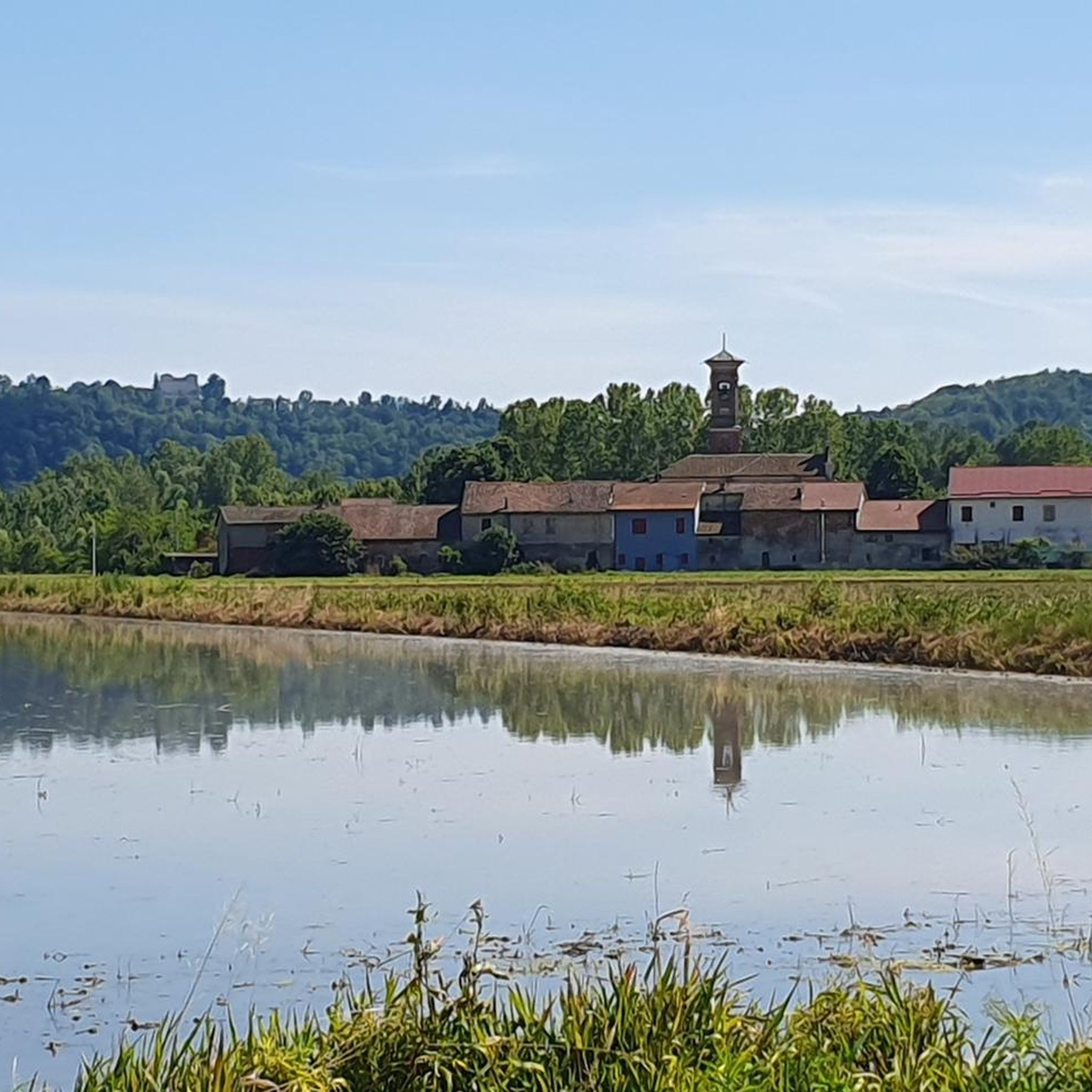
- Another must-see spot is Principality of Lucedio, a historical site where Cistercian monks reclaimed land and introduced rice cultivation in Italy. Visitors can explore this former abbey, which blends history with a sense of mystery among the rice fields.
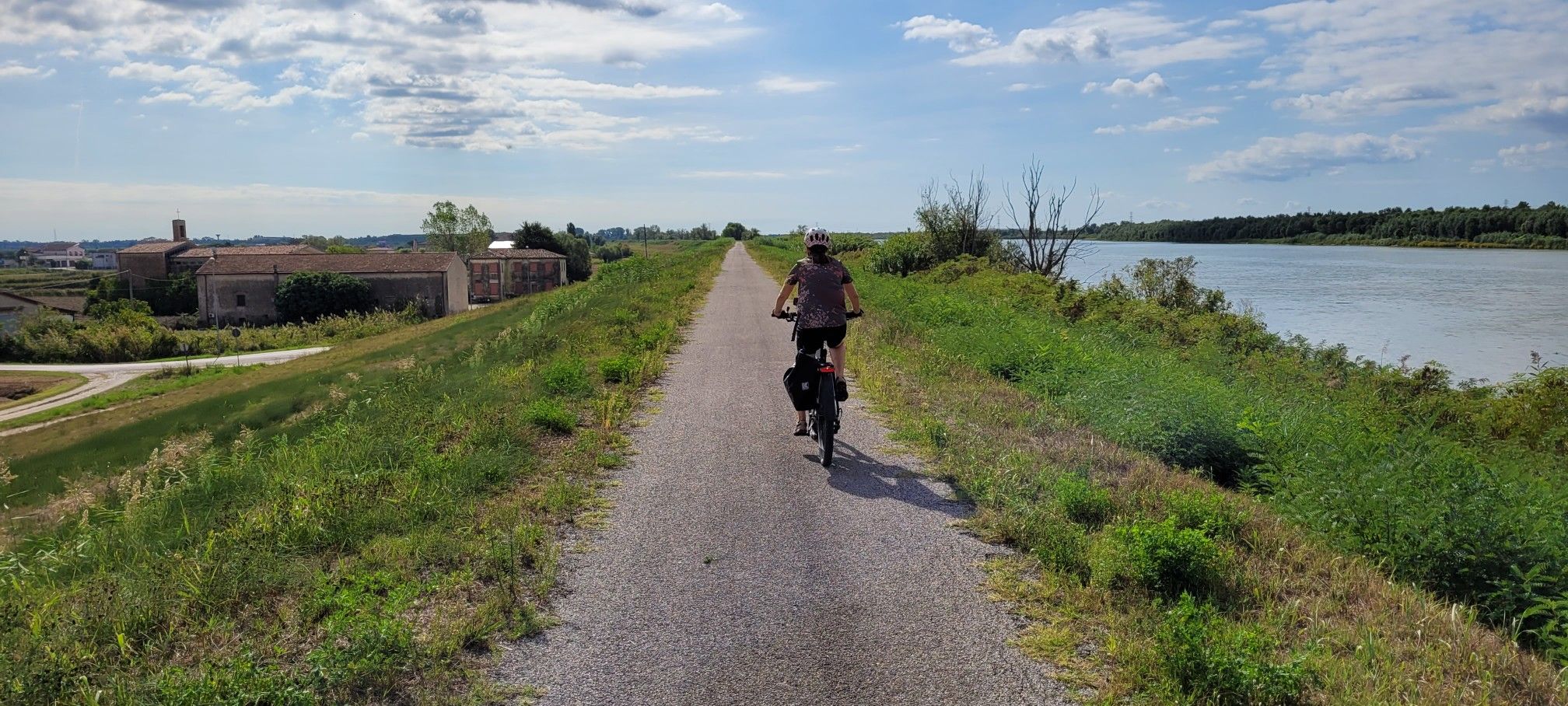
- Visitors also love Cavour Canal, an other man-made canal built to draw water from the Po River for irrigation. Its banks are largely accessible by bicycle, offering a route for exploration.
- Crescentino is known for its historical sites, religious buildings, and significant man-made structures. The area offers a variety of attractions to see and explore, from ancient castles to important agricultural infrastructure.
- The attractions around Crescentino are appreciated by the komoot community, with more than 40 upvotes and 10 photos shared.
Last updated: May 11, 2026
Camino Castle
Highlight • Castle
As with many ancient buildings in Italy, there are many legends about the castle of Camino. One of the most recurrent narrates that in the year 1494, Count Scarampo Scarampi, feudal lord of the Marquis of Monferrato, was accused of making forays into neighboring villages causing problems such as thefts and fires. After a long siege of the castle, which lasted two months, it was captured by the militias of Costantino Aranite, prefect of Casale.
His wife, the Marquise Camilla, managed to escape from a secret passage and reach Casale to ask for a safe conduct for her husband's life. Scarampo Scarampi, however, had already been beheaded by those who had imprisoned him. When she learned of her husband's sad fate, out of desperation, the Marquise Camilla threw herself from the tower. Now, she walks around the battlements of the castle crying, while her husband walks around the manor with his head in his hand.
Legend aside, in the inner courtyard of the castle of Camino there is the sarcophagus of the noble Scarampo, depicted at rest holding his head with his left hand.
Translated by Google •
Tip by

Principality of Lucedio
Highlight • Historical Site
Translated by Google •
Tip by

Sign up now to discover places like this
Get recommendations on the best single tracks, peaks, & plenty of other exciting outdoor places.
Sign up for free
Church of the Most Holy Name of Mary (Our Lady of the Vines)
Highlight • Religious Site
Translated by Google •
Tip by
Leri ghost town
Highlight • Settlement
In the prolific Piedmont, in the province of Vercelli, stands the old town of Leri Cavour, a very important grange in the area, at least until a few years ago.
The name comes from the presence of the family of Camillo Benso Conte di Cavour and also famous for the presence of the nearby power station.
The area was initially marshy and unsuitable for human settlement, but the Cistercian monks, in the 11th century, reclaimed it making it livable; less than a century later the area was widely exploited for cultivation and breeding and there was an imposing structure used as a farm.
This piece of history of the Vercelli countryside is very interesting, as mentioned it is located in the immediate vicinity of the Galileo Ferraris thermoelectric plant, one of the many punches in the stomach from the landscape point of view present in the area, but, despite this, it is surrounded by greenery and calm.
The buildings that you encounter while walking among its ruins are those typical of a huge agricultural plant, such as stables, barns and granaries; obviously there are the workers' houses, the church (1718-1720) and an old mill. Certainly the place of greatest interest is the one where the Cavour family lived, a splendid two-storey villa with entirely frescoed ceilings; each room had an intricately decorated fireplace and rich finishes throughout the house.
The abandonment of the place is not an easy thing to define, because undoubtedly during the 1960s there was a first phase of depopulation of the village due to the advent of industry and the industrial process linked to agriculture.
In the 1980s the village remained alive thanks to the employees of the nearby thermoelectric plant who had decided to live there being very close to the place of work.
In the 90s something still survived in Leri, but it was only a few jolts, because in the 90s there will be nothing more alive among those streets.
Given the recent actual abandonment, it is not the typical abandoned place with the vegetation that has already attacked the walls and buildings, everything is still quite in order, as if someone still lived there.
paesifantasma.it
Translated by Google •
Tip by

Cavour Canal
Highlight • Structure
Translated by Google •
Tip by

Sign up for free to discover even more attractions around Crescentino.
Sign up for free
Already have an account?
Start today with a free account
Your next adventure awaits.
Login or Signup

Other adventures around Crescentino

Tips from the Community

Nestled among centuries-old trees, Camino Castle dominates the ancient village from above and contributes to one of the most easily recognizable hilltop profiles of the Lower Monferrato.
0
0

Open on Sundays only (May 2024)
0
0

Canal built to support agriculture and rice fields, it was commissioned by Count Camillo Benso di Cavour
0
0

the church of the most holy name of Mary belonged to the complex of the Lucedio Abbey. today it is abandoned and it is not possible to enter. on the side there is a window from which I took some photos of the interior. Be very careful in summer because I noticed that on the side of the church there is a large nest of wasps or hornets, I can't tell because it is really very high up. the photos you see were taken at the end of February.
0
1

Beautiful, very large. In excellent condition as it is used
0
0

Built shortly after the proclamation of the unification of Italy, the Cavour canal was used to draw water from the Po near Chivasso for the irrigation of cultivated fields and in particular rice paddies. 83 kilometers long, it ends in Ticino in Novara. Its banks are mostly accessible by bicycle on a dirt road.
1
0

Canal that starts from Chivasso and ends on the Ticino (Galliate) Cycle path along the embankment for a good part, along the AIDA (upper Italy to cross) you pass along the canal from Chivasso for about ten km. and again shortly after Novara up to Ticino.
1
1

It was founded in 1123 by Cistercian monks from Burgundy who reclaimed the territory, being the first to introduce the cultivation of rice into Italy in the mid-1400s. The Principality of Lucedio can be visited by the public, according to the calendar indicated on the "Visit Lucedio" https: //www.principatodilucedio.it/it/
3
0
Frequently Asked Questions
What historical sites can I visit in and around Crescentino?
Crescentino and its surroundings are rich in history. You can explore the medieval Camino Castle, known for its crenellated walls and fascinating legends. The Principality of Lucedio, a former Cistercian abbey, offers a glimpse into early rice cultivation in Italy and holds a sense of mystery. Don't miss the 14th-century Civic Tower in Crescentino's town center, or the Sanctuary of the Madonna del Palazzo, rebuilt on ancient ruins.
Are there any natural attractions or reserves near Crescentino?
Yes, the area boasts several natural points of interest. The St. Maria Island Nature Reserve (Riserva Naturale Isola S. Maria) within the Po River Park is excellent for birdwatching. The St. Januarius marsh (Palude di San Genuario) preserves an important wetland system and ancient lowland forest. You can also find serene spots like Lake Ceresio and the picturesque Valley di Lunghini with its dense forests and clear streams.
What are some unique or lesser-known places to see around Crescentino?
For a unique experience, visit the Leri ghost town, an abandoned agricultural settlement with historical ties to the Cavour family. Another intriguing spot is the deconsecrated Church of the Most Holy Name of Mary (Our Lady of the Vines), a 17th-century church surrounded by legends and in a state of atmospheric abandonment.
Can I find cycling routes near Crescentino's attractions?
Absolutely! The banks of the Cavour Canal, an 83-kilometer historical irrigation canal, are largely accessible by bicycle on a dirt road, offering a scenic route. For more dedicated cycling adventures, you can explore various routes like the 'View of Monferrato and Trino loop' or the 'Bridge over the Po at Crescentino loop'. Find more options on the Cycling around Crescentino guide.
Are there hiking or running trails available?
Yes, the region offers trails for both hiking and running. The Valley di Lunghini provides a serene journey for walkers through dense forests. For specific running routes, you can find options like 'Running loop from Crescentino' or 'Saluggia Town Center loop'. Discover more detailed running trails in the Running Trails around Crescentino guide.
What about mountain biking opportunities near Crescentino?
Mountain biking enthusiasts will find several trails around Crescentino. Routes such as 'Big Bench – Giant Bench La Rul Verda loop' and 'Cantavenna viewpoint – Cantavenna Monastery loop' offer varying distances and difficulties. Explore more MTB trails in the MTB Trails around Crescentino guide.
Are there any family-friendly attractions in the area?
Many of the natural areas, such as Lake Ceresio and the St. Maria Island Nature Reserve, are suitable for family outings and picnics. The Principality of Lucedio, with its historical significance and rice fields, can also be an engaging visit for families interested in history and agriculture.
What is the best time of year to visit Crescentino?
Crescentino offers seasonal beauty throughout the year. Spring brings blossoms, summer provides warm weather for outdoor activities and sunsets, autumn showcases vibrant foliage, and winter can offer snowscapes. The Cavour Canal's banks are largely accessible year-round for cycling. For hiking, spring and autumn generally offer the most pleasant temperatures.
Can I find accommodations or places to eat near the attractions?
While specific accommodations and restaurants are not detailed for each attraction, Crescentino itself has a town center with amenities. The region, being in Piedmont, is known for its agriturismi (farm stays) which often include restaurants, providing local culinary experiences. The vibrant Piazza del Mercato in Crescentino hosts weekly markets for local produce and goods.
Are there any regulations for visiting nature reserves with dogs?
Specific regulations for dogs in the St. Maria Island Nature Reserve (Riserva Naturale Isola S. Maria) and the St. Januarius marsh (Palude di San Genuario) should be checked locally upon arrival or through official regional park websites. Generally, dogs are often permitted on leash in many natural areas, but restrictions may apply in protected zones to safeguard wildlife.
What is the significance of the Via Francigena in Crescentino?
Crescentino is situated along the historic Via Francigena, an important European pilgrimage route that stretches from Canterbury to Rome. This ancient path connects the town to a broader historical and cultural network, making it a point of interest for those following or interested in the pilgrimage route.
Most popular routes around Crescentino
Most popular attractions around Crescentino

Get inspired with the komoot mobile app


Explore more
Still not found the Highlight you’re looking for? See guides of the top attractions in other regions:
