The best road cycling routes around Schweiggers
4.1
(5)
138
riders
32
rides
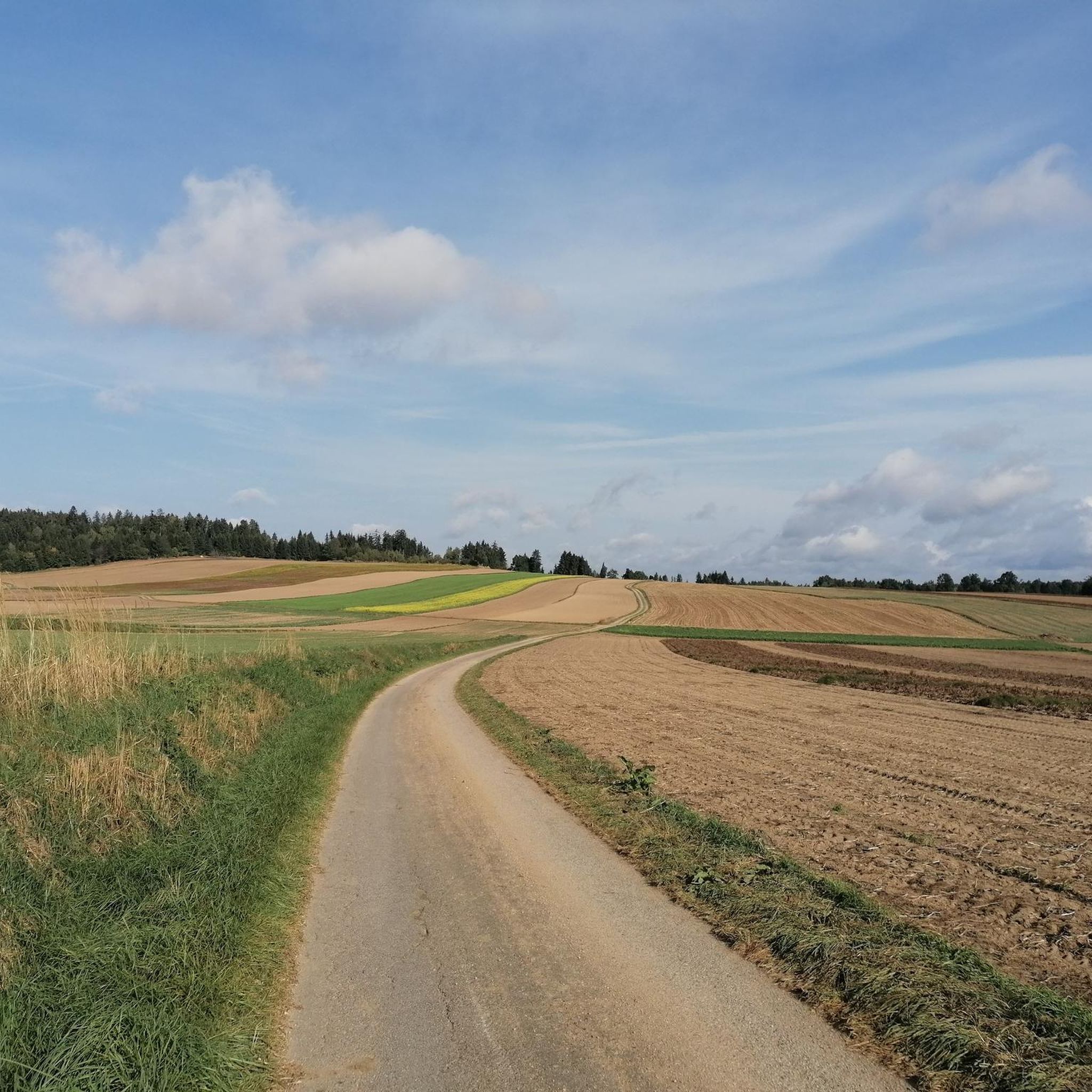
Road cycling routes around Schweiggers are characterized by gentle hills and verdant valleys within the Waldviertel region of Lower Austria. The landscape offers a mix of ascents and descents, providing varied terrain for cyclists. This area features extensive forests and romantic river valleys, including the origin of the German Thaya river. The well-developed cycling infrastructure supports exploration of these natural features.
Best road cycling routes around Schweiggers
- The most popular road cycling route is Parish Church of Schweiggers loop from…
Last updated: May 20, 2026
20
riders
Moderate road ride. Good fitness required. Mostly well-paved surfaces and easy to ride.
5.0
(1)
16
riders
60.4km
03:05
870m
870m
Moderate road ride. Good fitness required. Mostly well-paved surfaces and easy to ride.

Sign up for free
8
riders
52.5km
02:34
720m
720m
Moderate road ride. Good fitness required. Mostly well-paved surfaces and easy to ride.
8
riders
25.3km
01:08
230m
230m
Easy road ride. Great for any fitness level. Mostly well-paved surfaces and easy to ride.
6
riders
67.8km
03:32
1,090m
1,090m
Hard road ride. Very good fitness required. Some segments of this route may be unpaved and difficult to ride.
Get access to more routes and recommendations from other explorers.
Sign up for free
Already have an account?
Our route recommendations are based on thousands of hikes, rides, and runs completed by other people on komoot.
Start today with a free account
Your next adventure awaits.
Login or Signup
Tips from the Community

Arbesbach Castle is a top highlight that you should definitely plan a visit to. Even from a distance, you can recognize the so-called "Waldviertel's fang" (Stockzahn des Waldviertels). Once you arrive at the site, 126 steps lead up to the entrance where admission (currently €2.50) is payable in coins or by card. Then it continues inside upwards to the platform, which offers a fantastic view. There is also a circular path around the tower, which however requires some surefootedness and suitable shoes.
0
0

The Zwettl City Museum is a modern museum designed to appeal to both children and adults! We don't just want to preserve history, but to present it in an engaging, memorable, informative, and interesting way. Therefore, this museum is designed according to the latest museum education principles. All activities are geared towards achieving this goal. The museum features a model of the city where visitors can modify all the elements—houses, city walls, and bridges. With the help of instructions, the city's development from its founding in the 12th century to the 20th century can be traced. In addition to the most important documents of the city of Zwettl, the collection includes numerous weapons, among them original "Kuenringer weapons" from the 13th century, which were discovered during excavations in Zwettl.
0
0
The City Museum – Enriched with Many Attractions On Saturday, June 21, 2003, the Zwettl City Museum, redesigned as part of the "Urban Renewal in Lower Austria" initiative, celebrated its reopening. During the interior renovation, new spaces for the City Museum were created in the attic. Part of these rooms is dedicated to the theme of "Collecting" and houses the exhibits of the "Anton Collection" in a permanent display. Among the exhibited objects are numerous unique pieces and outstanding works of art, such as a Romanesque Madonna and precious glass rarities from the Baroque period. In addition to the exhibition spaces for the "Anton Collection," a generously sized room was also created for special exhibitions. The old wooden framework of the roof truss remains almost entirely visible and contributes significantly to the ambiance of the newly created exhibition spaces.
0
0
The local authorities succeeded in persuading the master artist Hundertwasser to design and construct a fountain in the main square. The presentation of the fountain model met with both widespread approval and vehement opposition from the residents of Zwettl. In 1994, the fountain, consisting of three main elements—the two fountain columns with basins and the pavilion—was unveiled to the public. Since then, it has been a popular meeting place in the heart of the town. Friedensreich Hundertwasser died in February 2000 at the age of 71.
0
0
Until the end of the 19th century, a monumental fountain stood in the middle of the main square, the terminus of Zwettl's oldest water supply system, dating back to the early 17th century; a place where the population gathered, not just to fetch water. A war memorial was erected here in 1925, and from the mid-20th century onward, the square in the heart of the town was primarily used as a park. In the early 1990s, the municipality of Zwettl decided to redesign the main square. The aim was to give the town an attractive central point once again and thus preserve the tradition of the old Zwettl main square for the present and future. Friedensreich Hundertwasser, born Friedrich Stowasser in 1928, had owned an old mill on the banks of the Kamp River above Zwettl since the 1970s.
0
0
The Renaissance graffiti were only rediscovered in 1976. During the restoration of the paintings, which took place in 2002, the Zwettl-based academic conservator Ralf Wittig strove for the greatest possible fidelity to the original. From 1850 to 1975, the Old Town Hall housed the district court and the land registry office. Today, the Old Town Hall houses the Zwettl Tourist Information Center as well as the noteworthy City Museum with its permanent exhibition, the "Anton Collection." Museum education programs for children and adults are also offered.
0
0
The building is one of the oldest secular buildings in the city and certainly dates back to the time of the Kuenring family. As early as 1307, it was remodeled and expanded by Leuthold I of Kuenring-Dürnstein. After Leuthold's death (1312), it passed into the ownership of the Liechtenstein family and then the Puchheim family, who sold the "manor house" to the city. From that time until 1850, it served as the town hall. In 1549/50, a square tower was erected on the front facade, behind whose round gateway the older, beautifully profiled Gothic pointed arch portal can still be seen. During the construction of this tower addition, the front facade was decorated with sgraffito, which refers to the building's function as the seat of the municipal administration and the city court. In 1678, the two lateral buttresses were added to the building – probably for structural reasons. The Old Town Hall was subsequently rebuilt and its facade changed several times, including after the city fires of 1772 and 1814.
0
0

The village was first mentioned in 1246 and was originally owned by the Kuenring line of Weitra-Rappottenstein. In 1282, the estate passed to the Lords of Falkenberg, and in 1291 to Ulrich von Kapelln. In the 14th century, Arbesbach is mentioned as a freehold property. From 1326 to 1348, it was owned by the Lords of Klingenberg, who in 1347 mortgaged "the castle and the house at Arbesbach" to Weikart and Katharina von Winkl. From 1348, Arbesbach was owned by the Lords of Dachsberg, and from 1423 by the Lords of Starhemberg. In 1480, the castle was destroyed by a Bohemian raiding party and was not rebuilt. In 1600, the estate passed to the Lords of Tschernembl, and in 1604 to Georg Fenzl von... Grueb and as early as 1605 to Georg Kaspar von Neuhaus. From 1614 owned by the Lords von Hackelberg, from 1675 to 1862 by the Countess Dietrichstein. Afterwards, it passed to the Herberstein, Geusau, and Baron Holtz families, and from 1877 onwards to the Altzinger family, who still own the estate today and reside in part of the castle complex. Text by G.R., K.Ki.
2
0
Frequently Asked Questions
What is the general terrain like for road cycling around Schweiggers?
The landscape around Schweiggers, located in the Waldviertel region, is characterized by gentle hills and verdant valleys. This undulating topography offers a mix of challenging ascents and enjoyable descents, making it accessible to various fitness levels without being overly mountainous. You'll also encounter extensive forests and romantic river valleys.
Are there easy road cycling routes suitable for beginners in Schweiggers?
Yes, Schweiggers offers several easier road cycling options. For instance, the Parish Church of Schweiggers loop from Schweiggers is an easy 25.6 km route with about 240 meters of elevation gain, perfect for less experienced cyclists or a relaxed ride. Overall, there are 3 easy routes available in the area.
What are some of the more challenging road cycling routes near Schweiggers?
For experienced road cyclists seeking a challenge, Schweiggers offers several difficult routes. The Nebelstein trailhead, parking lot – Moorkugel loop from Schweiggers is a difficult 67.8 km trail with over 1090 meters of elevation gain, leading through forested areas and open landscapes. In total, there are 13 difficult routes in the region.
What kind of cycling infrastructure can I expect in the Schweiggers region?
The Waldviertel region, including Schweiggers, is known for its excellent cycling infrastructure. You'll find well-paved surfaces on most routes, contributing to a smooth road cycling experience. The routes are generally well-signposted, and the area features cyclist-friendly amenities and businesses, making it an ideal destination for cycling.
Are there any interesting cultural or historical sights along the road cycling routes?
Yes, road cycling routes around Schweiggers often pass by cultural and historical points of interest. You might encounter the Gmünd Town Square, the Plague Column at the main square in Zwettl, or the Parish Church in Schweiggers itself. The broader region also features Zwettl Abbey.
What scenic viewpoints or natural attractions can I discover while road cycling?
The region offers several scenic viewpoints and natural attractions. You can visit the Blockheide Observation Tower or the Himmelsleiter Observation Tower (Hochmoor Schrems Nature Park) for panoramic views. The area is also home to natural features like the origin of the German Thaya river and the Schrems High Moor.
Are most road cycling routes around Schweiggers circular?
Many of the road cycling routes in Schweiggers are designed as loops, allowing you to start and end your ride in the same location. Examples include the Gmünd Town Square – Center of Zwettl loop and the Rosenau Castle – Arbesbach Castle Ruins loop, providing convenient options for exploration.
What do other road cyclists enjoy most about cycling in Schweiggers?
The road cycling routes in Schweiggers are highly rated by the komoot community, with an average score of 4.0 stars from 4 reviews. Cyclists often praise the varied terrain, which offers a good mix of ascents and descents, and the picturesque Waldviertel landscape with its extensive forests and charming valleys.
How long are the road cycling routes typically around Schweiggers?
The road cycling routes around Schweiggers vary in length to suit different preferences. You can find shorter rides like the 25.6 km Parish Church of Schweiggers loop, or longer, more challenging routes such as the 67.8 km Nebelstein trailhead, parking lot – Moorkugel loop. Many routes fall in the moderate 50-60 km range, like the 55.6 km Gmünd Town Square – Center of Zwettl loop.
When is the best time of year for road cycling in Schweiggers?
The undulating topography and varied terrain of Schweiggers make it suitable for road cycling across multiple seasons. Spring and autumn generally offer pleasant temperatures and beautiful scenery. While specific winter conditions can vary, the region is typically best enjoyed from late spring through early autumn for optimal weather and road conditions.
Are there any specific long-distance road cycling challenges in the wider Waldviertel region?
Yes, for those seeking a significant challenge beyond the local routes, the broader Waldviertel region offers the demanding Waldviertel Cycle Route. This is a 365-kilometer circular tour with over 4,000 meters of elevation gain, typically completed over five to seven days, providing an extensive multi-day adventure.
Most popular routes around Schweiggers
Most popular attractions around Schweiggers

Get inspired with the komoot mobile app


Explore more
Browse the best Road cycling routes in other regions.
