Attractions and Places To See around Chiusano Di San Domenico - Top 20
Attractions and places to see around Chiusano Di San Domenico, a town on the slopes of Mount Tuoro in the province of Avellino, Campania, offer a blend of historical, cultural, and natural sites. The area's history includes Roman and Lombard influences. Visitors can explore ancient landmarks, religious buildings, and natural features like chestnut groves and vineyards. This region provides opportunities for discovering its past and enjoying its diverse landscapes.
Best attractions and places to see around Chiusano Di San Domenico
- The most popular attractions is Sanctuary of the Most Holy Savior of Serino, a religious building entirely dug into the rock and adapted for liturgical use. It is believed to have been excavated around the end of 1300 by a Benedictine religious community.
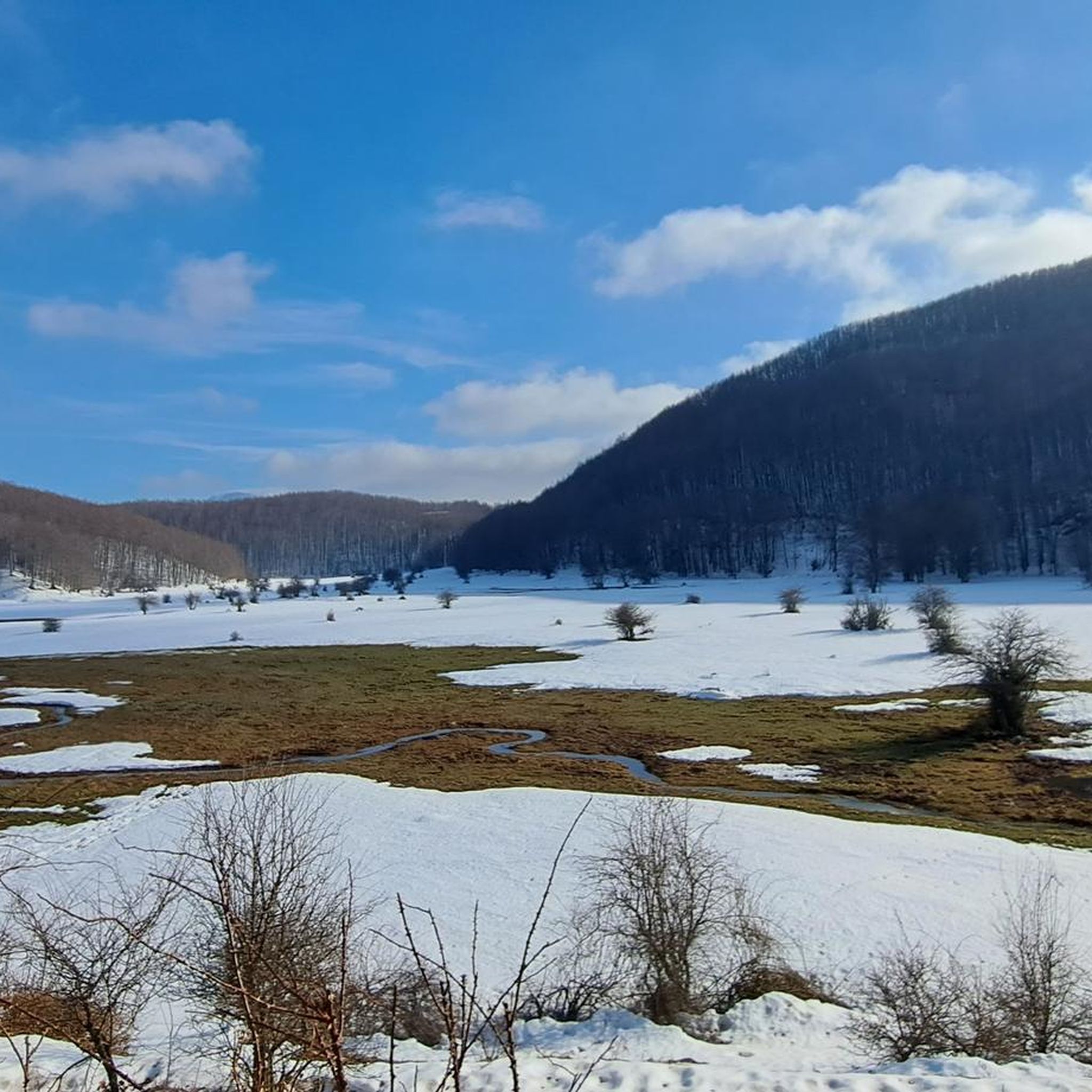
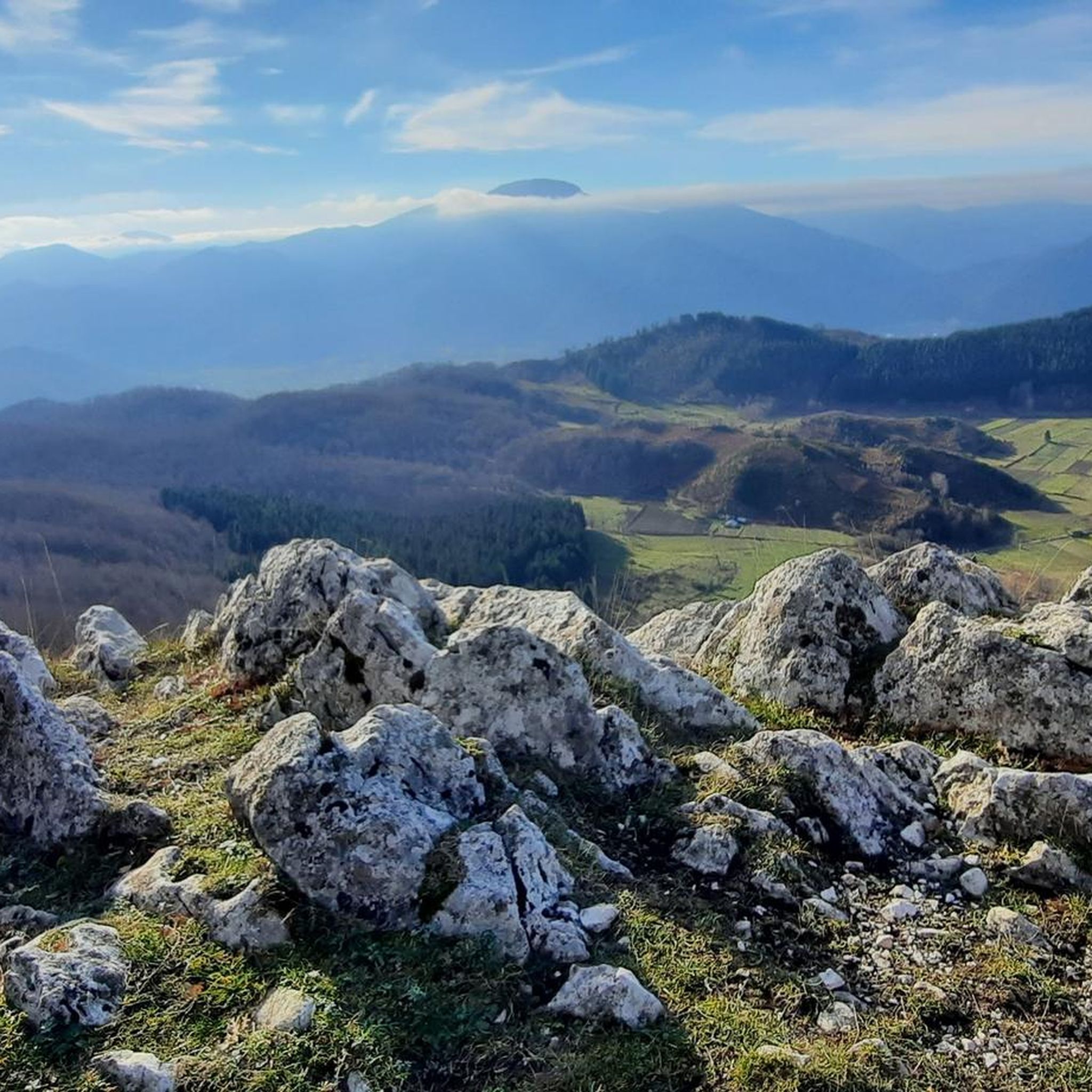
- Another must-see spot is Piano di Verteglia, a natural plateau. This area serves as a grazing place for herds in summer and offers scenic views.
- Visitors also love Monumental Complex of the Mount (Church, Monastery, and Castle of Montella), a historical site featuring a 10th-century Lombard castle, a church, and a monastery. Excavations have revealed finds from Lombard and early medieval times.
- Chiusano Di San Domenico is known for its historical sites, religious buildings, and natural landscapes. Visitors can explore ancient ruins, serene natural areas, and significant religious structures.
- The attractions around Chiusano Di San Domenico are appreciated by the komoot community, with 14 upvotes and 66 photos shared.
Last updated: May 21, 2026
Sanctuary of the Most Holy Savior of Serino
Highlight • Religious Site
The cave seems to have been excavated around the end of 1300 by a Benedictine religious community that resided at the time in the Abbey of Cerreto. Inside are the statues of the Holy Savior and of San Michele Arcangelo.
The Grotta del SS. Salvatore was formerly called the cave of the Angel or of San Michele. It is located, together with other caves, on what is called the path of the Angel. It is flanked by a hermitage that served as a refuge for pilgrims and all visitors who took the arduous path that led to the cave, reachable in about 3 hours of walking.
Translated by Google •
Tip by

Church of Saint Mary of the Snow
Highlight • Religious Site
Translated by Google •
Tip by
Sign up now to discover places like this
Get recommendations on the best single tracks, peaks, & plenty of other exciting outdoor places.
Sign up for free
Monumental Complex of the Mount (Church, Monastery, and Castle of Montella)
Highlight • Historical Site
Translated by Google •
Tip by
Dragon Plain
Highlight • Natural Monument
In more scientific terms it is a karst sinkhole, a sort of precipice that opens on the slopes of Monte Costa, formed after the earthquake of 1456, capable of holding about nine hundred liters of water and which constitutes the focal point of the "Bocca del Dragone ”from which the underground hydrographic network begins.
Translated by Google •
Tip by

Church of the Most Holy Rosary (Chiesa del Santissimo Rosario), Avellino
Highlight • Religious Site
It overlooks Corso Vittorio Emanuele II, and is governed by the Dominican fathers, who reside in the adjacent convent. Inside, various valuable works and stained glass windows, restored.
Translated by Google •
Tip by
Sign up for free to discover even more attractions around Chiusano Di San Domenico.
Sign up for free
Already have an account?
Start today with a free account
Your next adventure awaits.
Login or Signup

Tips from the Community

Few people know that this church was located in Piazza Libertà at the beginning of the 1900s...
4
0

Church of the SS.mo Rosario built in 1942 in Gothic style, overlooks the main street of Avellino.
0
0

Really suggestive place that deserves to be visited.
4
0
It can be visited by reservation only.
5
0

The monumental complex of the Monte, consisting of a church, monastery, archaeological garden and castle, rises just above Montella, a small town in the heart of the green Irpinia. Of great historical interest is the site of the 10th century Lombard castle with the adjacent settlement dating back to the 6th-7th century. Excavations conducted in the 1980s have brought to light finds from the Lombard and early medieval times, including coins and fragments of frescoes, as well as burials dating back to the same period. Today the central body (tower or donjon), the surrounding walls and the ruins of the rooms of the nobility are visible. In 1293 Charles II of Anjou confiscated the castle to make it a place for recreation. King Charles II was responsible for the construction of the cistern and the water channeling system. In the fourteenth century, at the behest of the d'Aquino, feudal lords of Montella, the twelfth-century tower was renovated and works to improve the building were carried out, with the creation of pictorial decorations. The castle was inhabited by the Cavaniglia counts in the 15th century, and during their lordship it hosted a memorable hunting expedition in 1445 in which King Alfonso the Magnanimous took part. The church has a single nave with side chapels. The wooden altars are of great value. In one of the side chapels there is an important thirteenth-century wooden altarpiece depicting the "Madonna dell'umiltà". The monastery was built between 1554 and 1586 on the pre-existing church at Monte di Pietà, by the Monte di Pietà di Montella, founded and administered by the Congrega del SS. Sacrament of Montella. It was entrusted to the Minimi Reformed Conventuals of S. Francesco replaced in 1603 by the reformed Observants. In 1613 a community of 12 fathers and several lay brothers lived in the convent. The feudal lord Antonio Grimaldi, in 1642, donated the garden adjacent to the convent, former dependence of the castle, to the Monte di Pietà. It has undergone several changes over the centuries: the structure has a square plan and the typical cloister with cross vaults frescoed in the seventeenth century by Michele Ricciardi. Completely recovered and made usable, the upper floors could be used for spiritual retreats, while it is still possible to visit the cells. The lower rooms, where the life of the friars took place, can be visited in full by taking advantage of the routes prepared also by means of illustrative panels present in each area. The convent garden is located in the open space adjacent to the castle; it has been recovered and the same crops from the Middle Ages that gave sustenance to the monks have been planted there. The entire monumental complex of the Monte, restored and open to visitors, is the property of the Santissimo Sacramento di Montella Archconfraternity
17
0
Beautiful sanctuary carved into the rock! Stunning panoramic view
3
0
On the slopes of Mount Terminio, in the territory of Serino, there is the ancient sanctuary of the Santissimo Salvatore, entirely dug into the rock and adapted for liturgical and residential use for a small hermit community. The cave seems to have been excavated around the end of 1300 by a Benedictine religious community that resided at the time in the Abbey of Cerreto. Inside are the statues of the Holy Savior and of San Michele Arcangelo. The Grotta del SS. Salvatore was formerly called the cave of the Angel or of San Michele. It is located, together with other caves, on what is called the path of the Angel. It is flanked by a hermitage that served as a refuge for pilgrims and all visitors who took the arduous path that led to the cave, reachable in about 3 hours of walking.
23
0
The Church of the Rosary is located on the main street of Avellino, a completely pedestrian area, to the right of its entrance there is a water source
5
0
Frequently Asked Questions
What historical sites can I explore in and around Chiusano di San Domenico?
The region is rich in history, with sites dating back to Roman and Lombard times. You can visit the ruins of the Lombard Castle on Mount San Domenico, which was a central point in the 11th century. Another significant historical site is the Monumental Complex of the Mount (Church, Monastery, and Castle of Montella), featuring a 10th-century Lombard castle and archaeological finds. The Sanctuary of the Most Holy Savior of Serino, an ancient sanctuary dug into rock, also offers a glimpse into the area's past.
Are there any natural attractions or scenic viewpoints in the area?
Yes, Chiusano di San Domenico is situated on the slopes of Mount Tuoro, offering picturesque views. The Piano di Verteglia is a beautiful natural plateau known for its scenic vistas and karst phenomena. You can also discover the Dragon Plain, a unique karst sinkhole with a local legend, offering another interesting natural viewpoint.
What religious buildings are notable in Chiusano di San Domenico?
The area features several significant religious sites. The Sanctuary of the Most Holy Savior of Serino is a unique ancient sanctuary entirely dug into rock. In Avellino, the Church of the Most Holy Rosary, built in neo-Gothic style, is also a notable religious building. Within Chiusano itself, you can find the Church of San Domenico, the Church of Santa Maria degli Angeli with its imposing bell tower, and the Hermitage of Santa Maria della Valle.
What kind of outdoor activities can I do near these attractions?
The region offers various outdoor activities, especially for cycling and running. You can find numerous road cycling routes, such as the 'Sanctuary of Montevergine – Liberty Square, Avellino loop', or explore the area on a touring bicycle with routes like 'Parco Santo Spirito – Ruins of Avellino Castle loop'. For runners, there are trails like 'Palazzo Antica Dogana – Castello Longobardo loop'. You can find more details on these activities in the dedicated guides for Road Cycling, Cycling, and Running Trails around Chiusano Di San Domenico.
Are there family-friendly attractions or activities in the area?
Yes, several spots are suitable for families. The Piano di Verteglia is a natural plateau with open spaces, perfect for enjoying nature and observing grazing herds. The Church of the Most Holy Rosary in Avellino is also considered family-friendly. The region's chestnut groves and vineyards offer pleasant, gentle walks for all ages.
What trekking and hiking opportunities are available on Mount Tuoro?
Mount Tuoro, where Chiusano di San Domenico is located, serves as an excellent starting point for trekking. The area provides various trekking opportunities, including trails like "Tuoro Extreme" and "House of the Mountain." The path to the Sanctuary of the Most Holy Savior of Serino is also a notable hike, though parts of it can be challenging.
What are the local agricultural features of the Chiusano di San Domenico region?
The local environment is characterized by lush chestnut groves and tidy rows of vineyards. These vineyards are known for producing popular wines such as Aglianico, Falanghina, Coda di Volpe, and Greco, reflecting the rich agricultural heritage of the area.
Can I visit the Lombard Castle in Chiusano di San Domenico?
The remains of the Lombard Castle are perched on Mount San Domenico, offering a glimpse into the town's medieval past. For a more extensive experience with Lombard history, the Monumental Complex of the Mount (Church, Monastery, and Castle of Montella), which includes a 10th-century Lombard castle, is open to visitors by reservation.
What is the significance of the Cross and Church of the Angel on Mount Luceto?
On the summit of Mount Luceto, a cross has stood for seventy years, symbolizing the town's faith. Nearby are the ruins of the Church of the Angel, believed to have been built between 1130 and 1143, adding to the historical and spiritual landscape of the region.
Are there any unique natural phenomena to see, like the Dragon Plain?
Yes, the Dragon Plain is a fascinating natural site. It's a karst sinkhole, also known as the "mouth of the dragon," which formed after an earthquake in 1456. Local legend tells of a three-headed dragon guarding a treasure here, making it a place of both natural wonder and folklore.
What do visitors enjoy most about the attractions around Chiusano Di San Domenico?
Visitors appreciate the blend of historical, cultural, and natural sites. The ancient religious buildings, like the rock-hewn Sanctuary of the Most Holy Savior of Serino, and the scenic natural landscapes, such as the Piano di Verteglia, are particularly popular. The historical depth, from Roman to Lombard influences, also adds to the appeal, offering a diverse experience for those exploring the region.
Most popular routes around Chiusano Di San Domenico
Most popular attractions around Chiusano Di San Domenico

Get inspired with the komoot mobile app


Explore more
Still not found the Highlight you’re looking for? See guides of the top attractions in other regions:
