The best MTB trails around Wiesenfelden
4.4
(48)
236
riders
62
rides
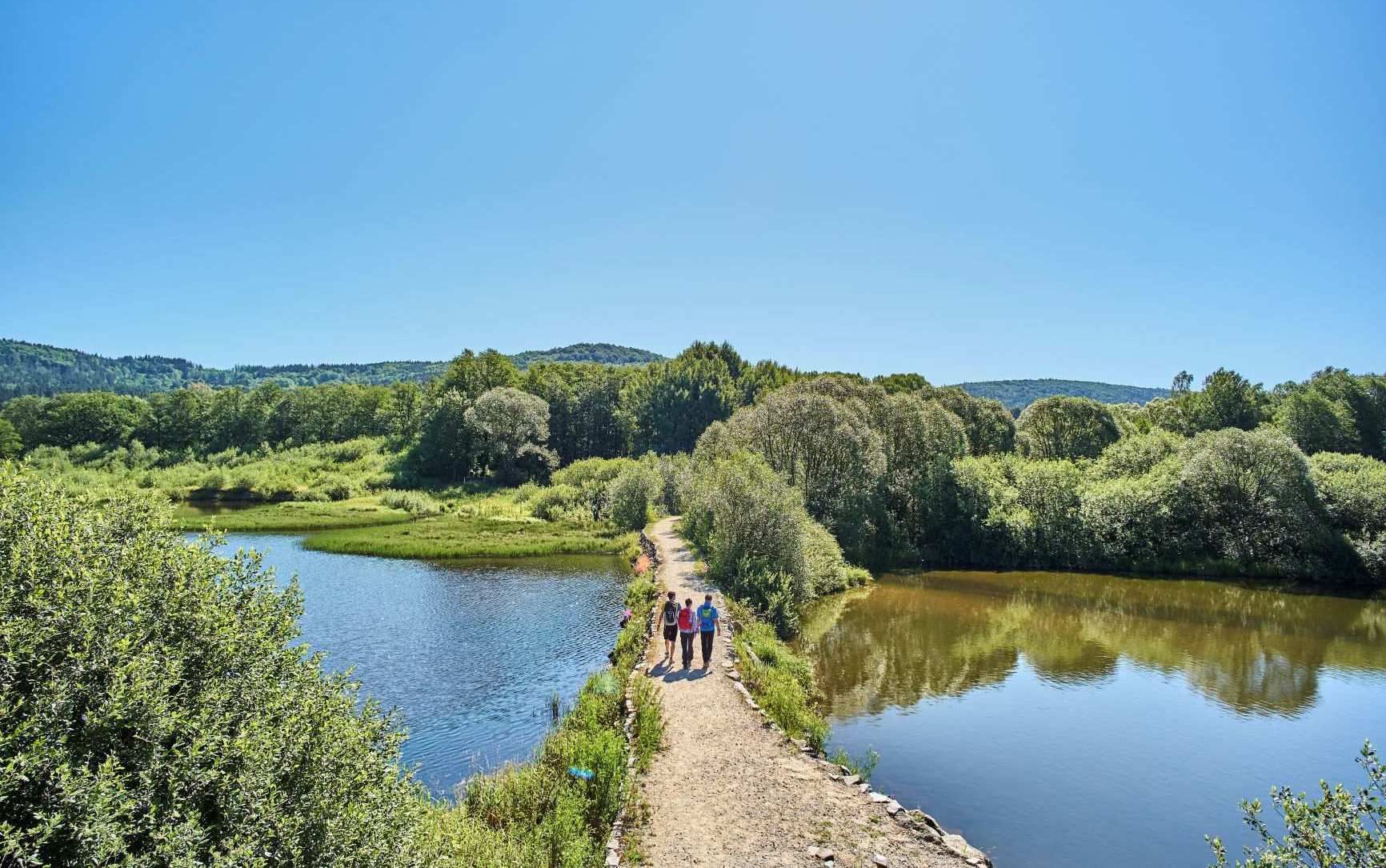
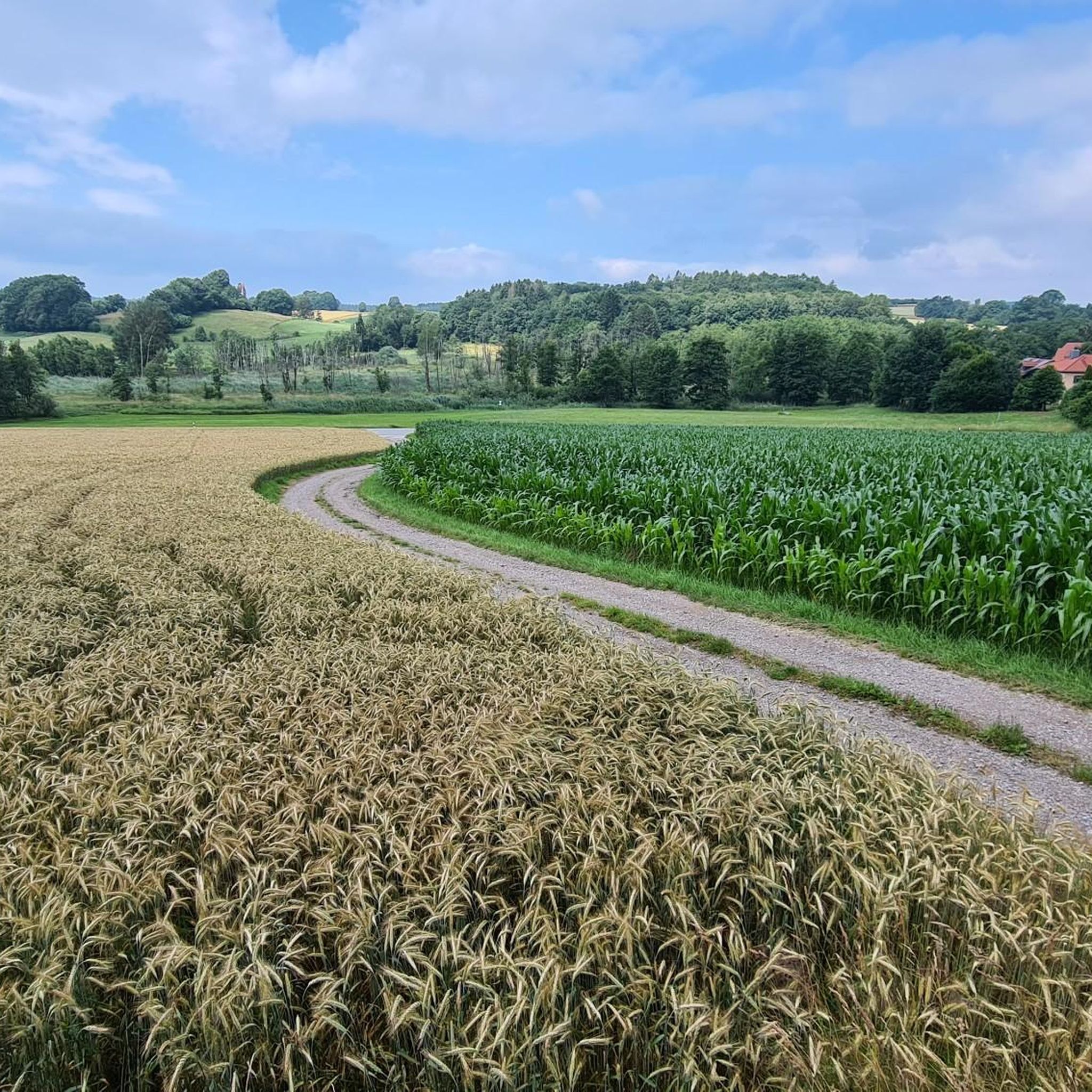
Mountain biking around Wiesenfelden offers diverse terrain on a high plateau at 650 meters above sea level within the Vorderer Bayerischer Wald. The region features expansive forests, numerous ponds, and gentle hills, providing varied conditions for mountain bike trails. Riders can explore an unspoiled natural landscape characterized by well-maintained paths and scenic views. Nature reserves and forested gorges contribute to a rich outdoor experience in this area.
Best mountain bike trails around Wiesenfelden
- The most popular mountain bike trail is…
Last updated: June 7, 2026
5.0
(8)
25
riders
Moderate mountain bike ride. Good fitness required. Advanced riding skills necessary.
4.0
(4)
16
riders
44.6km
03:59
1,060m
1,060m
Hard mountain bike ride. Very good fitness required. Advanced riding skills necessary.

Sign up for free
5.0
(1)
10
riders
Hard mountain bike ride. Good fitness required. Advanced riding skills necessary. Some portions of the route may require you to push your bike.
3.0
(1)
9
riders
44.5km
02:42
250m
250m
Moderate mountain bike ride. Good fitness required. Suitable for all skill levels.
5.0
(1)
6
riders
Moderate mountain bike ride. Good fitness required. Suitable for all skill levels.
Get access to more routes and recommendations from other explorers.
Sign up for free
Already have an account?
Our route recommendations are based on thousands of hikes, rides, and runs completed by other people on komoot.
Start today with a free account
Your next adventure awaits.
Login or Signup
Popular around Wiesenfelden


Tips from the Community

The Straubing Lock was built in 1993 as part of the Straubing Weir project to ensure the navigability of the Danube. The lock chamber is located at Danube kilometer 2322.02. With a chamber length of 264 m, it has a usable length of 230 m and a usable width of 24 m. The lock chamber is constructed of concrete and is closed at both the upper and lower gates by a double-leaf mitre gate. Each mitre gate weighs 83 t. The 14-meter-high and 12-meter-wide steel gates rest on a spherical bearing. The chamber is filled and emptied via bypass channels, each with two bypass gates at the upper and lower gates. The chamber fills in 20 minutes with a lock water volume of 44,000 m³. A lockage takes 25 minutes. The lock has a total capacity of 73,000 m³. [1] The level of the upper edge of the lock platform is 321.5 m above sea level (NN), and the level of the lower lock sill is 308.7 m above sea level (NN). For maintenance and repair work on the gates and closures, the lock is equipped with a gantry crane with a lifting capacity of 100 tons, which can be moved along the entire length of the lock. At the associated weir of the Straubing power plant, the design impoundment level is 320 m above sea level (NN). The water level of the lower lock basin is 313.75 m above sea level (NN) at mean water level (MTF) and 312.32 m above sea level (NN) at regulated low water level (RNW). The corresponding head is 6.25 meters at MTF and 7.68 meters at MTW. An information panel at the facility states the lock head as 6.21 m. The lock is remotely controlled from the WSV control center in Regensburg. This control center also remotely operates the Geisling, Regensburg, and Bad Abbach locks. Originally, the Straubing lock was operated from the lock tower on site. Immediately below the lower lock gate, the Kagers Bridge crosses the Alte Donau lock canal. The Danube's kilometer markers show a discrepancy of 7.9 kilometers at the Straubing lock. Therefore, both kilometer markers 2330 and 2322 are present at the lock basin. Source: https://de.wikipedia.org/wiki/Schleuse_Straubing
1
0


St. Ursula's Pilgrimage Church The small, simple Baroque building from the late 17th century stands on late Gothic foundations in its eastern part. The recessed choir has a single bay, a three-sided octagonal end, and a semi-dome with lunettes. The nave has four window axes, a simple west gallery, and a modern transverse room projecting to the north, dating from 1905. The tower rises in front of the south portal to the church's eaves, square in shape; on the upper floor, it is octagonal and has a pointed spire. The ceiling paintings were created in 1913, and the altars around 1910, with Gothic and Baroque elements. On the high altar is the miraculous image, a copy of the Altötting pilgrimage image. The figure originally dates back to the 17th century, but was stolen during the night of October 8-9, 1980. In the hope of being cured of a serious cancer, Mr. Josef Stöckl Jr. from Eggerszell carved a replica of the original and presented it to the Pilgramsberg residents. The Madonna was carried to the pilgrimage church by Mr. Stöckl on Easter Vigil 1982 and placed there. On consoles to the sides are the wooden figures of Joachim and Anne, the parents of the Mother of God, created around 1500. On the northern side altar is the late Gothic figural group of Anne Selbdritt, also created around 1500. In the central niche of the southern side altar is the figure of St. Wendelin from around 1680, kneeling before the Christ Child appearing in the clouds. On the choir arch to the south is the late Gothic figure of St. Ursula, created around 1460, with an arrow as an attribute. On the north wall of the transept is an early Rococo crucifix. Source: Pilgrimages in the Diocese of Regensburg by Hans J. Utz
2
0

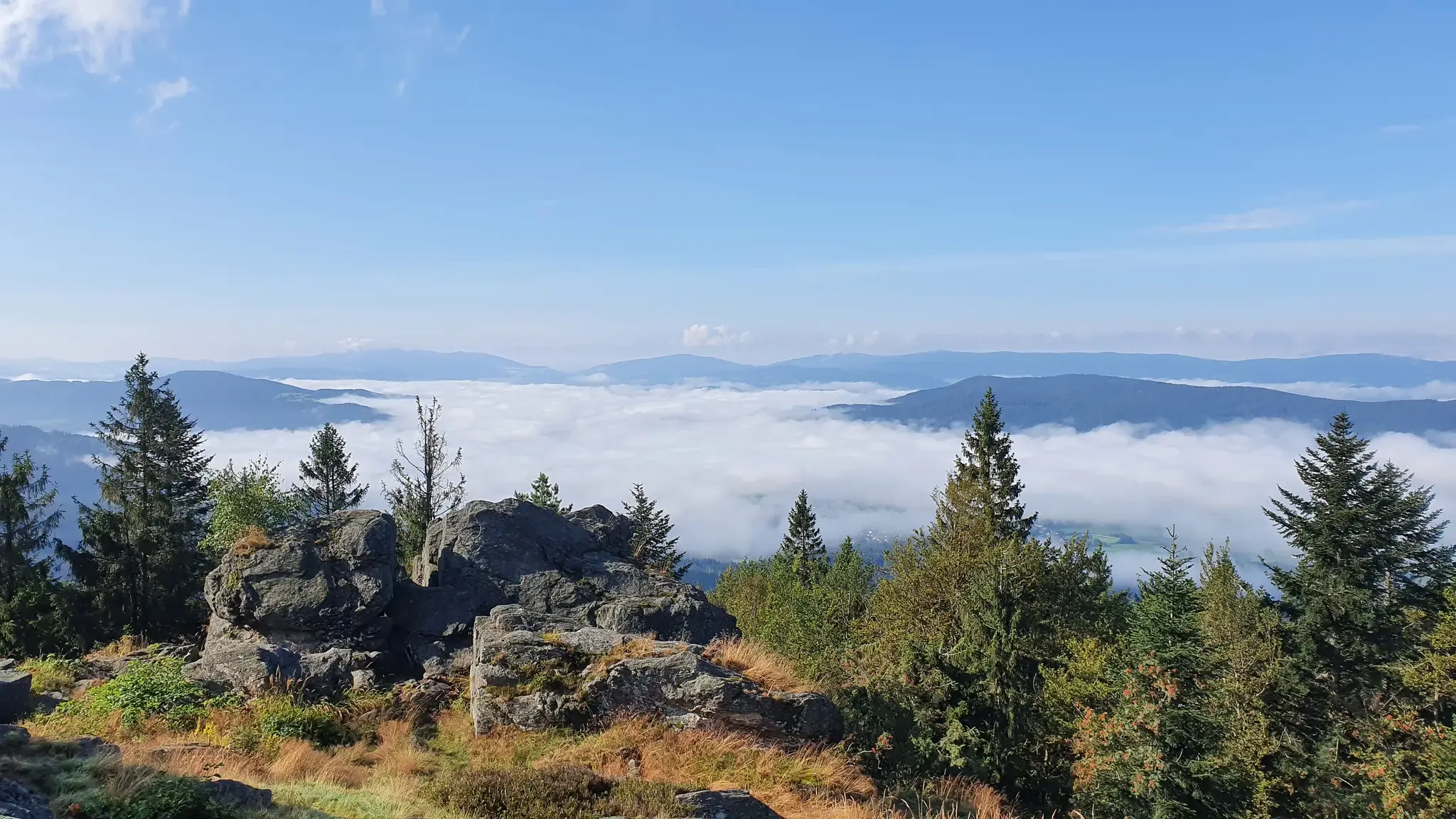
Beautiful viewpoint with shelter
0
0

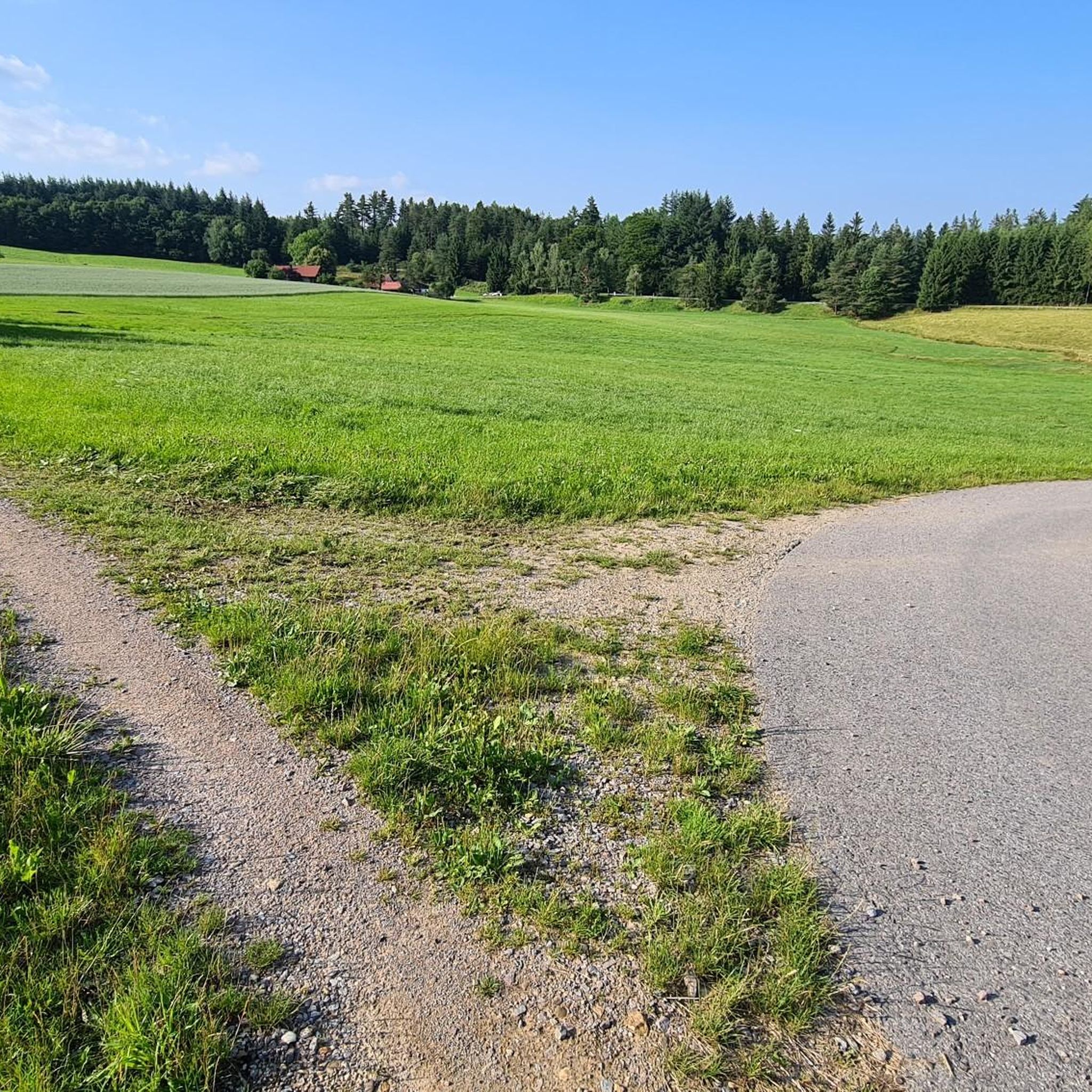
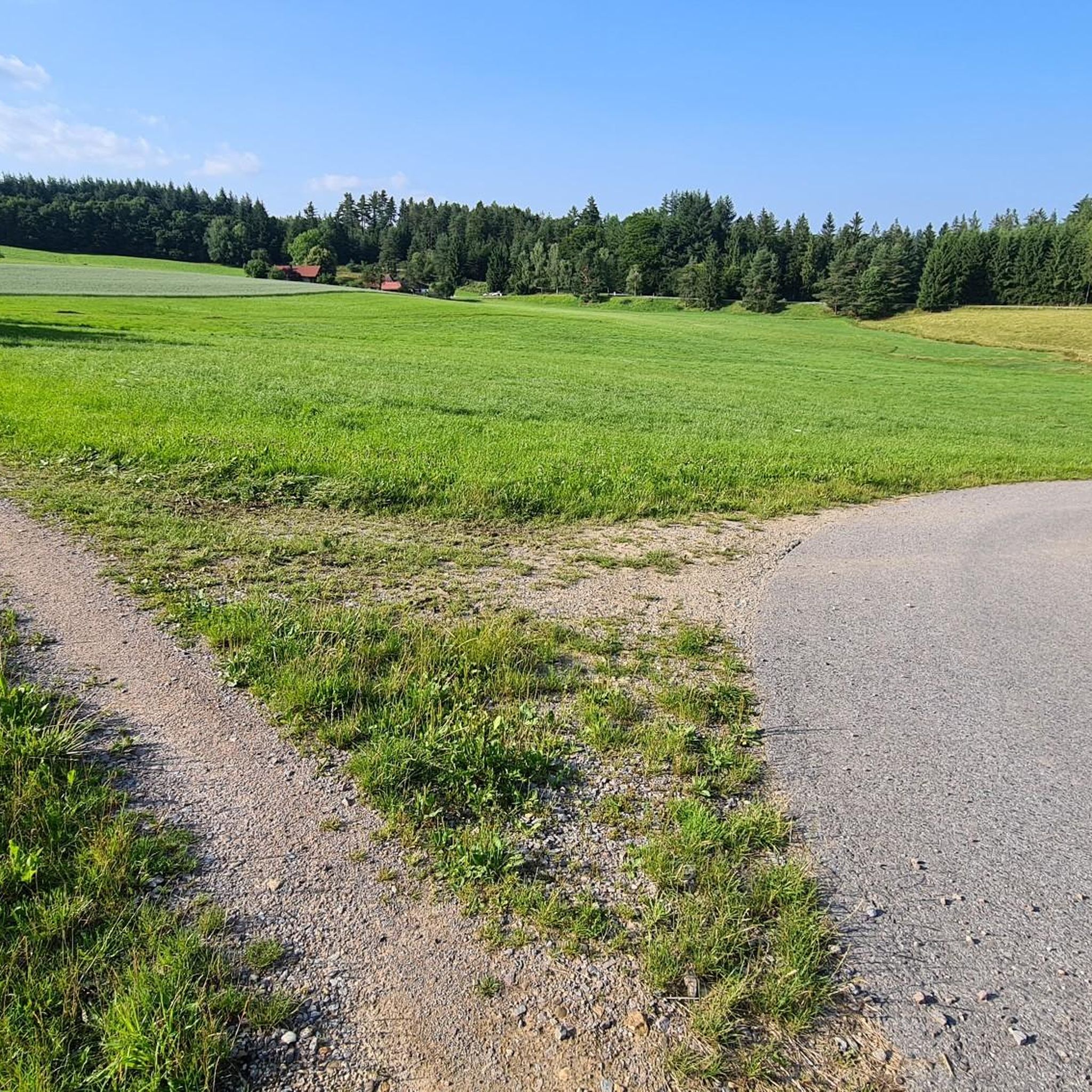
Fork in the road with bench and pond
1
0
Pilgrimage Church of St. John Called "St. John by the Oak", the first beginnings were probably a wayside cross or a small chapel as a resting place for the carters on the old road that led from Italy across the Danube to Bohemia. In 1664 it was mentioned as a small chapel with a portable altar that had been desecrated by the Swedes during the Thirty Years' War. The current church is an attractive baroque building from around 1721, very nicely situated next to a small property. The nave has three window axes and a flat ceiling. The slightly recessed choir of one bay closes off on three sides. Tuscan pilasters structure the entire room. The west gallery with a curved parapet is supported by two wooden columns. The west portal has a straight lintel. The square projecting west tower stands in the central axis; the top of its three floors has bevelled corners and a shingled onion dome. The portal vestibule has a cross vault. A beautiful frame stucco from the time the church was built has been applied to the nave ceiling. The high baroque altar dates from 1729, with two straight and two twisted columns, between them the altarpiece of the Baptism of Christ by John, created around 1670. In the elevator between volute pilasters is the image of the Immaculata, framed by acanthus carvings. The antependium has foliage carvings. The early baroque side altars were made in 1609 in the Windberg monastery and bought at auction for St. Johann in 1803. Two columns flank each shell niche. In the niches on the left are Mary with the child on a crescent moon, in the elevator St. Anne Selbdritt; on the right St. Sebastian, in the elevator St. Florian. The originals of the elevator figures were stolen in the 1960s. The confessional is a stylish baroque creation from the beginning of the 18th century. Major restorations took place in 1879, 1968 and 1985. The current organ comes from Haunkenzell and was installed in 2004. The roof structure and interior were completely restored from 2009 to 2011. Source: Extracts from information boards and pilgrimage churches in the diocese of Regensburg
2
0
Located directly on the hiking trail to Gallner Berg
0
0

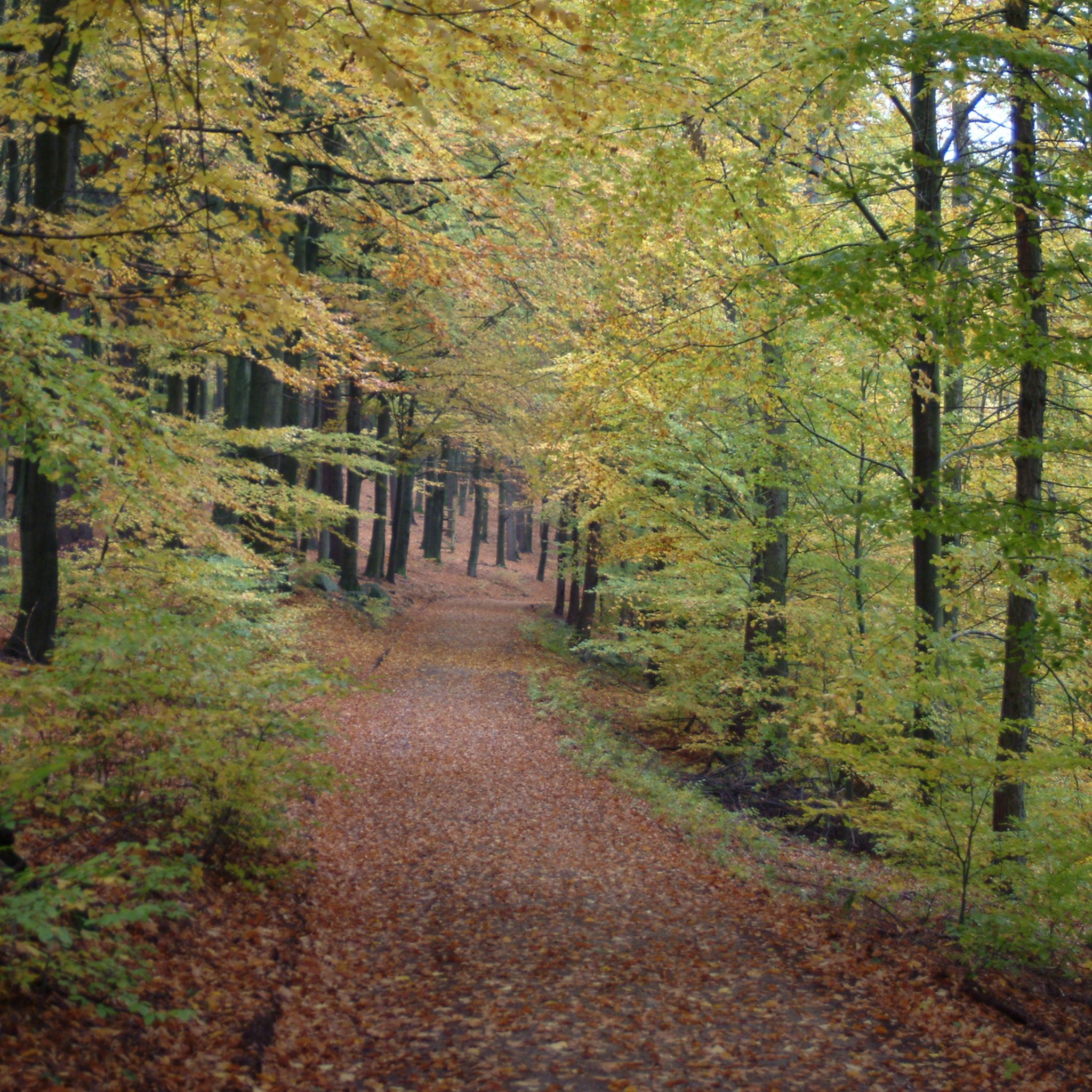
Very quiet place nice and shady
0
0
Frequently Asked Questions
How many mountain bike trails are available around Wiesenfelden?
Wiesenfelden offers a wide selection of mountain bike trails, with over 60 routes available for exploration. These trails cater to various skill levels, from easy to difficult.
What kind of terrain can I expect when mountain biking in Wiesenfelden?
You can expect diverse terrain on a high plateau at 650 meters above sea level. The region is characterized by expansive forests, numerous ponds, and gentle hills, providing varied conditions for mountain biking. You'll find well-maintained paths through an unspoiled natural landscape.
Are there mountain bike trails suitable for beginners or families in Wiesenfelden?
Yes, Wiesenfelden has several mountain bike trails suitable for beginners and families. There are 7 easy routes, offering a gentler introduction to mountain biking in the area. The region's gentle hills and well-maintained paths make it accessible for less experienced riders.
What is the best time of year to go mountain biking in Wiesenfelden?
The spring, summer, and autumn months are generally ideal for mountain biking in Wiesenfelden. The fresh, oxygen-rich mountain air enhances the outdoor experience, and the forests and meadows are particularly scenic during these seasons. Always check local weather conditions before heading out.
Are there challenging mountain bike routes for experienced riders?
Absolutely. For experienced riders seeking a challenge, Wiesenfelden offers 6 difficult mountain bike routes. One such route is the Goldsteig Singletrail Section – Trail 8: Rooty Fun at Büscherl loop from Brandmoos, which features significant elevation changes and technical sections.
Can I find circular mountain bike routes in Wiesenfelden?
Yes, many mountain bike routes in Wiesenfelden are designed as circular loops, allowing you to start and end at the same point. For example, the Straubing City Tower – Straubing Old Town loop from Saulburg is a moderate circular route that takes you through varied landscapes.
What natural attractions or landmarks can I see while mountain biking in Wiesenfelden?
Wiesenfelden is rich in natural beauty. You can explore the unique 'Weiherlandschaft' (pond landscape) and the 'Brandmoos' fens area. The wild and romantic Höllbach Valley (Hölle) Nature Reserve offers a rocky forest gorge. Other notable natural features include the Devil's Rock and various viewpoints offering panoramic vistas, potentially even of the Zugspitze on clear days.
Are there any specific natural reserves worth exploring by mountain bike?
Yes, the region is home to two significant nature reserves: the 'Weiherlandschaft um Wiesenfelden' and the 'Brandmoos'. While mountain biking directly within all protected areas might be restricted, many trails run alongside or offer access to the periphery of these beautiful landscapes, such as the Höllbach Valley (Hölle) Nature Reserve.
Is it possible to reach the mountain bike trails using public transport?
While Wiesenfelden is well-connected by roads, specific information regarding public transport options for carrying bikes directly to trailheads is best checked with local transport providers. Many visitors prefer to arrive by car due to the rural nature of the region.
What do other mountain bikers enjoy the most about mountain biking in Wiesenfelden?
The mountain bike routes in Wiesenfelden are highly rated by the komoot community, with an average score of 4.5 stars from over 40 reviews. Riders often praise the diverse terrain, the expansive forests, and the numerous ponds that define the region's natural beauty, offering a rich outdoor experience.
Are there any cultural or historical sites near the mountain bike trails?
Beyond the natural landscapes, you can find cultural attractions such as Schloss Wiesenfelden, which also houses an environmental center. The Marian pilgrimage site of Heilbrunn, with its chapel and holy spring, is another point of interest. For historical views, consider visiting the Sengersberg Castle Ruins.
Can I find places to eat or stay near the mountain bike trails?
Wiesenfelden and its surrounding villages offer various options for refreshments and accommodation. While specific cafes or pubs directly on every trail are not guaranteed, you will find places to eat and stay in the main town and nearby communities, catering to visitors exploring the region.
Most popular routes around Wiesenfelden
Most popular attractions around Wiesenfelden

Get inspired with the komoot mobile app


Explore more
Browse the best MTB trails in other regions.
