Top 20 Castles around Montecalvo In Foglia
Best castles around Montecalvo In Foglia are found in a region known for its historical significance as a border zone. The village itself features the Torre Cotogna, an isolated medieval tower on a hilltop near the River Foglia, serving as a defensive outpost. The broader area of Pesaro and Urbino is rich in historical fortified buildings, offering a glimpse into centuries of strategic importance.
Best castles around Montecalvo In Foglia
- The most popular castles is Ducal Palace, a Renaissance…
Last updated: October 4, 2026
Ducal Palace
Highlight • Castle
Translated by Google •
Tip by

Tavoleto Castle
Highlight • Castle
Translated by Google •
Tip by

Sign up now to discover places like this
Get recommendations on the best single tracks, peaks, & plenty of other exciting outdoor places.
Montefiore Conca
Highlight • Castle
Translated by Google •
Tip by

Fortezza Albornoz
Highlight • Historical Site
Translated by Google •
Tip by

Saludecio
Highlight • Settlement
Translated by Google •
Tip by

Sign up for free to discover even more castles around Montecalvo In Foglia.
Already have an account?
Start today with a free account
Your next adventure awaits.

Tips from the Community

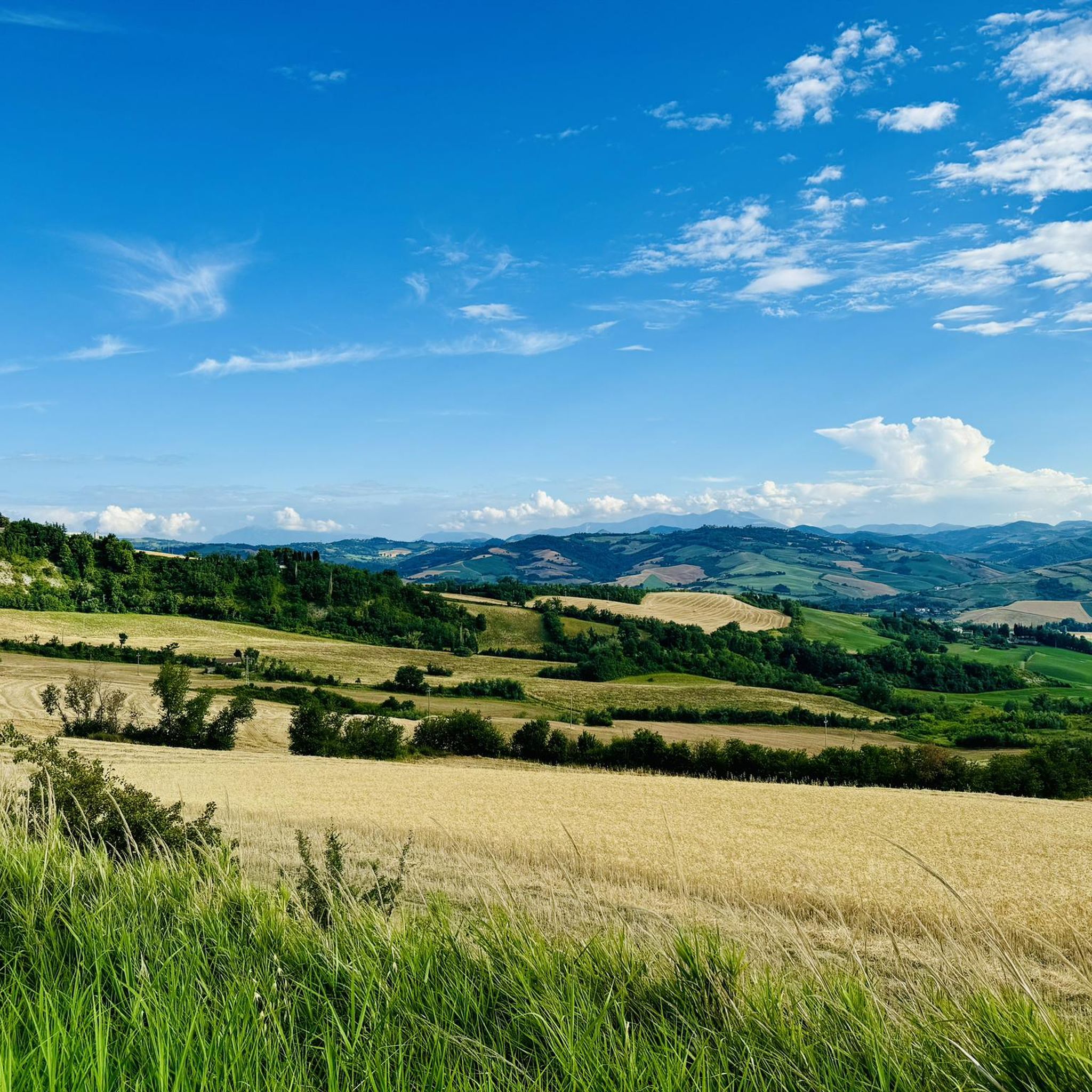
suggestive passage. I recommend the ascent from Morciano, The descent from the other side is - at times - steep but safely doable.
0
0

Urbino is a city in the Marche region, recognized as a UNESCO World Heritage site for its Renaissance-era historic center. It is located in a hilly area and is characterized by uphill streets, squares, and brick buildings. Among the main sites is the Ducal Palace of Urbino, home to the National Gallery of the Marche. Urbino is also the birthplace of Raffaello Sanzio, with a house-museum that can be visited. The city is home to the University of Urbino Carlo Bo, which contributes to the presence of students throughout the year.
0
0

Saludecio is registered in the Italian Association of Painted Villages because of the 50 splendid murals that color its streets.
0
0

The Palazzo Ducale in Urbino is a Renaissance palace and houses the famous Renaissance picture gallery of the Marche.
2
0

The city of Urbino is located on the highest part of a hill which, seen from afar, takes your breath away with such beauty.
2
0

The church of Santa Maria Assunta is the main Catholic place of worship in Urbino and cathedral of the archdiocese of Urbino-Urbania-Sant'Angelo in Vado.
2
0

Nice tour, ours was slightly longer than usual because it started from another point on the panoramic road near the Gibas restaurant and between the return journey with the muscular mountain bike there are a few km on the legs but the tour is also very nice and the visit to the castle
0
0

The construction of the castle took place by the family of Sigismondo Malatesta in the early 1300s and was disputed between the Malatesta and Montefeltro families in the battles for the acquisition of the territory. It was thus lost and reconquered five times, until Federico da Montefeltro finally conquered Tavoleto in 1458. Federico ordered the demolition of the castle and then rebuilt it under the work of the architect Francesco di Giorgio Martini who finished it before 1474. In 1631 it became the direct domain of the Papacy, but in 1885 it was donated to the Lawyer Petrangolini at the same time as the assignment of the title of count and the subjugation of the surrounding territories. It was subsequently sold to a private individual who transformed it into a restaurant in the more recent 1960s and renovated it according to the standards of those years. The current owners instead purchased it with the intention of bringing it back to its origins. Today it is home to receptions and ceremonies.
1
0
Frequently Asked Questions
What are the main historical castles or fortified buildings directly in Montecalvo in Foglia?
Montecalvo in Foglia's most notable ancient defensive structure is the Torre Cotogna (Quince Tower). This isolated medieval tower served as a crucial defensive outpost, marking the boundary between the Montefeltro and Malatesta territories. While currently in disrepair, it is recognized as a protected cultural asset and offers a tangible link to the region's medieval history.
Are there other significant castles near Montecalvo in Foglia worth visiting?
Yes, several significant castles are located nearby. The Castello di Tavoleto is a notable example, with a tumultuous history of changing hands between the Malatesta and Montefeltro families, and later rebuilt by the renowned architect Francesco di Giorgio Martini. Another must-see is the Ducal Palace, a Renaissance ducal palace recognized as a UNESCO World Heritage Site.
What makes the Ducal Palace in Urbino a significant historical site?
The Ducal Palace, Urbino is a Renaissance palace that houses the famous Renaissance picture gallery of the Marche, featuring works by Raphael and Piero della Francesca. The city of Urbino itself is a UNESCO World Heritage Site, known as the "Cradle of the Renaissance," with narrow, steep streets and great views of the surrounding hills.
Can I find family-friendly castles or historical sites in the area?
Yes, several sites are considered family-friendly. The Tavoleto Castle, the Ducal Palace, Urbino, and the settlement of Saludecio are all categorized as family-friendly historical sites, offering engaging experiences for all ages.
What kind of outdoor activities can I do near these castles?
The region around Montecalvo in Foglia offers various outdoor activities. You can explore numerous running trails, mountain biking routes, and cycling tours. For example, there are several running loops around Urbino, challenging MTB trails from Borgo Massano, and scenic cycling routes passing through historical villages like Tavoleto and Mondaino. You can find more details on these activities in the running, MTB, and cycling guides for the area.
Are there specific hiking or cycling routes that pass by these historical sites?
Yes, many routes are designed to showcase the historical beauty of the region. For cyclists, routes like the "Tavoleto – Mondaino Castle loop from Borgo Massano" offer a chance to see fortified villages. For those interested in running, routes like the "Ducal Palace of Urbino loop from Urbino" allow you to experience the historical city. Check the dedicated running, MTB, and cycling guides for detailed route information.
What is the historical significance of Montecalvo in Foglia and its surrounding castles?
Montecalvo in Foglia and its surrounding area were historically a crucial border zone, frequently contested between the powerful Montefeltro and Malatesta families. Castles like Torre Cotogna and Castello di Tavoleto served as strategic defensive outposts, reflecting centuries of conflicts that shaped the landscape and political control of the Marche region. This rich history is evident in the numerous fortified buildings and medieval villages scattered throughout the area.
What do visitors enjoy most about the castles and historical sites in this region?
Visitors appreciate the deep historical context and architectural beauty of the castles. Many enjoy the well-preserved medieval structures and Renaissance palaces, often noting the stunning views from elevated sites like Urbino. The opportunity to cycle or run through landscapes dotted with these historical landmarks is also a highlight for many, offering a blend of cultural immersion and outdoor activity.
Are there any medieval villages or settlements near Montecalvo in Foglia with historical significance?
Yes, Urbino is a prime example, a UNESCO World Heritage Site known as the "Cradle of the Renaissance." Another significant medieval settlement is Saludecio, a former Malatesta stronghold with a well-preserved medieval structure, complete with walls and monumental access gates, reflecting its past as a defensive bastion.
How can I get to Montecalvo in Foglia and its nearby castles?
Montecalvo in Foglia is located in the Marche region of Italy. While specific public transport details for each castle may vary, the broader area is accessible by road. For general travel information to the Marche region, you can consult resources like Italia.it. Exploring the castles often involves driving or cycling between locations.
Is there parking available when visiting castles in the Montecalvo in Foglia area?
Parking availability varies by specific castle and location. For larger, more popular sites like the Ducal Palace in Urbino, there are usually designated parking areas within or near the city. For smaller, more isolated sites like Torre Cotogna, parking might be less formal, often requiring roadside parking or a short walk. It's advisable to check specific visitor information for each castle you plan to visit.
What is the best time of year to visit the castles around Montecalvo in Foglia?
The best time to visit is generally during the spring (April-June) and autumn (September-October) months. During these periods, the weather is typically mild and pleasant for exploring historical sites and engaging in outdoor activities like cycling or hiking. The vibrant colors of autumn can also add to the scenic beauty of the region's rolling hills and medieval villages.
Most popular routes around Montecalvo In Foglia
Most popular attractions around Montecalvo In Foglia

Get inspired with the komoot mobile app


Explore more
Looking for the best castles somewhere else? Discover other guides around Montecalvo In Foglia:
