The best cycling routes around Scheibenberg
4.8
(173)
691
riders
35
rides
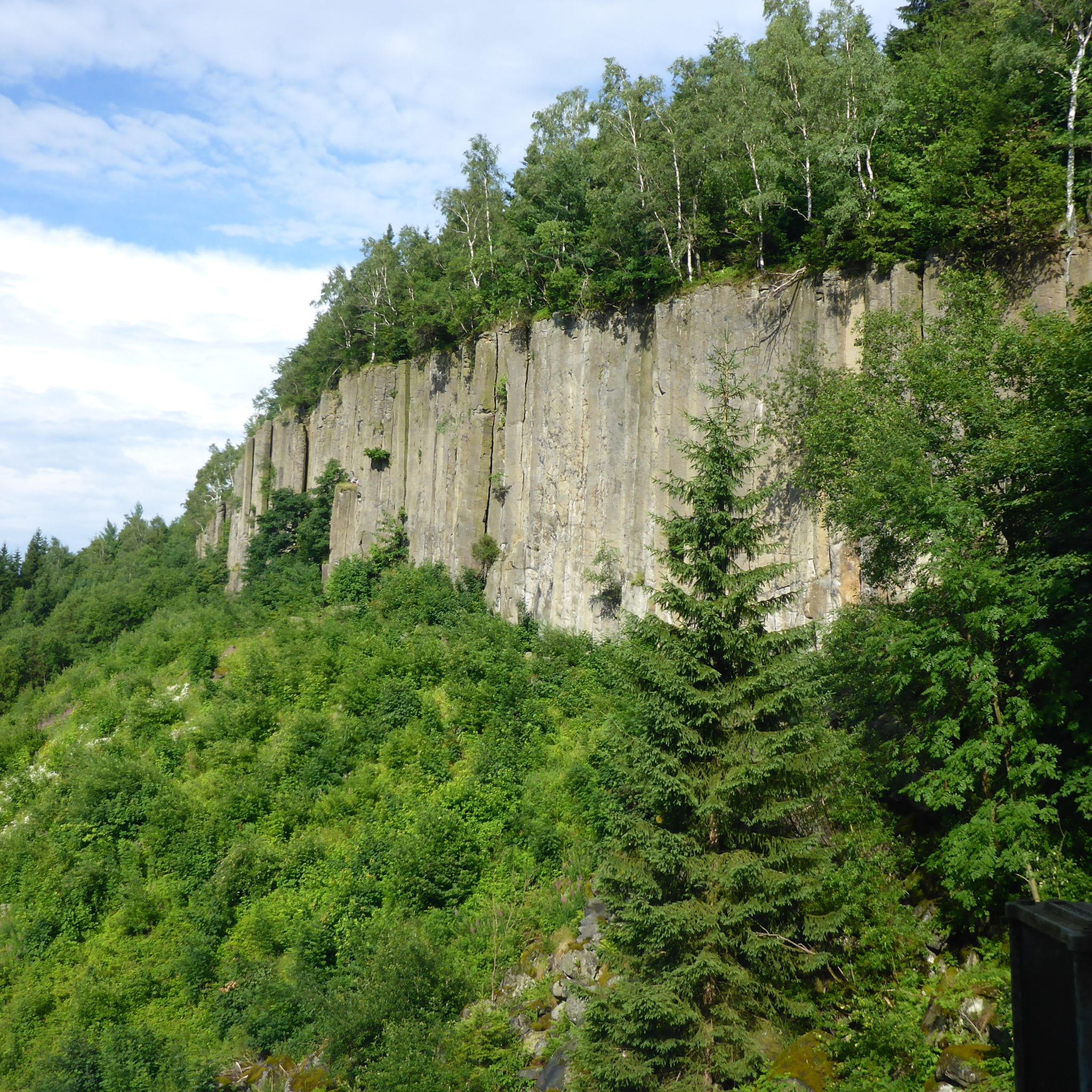
Touring cycling routes around Scheibenberg traverse the scenic Ore Mountains (Erzgebirge) in Saxony, Germany. The region is characterized by unique geological formations, including imposing basalt columns up to 30 meters high, and diverse landscapes. Cyclists encounter a mix of picturesque valleys, such as the Greifenbach Valley, and varied terrain ranging from paved roads to gravel paths. The area's volcanic origins contribute to a distinct geological environment.
Best touring cycling routes around Scheibenberg
- The most popular touring cycling route is Fichtelberg…
Last updated: May 14, 2026
4.6
(17)
74
riders
55.5km
04:09
1,030m
1,030m
Hard bike ride. Very good fitness required. You may need to push your bike for some segments of this route.
4.3
(7)
47
riders
34.8km
02:25
570m
570m
Hard bike ride. Very good fitness required. You may need to push your bike for some segments of this route.

Sign up for free
4.6
(14)
54
riders
27.3km
01:51
390m
390m
Moderate bike ride. Good fitness required. Mostly paved surfaces. Suitable for all skill levels.
4.7
(19)
48
riders
37.2km
02:39
620m
620m
Hard bike ride. Very good fitness required. Mostly paved surfaces. Suitable for all skill levels.
4.9
(15)
49
riders
44.6km
03:26
870m
870m
Hard bike ride. Very good fitness required. Mostly paved surfaces. Suitable for all skill levels.
Get access to more routes and recommendations from other explorers.
Sign up for free
Already have an account?
Our route recommendations are based on thousands of hikes, rides, and runs completed by other people on komoot.
Start today with a free account
Your next adventure awaits.
Login or Signup
Popular around Scheibenberg

The Stoneman Trail in the Ore Mountains

Flying high on two wheels – bike holidays in the Ore Mountains
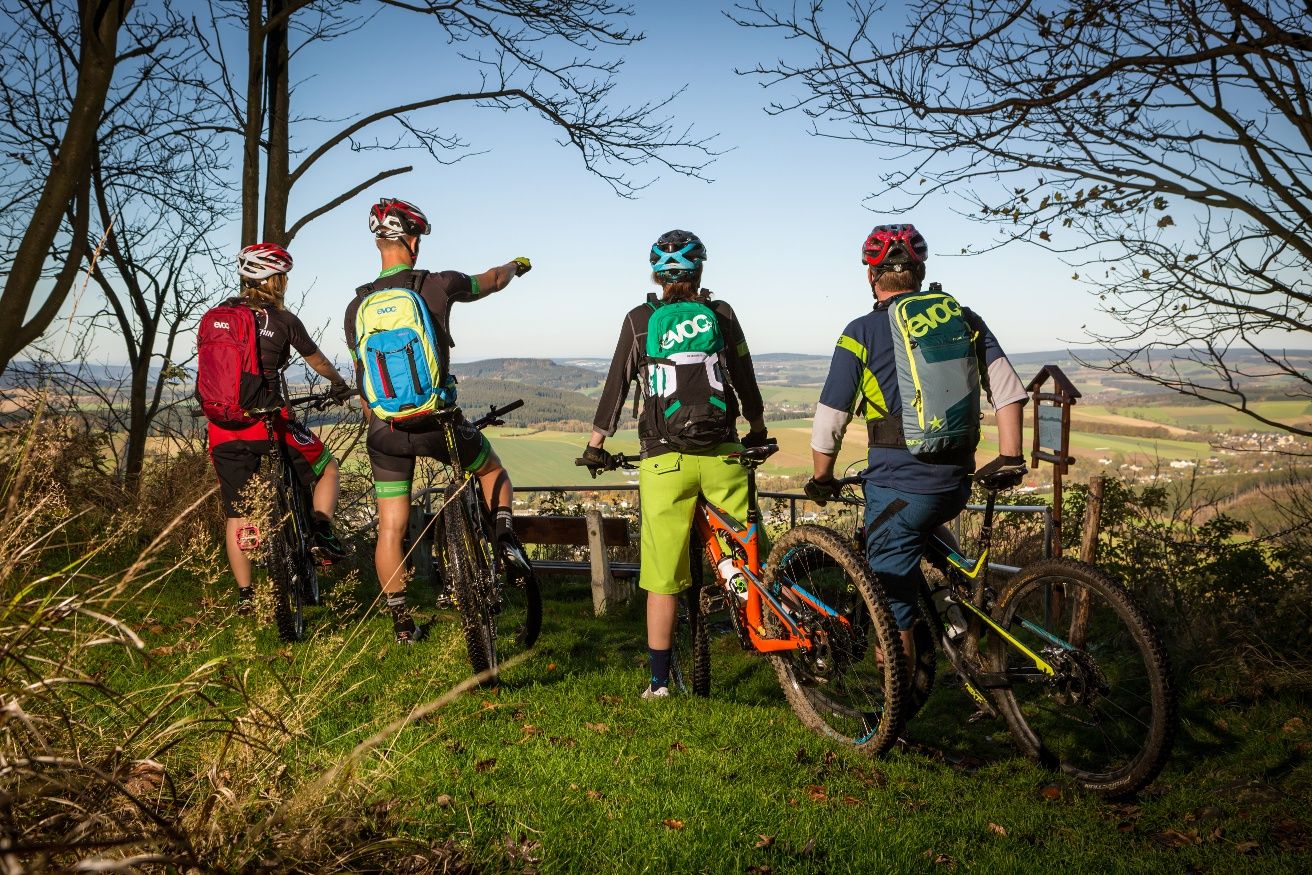
Stoneman Miriquidi MTB Gesamtstrecke (3 Tage - Bronze)
Hiking around Scheibenberg
MTB Trails around Scheibenberg
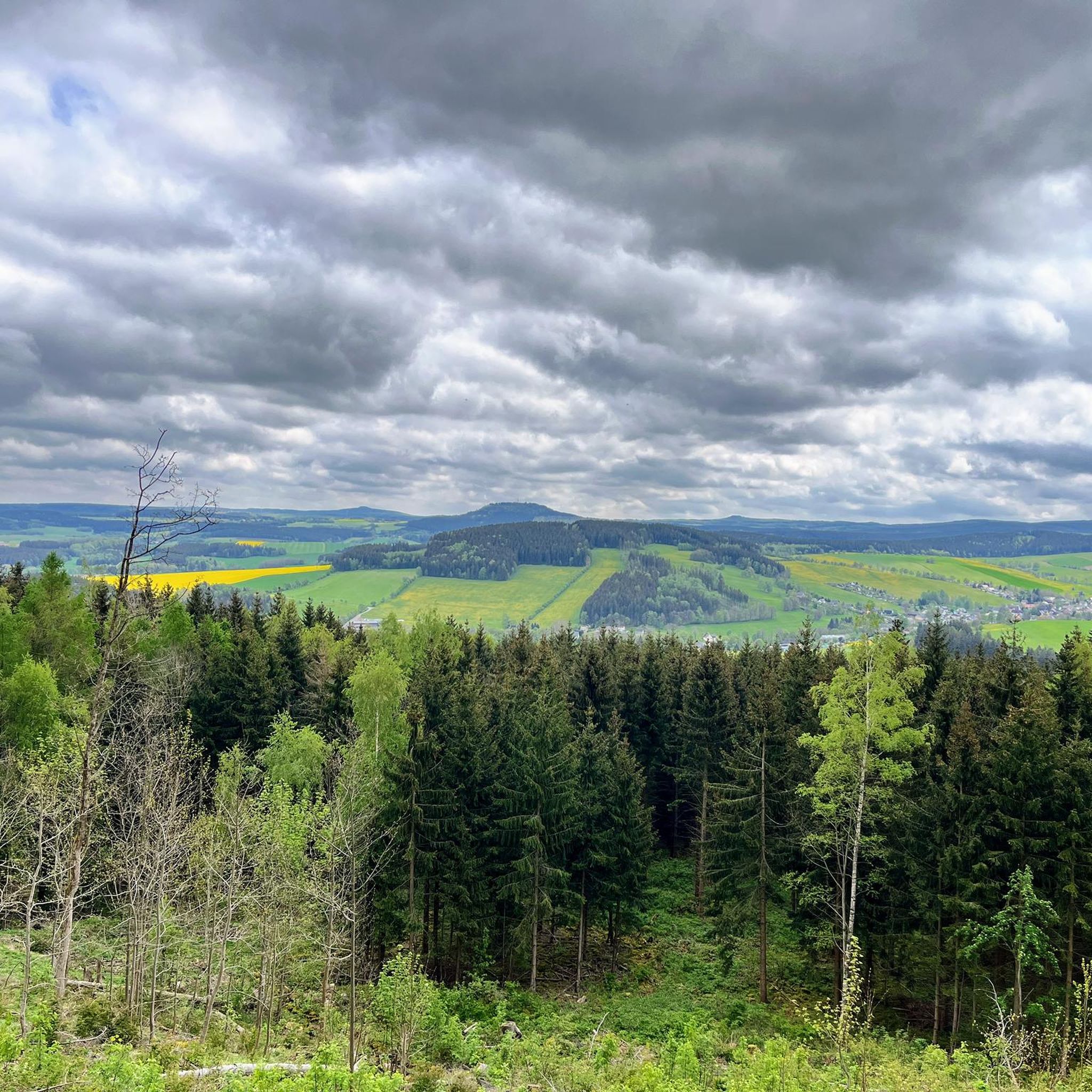
Road Cycling Routes around Scheibenberg
Gravel biking around Scheibenberg
Running Trails around Scheibenberg
Other adventures around Scheibenberg


Tips from the Community

In 1481, St. Laurentiuskirche in Elterlein was consecrated by the Bishop of Naumburg, who was responsible for the region. In 1891, the current 57 m high tower on the south side was consecrated, replacing the old, dilapidated former tower on the northwest side. The church's furnishings include an organ by Fa. Eule / Bautzen (opus 95), four bronze bells cast by Grassmayr in Innsbruck, the baptismal font dating from the Baroque period, the pulpit, and the altar. Remains of a former Gothic altar are currently undergoing restoration. From the tower gallery, there is a magnificent view of the mountain landscape of Kammlandschaft. https://www.elterlein.net/stadtleben/kirchen
0
0


The Markersbach pumped-storage power plant is open to visitors. Guided tours lasting approximately two to two and a half hours are offered, providing insight into the power plant's engine cavern and operational procedures.
1
0

Very beautiful, wooded area. I live here, and if anyone would like to explore the area, I'd be happy to accompany them...please contact me. Cyclist Chris
0
0

The large peace bell on the Fichtelberg had to remain silent for six months in 2024. Stone throwing in May 2022 had so badly damaged the bell that its sound suffered. It was decided to stop ringing it and replace it with a new one. The old bell rang for the last time on Easter Monday 2024. Just in time for the mountain service on German Unity Day on October 3, the new bell was officially rung for the first time in the fall of 2024. The idea of using a peace bell to commemorate the peaceful revolution of 1989 in the GDR and German reunification in 1990 came from watchman Gerd Schlesinger and night watchman Jörg Eller from the Ore Mountains town of Schwarzenberg. The bell was also intended to be heard in neighboring Czechia and thus ring for a united Europe. The cast steel bell, already ninety years old at the time, was rung for the first time in 2010. The new bell was cast in Innsbruck by the Grassmayr company. At 2,700 kilograms, it is about 1,100 kilograms heavier than the old bell.
17
1
Construction of the railway from Grünstädtel to Oberrittersgrün began in April 1888. Due to the narrow valley, only a Saxon narrow-gauge railway with a 750 mm gauge was feasible. Popularly known as the "Pöhler Pussel," it ran 9.36 km through the valley for over 82 years until its closure in 1971. In 1972, the first Saxon narrow-gauge railway museum was inaugurated at the Rittersgrün terminus station to commemorate the railway. In addition to information on Saxon history, the museum is dedicated to the transportation system of the Ore Mountains. https://www.dampfbahn-route.de/de/westerzgebirge_vogtland/5/Saechsisches_SchmalspurbahnMuseum_Rittersgruen.html
1
0

There is a very beautiful view from the dam.
0
0
Looks even better in action than in photos.
0
0
Frequently Asked Questions
How many touring cycling routes are available around Scheibenberg?
There are over 30 touring cycling routes around Scheibenberg, offering a diverse range of experiences. These include options for various skill levels, from moderate paths to more challenging rides through the Ore Mountains.
What types of terrain can I expect on touring cycling routes in Scheibenberg?
The routes around Scheibenberg feature a varied terrain, including paved roads, quiet country roads, and gravel paths. This mix caters to different cycling preferences, allowing for both challenging ascents and more relaxed stretches.
Are there routes suitable for beginners or families in Scheibenberg?
Yes, Scheibenberg offers routes suitable for various abilities. While 24 routes are classified as difficult, there are 14 moderate routes and 1 easy route. The picturesque Greifenbach Valley, for instance, provides enjoyable cycling environments that can be suitable for families looking for less strenuous rides.
What are the difficulty levels of touring cycling routes in Scheibenberg?
The touring cycling routes in Scheibenberg range from easy to difficult. Out of 39 total routes, 1 is easy, 14 are moderate, and 24 are classified as difficult. This variety ensures options for cyclists seeking different levels of challenge.
What natural features and scenic viewpoints can I discover along the routes?
Scheibenberg is known for its unique geological formations, including imposing basalt columns up to 30 meters high. Many routes offer breathtaking panoramic views of the surrounding Ore Mountains from the summit of Scheibenberg. You can also explore picturesque valleys like the Greifenbach Valley. Notable viewpoints include the Bärenstein Summit and Observation Tower and the Pöhlberg Observation Tower.
Are there any circular touring cycling routes around Scheibenberg?
Yes, many touring cycling routes around Scheibenberg are designed as loops. Examples include the challenging Fichtelberg Peace Bell – Fichtelberghaus Bell Tower loop, the scenic Zwönitz Market Square – View of Scheibenberg loop, and the pleasant Greifenbach Reservoir – Kneipp Pool with Shelter loop.
What historical or cultural attractions can I visit while cycling in the region?
Beyond natural beauty, the region offers glimpses into its industrial heritage. Cyclists can encounter historical sites such as the Schmalzgrube Ironworks and the Frohnau Mining Landscape with its hammer mill. The Röhrgrabenweg – Historic Mining Canal Trail is another point of interest.
What do other touring cyclists enjoy most about cycling in Scheibenberg?
The area is highly rated by the komoot community, with an average score of 4.9 stars from over 200 reviews. Cyclists often praise the varied terrain, the well-maintained and signposted trails, and the stunning views of the Ore Mountains and unique basalt formations.
Is there public transport available that accommodates bicycles in Scheibenberg?
Saxony is generally well-equipped with public transport options. While specific details for Scheibenberg's local services regarding bicycle transport should be checked with regional providers, the broader network in Saxony often supports cyclists, especially connecting to larger towns and trailheads.
What is the best time of year for touring cycling in Scheibenberg?
The best time for touring cycling in Scheibenberg is typically from spring through autumn, when the weather is mild and the trails are clear. The region's scenic beauty is particularly vibrant during these seasons. Winter cycling is possible but may require specialized equipment due to snow and ice.
Are there any specific routes that offer views of the Fichtelberg?
Yes, several routes provide views towards the Fichtelberg. For example, the moderate View of Fichtelberg – Kneipp Pool with Shelter loop offers scenic vistas of this prominent peak.
Most popular routes around Scheibenberg
Most popular attractions around Scheibenberg

Get inspired with the komoot mobile app


Explore more
Browse the best Cycling routes in other regions.
