Attractions and Places To See around San Prisco - Top 20
Best attractions and places to see around San Prisco include historical landmarks and natural features. Located in Italy's Campania region, San Prisco offers an authentic Italian small-town experience. The area is characterized by picturesque landscapes, including lush vineyards and olive groves. Visitors can explore cultural sites and experience the local atmosphere.
Best attractions and places to see around San Prisco
- The most popular attractions is Acquedotto Carolino, a man-made monument that was built in the mid-1700s to bring water…
Last updated: July 15, 2026
Acquedotto Carolino
Highlight • Monument
Translated by Google •
Tip by

Piazza della Vaccheria and the Church of Santa Maria delle Grazie
Highlight • Religious Site
Translated by Google •
Tip by

Sign up now to discover places like this
Get recommendations on the best single tracks, peaks, & plenty of other exciting outdoor places.
Sign up for free
Casertavecchia Medieval Village
Highlight • Historical Site
Translated by Google •
Tip by
Amphitheatre of Capua
Highlight • Historical Site
Translated by Google •
Tip by

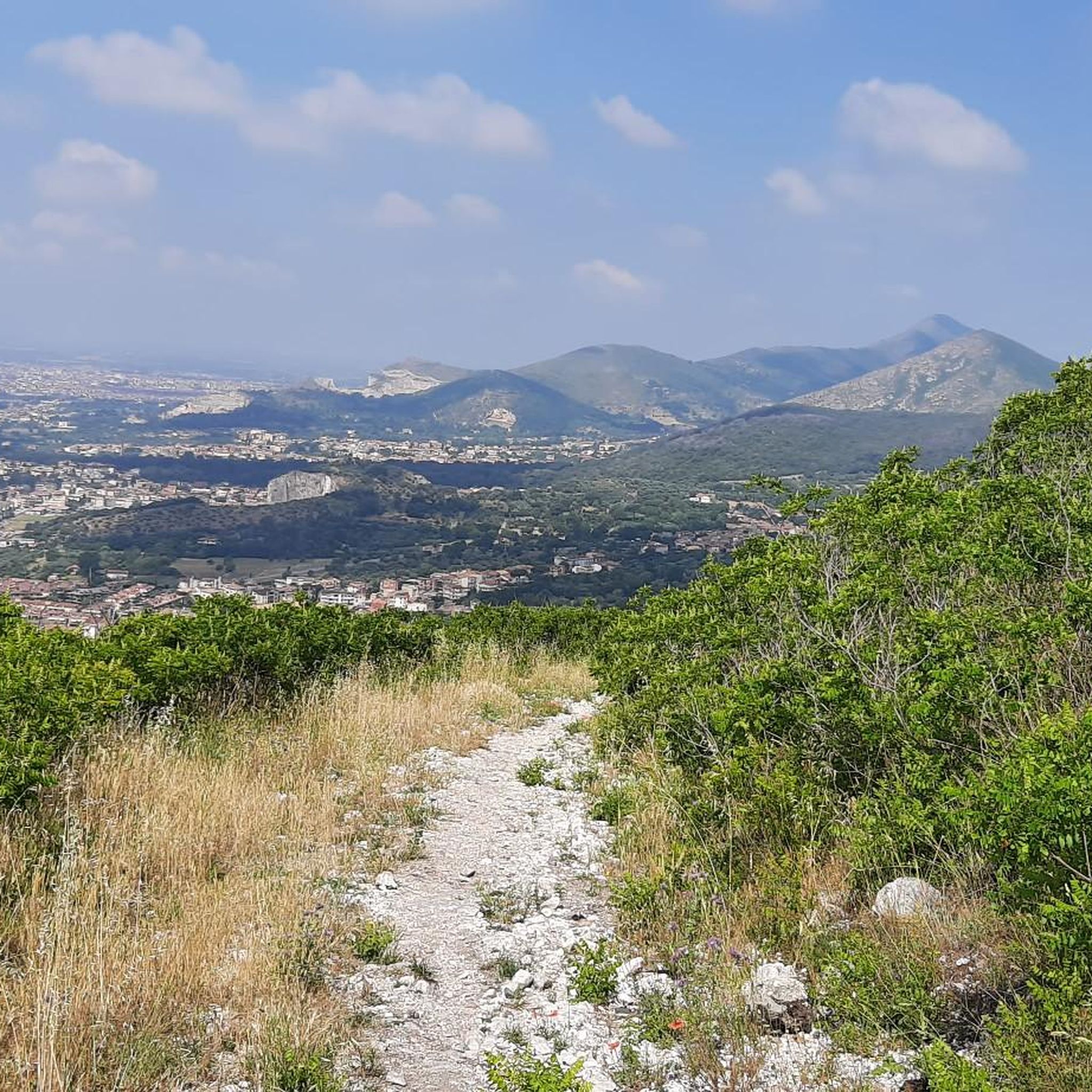
Vaccheria Panoramic Trail
Highlight (Segment) • Trail
Translated by Google •
Tip by

Sign up for free to discover even more attractions around San Prisco.
Sign up for free
Already have an account?
Start today with a free account
Your next adventure awaits.
Login or Signup
Tips from the Community

The Carolino Aqueduct (also known as Vanvitelli's Aqueduct) is a monumental engineering work designed by Luigi Vanvitelli to supply the Royal Palace of Caserta, its fountains, gardens, and the nearby industrial complex of San Leucio. Inaugurated in 1762 after 9 years of work, the aqueduct draws water from the Fizzo springs in the territory of Airola and winds for about 38 kilometers, much of which is underground. In 1997 it was included in the UNESCO World Heritage list along with the Palace and the Belvedere of San Leucio.
1
0

Wonderful aqueduct built by Vanvitelli to bring water to the Royal Palace of Caserta
1
0

Spectacular amphitheater, the largest of antiquity after the Colosseum, located in Santa Maria Capua Vetere, the ancient Capua. It is clearly visible from the outside without having to enter the archaeological area
0
0
Very interesting archaeological site in Santa Maria Capua Vetere, the ancient Capua. The Campanian amphitheater stands out, the largest of antiquity after the Colosseum
1
0

Route traveled at the beginning of September 2024. Due to bad weather the route is bumpy with fallen trees that prevent transit. I struggled and not a little, if it is not cleared it is to be avoided
0
0

The Campanian amphitheater or Capuano amphitheater is a Roman-era amphitheater in the city of Capua, today located in Santa Maria Capua Vetere
0
0
It is a Roman-era amphitheater in the city of Capua, nowadays located in Santa Maria Capua Vetere
0
0
The Campania amphitheater is second only to the Colosseum in importance and size
0
0
Frequently Asked Questions
What historical landmarks can I explore around San Prisco?
San Prisco and its surroundings are rich in history. You can visit the impressive Acquedotto Carolino, an 18th-century engineering marvel that supplied water to the Royal Palace of Caserta. Another significant site is the Casertavecchia Medieval Village, offering a glimpse into ancient history with its castle and charming streets. Don't miss the Amphitheatre of Capua, a major archaeological site known for its gladiator school and connection to Spartacus.
Are there any cultural sites or unique churches to visit in the area?
Yes, the region boasts several cultural gems. The Piazza della Vaccheria and the Church of Santa Maria delle Grazie is a notable religious building showcasing Neapolitan eclectic art with its gothic exteriors and baroque classicism. Within San Prisco itself, the Chiesa di Santa Croce e San Prisco is a significant historical landmark with origins tracing back to 506 AD, featuring a facade by Luigi Vanvitelli and early Christian mosaics in the Chapel of Santa Matrona.
What natural features can I enjoy around San Prisco?
San Prisco is nestled amidst beautiful landscapes, characterized by lush vineyards and olive groves. While specific natural highlights are not listed, the picturesque surroundings offer a peaceful ambiance for walks and enjoying the Italian countryside. The area's natural beauty complements its historical sites.
What kind of outdoor activities are available near San Prisco?
The area around San Prisco is great for various outdoor activities. You can find numerous cycling routes, including road cycling and touring bicycle options, with varying difficulty levels. For mountain biking enthusiasts, there are dedicated MTB trails. Explore these options and more on the Cycling around San Prisco guide or the MTB Trails around San Prisco guide.
Are there hiking trails or walks suitable for different skill levels?
Yes, San Prisco offers hiking trails for various preferences. While specific difficulty levels for hiking trails aren't detailed in the provided data, the region research indicates the presence of hiking trails. For cycling, you can find routes ranging from easy to difficult, suggesting a diverse landscape suitable for different activity levels. Check the Cycling around San Prisco guide for more details on routes.
What is the best time to visit San Prisco for outdoor activities?
While specific weather patterns aren't detailed, generally, spring and autumn offer pleasant temperatures for outdoor activities like hiking and cycling in Italy's Campania region, avoiding the peak heat of summer. These seasons provide comfortable conditions to explore the historical sites and natural landscapes.
Are there family-friendly attractions or activities in San Prisco?
Several attractions around San Prisco are considered family-friendly. The Piazza della Vaccheria and the Church of Santa Maria delle Grazie, the Amphitheatre of Capua, and the Acquedotto Carolino are all categorized as suitable for families, offering engaging historical and cultural experiences for all ages.
What do visitors enjoy most about the attractions near San Prisco?
Visitors frequently praise the historical significance and scenic beauty of the area. The Casertavecchia Medieval Village is highlighted for its 'very very beautiful location' and 'breathtaking views.' The Amphitheatre of Capua is noted as a 'very interesting archaeological site' with its 'completely preserved catacombs' radiating a 'special charm.' The Acquedotto Carolino is appreciated as an 'imposing 18th century' structure and a UNESCO World Heritage Site.
Can I find viewpoints to enjoy panoramic scenery?
Yes, the Casertavecchia Medieval Village, situated on the slopes of the Tifatini mountains, offers excellent views of the surrounding area. Its elevated position provides 'breathtaking views' according to visitors, making it a great spot for panoramic scenery.
Is there public transport available to reach attractions around San Prisco?
While specific public transport routes to individual attractions are not detailed, San Prisco is a small Italian town, and local bus services typically connect it to nearby municipalities and key points of interest. It's advisable to check local transport schedules upon arrival for the most up-to-date information on reaching specific sites.
What is the significance of the Chiesa di Santa Croce e San Prisco?
The Chiesa di Santa Croce e San Prisco is a highly significant historical and cultural landmark in San Prisco. Its origins date back to 506 AD, and its facade and bell tower were designed by the renowned architect Luigi Vanvitelli. Inside, the Chapel of Santa Matrona is particularly noteworthy for its unique early Christian mosaics from the 5th or 6th century, which represent a distinct tradition in Campania.
Are there any hidden gems or lesser-known spots worth discovering?
Beyond the main highlights, San Prisco itself offers a peaceful atmosphere with traditional Italian houses and local shops lining its narrow streets, inviting exploration. The town provides an opportunity to experience authentic Italian small-town life, which can be a hidden gem in itself for those seeking a tranquil and cultural experience away from larger tourist crowds.
Most popular attractions around San Prisco

Get inspired with the komoot mobile app


Explore more
Still not found the Highlight you’re looking for? See guides of the top attractions in other regions:
