Attractions and Places To See around Bagnaria Arsa - Top 20
Best attractions and places to see around Bagnaria Arsa include historical landmarks and cultural sites. Bagnaria Arsa is a municipality in the Udine province, characterized by its rural landscapes. While the town offers a tranquil escape, many notable attractions are found in the immediate surrounding areas. These include ancient Roman sites and Venetian fortress cities.
Best attractions and places to see around Bagnaria Arsa
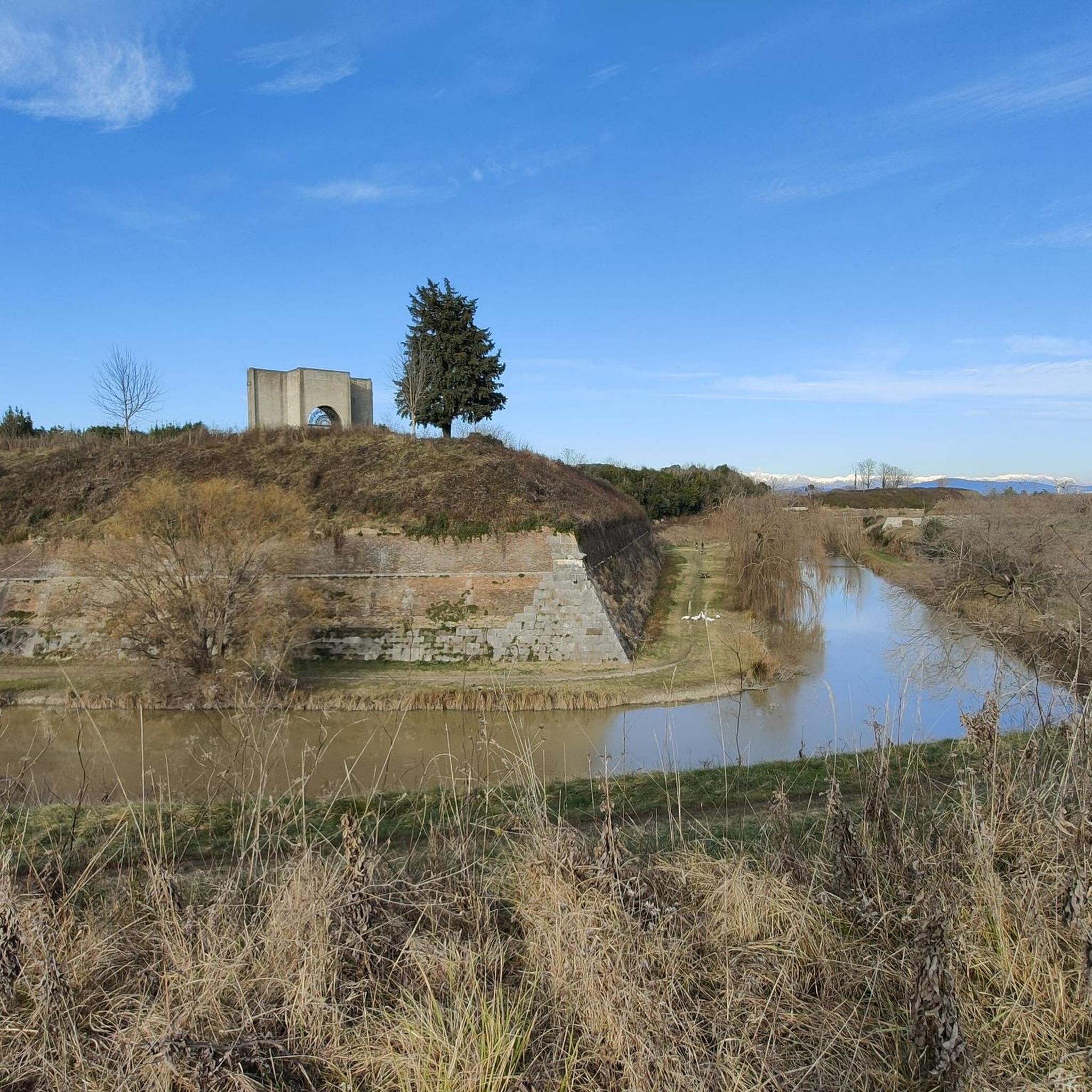
- The most popular attractions is Palmanova, a historical site that is a UNESCO World Heritage…
Last updated: October 9, 2026
Udine Gate
Highlight • Historical Site
Translated by Google •
Tip by

Palmanova
Highlight • Historical Site
Translated by Google •
Tip by

Sign up now to discover places like this
Get recommendations on the best single tracks, peaks, & plenty of other exciting outdoor places.
Alpe‑Adria Cycle Path at Terzo d'Aquileia
Highlight (Segment) • Cycleway
Translated by Google •
Tip by

Roman Forum of Aquileia
Highlight • Historical Site
Translated by Google •
Tip by

Basilica of Saint Mary of the Assumption and Aquileia Archaeological Area
Highlight • Religious Site
Translated by Google •
Tip by

Sign up for free to discover even more attractions around Bagnaria Arsa.
Already have an account?
Start today with a free account
Your next adventure awaits.
Tips from the Community


The Roman Forum is located on the cycle path through Aquileia
5
0

One of the three entrances to the city. Traffic lights regulate traffic for cars, pedestrians and cyclists.
18
1

Ruins from Roman times. They are clearly visible from the FVG1 cycle path and can be visited free of charge during the day.
4
0

The Roman Forum of Aquileia was the center of the town's public life, functioning as a market, administrative center and meeting place for the inhabitants. Today, you can explore the remains of the Roman Forum, including the partially reconstructed basilica and the remains of various other buildings. These ruins offer a glimpse into the daily life and architecture of ancient Roman civilization.
5
0

The Basilica Santa Maria Assunta is the largest and most admired monument of ancient Aquileia. What we see today is the result of various renovations and expansions carried out over the centuries, which however have not compromised the solemnity of the building and the charm that it still exerts on visitors. The true jewel of the basilica is the floor mosaic, which covered the two large worship halls built in the early 4th century. The mosaic in the southern hall, which corresponds to the current basilica, with its 750 m2 is the largest in the Western Christian world. For almost a third of its extension it is dedicated to the story of Jonah and is surprising for the richness and precision of the details. The north hall instead corresponds to the current crypt of the excavations: some of the surviving mosaics, visible around the foundations of the bell tower built at the beginning of the 11th century, are particularly accurate and still mysterious in their symbolism. The crypt of the frescoes, however, dates back to the 9th century and is decorated with images from the 12th century which present a singular union between the Christian arts of the East and the West. In the period April-September it is possible to climb the bell tower, over 70 meters high, which offers a view over the entire city and the surrounding plain up to the sea. The basilica complex also includes the baptistery and its south hall.
10
0

With Salzburg as the starting point, the Alps as the stage point and Grado on the Adriatic as the destination, the cycle path connects extremely beautiful and popular holiday destinations. Because of this and the fact that high Alpine passes are bridged by train through the Tauern lock and are therefore no longer necessary, the cycle path has been a popular transalp since it opened in 2012, as it is not particularly difficult in terms of technology and fitness.
8
0
If you like Roman remains you should stop here. Can be visited without admission.
5
0
Frequently Asked Questions
What historical sites can I visit near Bagnaria Arsa?
The area around Bagnaria Arsa is rich in history. You can explore the UNESCO World Heritage site of Palmanova, a unique star-shaped fortress city with monumental gates like Udine Gate and Porta Aquileia. Another significant historical site is Aquileia, a former Roman colony, where you can visit the Roman Forum of Aquileia and its archaeological area.
Are there any UNESCO World Heritage sites in the vicinity of Bagnaria Arsa?
Yes, there are two prominent UNESCO World Heritage sites nearby. The star-shaped fortress city of Palmanova, built by the Venetians, is recognized for its unique military architecture. Additionally, Aquileia, with its extensive archaeological area including the Roman Forum of Aquileia, is a UNESCO site showcasing its importance as a Roman colony.
What natural attractions are there around Bagnaria Arsa?
While Bagnaria Arsa itself is known for its tranquil rural landscapes in the Friulian plain, the broader region offers natural reserves. The Riserve Naturali di Marano Lagunare, including the Foci of the Stella River reserve and the Valle Canal Novo reserve, provide opportunities to experience lagoon environments and observe local wildlife.
Are there opportunities for cycling near Bagnaria Arsa?
Absolutely. The region is popular for cycling, with routes like the Alpe-Adria Cycle Path at Terzo d'Aquileia passing nearby. You can find various cycling routes, including MTB trails, around the area. For more options, explore the MTB Trails around Bagnaria Arsa guide.
Where can I go hiking or running near these attractions?
There are several options for hiking and running. You can enjoy easy walks around the star-shaped city of Palmanova, such as the Porta Udine – Porta Aquileia loop. For more trails, refer to the Hiking around Bagnaria Arsa and Running Trails around Bagnaria Arsa guides.
Are there family-friendly attractions around Bagnaria Arsa?
Many of the historical sites are suitable for families. Palmanova, with its unique star shape and central Piazza Grande, offers an engaging experience for all ages. Exploring its gates like Udine Gate and Porta Aquileia, or the archaeological area of Aquileia, can be educational and fun for children.
Are any attractions wheelchair accessible?
Yes, the city of Palmanova is noted for its accessibility, including its central square and general layout, making it a good option for wheelchair users.
What museums are available to explore the local culture and history?
Beyond the archaeological sites, you can visit the Civici Musei e Galleria d'Arte Antica, housed in a castle in Udine, featuring 18th-century art. The Museo della Civiltà Contadina nel Friuli Imperiale in Aiello del Friuli offers a deep dive into peasant civilization with over 20,000 items. In Palmanova, the Civico Museo Storico details the city's history.
What do visitors enjoy most about the attractions around Bagnaria Arsa?
Visitors particularly appreciate the well-preserved historical sites, especially the unique star-shaped design of Palmanova and the ancient Roman ruins in Aquileia. The region's cycle paths, like the Alpe-Adria Cycle Path, are also highly rated for their scenic routes and ease of access.
Are there any castles or abbeys to visit in the area?
Yes, you can explore the historic Abbey of Rosazzo, which boasts a millennium of history and overlooks the eastern hills of Friuli. Additionally, the massive Gradisca Castle, built by the Austrians in the 16th century, is another notable historical structure in the vicinity.
What is the best time of year to visit the attractions around Bagnaria Arsa?
The region's rural landscapes and historical sites can be enjoyed throughout much of the year. Spring and autumn offer pleasant temperatures for exploring the outdoor attractions like Palmanova and the archaeological areas. Summer is also popular, though it can be warmer, while winter provides a quieter experience for cultural visits.
Most popular routes around Bagnaria Arsa
Most popular attractions around Bagnaria Arsa

Get inspired with the komoot mobile app


Explore more
Still not found the Highlight you’re looking for? See guides of the top attractions in other regions:
