Attractions and Places To See around Manfredonia - Top 20
Best attractions and places to see around Manfredonia include a blend of historical sites, cultural landmarks, and natural features. This coastal town in Puglia, Italy, serves as a gateway to the Gargano National Park, offering diverse landscapes from mountains to beaches. The area features ancient ruins, medieval castles, and significant religious buildings, alongside extensive forests and a prominent coastline.
Best attractions and places to see around Manfredonia
- The most popular attractions is Monte Calvo, a summit that is the…
Last updated: October 11, 2026
Monte Calvo
Highlight • Summit
Translated by Google •
Tip by

Sanctuary of Saint Michael the Archangel
Highlight • Religious Site
Translated by Google •
Tip by

Sign up now to discover places like this
Get recommendations on the best single tracks, peaks, & plenty of other exciting outdoor places.
Monte Sant'Angelo Castle
Highlight • Castle
Translated by Google •
Tip by
Ragusa Valley
Highlight • Forest
Translated by Google •
Tip by

Tomba di Rotari, San Pietro, and Santa Maria Maggiore (Monte Sant’Angelo)
Highlight • Religious Site
Translated by Google •
Tip by
Sign up for free to discover even more attractions around Manfredonia.
Already have an account?
Start today with a free account
Your next adventure awaits.
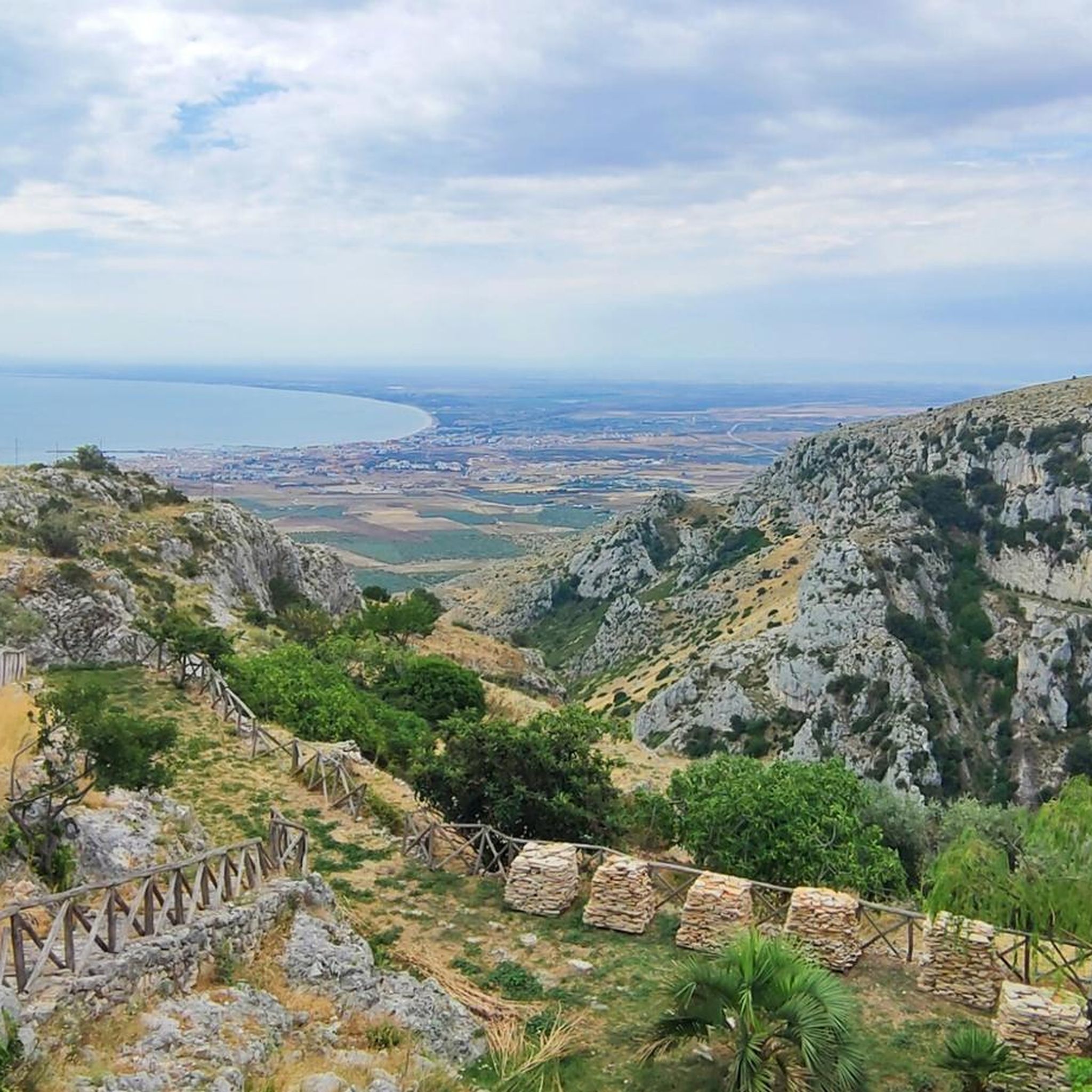
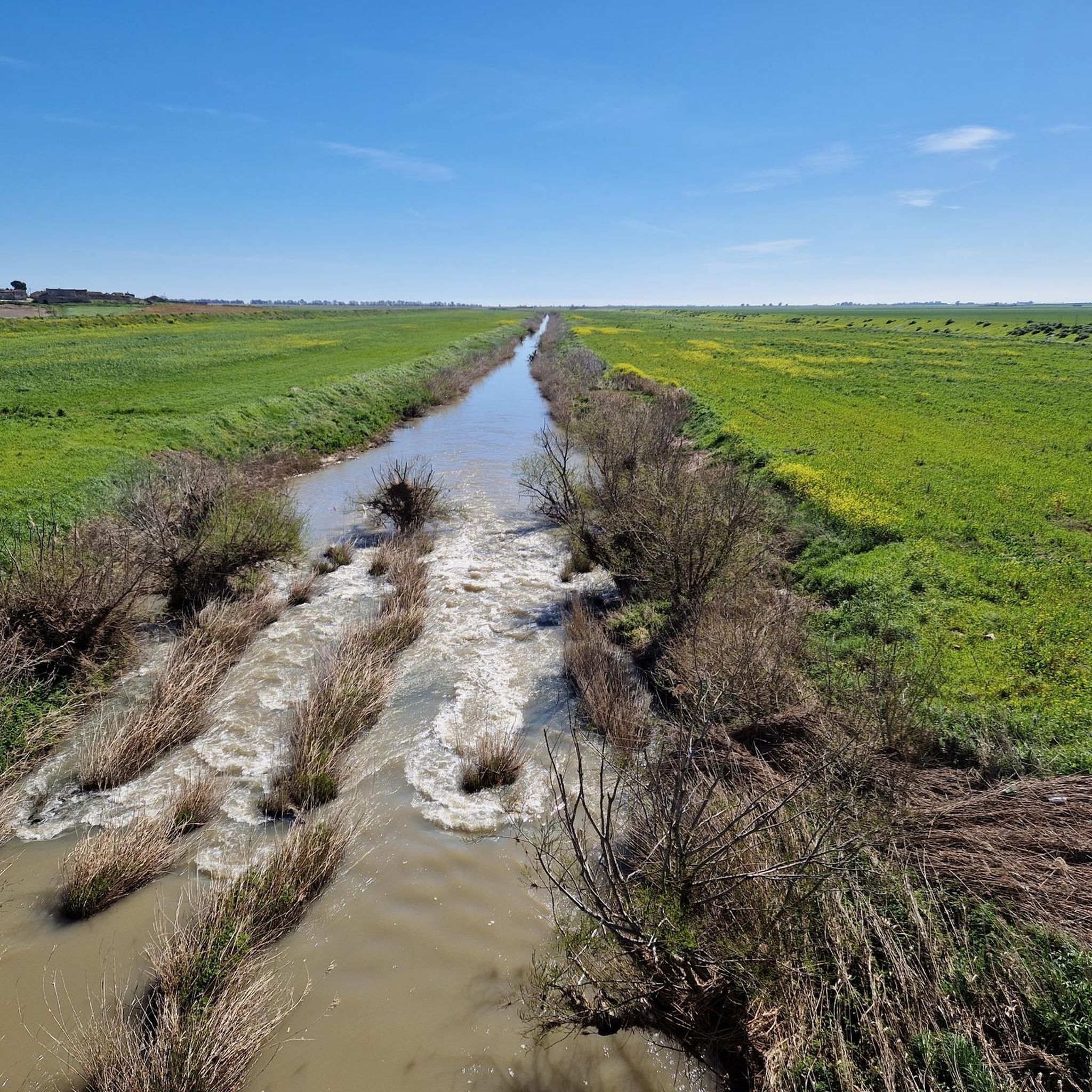
Other adventures around Manfredonia

Tips from the Community

On Monte Calvo, it's best to ascend from the east by mountain bike, despite the numerous unnecessary stone steps that clutter the initial section. The trail, which descends west from the summit to connect with the Sentiero delle Anguille, would be less rideable and much more difficult overall.
1
0

In 2011, the pilgrimage site of Monte Sant'Angelo was added to the UNESCO World Heritage List as one of the seven components of the Lombard site in Italy, Places of Power (568 to 774 AD). The historic site and its surroundings are also protected by the Gargano National Park. The sights are well described in the following link: https://de.m.wikipedia.org/wiki/Monte_Sant%E2%80%99Angelo
2
0
This highlight contains three churches: The Tomba di Rotari (left), a building from the 11th and later centuries with several architectural and artistic-historical features. To the right of the portal is the apse of the 12th-century parish church of San Pietro, which collapsed in the 19th century. Next to it, in close proximity, is the 12th-century church of Santa Maria Maggiore. Source: https://de.m.wikipedia.org/wiki/Monte_Sant%E2%80%99Angelo Santa Maria Maggiore is a church in the Apulian town of Monte Sant'Angelo. It dates primarily from the second half of the 12th century and is part of a complex with two other buildings whose connection is unclear. It is known for its façade and the relief above the portal. The church's interior is basilica-style, meaning it has three naves with a raised central nave. Characteristic of the early Gothic alterations are the pointed arcades and transverse arches of the side aisles. These are supported by pillars preceded by half-columns and pilasters. The church has only three bays, and in relation to its relatively short length, the side aisles and nave are very high. In the third bay, facing the semi-hexagonal choir, the nave is vaulted by a small dome with small round-arch windows; otherwise, the nave is covered by a barrel vault with small lunettes. Source and further information: https://de.m.wikipedia.org/wiki/Santa_Maria_Maggiore_(Monte_Sant’Angelo)
2
0
San Michele – the main church of Monte Sant'Angelo – is a grotto church, a church type particularly favored by the Normans in their newly conquered territories. All that can be seen at the top of the mountain is the church's octagonal bell tower (1273/74) and the two-part entrance hall (1395). The church itself is located inside the mountain. San Michele is a pilgrimage church dedicated to the Archangel Michael. Source: https://de.m.wikipedia.org/wiki/Monte_Sant%E2%80%99Angelo
2
0
Don't miss, if you're in the Bosco Quarto, with its hornbeams and beech trees, the Ragusa Valley, formed by one of the numerous east-west oriented tectonic fissures that mark the Gargano promontory between the Umbra Forest and the area of San Marco in Lamis. It's very easy to cycle through and can be reached by anyone with a basic understanding of cartography and navigation, yet the impression is of being immersed in an environment profoundly removed from any human presence. On the southern slope, near Coppa del Giglio and Casa Natura, runs what was the line of a Decauville a century ago.
0
0

A village perched on the promontory, Monte Sant'Angelo is a place out of time, with its white houses that seem to blend into each other. Worth a visit.
0
0

The Basilica of San Michele Arcangelo, included in the UNESCO heritage, represents one of the most important places of Michaelic worship in Italy. The apparitions of the Archangel in the 5th century AD have given rise to pilgrimages to the cave, consecrated by the celestial Archangel himself, since the Middle Ages.
1
0

1 of the 7 sanctuaries of San Michele that are part of the Sacred Line of San Michele
0
0
Frequently Asked Questions
What historical sites can I explore in and around Manfredonia?
Manfredonia and its surroundings are rich in history. You can visit the imposing Swabian-Angevin Castle, which now houses the National Archaeological Museum of Gargano. Just outside town, the Siponto Archaeological Park features the ancient ruins of Siponto and the Romanesque Basilica of Santa Maria Maggiore, famously enhanced by Edoardo Tresoldi's wire mesh art installation. Don't miss the Monte Sant'Angelo Castle, a significant historical site built between 837 and 838, and the nearby religious complex of Tomba di Rotari, San Pietro, and Santa Maria Maggiore in Monte Sant'Angelo.
Are there any significant religious sites near Manfredonia?
Yes, several important religious sites are accessible from Manfredonia. The Cathedral of San Lorenzo Maiorano in the heart of the old town is a notable example, rebuilt with Romanesque and Baroque elements. Further afield, the Sanctuary of the Incoronata is a Catholic shrine dedicated to the Black Madonna, known for its annual celebration and unique bronze crown. The UNESCO World Heritage Sanctuary of Monte Sant'Angelo is also a must-visit.
What natural attractions are there for nature lovers?
Manfredonia is known as the 'Gateway to Gargano,' offering stunning natural beauty. You can explore the Monte Calvo, the highest peak in the Gargano massif, featuring dense forests and ancient caves. The Ragusa Valley is a forest paradise within the larger Fourth Wood, characterized by a continuous arboreal canopy. The Gargano National Park itself provides breathtaking landscapes, from mountainous interiors to limestone headlands. For birdwatching, visit the ecologically significant Oasi Lago Salso, a WWF-affiliated wetland.
What outdoor activities can I do near Manfredonia?
The area around Manfredonia is perfect for outdoor enthusiasts. You can find numerous hiking trails, such as the moderate 'Valley of the Hermitages of Pulsano Trail' or the 'From Manfredonia to Siponto on the beach of the Gulf of Manfredonia'. For cycling, options range from easy routes like 'Fisherman’s Monument – Shady pine avenue loop' to challenging ones like 'Coast view – Arch of San Felice loop'. Mountain biking is also popular, with routes like 'Casa Natura, Valle Ragusa — Giro ad anello'. You can find more details on these activities in the hiking guide, cycling guide, and MTB trails guide for Manfredonia.
Are there family-friendly attractions or activities in Manfredonia?
Yes, Manfredonia offers several family-friendly options. The Spiaggia di Siponto is a popular beach with shallow, calm waters and playgrounds along the promenade, ideal for families. The Manfredonia Seafront Promenade is perfect for leisurely strolls with children. The Sanctuary of the Incoronata is also listed as family-friendly, offering a cultural experience. Many of the natural parks and beaches provide open spaces for children to enjoy.
Where can I find the best viewpoints around Manfredonia?
For panoramic views, consider visiting Monte Calvo, which offers expansive vistas from the highest peak in the Gargano massif. The Monte Sant'Angelo Castle also provides excellent viewpoints over the surrounding area. Additionally, the Manfredonia Seafront Promenade and Marina del Gargano offer beautiful sea views, especially at sunset.
What is the best time of year to visit Manfredonia?
Manfredonia is a coastal town in Puglia, Italy, making spring (April-May) and autumn (September-October) ideal for visiting. During these seasons, the weather is pleasant for exploring historical sites and enjoying outdoor activities without the intense heat of summer. Summer (June-August) is perfect for beach activities and enjoying the lively atmosphere of the Marina del Gargano, though it can be quite warm and crowded. The Carnival of Manfredonia, a well-known event, attracts many visitors annually, typically occurring before Lent.
Can I find beaches suitable for swimming near Manfredonia?
Absolutely. The Spiaggia di Siponto is a popular beach located near the town, known for its shallow and calm waters, making it ideal for swimming and families. The broader Gargano coastline, accessible from Manfredonia, features numerous sandy beaches and coves perfect for swimming and enjoying the Adriatic Sea.
What is the Centro Storico (Historic Center) like in Manfredonia?
Manfredonia's Centro Storico offers a charming glimpse into the city's medieval past. It features a network of low-rise stone buildings, narrow streets, and open squares. This area has a vibrant atmosphere, especially in the evenings, and is home to landmarks like the Cathedral of San Lorenzo Maiorano and Piazza del Popolo, overlooked by the Town Hall in the former monastery of San Domenico.
Are there any museums in Manfredonia?
Yes, the National Archaeological Museum of Gargano is housed within the Swabian-Angevin Castle. It showcases a rich collection of prehistoric artifacts, including 'Stele Daunie' (decorated limestone funerary monuments), Mycenaean-style jars, bronzes, ceramics, and fascinating underwater archaeological finds, offering deep insights into the region's ancient history.
What are some notable churches to visit in Manfredonia?
Beyond the main Cathedral of San Lorenzo Maiorano, Manfredonia has several other churches of historical and artistic interest. These include the Church of San Domenico, rebuilt in Gothic style and housing significant artworks, the Church of San Benedetto with its stucco decorations, and the Church of San Francesco, known for its 17th-century wooden crucifix. The Church of Santa Chiara also features beautiful Baroque altars.
What are some popular nearby excursions from Manfredonia?
Manfredonia serves as an excellent base for exploring the wider Gargano region. A popular excursion is to Monte Sant'Angelo, a charming medieval town famous for its UNESCO World Heritage Sanctuary and panoramic views. Coastal towns like Mattinata and Vieste are also easily accessible, offering fantastic seaside experiences and further exploration of the Gargano National Park's diverse landscapes.
Most popular attractions around Manfredonia

Get inspired with the komoot mobile app


Explore more
Still not found the Highlight you’re looking for? See guides of the top attractions in other regions:
