Attractions and Places To See around Bentivoglio - Top 20
Attractions and places to see around Bentivoglio offer a blend of historical landmarks, cultural sites, and natural beauty in the province of Bologna, Italy. The town's history dates back to the Villanova period, with Roman influence and a strong connection to the Bentivoglio noble family. Visitors can explore ancient waterways, significant wetlands, and historical buildings. The area provides diverse points of interest for those interested in history, nature, and local culture.
Best attractions and places to see around Bentivoglio
- The…
Last updated: July 19, 2026
La Rizza Nature Reserve
Highlight • Natural
Translated by Google •
Tip by

Blonde Bridge
Highlight • Bridge
Translated by Google •
Tip by

Sign up now to discover places like this
Get recommendations on the best single tracks, peaks, & plenty of other exciting outdoor places.
Sign up for free
Trebbo di Reno cycle path
Highlight (Segment) • Cycleway
Translated by Google •
Tip by
Galliera Gate
Highlight • Monument
Translated by Google •
Tip by
Palazzo Rosso (Pizzardi Palace), Bentivoglio
Highlight • Historical Site
Privileged residence of the Marquis Carlo Alberto Pizzardi, Palazzo Rosso originally served as a manor house but also as the administrative headquarters of a large agricultural and proto-industrial company …
Translated by Google •
Tip by

Sign up for free to discover even more attractions around Bentivoglio.
Sign up for free
Already have an account?
Start today with a free account
Your next adventure awaits.
Login or Signup

Tips from the Community

The Porta Galliera was a gate or portal in the former medieval outer walls of the city of Bologna, Italy. It is the most ornate of all the remaining gates. The gate was built between 1659 and 1661 according to designs by the architect Bartolomeo Provaglia. The inner portal has a picturesque Baroque façade, while the outer portal emphasizes the defensive military role of a gate. The road from here led to Ferrara. In 1330–1333, during a siege, Cardinal Bertrand du Pouget ordered the construction of a castle near this gate. In the 20th century, the walls were demolished and the gate isolated. Restorations were carried out in 1926 and from 2001 to 2003. Source: smart-guide.com
0
0

Historic building overlooking the road connecting Bentivoglio to Castel Maggiore
0
0

Frabboni_ Privileged residence of the Marquis Carlo Alberto Pizzardi, Palazzo Rosso originally served as a manor house but also as the administrative headquarters of a large agricultural and proto-industrial company called "Tenuta Pizzardi". The building was built at the behest of Pizzardi between 1890 and 1893, based on a design by the municipal engineer of Bentivoglio Guido Lisi. ... Palazzo Rosso is an incredible residence, to be observed calmly and discovered little by little. The gaze runs and rests on its external walls, made of vermilion-coloured bricks, to linger on valuable decorative details and to perceive ever-new elements, in a game of discovery and amazement. The privileged point for contemplating the building is on the left bank of the Navile canal, immersed in nature and surrounded by beauty. From there the palace appears at the center of a suggestive and unreal postcard composition, which thanks to the perspective vision includes the mill building and the castle walls. In front of the observer, an evergreen magnolia rises majestically and only partially reveals the volume of the building, a building that rises on three floors and develops longitudinally. Behind the magnolia it is possible to observe the southern façade of the building, in which there is a window adorned with terracotta and preceded by an elegant double loggia that extends towards the canal. ... (Source: https://palazzorossobentivoglio.it/leditore/ )
0
0
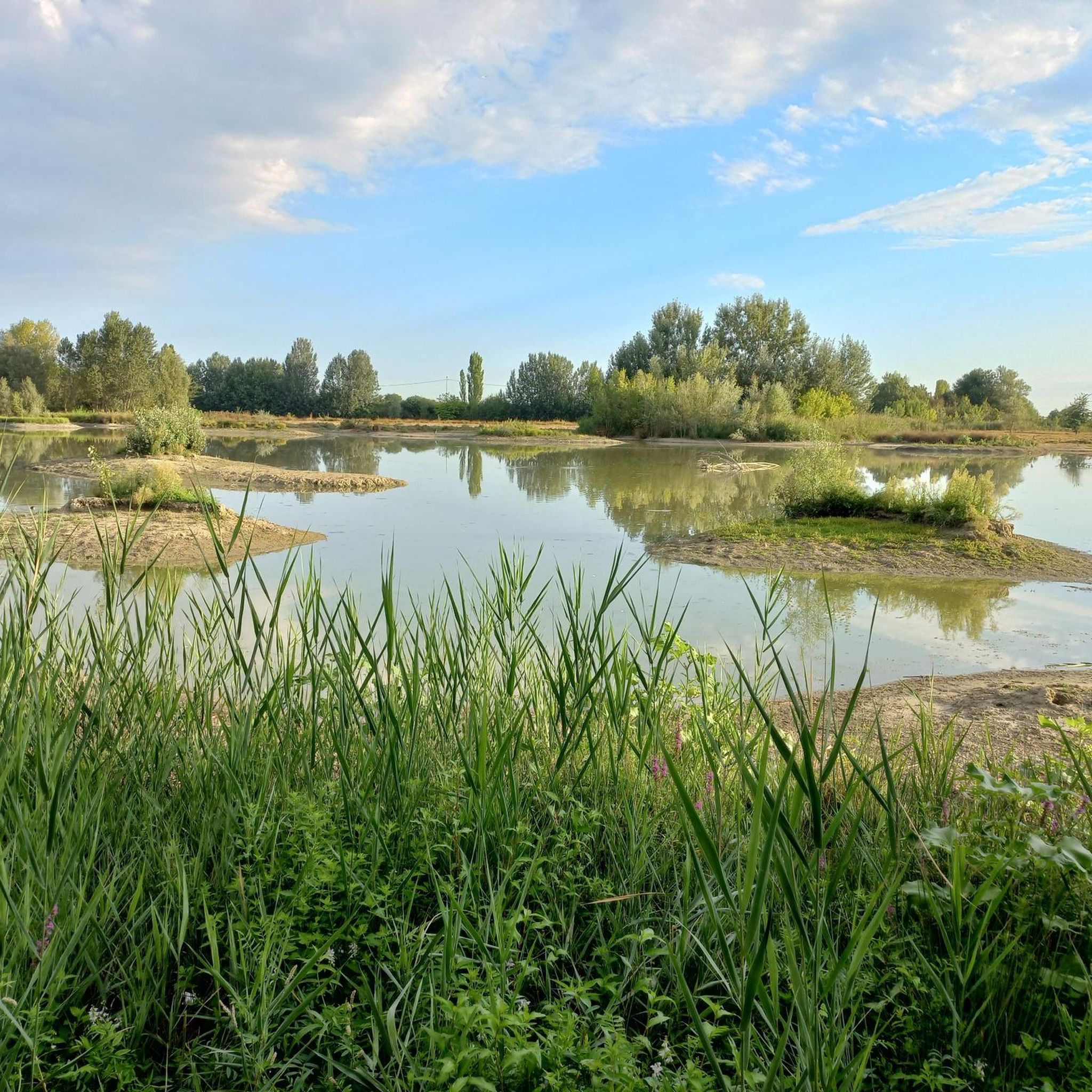
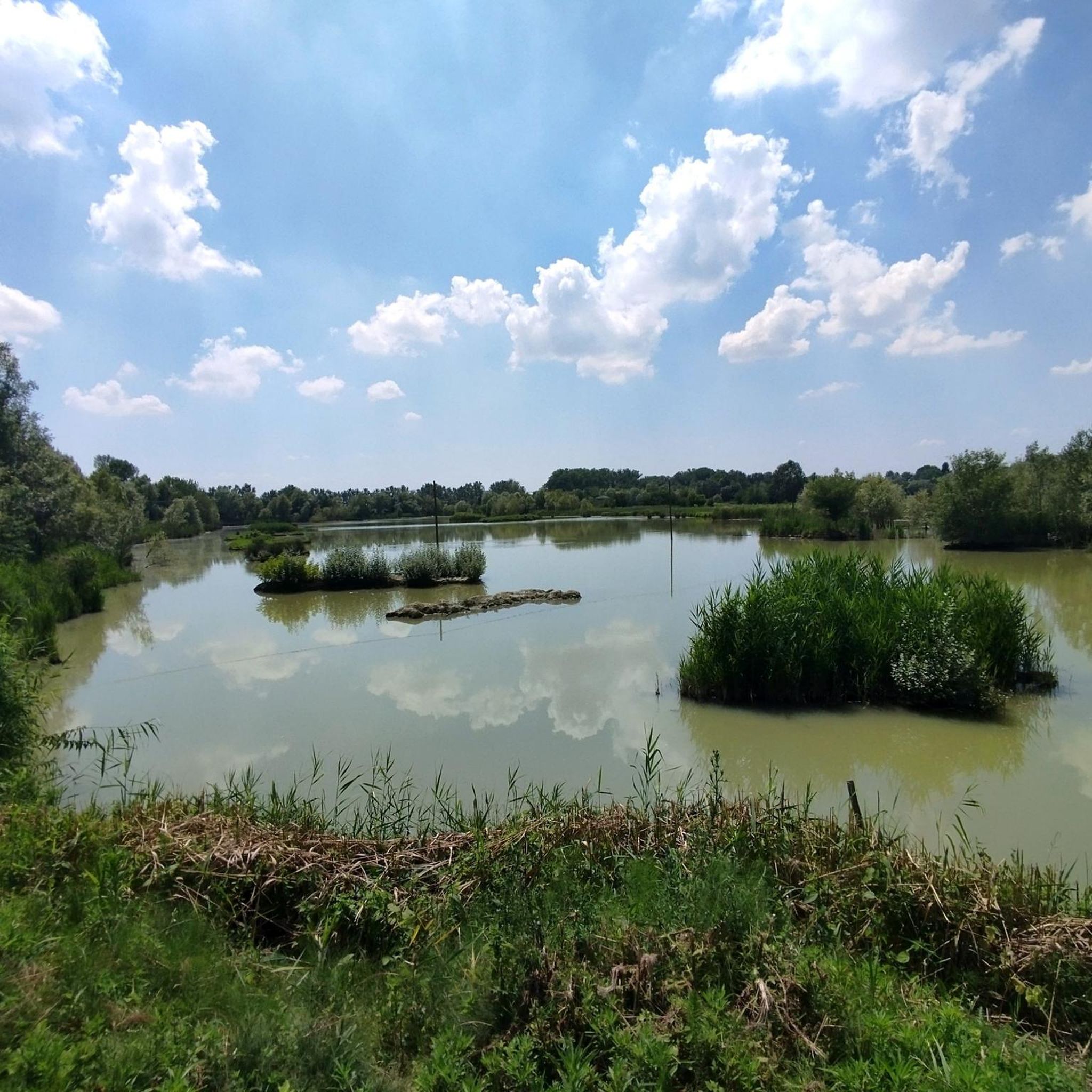
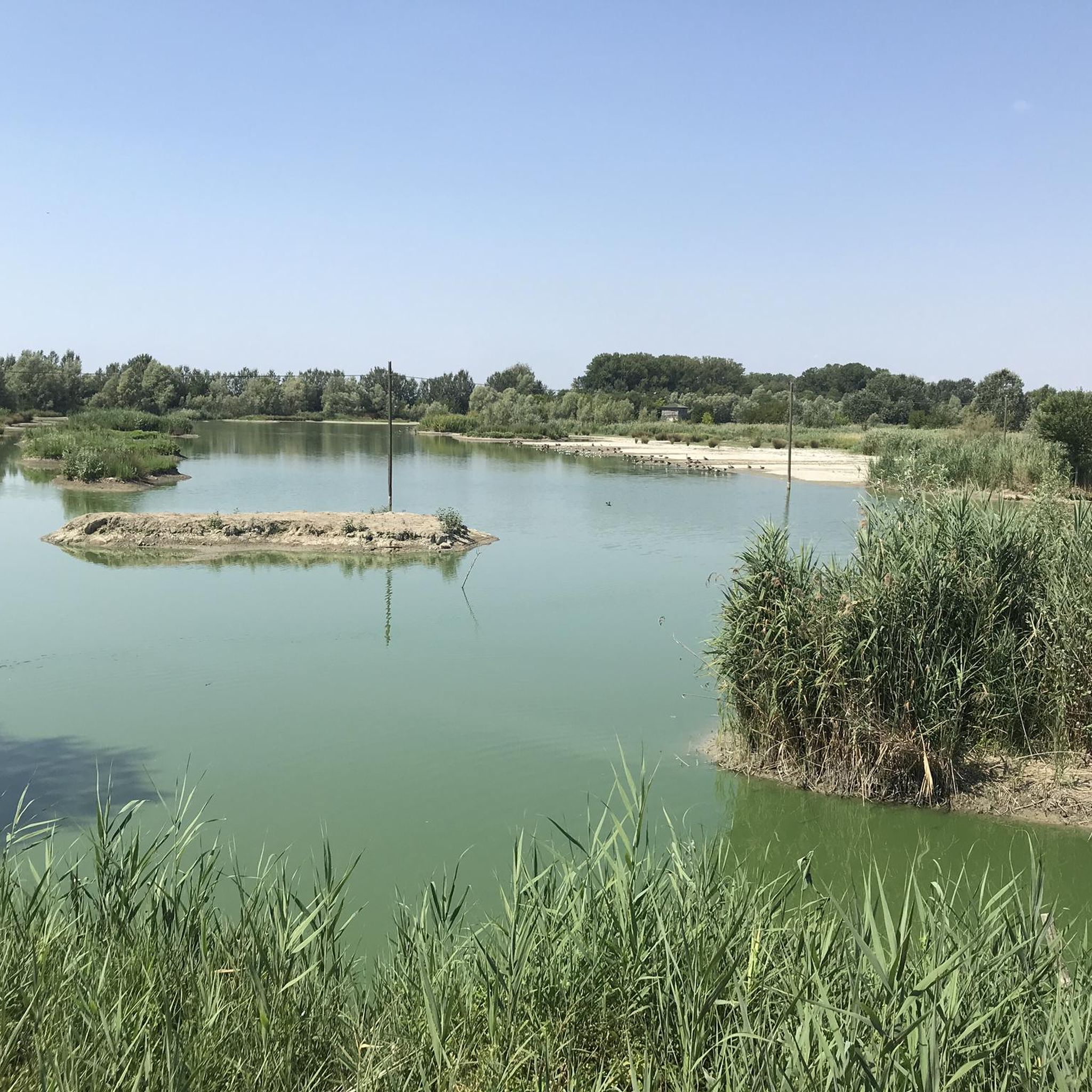
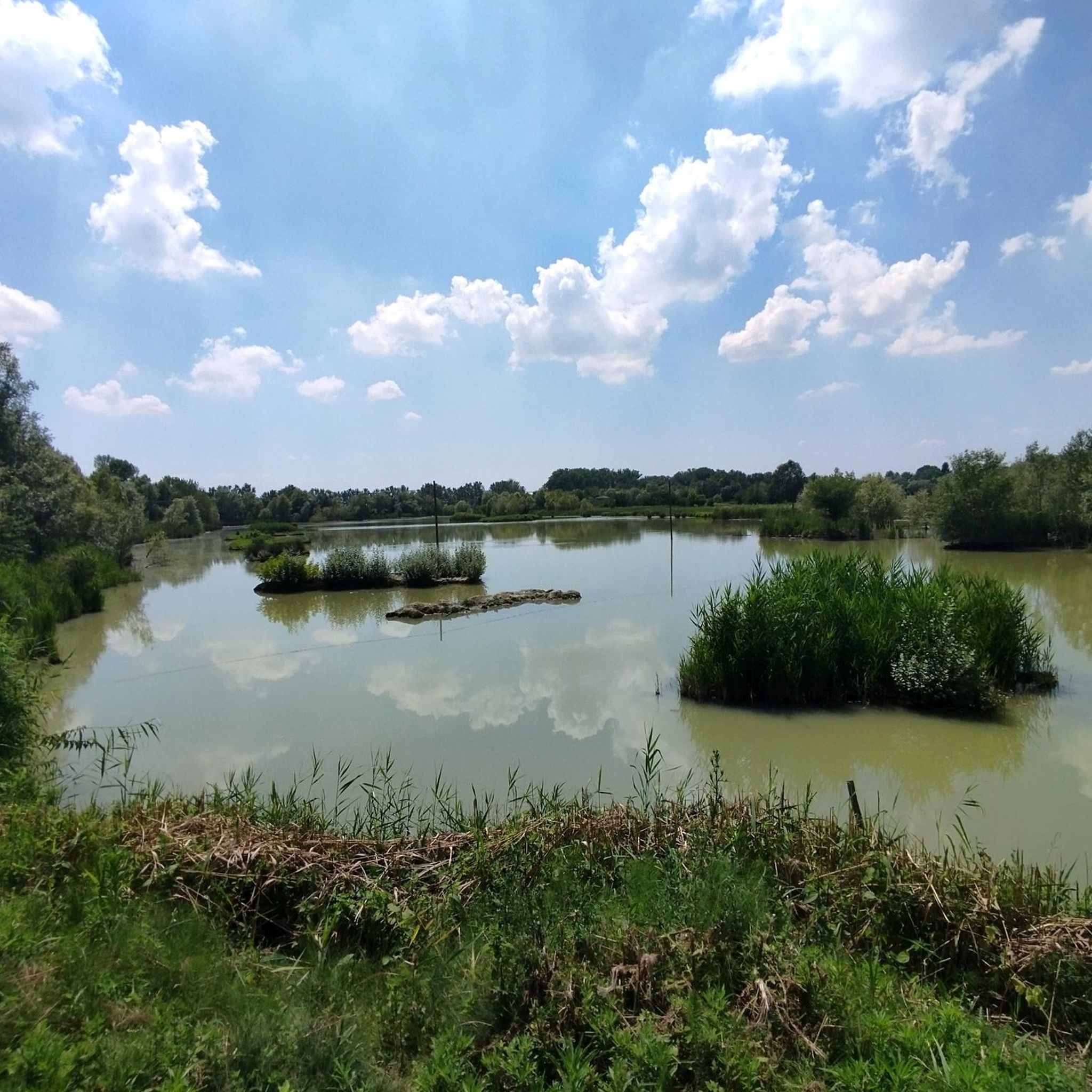
The protected natural area of the Ex Risaia di Bentivoglio, also known by the name of Oasi La Rizza, is located in the northern part of the municipal territory and located in that part of the plain affected, in the recent past, by the cultivation of rice: the area of the former rice fields. Before the rice fields, in historical times, still in the eighteenth and nineteenth centuries, the entire area was characterized by marshy land that flooded during the periodic flooding of the rivers, which were then poorly or not at all dammed. ... Once the rice farming activity ended, the agricultural landscape was replaced by dry crops such as wheat, beetroot, corn ... The nineties saw a small but substantial revolution in this monoculture landscape, thanks to the provision of community contributions in 1998 what was an anonymous triangle of fields was transformed into the natural area we know today, through environmental restoration interventions natural features typical of the plain. ... (Source: https://www.oasilarizza.it/it-it/oasi/rubriche/il-territorio-e-la-sua-storia-3181-1-7111ab2cdc775bb24e1c1cd44521fd51 )
1
1

Worth seeing city gate near the train station.
2
0

Forty hectares of wetlands and woods where you can observe lots of birdlife. A perfect place for bird watching or fish watching. There is also a shed with glass under the water to observe the habitat. This can be the perfect place to stop. A restaurant-hostel is open on Saturday and Sunday.
6
0

For me it's an old route that I used to do as a child along the Navile canal, now I live in Cento and to get to and from home I added 2 new sections.
0
0

The Trebbo di Reno cycle path is a cycle path located in the province of Bologna, in Emilia-Romagna, Italy. This cycle path follows the course of the Rhine River, offering cyclists a scenic and pleasant route along the banks of the river. Description and Features: The Trebbo di Reno cycle path extends for several kilometers along the Reno river, starting from the town of Trebbo di Reno, a small town located north of Bologna. From here, the cycle path continues east, following the course of the Rhine River through rural landscapes and green areas. The cycle path is mostly flat and well maintained, making it suitable for both expert cyclists and anyone who wishes to enjoy a peaceful ride surrounded by nature. Along the route, cyclists can admire the beauty of the Rhine River and its banks, as well as pass through picturesque rural landscapes and see some interesting nature areas. The Trebbo di Reno cycle path also offers the opportunity to visit various locations and small villages along the route, where it is possible to stop for a break or to discover the culture and tradition of the region. This cycle path is much appreciated by those who love cycle tourism and want to explore the Bolognese countryside in an eco-friendly and relaxing way.
0
0
Frequently Asked Questions
What historical landmarks can I explore in Bentivoglio?
Bentivoglio offers several significant historical landmarks. The Castle of Bentivoglio, a former leisure residence of the noble family, features 16th-century frescoes and is open for events and guided tours. Another notable site is Palazzo Rosso, an impressive Art Nouveau building housing the Municipal Library, known for its 'Sala dello Zodiaco'. You can also find the historic Mulino Pizzardi, a large mill dating back to the mid-1300s, showcasing Bolognese industrial archaeology.
Where can I experience nature and wildlife in Bentivoglio?
For nature and wildlife, visit La Rizza Nature Reserve (Oasi La Rizza). This important wetland complex, formerly rice fields, is a haven for diverse birdlife, including white storks. It features pedestrian and cycle paths, observation huts for birdwatching, and even an underwater viewing shed for fish. The reserve spans 40 hectares of wetlands and woods, making it ideal for observing various species.
Are there any cultural sites or museums in Bentivoglio?
Yes, Bentivoglio is home to the Museo della Civiltà Contadina (Museum of Rural Culture) at Villa Smeraldi. This museum is considered one of Italy's most important for rural culture, portraying the history of the plain through its crops, agricultural machinery, and tools from the 1800s to 1900s. The museum is set within a beautiful English-style historic park.
What cycling opportunities are available around Bentivoglio?
Bentivoglio offers excellent cycling opportunities. The Trebbo di Reno cycle path follows the course of the Rhine River, providing a scenic and mostly flat route through rural landscapes. Additionally, the Navile Canal, an ancient waterway, has cycle paths along its banks, connecting various significant buildings and offering a pleasant ride. You can find many cycling routes, including easy touring bicycle routes like the 'Bentivoglio Castle – La Rizza Nature Reserve loop', on the Cycling around Bentivoglio guide.
Are there family-friendly attractions in Bentivoglio?
Bentivoglio has several family-friendly options. La Rizza Nature Reserve is perfect for families, offering birdwatching and easy paths. The Trebbo di Reno cycle path and the paths along the Navile Canal are suitable for family bike rides. Historical sites like the Castle of Bentivoglio and Palazzo Rosso also welcome families, offering educational and engaging experiences.
What is the Navile Canal and why is it important?
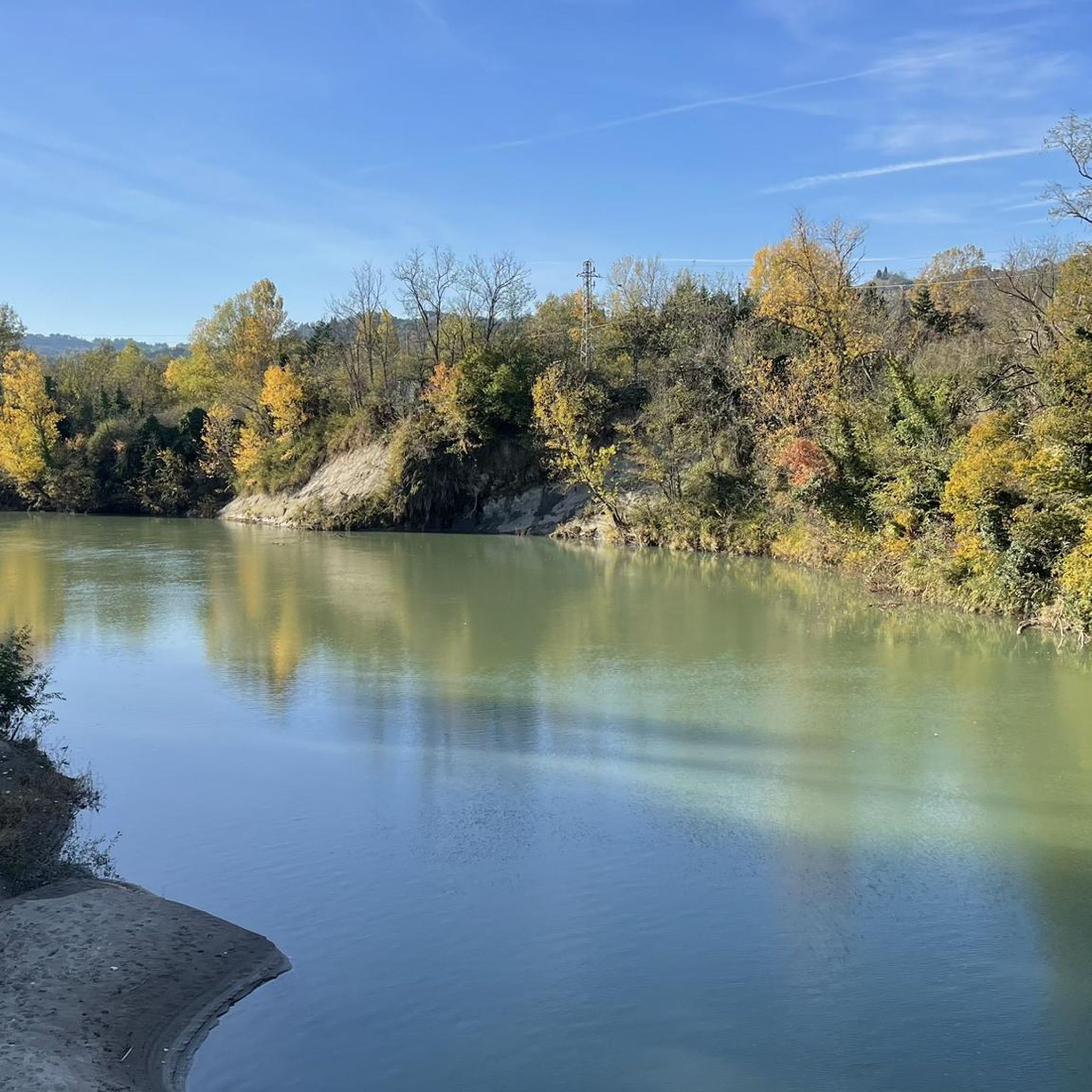
The Navile Canal is an ancient waterway that played a crucial role in Bentivoglio's history, connecting it to Venice and the Adriatic Sea. It was vital for communication and trade, even transporting rice from local fields to Bologna. Many significant buildings in Bentivoglio are situated along its banks, and today, its paths offer scenic routes for walking and cycling, including passing by the Blonde Bridge.
Can I find any unique architectural sites in the area?
Beyond the Castle of Bentivoglio, you can discover unique architecture such as Palazzo Rosso, an exquisite Art Nouveau building with splendid decorations, including the 'Sala dello Zodiaco'. Another interesting site is Palazzo Vivaio, built by Marquis Pizzardi in 1889, which served as a residence during the castle's restoration.
What kind of outdoor activities can I do near Bentivoglio's attractions?
Near Bentivoglio's attractions, you can enjoy various outdoor activities, especially cycling. The area offers numerous routes for road cycling, mountain biking, and touring. For example, you can explore routes like the 'Oasi La Rizza – Navile Canal loop' for mountain biking or the 'Bentivoglio Castle – La Rizza Nature Reserve loop' for touring. Find detailed routes in the Road Cycling, MTB Trails, and Cycling around Bentivoglio guides.
Are there any accessible attractions for visitors with mobility needs?
While specific accessibility details vary, Palazzo Rosso is noted as wheelchair accessible, offering an opportunity to experience its Art Nouveau architecture and cultural activities. For outdoor experiences, some sections of the cycle paths, being mostly flat and well-maintained, may also be suitable, but it's always advisable to check specific route conditions.
What is the Blonde Bridge?
The Blonde Bridge is a seventeenth-century structure located near the Lungonavile cycle path. Historically, it was used for the passage of horses that pulled boats along the Navile Canal, making it a significant landmark reflecting the region's past transportation and trade routes.
What is the best time to visit Bentivoglio for outdoor activities?
The best time to visit Bentivoglio for outdoor activities like cycling and exploring nature reserves is typically during the spring (April to June) and autumn (September to October). During these seasons, the weather is generally mild and pleasant, ideal for enjoying the cycle paths, birdwatching at Oasi La Rizza, and exploring historical sites without the intense heat of summer.
Are there any hidden gems or lesser-known spots worth visiting?
Beyond the main attractions, consider exploring Mulino Pizzardi, an impressive example of industrial archaeology with machinery from the early 20th century. Another lesser-known spot is Palazzo Vivaio, built by Marquis Pizzardi in 1889, which offers a glimpse into the region's historical residences. These sites provide a deeper dive into Bentivoglio's rich past.
Most popular routes around Bentivoglio
Most popular attractions around Bentivoglio

Get inspired with the komoot mobile app


Explore more
Still not found the Highlight you’re looking for? See guides of the top attractions in other regions:
