Attractions and Places To See around Molinella - Top 20
Best attractions and places to see around Molinella, located in the Metropolitan City of Bologna, Italy, offer a mix of historical landmarks and natural features. The town's name reflects its past with numerous mills, shaped by its land and water. Visitors can explore ancient castles, religious sites, and wetlands. The area is also characterized by the Reno River and proximity to the Po Delta Park.
Best attractions and places to see around Molinella
- The most popular attractions is Delizia di Benvignante, a castle that was built in 1464 and is considered one of the most important delights of the Borso d'Este period. It was declared a World Heritage Site by Unesco in 2000.
- Another must-see spot is San Martino dei Manzoli Castle, a castle. This structure originated in 1411 as an aristocratic residence, featuring military defenses like walls and moats.
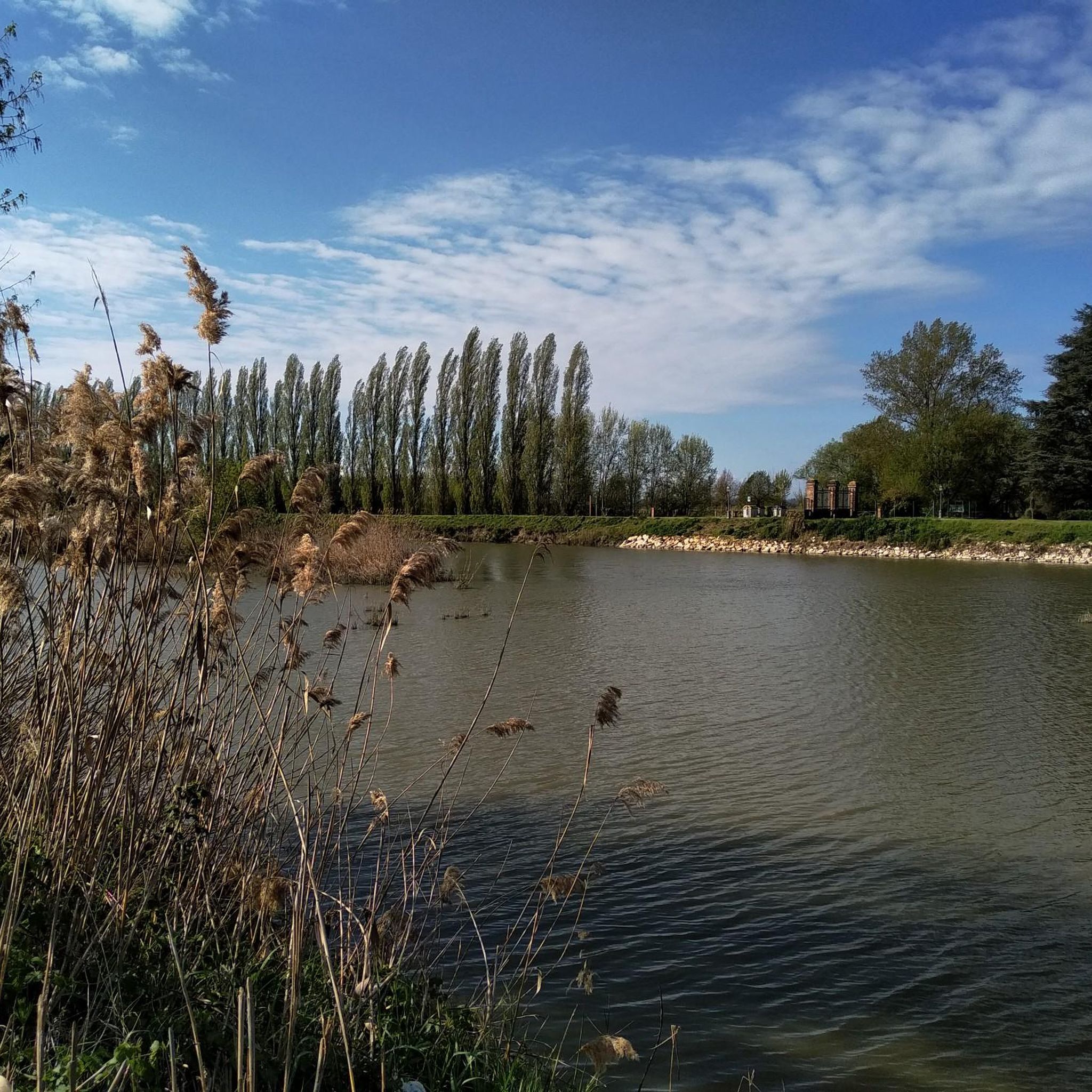
- Visitors also love Casetto Bassarone Hut (CAI Argenta), a hut. This old guard house of the Reno river dates back to the early 20th century and is now a self-managed hut.
- Molinella is known for its historical sites, religious buildings, and natural wetlands. The region offers a variety of attractions to see and explore, from ancient castles to sanctuaries.
- The attractions around Molinella are appreciated by the komoot community, with 15 upvotes and 8 photos shared by visitors.
Last updated: May 9, 2026
San Martino dei Manzoli Castle
Highlight • Castle
Although the manor was born as an aristocratic residence, it was equipped with military-type defenses, such as walls, battlements and moats. In fact, the castle has a rectangular plan with a spacious internal courtyard; at the four corners there are defensive towers and the defense aspect accentuated by the large moat that surrounds it, as well as by the drawbridges and the grandeur of the main tower. It served as a noble residence for a short time in 1500 (from 1514 to 1532) when Leo X granted Marchione Manzoli the jurisdiction of San Martino with the title of Count.
The Castle was restored and decorated in the 1500s and 1600s, but the restoration work took place in 1883-85, when it was owned by the Cavazza Counts, by Alfonso Rubbiani and Tito Azzolini. The curtains and crenellated towers that characterize it give a decidedly fairytale aspect to the castle which is located in a centuries-old park.
Translated by Google •
Tip by

Delizia di Benvignante
Highlight • Castle
The Delizia, built in 1464 by Pietro Benvenuto degli Ordini, was commissioned by Borso d'Este who donated it to his faithful secretary Teofilo Calcagnini, who made the residence available for meetings of the Filareti Academy. In 1481 the beautiful Beatrice d'Este stayed there. It then passed to various owners, in the 19th century the Delizia was purchased by Count Luigi Gulinelli (whose coat of arms still appears today above the entrance door) who modified the structure by raising it and making it more imposing and squared and surrounding it by four hectares of park. He also endowed it with famous stables for breeding racing horses which were also visited by Vittorio Emanuele II. Currently the residence belongs to the municipality of Argenta.
In 2000, the Delizia di Benvignante was declared a World Heritage Site by Unesco, together with other Delights.
Translated by Google •
Tip by

Sign up now to discover places like this
Get recommendations on the best single tracks, peaks, & plenty of other exciting outdoor places.
Sign up for free
Tempio della Celletta
Highlight • Religious Site
In front of the building there are two benches which invite to a short rest.
Translated by Google •
Tip by

Church of the Blessed Virgin of the Elm
Highlight • Religious Site
...
In 1660 a terrible famine was afflicting the Portuense area, the priest Apollonio Boari assiduously went to pray to the Virgin in the countryside just outside the town, at the foot of a large elm tree on which a small plaster image of the Madonna with her child was hanging.
The people followed the example of the priest by joining "in prayerful pilgrimage" in a journey of faith still recognizable today from the Collegiate Church to the small Sanctuary.
The famine ended almost miraculously, so much so that the entire population asked to erect a sacred building to accommodate the small chalk tablet.
Even today in the month of May the plaster statuette is carried in procession through the streets of the town which for the occasion is decorated with drapes and rose petals, while the beloved "Madonnina" is surrounded by soft lights, prayers and songs .
(Source: comune.portomaggiore.fe.it/17/163/vivere-portomaggiore/visita-portomaggiore/chiese)
Translated by Google •
Tip by

Casetto Bassarone Hut (CAI Argenta)
Highlight • Mountain Hut
The Casetto Cai which we renamed "Refuge" is an old guard house of the Reno river dating back to the early twentieth century. The house, built during the reclamation operations of the Argentine territory as a garrison and guardian of the works themselves, hosted groups of evacuees from the surrounding towns during the Second World War and was inhabited by the last custodian until the 1960s. The house, owned by the State Property, was given in concession to the Province and from this to the Municipality of Argenta, which through an agreement assigned it for use to the local Section of the Italian Alpine Club. The Hut is self-managed, consisting of a ground floor intended as a main room with cooking area and multi-purpose room and a first floor which is currently not usable.
...
(Source: caiargenta.it/il-rifugio-casetto )
Translated by Google •
Tip by
Sign up for free to discover even more attractions around Molinella.
Sign up for free
Already have an account?
Start today with a free account
Your next adventure awaits.
Login or Signup
Tips from the Community

Pills of history on the Temple of the Celletta can be found on https://www.vallidiargenta.org/lecomuseo/laculturanonsiferma/pillole/tempio-della-celletta/
0
0
Temple of the Celletta or Sanctuary of the Blessed Virgin of the Celletta The Sanctuary of the Celletta, with its unmistakable elliptical shape, was built in the early seventeenth century on the site of a Renaissance cell to accommodate the growing number of faithful who visited the place following an apparition of the Madonna. ... Every year on 7 October the Celletta Festival takes place which evokes the transport of the venerated image to the temple as thanks of the population who escaped the 1624 earthquake. (Source: https://www.ferraraterraeacqua.it/it/argenta/scopri-il-territorio/arte-e-cultura/abbazie-monasteri-santuari/santuario-della-beata-vergine-della-celletta)
0
0
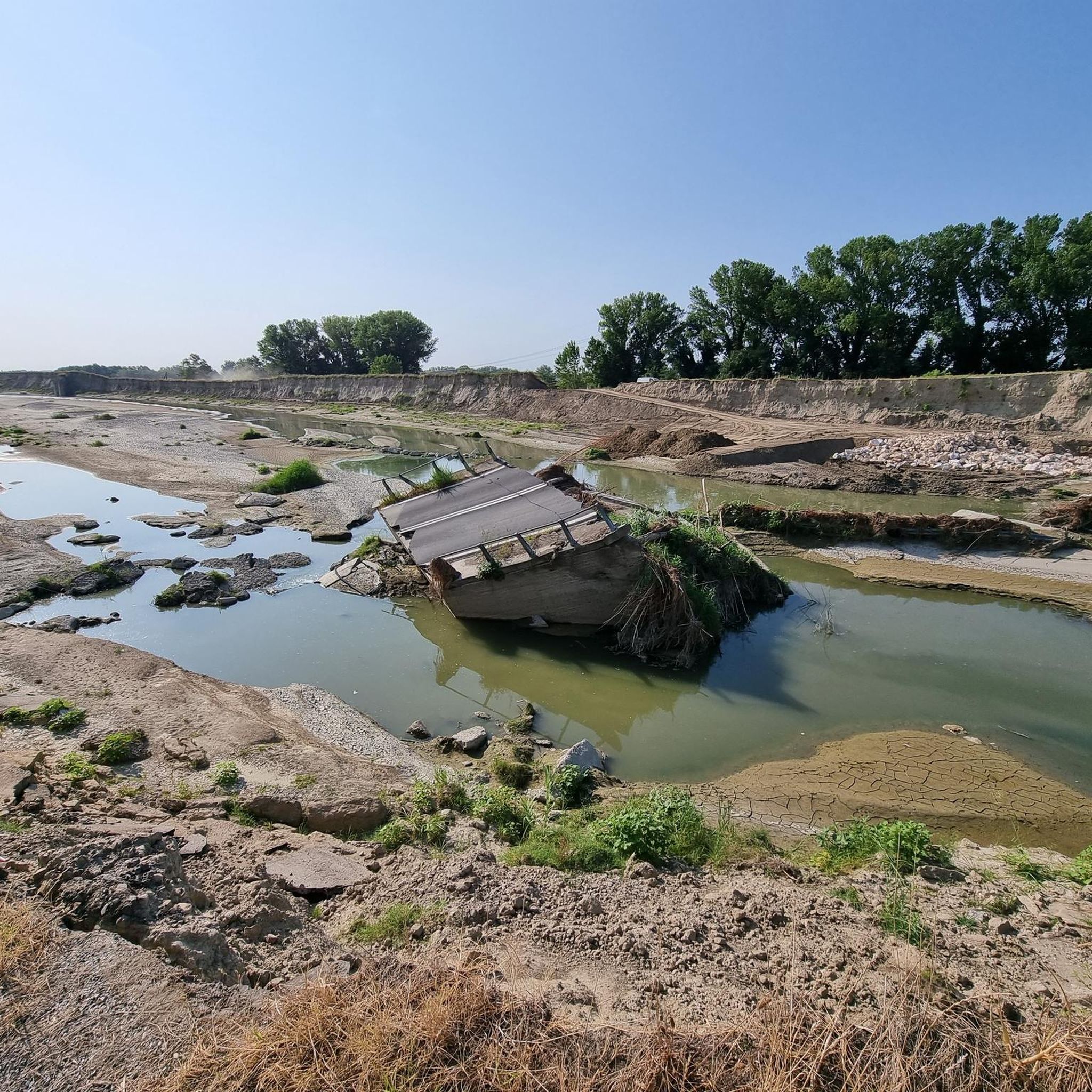
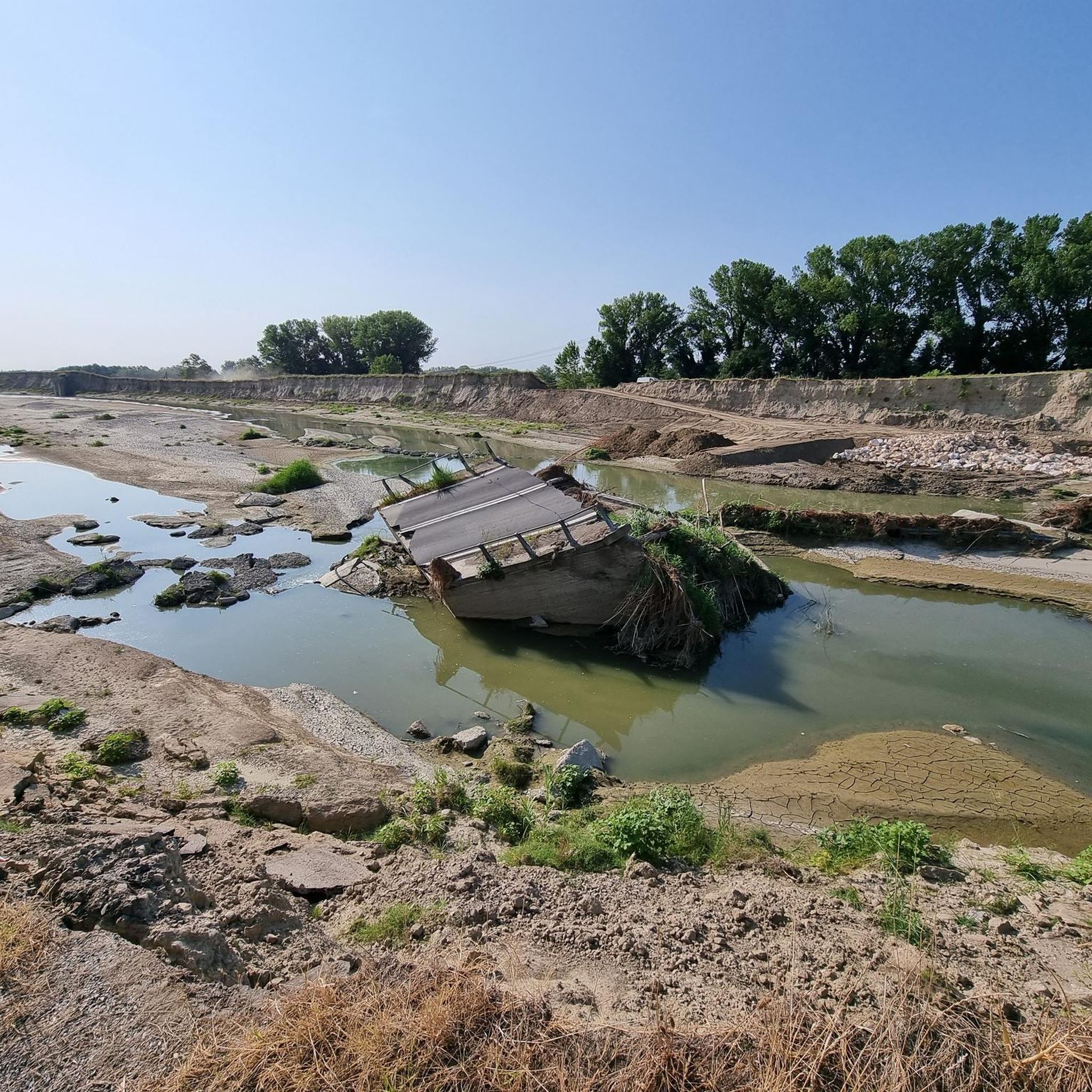
Casetto Bassarone Social Hut CAI Argenta Section “Bruno Soldati” The Casetto Cai which we renamed "Refuge" is an old guard house of the Reno river dating back to the early twentieth century. The house, built during the reclamation operations of the Argentine territory as a garrison and guardian of the works themselves, hosted groups of evacuees from the surrounding towns during the Second World War and was inhabited by the last custodian until the 1960s. The house, owned by the State Property, was given in concession to the Province and from this to the Municipality of Argenta, which through an agreement assigned it for use to the local Section of the Italian Alpine Club. The Hut is self-managed, consisting of a ground floor intended as a main room with cooking area and multi-purpose room and a first floor which is currently not usable. ... (Source: https://www.caiargenta.it/il-rifugio-casetto/ )
0
0
The small church was built on land donated by Count Aventi not far from where a large elm tree stood and solemnly inaugurated on 5 May 1666. Three centuries later in 1966 it was consecrated as a Marian sanctuary. ... In 1660 a terrible famine was afflicting the Portuense area, the priest Apollonio Boari assiduously went to pray to the Virgin in the countryside just outside the town, at the foot of a large elm tree on which a small plaster image of the Madonna with her child was hanging. The people followed the example of the priest by joining "in prayerful pilgrimage" in a journey of faith still recognizable today from the Collegiate Church to the small Sanctuary. The famine ended almost miraculously, so much so that the entire population asked to erect a sacred building to accommodate the small chalk tablet. Even today in the month of May the plaster statuette is carried in procession through the streets of the town which for the occasion is decorated with drapes and rose petals, while the beloved "Madonnina" is surrounded by soft lights, prayers and songs . (Source: https://www.comune.portomaggiore.fe.it/17/163/vivere-portomaggiore/visita-portomaggiore/chiese)
0
0

In the locality of Soverzano, near Minerbio, the castle of San Martino, also known as the Manzoli family, stands surrounded by a sparse grove. The structure saw its origins in the year 1411 when the Bolognese Knight Bartolomeo Manzoli wanted it to be built as an aristocratic residence around the ancient Ariosti tower, (which in turn had stood on the edge of the swamp since the thirteenth century). Although the manor was born as an aristocratic residence, it was equipped with military-type defenses, such as walls, battlements and moats. In fact, the castle has a rectangular plan with a spacious internal courtyard; at the four corners there are defensive towers and the defense aspect accentuated by the large moat that surrounds it, as well as by the drawbridges and the grandeur of the main tower. It served as a noble residence for a short time in 1500 (from 1514 to 1532) when Leo X granted Marchione Manzoli the jurisdiction of San Martino with the title of Count. The Castle was restored and decorated in the 1500s and 1600s, but the restoration work took place in 1883-85, when it was owned by the Cavazza Counts, by Alfonso Rubbiani and Tito Azzolini. The curtains and crenellated towers that characterize it give a decidedly fairytale aspect to the castle which is located in a centuries-old park.
0
0

Beautiful and little known. One of the most important delights of the Borso d'Este period. The Delizia, built in 1464 by Pietro Benvenuto degli Ordini, was commissioned by Borso d'Este who donated it to his faithful secretary Teofilo Calcagnini, who made the residence available for meetings of the Filareti Academy. In 1481 the beautiful Beatrice d'Este stayed there. It then passed to various owners, in the 19th century the Delizia was purchased by Count Luigi Gulinelli (whose coat of arms still appears today above the entrance door) who modified the structure by raising it and making it more imposing and squared and surrounding it by four hectares of park. He also endowed it with famous stables for breeding racing horses which were also visited by Vittorio Emanuele II. Currently the residence belongs to the municipality of Argenta. In 2000, the Delizia di Benvignante was declared a World Heritage Site by Unesco, together with other Delights.
2
0

This sanctuary was historically built in 1606 after a vision of the Virgin Mary. In front of the building there are two benches which invite to a short rest.
2
0
Frequently Asked Questions
What historical landmarks can I explore in Molinella?
Molinella offers several historical landmarks. You can visit the Delizia di Benvignante, a 15th-century castle and former residence of the Borso d'Este period, which is a UNESCO World Heritage Site. Another significant site is the San Martino dei Manzoli Castle, an aristocratic residence from 1411 with military defenses. The town also features the historic Torre di Santo Stefano, a symbol of Molinella, and the charming feudal village of Selva Malvezzi, which retains its 15th-century appearance.
Are there any notable religious sites in Molinella?
Yes, Molinella is home to several religious sites. The Tempio della Celletta, built in 1606, commemorates a vision of the Virgin Mary and is known for its distinctive elliptical shape. You can also visit the Church of the Blessed Virgin of the Elm, a Marian sanctuary consecrated in 1966, originally built in 1666 after a miraculous event.
What natural attractions are there near Molinella?
For nature enthusiasts, the Vallazza and Valle di Marmorta Wetlands are a must-see, offering diverse flora and fauna, and are ideal for birdwatching. The municipality is also crossed by the Reno River on its northern side and is situated at the gates of the Po Delta Park, providing rich natural landscapes.
What outdoor activities can I do around Molinella?
Molinella offers a variety of outdoor activities. For thrill-seekers, the town hosts Italy's largest parachuting center, open every weekend for courses, tandem launches, and free-fall simulations. If you prefer land-based activities, you can explore numerous cycling and running routes. For cycling, consider routes like the 'Daniele Zagani Route – Consandolo–Argenta Trail loop' or the 'Rocca di Selva Malvezzi – Campanile di Durazzo loop'. Running enthusiasts can enjoy trails such as the 'Grotta Pedrelli loop' or the 'Campanile di Durazzo loop'. You can find more details on these activities in the dedicated guides for cycling, running, and road cycling around Molinella.
Are there family-friendly attractions around Molinella?
Yes, Molinella offers attractions suitable for families. The Tempio della Celletta and the Church of the Blessed Virgin of the Elm are historical and religious sites that can be interesting for all ages. Additionally, exploring the street art murals throughout Molinella and its hamlets can be a fun and engaging activity for families.
Where can I find cycling routes near Molinella?
Molinella is a great starting point for cycling. You can find a range of routes, from moderate to difficult, including the 'Castenaso Trail – Castello dei Manzoli loop' and the 'Ferrara City Walls – Giorgio Bassani Urban Park loop'. For more options and detailed information, refer to the Cycling around Molinella guide and the Road Cycling Routes around Molinella guide.
What is the Casetto Bassarone Hut?
The Casetto Bassarone Hut (CAI Argenta) is an old guard house of the Reno river, dating back to the early 20th century. It was originally built during reclamation operations and later served as a garrison. Today, it is a self-managed hut used by the local section of the Italian Alpine Club, offering a unique historical insight into the region's past.
Can I see street art in Molinella?
Yes, Molinella and its surrounding hamlets have embraced street art, transforming many public and private buildings, including the railway station, into an urban art gallery. These murals, some created during the Artù festival in 2020, offer an engaging way to explore the town's contemporary cultural scene.
What is the best time to visit Molinella for outdoor activities?
Molinella's climate is generally favorable for outdoor activities from spring through early autumn. Spring (April-May) and autumn (September-October) offer pleasant temperatures for cycling, running, and exploring historical sites. Summer (June-August) can be warm, but is ideal for activities like parachuting or enjoying the natural wetlands.
Are there any unique local traditions or foods in Molinella?
Molinella is known for its rich gastronomic tradition, particularly its rice cultivation. Local specialties include Tagliatelline cake, rice cake, 'apassita' sausage, Molinella loquat, and Panone di Molinella. Exploring these culinary delights offers a taste of the region's unique heritage.
What is the significance of the Reno River in Molinella?
The Reno River crosses the northern side of Molinella and has historically played a significant role in shaping the area. The town's name, deriving from the numerous mills ('molini') that once dotted the area, hints at its rich past influenced by land and water, with the river being a key element in its development and natural landscape.
Are there any viewpoints or scenic spots in Molinella?
While Molinella is primarily flat, the natural wetlands of Vallazza and Valle di Marmorta offer scenic views, especially for birdwatching. The historic Torre di Santo Stefano, once a bell tower, provides a symbolic landmark, and the rural landscapes around the Reno River and towards the Po Delta Park offer picturesque settings for walks and cycling.
Most popular routes around Molinella
Most popular attractions around Molinella

Get inspired with the komoot mobile app


Explore more
Still not found the Highlight you’re looking for? See guides of the top attractions in other regions:
